To scroll through social media during the height of the WNBA season was to inhabit a battleground. For weeks, digital feeds were saturated with fierce debates, vitriolic arguments, and aggressive commentary concerning transgender inclusion in women’s professional basketball. To the casual observer, the discourse felt inescapable—a massive, grassroots cultural war tearing through the sports world with organic, unstoppable force.
Yet, comprehensive data tells a starkly different story.
A newly released white paper from data analytics startup GUDEA reveals that the roaring digital firestorm was largely a manufactured phenomenon. While the underlying cultural debate is undeniably real and deeply polarizing, the day-to-day amplification of the topic on social media was driven not by a sweeping, organic groundswell of everyday sports fans, but by a microscopic cohort of influencers, pundits, and aggregation accounts.
According to GUDEA’s empirical analysis of nearly 190,000 social media posts across a critical 24-day window, a mere 3.57 percent of active users generated a disproportionate 16.75 percent of the total output. Furthermore, researchers found that the entire viral narrative hinged on a handful of pivotal "anchor posts." Without them, the conversation would have largely sputtered out. Instead, financial incentives, algorithmic biases on platforms like X (formerly Twitter), and the deliberate exploitation of hot-button culture-war issues transformed a localized sports policy discussion into a lucrative exercise in engagement bait.
This investigative report examines how the WNBA’s transgender athlete debate morphed into an online spectacle, dissecting the metrics behind the noise, the economic incentives fueling the digital outrage machine, and the widening chasm between real-world civic discourse and manufactured online polarization.
Detailed Chronology: From Locker Room Concerns to a National Flashpoint
To understand how the debate reached its digital boiling point, one must trace its origins through the 2025–2026 sports calendar. Although the WNBA currently features zero open transgender players, the broader landscape of women’s sports has experienced escalating regulatory and cultural friction over athlete eligibility.
The Legislative and Institutional Catalyst
The modern flashpoint received a massive federal push under President Donald Trump’s administration. Following an executive order signed in 2025 prohibiting transgender women from competing on women’s sports teams, major athletic bodies—including the NCAA and Olympic committees—rapidly recalibrated their eligibility policies. These sweeping institutional shifts set a high-stakes precedent, placing women’s professional leagues under intense public scrutiny to clarify their own stances.
The Spark: Sophie Cunningham’s ESPN Interview
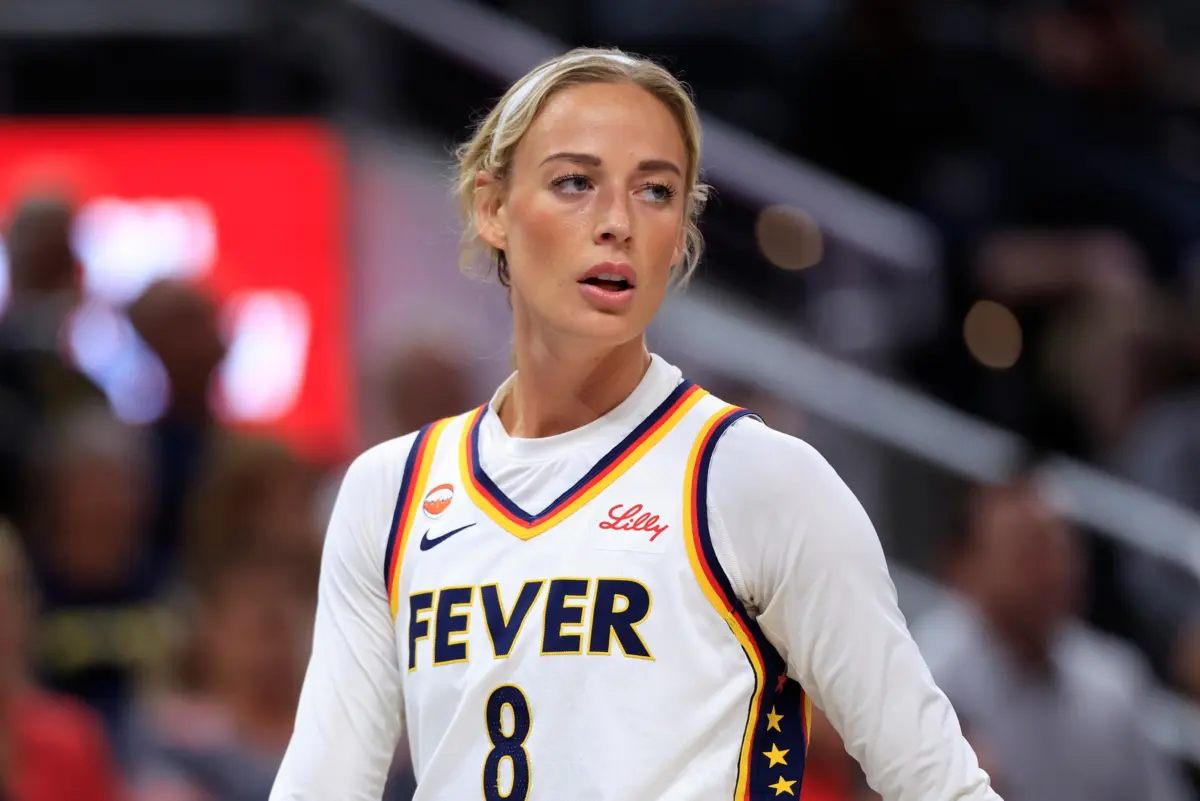
The tinderbox ignited within the WNBA ecosystem in July, when Indiana Fever guard Sophie Cunningham addressed the topic directly in an interview with ESPN. Cunningham argued that transgender women should not be permitted to compete in the league, framing her position around the protection of female athletes.
"I got a lot of negative feedback about me hating trans," Cunningham noted. "And I’m like, ‘I never once said that.’ I want to protect young girls in a locker room, or young girls in sport who shouldn’t have to go against biological men."
The remarks instantly detonated a firestorm. Within hours, Cunningham’s comments were broadcast across sports talk shows, political commentary channels, and social media platforms, dividing fans, players, and analysts alike.
Escalation: Protests, Public Stunts, and Institutional Deadlock
As the weeks progressed, the controversy bled out of television studios and into arenas. Protests and counter-protests materialized outside WNBA venues, with spectators brandishing competing pro-trans and anti-trans signage. The tension manifested on the court as well; during an August matchup, Minnesota Lynx head coach Cheryl Reeve made headlines by wearing a prominent "Trans Kids Belong" t-shirt.
The spectacle reached theatrical heights when former NBA player Enes Kanter Freedom launched a public campaign demanding the WNBA amend its bylaws to explicitly restrict participation to "biological women." As a publicity stunt, Freedom formally put himself up for eligibility in the 2027 WNBA draft—a move publicly endorsed by President Donald Trump.
The constant media scrutiny forced league leadership to act. In August, the WNBA convened a special task force composed of general managers and team presidents to debate athlete eligibility parameters. Ultimately, however, the task force concluded its meetings without implementing any formal policy changes, leaving the league’s status quo intact while the cultural pressure cooker continued to build.
Supporting Context & Metrics: Decoding the GUDEA Data
While the physical protests and league meetings were tangible, the digital footprint of the controversy told a story of engineered amplification. GUDEA’s data analytics team sought to quantify the actual mechanics of the online debate, analyzing 188,631 posts across a 24-day sample window from July 20 to August 12.
The Dominance of X and "Non-Typical" Users
GUDEA’s findings highlight the hyper-concentrated nature of platform-specific debates. The research revealed that nearly 99 percent of all tracked posts regarding the WNBA trans debate occurred on X.
Within this ecosystem, researchers identified a specific classification of user dubbed "non-typical"—encompassing professional influencers, political pundits, and high-volume aggregation accounts. While these users represented just 3.57 percent of the total sample pool, their output accounted for 16.75 percent of all identified tweets. This production rate significantly outpaces the statistical baseline for standard social media discourse, underscoring how professional content creators leaned into the controversy.
The Power of the "Anchor Post"
Perhaps the most revealing insight from the GUDEA white paper is the extreme fragility of the viral narrative. According to GUDEA founder Keith Presley, the vast machinery of outrage was anchored by an infinitesimal number of top-performing tweets.
"If you take out the eight top posts, this [narrative] didn’t happen. Nobody would be talking about this," Presley explained. "When you look at what content was getting the highest inauthentic engagement, it’s more visceral, trying to get an emotional response. [This debate] was pushed for clicks."
Georgia Paul, GUDEA’s head of customer success, expanded on this dynamic, noting the distinct lack of authentic grassroots content generation. In organic, community-driven social movements, users typically generate original thoughts, varied perspectives, and branching networks of conversation. In contrast, the WNBA debate was characterized by passive amplification—namely, endless re-sharing and quoting of a few foundational anchor posts with increasingly inflammatory or distorted commentary.
"Sharing [a post] is one of the lowest-lift actions that you can take in a narrative," Paul noted. "When we see that it’s just primarily people reposting an anchor post, it just shows that there’s just not true engagement on the topic… This told us that it was a flash in the pan and then other accounts tried to take advantage of that flash to monetize."
Official Statements & Industry Perspectives
The convergence of sports and politics has placed unprecedented pressure on athletes, coaches, and league administrators. The institutional response reflects a deep anxiety over navigating a cultural minefield where neutral consensus appears increasingly impossible.
League executives, speaking anonymously due to the sensitive nature of the ongoing discussions, have privately expressed frustration that external political actors and hyper-partisan influencers have hijacked legitimate conversations about athletic equity. The WNBA task force’s decision to maintain current eligibility guidelines was viewed by insiders as an effort to ground policy in medical and athletic science rather than reactionary public pressure.
At the same time, public figures like Sophie Cunningham maintain that their advocacy stems from a genuine desire to safeguard women’s sports. The public defense of these statements by political figures—including former and current government officials—ensures that the topic remains permanently wedged at the intersection of sports entertainment and national politics.
Industry analysts point out that platforms bear a structural responsibility for this dynamic. Since Elon Musk’s acquisition of X in 2022, algorithmic updates have prioritized subscription-tier accounts, integrated monetization models for viral content, and deliberately sought to reward high-engagement, provocative discourse. Because outrage is mathematically proven to drive algorithmic visibility and financial returns, content creators face immense fiscal incentives to fan the flames of cultural division, regardless of the topic’s actual prevalence in daily life.
Future Outlook: The Intersection of Sports, Analytics, and Outrage
As the WNBA moves past its playoff stretch and looks toward future seasons, the lessons of the 2025–2026 data analysis offer a sobering blueprint for the future of sports media.
The manufacture of online outrage is no longer an accidental byproduct of digital communication; it is a mature, monetized industry. As GUDEA’s research demonstrates, divisive narratives can be artificially inflated to create the illusion of a national emergency, distorting public perception and pressuring sports leagues into defensive postures.
"The primary motive for posting on the internet is no longer to have an opinion, a unique point of view, or add substance to the conversation. It is to make money," Paul concluded. "You’re going to make money in these divisive ways because you’re tugging at real-world conversations. Anger has turned into dollars for other people. The point is to sow division."
For sports fans, cultural observers, and league administrators alike, the data serves as both a warning and a vital reality check. While real debates regarding fairness, inclusion, and the future of athletics deserve thoughtful, nuanced civic discourse, consumers must learn to distinguish between authentic community concern and the hollow echo chamber of the engagement economy. Until platform incentives shift away from rewarding hostility, the digital arenas surrounding women’s sports will likely remain prime targets for algorithmic exploitation—making it more important than ever to look past the manufactured noise and examine the underlying facts.