

Executive Overview
To scroll through social media during the peak of the 2025–2026 WNBA season was to inhabit a digital ecosystem seemingly consumed by a singular, unyielding culture war. Day after day, feeds were flooded with debates regarding transgender athletes, locker-room access, and biological definitions of womanhood within professional basketball. The controversy felt inescapable, saturating timelines with polarized thinkpieces, vitriolic arguments, hostile memes, and escalating threats.
Yet, beneath the deafening roar of the digital landscape lay a stark reality: the online storm was disproportionately manufactured.
A comprehensive data analytics report compiled exclusively for Rolling Stone by the data startup GUDEA reveals that the intense online discourse surrounding transgender athletes in the WNBA was heavily skewed by a minute fraction of internet users. Analyzing nearly 190,000 posts across a 24-day window, GUDEA’s researchers discovered that a tiny cohort of high-reach influencers, pundits, and aggressive aggregation accounts—amounting to less than 4 percent of the sampled users—drove nearly 17 percent of the entire conversation.
According to GUDEA founder Keith Presley, the narrative would have largely fizzled out were it not for a handful of viral "anchor posts." Instead of representing a massive, organic grassroots groundswell, the online controversy became a masterclass in engagement bait. Fueled by platform algorithms that reward emotional provocation and financial monetization models on sites like X (formerly Twitter), outrage was systematically converted into ad revenue and political leverage.
While the debate over transgender participation in women’s sports remains a deeply felt, highly contentious real-world issue, the data demonstrates how modern social media architecture can distort a complex societal conversation into an artificially magnified hurricane of division.
Detailed Chronology: From Locker Rooms to the Boardroom
To understand how a league with zero open transgender players became the epicenter of a national political firestorm, one must trace the timeline of events that accelerated the debate from sports-adjacent commentary into a mainstream legislative and cultural flashpoint.
The Legislative Catalyst and Early Flashpoints
The debate surrounding transgender athletes in women’s sports is not entirely new, but its intersection with professional basketball sharpened dramatically over a multi-year policy shift. While athletic bodies across collegiate and international sports—including the NCAA and the International Olympic Committee—grappled with updated eligibility frameworks, the political stakes escalated significantly following federal administrative interventions.
The momentum accelerated sharply when the federal government implemented broader prohibitions restricting transgender women from competing on female sports teams. These policy shifts sent shockwaves through athletic institutions, forcing sports executives to re-examine existing inclusion policies or face intense legal and political scrutiny.
Sophie Cunningham’s Spark and the WNBA Firestorm
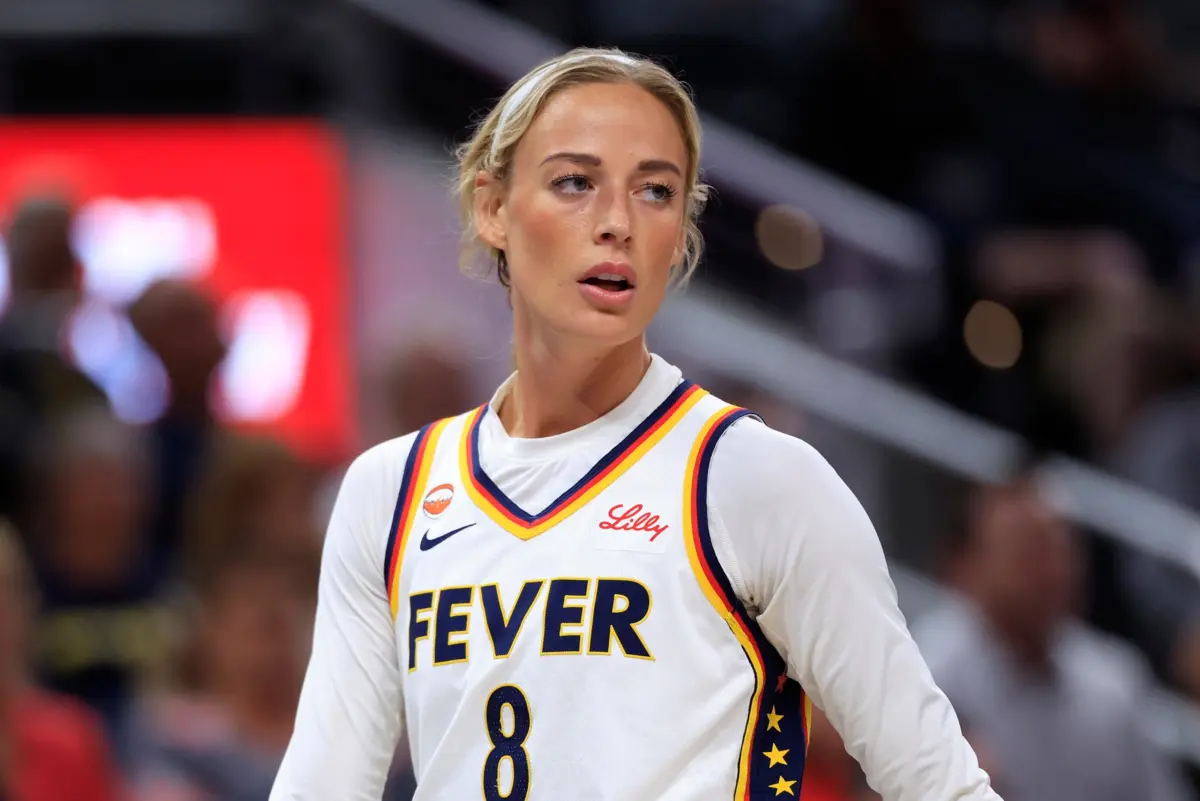
The controversy formally breached the gates of the WNBA in July, when Indiana Fever guard Sophie Cunningham addressed the league’s lack of explicit definitions regarding biological sex. In an interview with ESPN, Cunningham asserted that transgender women should not be permitted to compete in the professional women’s basketball league, positioning her stance as a protective measure for young female athletes.
"I got a lot of negative feedback about me hating trans. And I’m like, ‘I never once said that,’" Cunningham told ESPN. "I want to protect young girls in a locker room, or young girls in sport who shouldn’t have to go against biological men."
Cunningham’s remarks acted as an immediate catalyst, igniting a firestorm that rapidly polarized players, coaches, and fans. Within weeks, the fallout spilled out of the press room and directly onto the asphalt outside WNBA arenas. Protests and counter-protests materialized at game venues across the country. Fans inside stadiums held competing signs—some declaring "Trans Kids Belong," others demanding biological restrictions.

The cultural divide even found its way to the sidelines. During an August game, Minnesota Lynx head coach Cheryl Reeve made headlines by prominently wearing a "Trans Kids Belong" t-shirt, drawing praise from pro-trans advocates and fierce condemnation from conservative commentators.
The pressure reached theatrical heights when former NBA player Enes Kanter Freedom launched a public crusade demanding that the WNBA explicitly redefine its eligibility criteria to include only "biological women." As part of his campaign, Freedom publicly entered his name for the 2027 WNBA draft—a stunt that earned public applause from political figures, including President Donald Trump.
The League’s Response and Arena Realities
As the pressure mounted, WNBA leadership found themselves cornered by a controversy threatening to overshadow the league’s historic growth and playoff races. In August, the league took the unprecedented step of forming a specialized task force comprising general managers and team presidents. The committee convened to deliberate over eligibility rules and the future of gender-inclusive policies in the league.
However, despite intense external lobbying and internal debate, the task force concluded its meetings without making any immediate updates to the WNBA’s eligibility rules. For league executives, walking a tightrope between inclusion and escalating public pressure proved exceptionally difficult, leaving the policy status quo intact while the cultural battle raged unabated on the outside.
Supporting Context & Metrics: Decoding the GUDEA Data
While the physical protests and high-profile statements dominated sports news, the true battleground was digital. To measure the depth and authenticity of the online conversation, data analytics firm GUDEA conducted an exhaustive study of the digital ecosystem.
Methodology and Findings
GUDEA analyzed 188,631 posts regarding the WNBA and the transgender athlete debate over a 24-day period stretching from July 20 to August 12. Their white paper reveals several critical structural patterns about how the narrative spread:
- Platform Concentration: Nearly 99 percent of all identified posts regarding the controversy took place on X (formerly Twitter).
- The "Non-Typical" Impact: Out of the entire user sample, 3.57 percent were classified as "non-typical" users—defined as influencers, political pundits, media aggregation accounts, and power-users who post at frequencies far exceeding the average individual and command massive subscriber or follower bases.
- Disproportionate Output: Despite accounting for less than 4 percent of the participant pool, this small cohort of non-typical users produced 16.75 percent of all identified tweets—a significantly higher concentration than is typically observed in organic social media debates.
- The Anchor Post Phenomenon: According to GUDEA founder Keith Presley, the entire digital narrative rested on a fragile foundation. "If you take out the eight top posts, this [narrative] didn’t happen. Nobody would be talking about this," Presley stated.
The Economics of Outrage
The disproportionate influence of non-typical accounts is not an accident of nature; it is a direct result of platform architecture and financial incentives. Georgia Paul, GUDEA’s head of customer success, points to changes in platform monetization introduced under Elon Musk’s ownership following his 2022 acquisition of the company.
On modern X, users who subscribe to premium tiers can directly monetize their engagement, earning a share of ad revenue generated from their highest-performing threads. Furthermore, platform algorithms prioritize paid subscribers and high-engagement accounts in comment sections, ensuring their provocative takes float directly to the top of millions of user feeds.
Consequently, influencers and pundits possess a powerful financial incentive to keep the cultural temperature at a boiling point. As Paul notes, the primary motive for high-volume posters has shifted away from organic expression toward revenue generation.
"The primary motive for posting on the internet is no longer to have an opinion, a unique point of view, or add substance to the conversation. It is to make money," Paul explains. "You’re going to make money in these divisive ways because you’re tugging at real-world conversations. Anger has turned into dollars for other people. The point is to sow division."
Authentic vs. Inauthentic Engagement
A key diagnostic metric utilized by GUDEA involves distinguishing between authentic social momentum and manufactured amplification. When a topic generates authentic, grassroot interest, ordinary users typically respond by generating their own original content, diversifying the network, and introducing nuanced perspectives.

By contrast, the WNBA trans debate exhibited classic markers of "inauthentic" engagement. The vast majority of activity did not consist of original user-generated insights, but rather low-effort retweets and repetitive reiterations of a few foundational "anchor posts." Users overwhelmingly engaged in the lowest-lift social media action possible: reposting visceral, emotionally charged content designed to provoke anger. As these posts circulated, they rapidly devolved into pools of derogatory rhetoric, explicit threats, and anti-trans memes.
Official Statements and Diverse Perspectives
The widening chasm between athletic competition, human rights, and political posturing has drawn impassioned remarks from across the cultural spectrum, highlighting the deep emotional resonance of the debate.
Proponents of restrictions argue that the integrity and physical safety of women’s sports are non-negotiable foundations that must be protected by strict biological guardrails. Athletes like Sophie Cunningham have framed their advocacy as a defense of young girls entering sports pathways, arguing that biological differences create insurmountable competitive imbalances. Political figures who championed executive orders and legislative bans echo this sentiment, portraying their actions as common-sense measures to preserve fairness in female athletics.
Conversely, advocates for transgender inclusion—including prominent voices like Minnesota Lynx coach Cheryl Reeve and advocacy organizations staging demonstrations outside arenas—argue that sports should be open and affirming spaces for all youth. They emphasize that excluding transgender athletes inflicts severe psychological harm on vulnerable populations, reinforcing discrimination under the guise of competitive fairness. Furthermore, pro-trans advocates point out that policing gender identity in sports creates a surveillance culture that harms cisgender female athletes who do not conform to traditional feminine stereotypes.
Between these two deeply entrenched ideological poles sit sports executives and league administrators. Caught in the crosshairs, league officials face the unenviable task of balancing human rights, legal liabilities, public relations, and fan sentiment. Their cautious approach—typified by the WNBA task force’s decision to maintain current policies while studying the issue—reflects an industry desperately hoping to navigate a societal landmine without detonating its own fan base.
Future Outlook: Navigating the Digital Mirage
As the WNBA moves past its playoff stretch and looks toward future seasons, the lessons learned from the summer of 2025 and 2026 extend far beyond professional basketball. The collision of athletics and culture-war politics is unlikely to subside, particularly as federal policies, state-level legislation, and international athletic federations continue to update their rulebooks.
However, data-driven investigations like GUDEA’s white paper offer a vital antidote to digital fatigue. They remind media consumers, sports fans, and journalists alike to look past the smoke and mirrors of algorithmic amplification.
While the debate over transgender athletes touches on genuine, deeply held beliefs in the physical world, the apocalyptic tone of the digital feed is largely a constructed illusion. It is a product designed by economic incentives, sustained by platform monetization, and engineered by a small cohort of influencers seeking to profit from polarization.
Ultimately, the GUDEA report serves as both a warning and a reassurance. It proves that while the cultural battles of our era are real and complex, the version of reality projected onto our phone screens is frequently inflated. The conversation might feel all-consuming, but behind the algorithmic shouting match, the actual community of voices driving the division is far smaller than it appears.