

Executive Overview
In the modern digital economy, the landscape of freelance writing has undergone a seismic shift. Gone are the days when freelancers relied solely on saturated job boards, tedious cold-pitching campaigns, or word-of-mouth referrals to sustain a viable business. Today, the most successful independent writers have pivoted toward a single, highly lucrative ecosystem: LinkedIn.
As professional networking has evolved into digital thought leadership, LinkedIn has cemented its position as the premier inbound lead-generation engine for freelancers. According to industry surveys and leading independent creators, a vast majority of modern freelance writers now secure the lion’s share of their high-paying corporate clients directly through LinkedIn—outstripping traditional acquisition channels entirely.
However, mastering LinkedIn requires far more than merely setting up a basic profile and hoping for the best. With continuous updates to the platform’s underlying algorithms, outdated tactics—such as generic engagement pods, low-effort outreach, and publishing content geared exclusively toward peer validation—are routinely penalized. To cut through the noise, freelance writers must adopt a sophisticated, systematic approach to platform management. This comprehensive guide outlines five foundational strategies designed to optimize profiles, overcome posting anxiety, engage target prospects, and secure a predictable stream of inbound clients in 30 days or less.
Detailed Chronology: The Evolution of Freelance Client Acquisition
To understand why LinkedIn reigns supreme today, it is essential to examine how freelance client acquisition has evolved over the past decade.
Phase 1: The Wild West of Job Boards (Early 2010s)
A decade ago, freelance writers built their businesses by scouring online job boards, bidding on low-cost platforms, and competing in a race to the bottom against a global pool of low-rate providers. While these platforms offered a high volume of postings, they suffered from intense friction: low conversion rates, predatory fee structures, and clients who viewed writing as a commodity rather than a strategic business investment.
Phase 2: The Cold Pitching Era (Mid-to-Late 2010s)
As job boards became overly saturated, the industry shifted toward cold outreach. Freelancers spent hours crafting hyper-personalized email pitches to marketing managers and startup founders. While more effective than job boards, cold pitching demanded massive time investments with notoriously low response rates. Burnout became a pervasive issue across the freelance community.
Phase 3: The Rise of Inbound Authority (The Present Day)
Today, the paradigm has flipped from outbound interruption to inbound attraction. Decision-makers—including marketing directors, content heads, and agency founders—rarely have time to review cold pitches or sift through low-tier job boards. Instead, they turn to LinkedIn to research industry experts, evaluate peer recommendations, and actively hunt for specialized talent. Freelancers who position themselves correctly on the platform no longer need to hunt for work; the work comes to them.
Supporting Context & Metrics: Decoding the LinkedIn Algorithm
Before executing an outreach campaign, writers must understand the mechanics of the modern LinkedIn algorithm. The platform’s machine-learning architecture has evolved to prioritize genuine relevance, contextual authority, and dwell time over raw, unverified reach.
What the Algorithm Rewards
- Niche Authority: Accounts that consistently publish content within a tightly defined subject matter are systematically flagged by the platform as authoritative sources, boosting their distribution within that specific professional graph.
- Early Engagement Velocity: Meaningful, multi-word comments and substantive discussions occurring within the first 60 minutes of a post going live signal high community value to the algorithm.
- Dwell Time: Well-formatted text posts and structured multi-image carousels that keep readers scrolling and reading for extended periods are heavily favored.
What the Algorithm Penalizes
- External Links in the Main Post Body: Directing users away from LinkedIn in the initial post text historically reduces algorithmic distribution (though workarounds, such as placing links in the comments or editing posts later, mitigate this).
- Generic Engagement Pods: Automated or superficial commenting rings are easily detected and suppressed by platform filters.
- Low-Quality Interactions: Single-emoji responses or two-word comments ("Great post!") carry negligible weight compared to insightful, conversational replies.
The Five-Step Framework for LinkedIn Mastery
To successfully transition LinkedIn into an automated client acquisition funnel, freelance writers must execute five tactical pillars.
1. Write to Potential Clients, Not Other Freelancers
The most common trap for new freelancers is building an echo chamber. Writers frequently flock to LinkedIn networking groups, commenting on peer posts, swapping tips, and celebrating milestones with other writers. While community building is emotionally rewarding, it yields zero revenue.
The Execution Plan:

- Audit Your Feed: Review your last ten posts. If the majority of your content addresses writing tips, grammar rules, or freelance anxiety, you are speaking to the wrong audience.
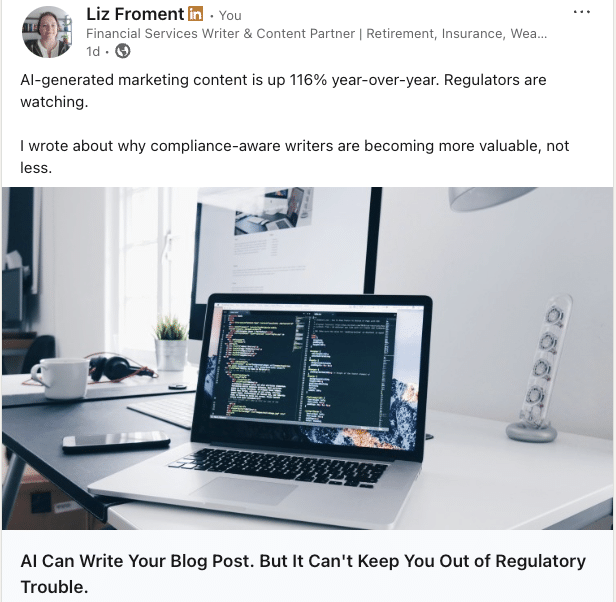
- Identify Core Pain Points: Isolate three to five high-value topics your ideal clients care about. For instance, a freelance medical writer should focus on regulatory shifts, clinical trial communications, and health-tech content challenges. A financial services writer should lean into fintech trends, regulatory compliance, and customer acquisition strategies.
- Demonstrate Domain Expertise: Share high-level industry insights, breakdown case studies (without breaching client confidentiality), and offer contrarian takes on industry trends. When a marketing director visits your profile, they must immediately recognize an industry peer, not just another copywriter.
2. Overcome Posting Anxiety Through Strategic Cadence
Conventional advice often dictates that creators must post daily to achieve visibility. For a busy freelancer balancing client work, this relentless pace induces severe imposter syndrome and operational burnout, frequently resulting in total platform abandonment.
The Execution Plan:
- Embrace Sustainable Consistency: A predictable cadence of posting once or twice a week—such as every Monday and Thursday—yields exceptional long-term results when maintained consistently over several months.
- Batch Your Content Creation: Allocate a strict 30-minute block every Sunday to draft, refine, and schedule your content using LinkedIn’s native scheduling tool.
- Prioritize Simple Formats: Complex graphics and high-production videos are entirely optional. Cleanly formatted text posts featuring a compelling hook, short paragraphs, and a clear call-to-action consistently outperform overly designed media.
3. Implement the "Walking the Marketing Dog" Engagement Strategy
As content marketing strategist Sarah Greesonbach notes, marketing requires daily maintenance—much like walking a dog. Passive publishing is insufficient; active engagement accelerates algorithmic visibility and builds direct relationships with prospective buyers.
The Execution Plan:

- Build a Target Prospect List: Compile a curated roster of 20 to 30 marketing directors, content managers, and founders at companies you aspire to work with. Follow their profiles immediately.
- Engage with Substance: Spend 15 to 20 minutes daily reviewing their activity feeds. Leave thoughtful, value-add comments that expand upon their points, share relevant data, or offer a unique perspective. Avoid lazy phrases like "Great insights!"
- Adopt the 3-2-1 Method: Popularized by B2B expert Ed Gandia, this framework simplifies daily outreach: send 3 targeted connection requests, leave 2 thoughtful comments, and publish 1 original post.
4. Optimize Your Profile to Convert Traffic
Treat your LinkedIn profile not as an online resume, but as a high-converting sales landing page designed to turn casual scrollers into paying clients.
The Execution Plan:
- Ditch the Generic Replace "Freelance Writer" with a value-driven headline. For example: "I write high-converting B2B SaaS content that turns cold leads into pipeline revenue," or "Financial Services Copywriter | Trusted by [Client A], [Client B], and [Client C]."
- Address the Reader Directly: Rewrite your "About" section in the second person ("You"). Clearly outline the specific problems you solve, the exact industries you serve, and the measurable results you deliver. Conclude with a direct call-to-action and a link to your portfolio website.
- Leverage the Featured Section: Pin your two or three highest-performing writing samples, client case studies, or glowing testimonials directly to the top of your profile.
- Detail Your Experience Section: Move away from vague descriptions. Instead of writing "Wrote articles for various clients," specify: "Authored 50+ authoritative long-form guides covering artificial intelligence in banking, payment processing, and credit card strategies."
5. Build an "Idea Brain" to Banish Writer’s Block
Staring at a blank screen wondering what to post is the primary driver of content creation paralysis.
The Execution Plan:
- Establish a Daily Idea Habit: Set a daily smartphone reminder to jot down 10 raw ideas into a dedicated notes app. These can range from client questions and industry news items to controversial opinions or personal lessons learned. Do not judge the ideas during capture; focus purely on volume.
- Review and Refine Weekly: At the end of every week, scan your list of 70 raw ideas. Select the top 5 to 10 concepts and expand them into full LinkedIn posts.
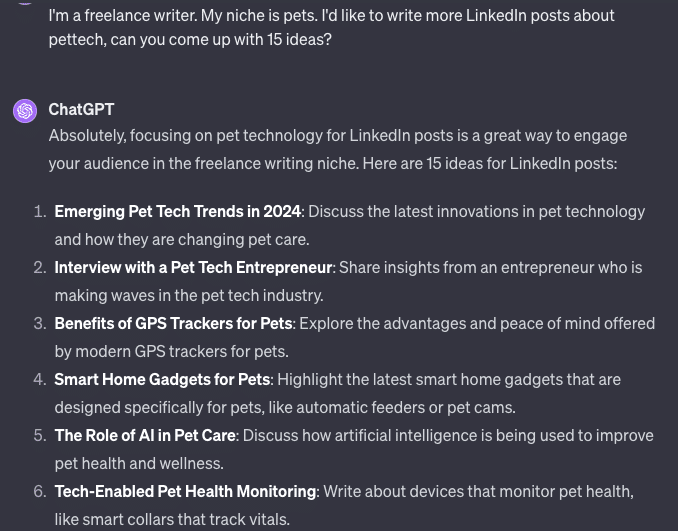
- Collaborate with AI: When struck by severe creative block, leverage advanced AI writing assistants (such as ChatGPT) as a sounding board. Prompt the tool to generate 10 unique angles for a post within your specific niche, then infuse your personal voice, anecdotes, and expertise into the resulting output.
Future Outlook: The Sustainable Future of Freelance Writing
As the digital landscape continues to mature, the barrier to entry for generic writing will only decrease. With the proliferation of generative artificial intelligence, brands no longer pay top dollar for basic commodity content produced by anonymous word-processors.
Instead, modern companies are aggressively searching for subject-matter experts who possess distinct professional points of view, deep industry knowledge, and verified authority. By treating LinkedIn as a dynamic publishing platform and a relationship-building machine, freelance writers can future-proof their careers. Investing just 20 to 30 minutes a day into strategic profile optimization, targeted engagement, and consistent thought leadership will not only secure a steady stream of inbound clients, but will also establish an enduring professional network that guarantees long-term income stability.