

WASHINGTON — With the 2026 midterm elections fast approaching, Washington and state capitals across the country are gripped by a palpable sense of political foreboding. Recent reports indicate that the Republican Party is bracing for a punishing electoral cycle, with anxieties intensifying within both congressional caucuses and the West Wing.
As the prospect of legislative losses looms large, attention has increasingly turned toward how President Donald Trump might react to unfavorable outcomes. While speculation swirls around potential executive overreaches—including declarations of national emergencies or attempts to seize voting machines—constitutional scholars and legal experts emphasize that the administration’s formal legal options remain severely constrained. Yet, even with statutory limits in place, the intersection of domestic electoral vulnerability and active foreign conflicts points toward a volatile post-election landscape.
Executive Overview: A Grim Forecast and the Limits of Power
The political climate leading into the November midterms is characterized by widespread panic among Republican strategists. House GOP leadership has reportedly shifted from debating whether they will lose their majority to calculating the depth of their potential losses. Meanwhile, the mood within the White House is described by insiders as grim, with advisers anticipating setbacks in both chambers of Congress.
In a desperate bid to stave off a blue wave, billionaire tech magnate Elon Musk has injected nearly half a billion dollars into the political ecosystem, primarily funneled through his America PAC. This unprecedented financial intervention makes Musk the single largest disclosed donor in modern American political history. However, despite massive infusions of cash into swing regions—such as Texas, Michigan, Ohio, and Iowa—polling continues to show razor-thin margins in historically safe territory.
Should the opposition sweep the midterms, political analysts expect the administration to test the boundaries of executive authority. Yet, legal specialists argue that sweeping federal interventions in state-run elections face insurmountable statutory hurdles. Nevertheless, a cornered executive facing a hostile legislature may pivot aggressively toward foreign arenas, doubling down on ongoing trade disputes and military engagements, most notably the conflict with Iran.
Detailed Chronology: The Escalation of Midterm Panic and Foreign Entanglements
Early 2026: The Opening of New Fronts
The geopolitical and domestic pressures defining the current political cycle trace their roots back to the early months of 2026. In late February, President Trump, acting in coordination with Israeli leadership, initiated military strikes against Iran. This marked a dramatic escalation in Middle Eastern tensions, drawing the Pentagon into a protracted campaign aimed at degrading Iranian infrastructure. Simultaneously, the administration ramped up aggressive trade wars with traditional international allies, setting an adversarial tone for both foreign policy and domestic governance.
October 16, 2026: Signals from the Tarmac
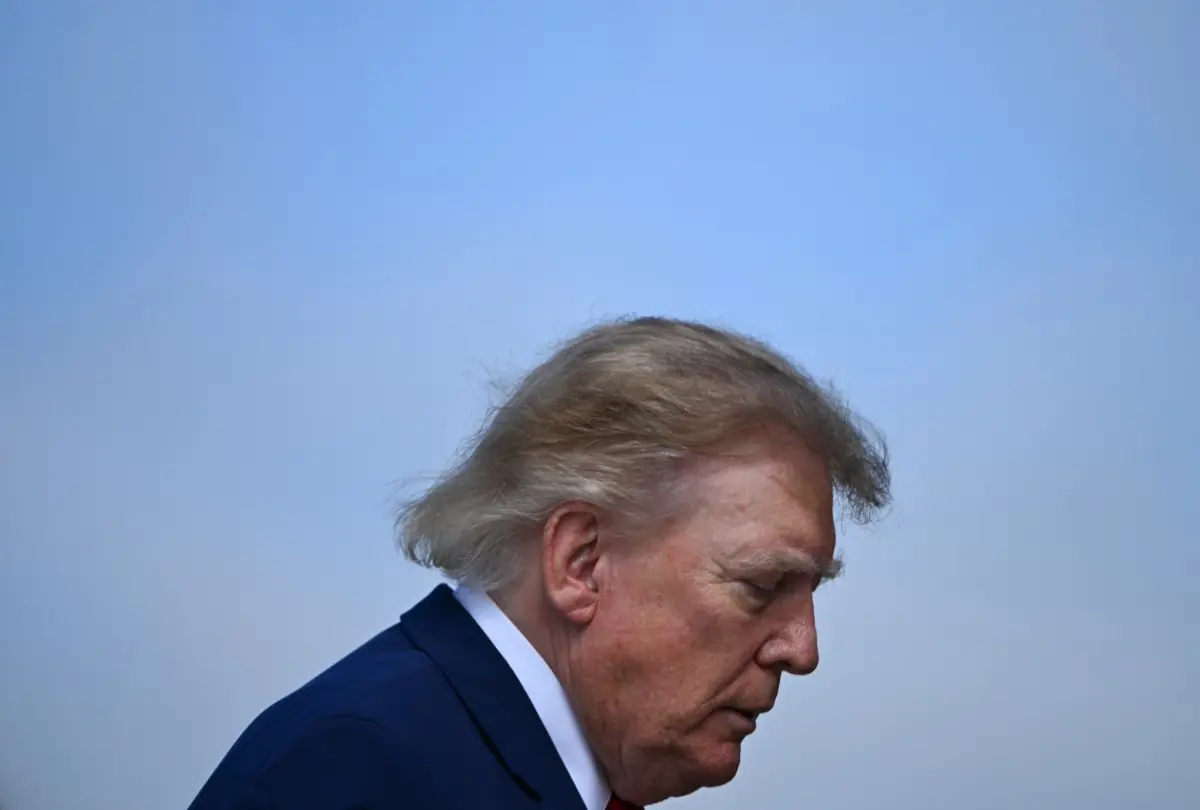
As campaign rhetoric reached a fever pitch, President Trump was photographed boarding Air Force One at Joint Base Andrews on October 16. The imagery underscored a presidency constantly in motion, attempting to project strength while navigating a rapidly deteriorating political map at home. Behind closed doors, campaign internals were flashing warning signs that standard messaging strategies were failing to insulate Republican candidates from voter discontent.
Late October 2026: Electoral Dread and Financial Flooding
During the final weeks of October, public admissions of vulnerability became harder for the GOP to conceal.
- October 28: The New York Times reported that the atmosphere inside the White House had turned decidedly grim, with senior advisers preparing for the distinct possibility of losing control of the House of Representatives and facing severe headwinds in the Senate.
- October 30: Prominent Republicans went public with their fears. During a podcast episode, Texas Senator Ted Cruz delivered a stunning warning regarding his home state: "It’s excruciatingly close… we could lose Texas. Let me repeat that: We could lose Texas. And by the way, not just the Senate race. We could lose every single statewide race in Texas."
Simultaneously, financial disclosures analyzed by outlets like CNN and Politico revealed the full scale of Elon Musk’s electoral meddling. By injecting roughly $48 million into Texas alone, alongside millions more in the Midwest, Musk’s spending solidified his role as the premier financial benefactor of the Republican apparatus.
Despite these capital injections, reports surfaced on October 30 detailing the potential fallout of a GOP defeat, prompting experts to weigh in on whether the White House might attempt extraordinary measures to alter or invalidate election outcomes.
Supporting Context & Metrics: Money, Polling, and Institutional Realities
The narrative of the 2026 midterms is fundamentally defined by stark financial metrics and shifting demographic realities. The mobilization of wealth by external actors highlights the structural weaknesses campaigns face when grassroots enthusiasm dips.
The Musk Financial Footprint
Elon Musk’s America PAC expenditure stands as a historic outlier in American campaign finance:
- Total Estimated Outlay: Approaching $500 million overall across the cycle.
- Texas Allocation: Approximately $48 million, reflecting desperate efforts to secure a fortress state that has steadily trended purple.
- Midwestern Deployments: Roughly $9 million each directed toward Michigan and Ohio.
- Iowan Investment: Around $4 million allocated to stabilize traditional firewall territory.
Despite these staggering figures, political scientists note that money cannot entirely offset unfavorable macroeconomic indicators, voter fatigue, and deep-seated anxieties over ongoing foreign conflicts.
The Mechanics of Electoral Oversight
Speculation regarding executive interference—such as deploying federal agents to seize voting machines or invoking emergency powers—fails to account for the decentralized nature of American elections. Under the U.S. Constitution and federal statutes like the Electoral Count Reform Act, the administration of elections is explicitly delegated to state and local authorities.
While federal agencies can investigate specific claims of criminal malfeasance, they possess no lawful mechanism to commandeer voting infrastructure or unilaterally discard certified state results. Consequently, any aggressive White House maneuver would immediately trigger an avalanche of litigation, likely culminating in swift rejections by the federal judiciary.
Official Statements and Expert Analysis
Legal and foreign policy experts have offered sobering assessments of what the nation can expect once the ballots are counted.
Jonathan Diaz, director of voting advocacy and partnerships at the Campaign Legal Center, offered a pragmatic view to Forbes regarding potential executive overreaches. While acknowledging that the administration may attempt unorthodox challenges, Diaz noted that the president’s actual toolkit is severely restricted:
"He can certainly try, but… there just isn’t a lot that he can actually do."
On the foreign policy front, scholars warn that domestic political defeats could paradoxically embolden the executive branch overseas. Andrew Gawthorpe, a senior research fellow at the Foreign Policy Centre, highlighted the dynamic awaiting a potential lame-duck or weakened administration facing a newly empowered opposition in Congress:
"It might be difficult for Democrats in Congress to restrain Trump from a course of action which he is strongly committed to, but they can still raise the political costs associated with plowing ahead. Facing a hostile Congress, Trump might become even more willing to simply ignore domestic opposition and plow ahead with controversial and unpopular policies, as he did by attacking Iran or threatening to annex Greenland."
Future Outlook: Navigating the Post-Midterm Horizon
As voters head to the polls, the nation stands at a critical juncture. If the pre-election polling proves accurate and Republicans suffer significant defeats across the legislative branch, the checks and balances designed into the American constitutional system will face an immediate stress test.
Domestically, the immediate aftermath will likely see protracted legal battles over certification processes, with the administration and its allies contesting outcomes wherever margins are narrow. However, because legal avenues to subvert state-run elections are fundamentally limited by institutional safeguards, the center of gravity for executive action is widely expected to shift outward.
Freed from or frustrated by legislative constraints at home, an embattled president may lean further into foreign arenas. The ongoing military buildup in the Middle East, coupled with strategic contingency plans to strike Iranian nuclear and energy infrastructure, suggests that foreign policy will become the primary instrument through which the administration asserts its power.
Ultimately, whether through domestic electoral skirmishes or intensified overseas conflicts, the weeks following the 2026 midterms promise to test the resilience of American democratic institutions, the rule of law, and the structural limits of executive authority.