

Executive Overview
The landscape of modern television was forever altered by the quiet dignity, theatrical rigor, and moral gravitas brought to the small screen by Sir Patrick Stewart. Following his death in Los Angeles at the age of 86, the global entertainment community has entered a period of profound mourning, reflecting on a career that spanned more than six decades across classical theater, cinematic blockbusters, and groundbreaking science fiction.
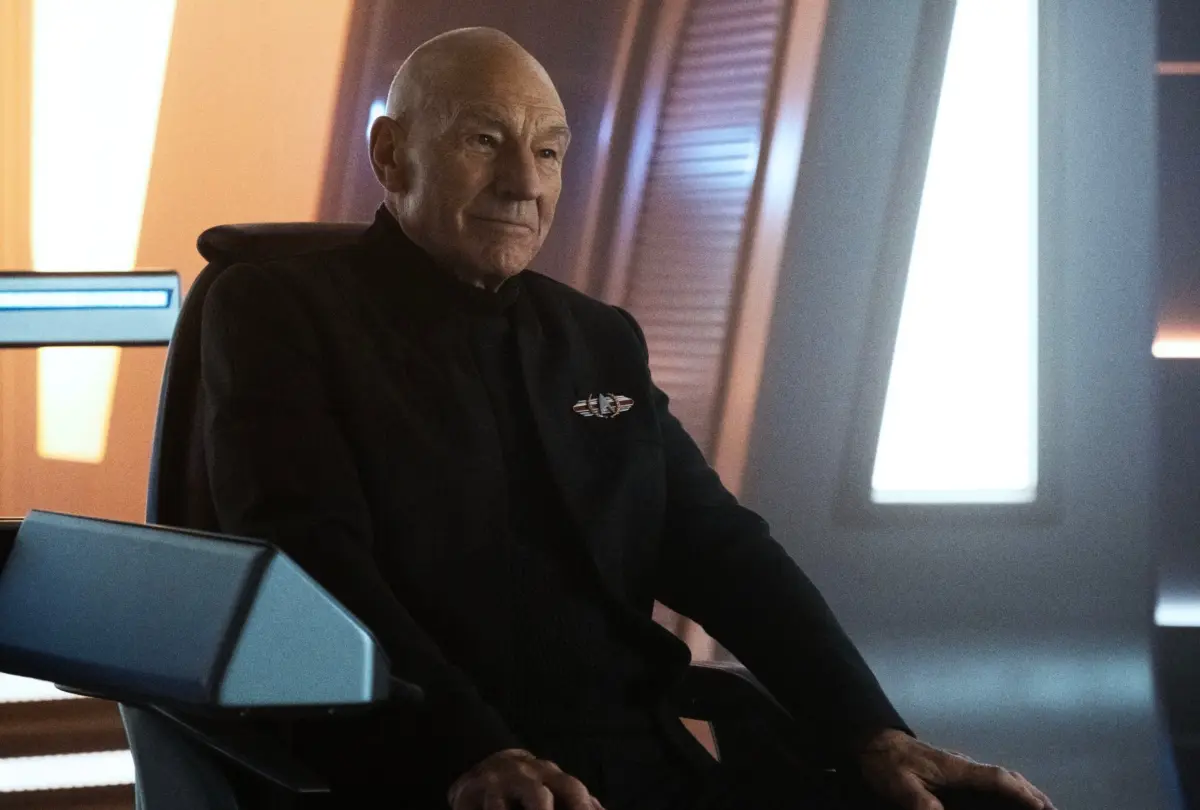
Before the contemporary "prestige TV" era convinced Hollywood that the small screen could match the cinematic ambition of the silver screen, television—particularly syndicated science fiction—was frequently dismissed as a lesser artistic medium. Stewart, a classically trained Shakespearean actor hailing from humble working-class origins in West Yorkshire, shattered these dismissive assumptions. When he accepted the role of Captain Jean-Luc Picard in 1987 for Star Trek: The Next Generation, he did not simply step into a franchise; he elevated it, treating a futuristic Starfleet commander with the intellectual depth and emotional complexity of a tragic Shakespearean protagonist.
Over the course of 178 episodes of The Next Generation, subsequent feature films, and the critically acclaimed Paramount+ continuation Star Trek: Picard, Stewart shaped a television legacy that transcended genre boundaries. He imbued his characters with a regal authority, an unwavering commitment to human empathy, and an intrinsic nobility. Far from viewing genre television as a professional compromise, Stewart famously remarked that sitting in the captain’s chair of the USS Enterprise was "rather like sitting on the throne of England, though marginally more important." His refusal to succumb to artistic snobbery allowed him to traverse high culture and pop culture effortlessly, leaving an indelible imprint on global pop culture that ranges from philosophical space exploration to subversive comedy.
Detailed Chronology: From Yorkshire Roots to Global Icon
Humble Beginnings and Classical Foundations
Sir Patrick Stewart’s journey to international renown began on July 13, 1940, in Mirfield, a heavy wool-producing industrial town in West Yorkshire, England. His early life was marked by post-war scarcity; he was raised in a modest household that lacked basic modern amenities, including an indoor toilet and running hot water.
Despite these economic hardships, Stewart found an escape and a vocation in the dramatic arts. In 1957, at the age of 17, he enrolled at the prestigious Bristol Old Vic Theatre School. During his rigorous training, he meticulously shed his working-class Yorkshire accent, mastering the regal elocution and baritone projection that would later become his trademark.
He made his professional stage debut in 1959 in an adaptation of Treasure Island, setting the stage for a legendary theatrical career. In 1966, Stewart joined the Royal Shakespeare Company (RSC), beginning a foundational 16-year association with the institution that cemented his status as one of Britain’s premier classical actors. He later transitioned to the Royal National Theatre in 1984, accumulating accolades, including two Laurence Olivier Award nominations, for his commanding interpretations of the Bard’s most intricate heroes and villains.
Crossing the Atlantic and Claiming the Captain’s Chair
By the mid-1980s, Stewart was a respected figure within British theatrical circles and arthouse cinema—recognized by cinephiles for his appearances in John Boorman’s Excalibur (1981) and David Lynch’s Dune (1984)—but he remained largely unknown to American television audiences.
That anonymity dissolved instantly in 1987 when creator Gene Roddenberry cast the classically trained Shakespearean actor as Captain Jean-Luc Picard for Star Trek: The Next Generation. The casting was considered a major gamble by studio executives at the time. Unlike William Shatner’s swashbuckling, highly physical Captain James T. Kirk from the original 1960s series, Stewart’s Picard was an intellectual, introspective diplomat. He was a man who preferred philosophical debates, archaeology, horseback riding, and a steaming cup of "Earl Grey, hot" over physical confrontation.
Yet, under Stewart’s command, Picard became an enduring symbol of grace under pressure. He demonstrated that true authority does not stem from aggressive posturing, but from listening, ethical consistency, and an unyielding commitment to the core ideals of Starfleet. As Stewart famously observed regarding the nature of authority:
"What identifies an individual as a king is how other people behave towards him. All authority is assumed, and if other people don’t accept your authority then you don’t have it. Perhaps the critical thing to being a convincing figure of authority is actually not to try too hard."
The Evolution of a Cultural Touchstone
Star Trek: The Next Generation initially faced skepticism from critics who doubted a syndicated sci-fi series could capture the cultural zeitgeist. However, anchored by Stewart’s gravitational pull and an exceptional ensemble cast featuring Jonathan Frakes, LeVar Burton, and others, the show evolved into a monumental television phenomenon. It earned 17 Emmy Awards and a prestigious Peabody Award, proving that serialized science fiction could tackle complex philosophical, political, and moral dilemmas.
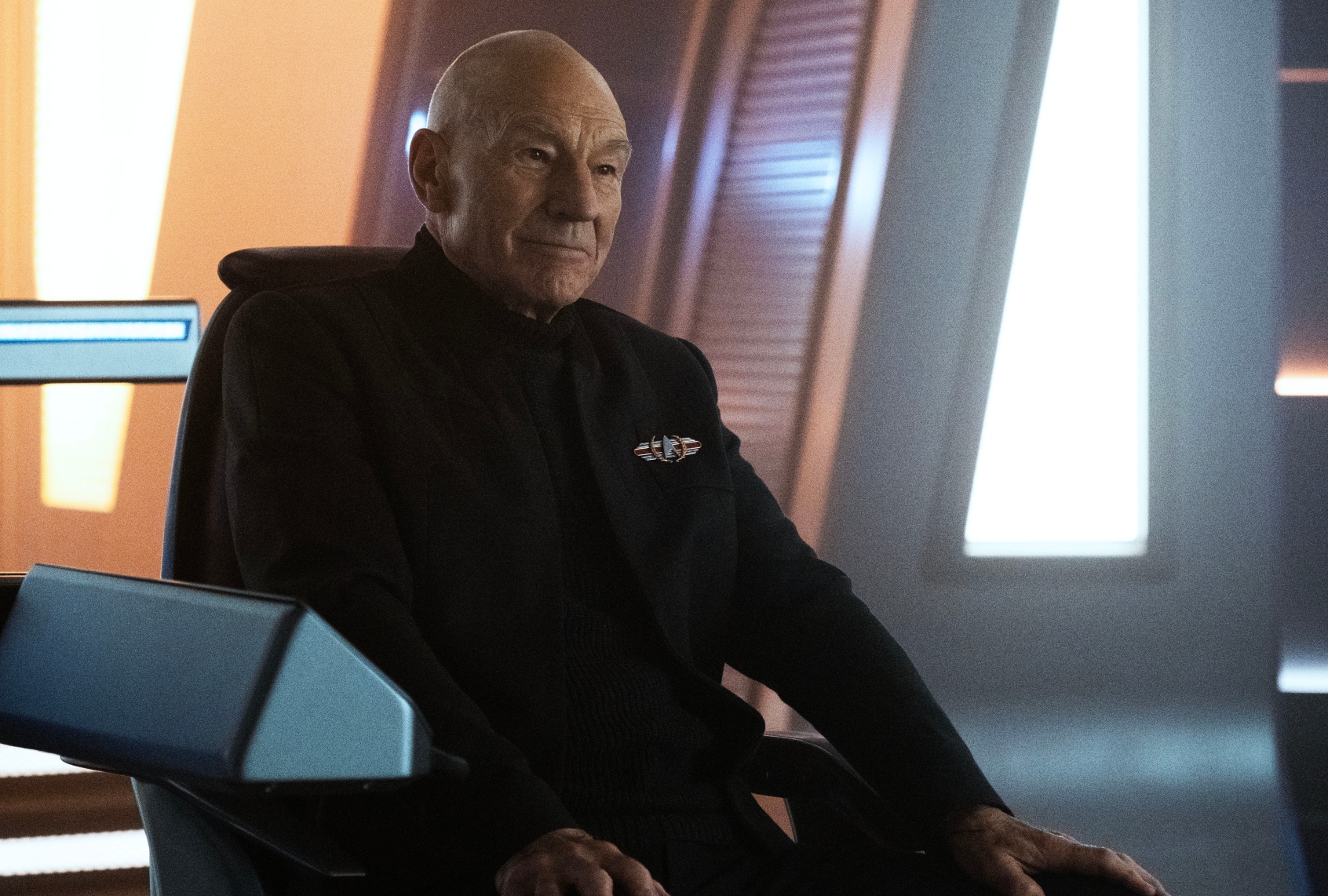
Stewart’s relationship with the character of Picard did not end with the conclusion of The Next Generation in 1994 or its subsequent cinematic outings (Generations, First Contact, Insurrection, and Nemesis). Decades later, he returned to the role in the Paramount+ streaming series Star Trek: Picard (2020–2023). In this later iteration, Picard was depicted not as an invincible Starfleet action hero, but as a wise, aging statesman weary of systemic political callousness and institutional decay. This final chapter served as a poignant reflection on aging, legacy, and moral responsibility in a fractured world.
Supporting Context & Metrics: Redefining Television’s Ceiling
To fully appreciate the magnitude of Stewart’s impact, one must examine the metrics and cultural shifts surrounding his body of work:
- Theatrical and Cinematic Depth: Stewart’s career bridged the gap between high-art performance and mass entertainment. His 16-year tenure with the Royal Shakespeare Company and subsequent work with the Royal National Theatre provided the technical foundation that allowed him to treat science fiction scripts with absolute theatrical sincerity.
- Award-Winning Excellence: Star Trek: The Next Generation achieved unprecedented critical success for a syndicated weekly series, amassing 17 Emmy Awards and a rare Peabody Award in 1988 for the landmark episode "The Big Goodbye."
- Global Recognition: In recognition of his immense contributions to drama, theater, and culture, Queen Elizabeth II officially knighted Patrick Stewart at Buckingham Palace in 2010.
- Franchise Multiplier: Beyond Picard, Stewart successfully anchored a second multi-billion-dollar cinematic universe by portraying the telepathic mutant leader Professor Charles Xavier (Professor X) across the X-Men film franchise (2000–2017), further cementing his status as science fiction royalty.
- Versatility and Pop Culture Agility: Demonstrating an utter lack of artistic snobbery, Stewart cultivated a celebrated comedic career later in life. His frequent voice-acting collaborations with Seth MacFarlane—including voicing the bombastic, self-important CIA director Avery Bullock on American Dad! and various roles on Family Guy—alongside meta-comedic appearances on Ricky Gervais’s Extras, showcased a self-deprecating wit that balanced his classical gravitas.
Official Statements and Tributes
The global outpouring of grief following Sir Patrick Stewart’s passing reflected the profound personal and professional connections he forged throughout his life.
Colleagues, cultural institutions, and former co-stars released statements honoring his monumental legacy:
- The Royal Shakespeare Company released a joint statement mourning the loss of a titan of the stage:
"Sir Patrick Stewart was a giant of the British theater and an incomparable interpreter of the Shakespearean canon. His ability to fuse ferocious intellect with deep, accessible humanity made him a beacon for generations of actors. He never forgot his working-class roots, bringing dignity and fierce integrity to every stage he graced."
- Paramount Global and the Star Trek Franchise Team shared a tribute emphasizing his transformative impact on the sci-fi genre:
"Sir Patrick didn’t just play a captain; he embodied the very best of what humanity aspires to be. With a cup of Earl Grey tea, a raised eyebrow, and an unwavering moral compass, he made millions of viewers around the globe believe in a hopeful, enlightened future. His contributions to Star Trek and television history are immeasurable."
- Co-star LeVar Burton, who played Geordi LaForge alongside Stewart on The Next Generation, posted a heartfelt message on social media:
"The world has lost a master storyteller, a fierce advocate for justice, and a dear friend. Sitting on the bridge next to Sir Patrick was the privilege of a lifetime. His standard of excellence raised the bar for everyone in his orbit. Rest well, Captain."
Future Outlook: A Legacy Cast in Starlight
As the entertainment industry processes the loss of Sir Patrick Stewart, his enduring influence on television, cinema, and theater remains secure. He leaves behind a sprawling body of work that challenges the artificial boundaries between "high art" and popular entertainment.
In interviews, Stewart frequently reflected on how completely the character of Jean-Luc Picard had merged with his own identity. During a 2020 Television Critics Association press conference, he famously noted:
"Halfway through season 3 of ‘Next Generation,’ I no longer knew where Jean-Luc started and Patrick Stewart left off. We became melded, and he has never left me… It’s a relationship that I am happy to continue with."
For millions of fans worldwide, that relationship will never truly end. Through syndicated reruns, streaming archives, cinematic masterpieces, and the enduring ethical framework of Gene Roddenberry’s universe as filtered through Stewart’s inimitable grace, Sir Patrick Stewart’s voice will continue to echo across the cultural cosmos. He aimed for the stars in every facet of his work, and in doing so, he left television vastly nobler than he found it.