

Executive Overview
The intersection of professional athletics and the entertainment industry is frequently romanticized through the lens of triumph, multi-million-dollar contracts, and roaring crowds. However, beneath the polished veneer of primetime broadcasts and red-carpet premieres lies a fragile human reality. Recent weeks have underscored the precarious nature of life for high-profile figures, highlighted by harrowing medical emergencies on the gridiron and a chilling catalog of freak accidents spanning Hollywood, the great outdoors, and international travel.
From Detroit Lions linebacker Jack Campbell being immobilized and stretchered off the field with a terrifying neck injury, to Philadelphia Eagles quarterback Jalen Hurts facing an indefinite, season-halting battle with bilateral pulmonary embolisms, the National Football League (NFL) has been forced to confront the stark limits of athletic invulnerability. These gridiron incidents do not occur in a vacuum; they echo a broader, sobering reality across pop culture where performers, creators, and athletes routinely face sudden, life-altering medical events.
This comprehensive report examines the structural, medical, and emotional ramifications of these recent crises. By analyzing the timelines of care, synthesizing official institutional statements, and contextualizing these events alongside historical milestones of celebrity resilience, we explore how modern sports medicine and emergency response protocols are evolving to safeguard those who perform under the most intense public spotlights.
Detailed Chronology
The Gridiron Crises: Fall 2025
The autumn of 2025 will be remembered by the NFL community as a period of profound health-related anxiety, punctuated by two distinct medical emergencies involving premier players from different conferences.
1. October 19: The Jalen Hurts Diagnosis
The crisis began unfolding quietly behind closed doors before exploding into the public consciousness. On October 19, the Philadelphia Eagles announced that star quarterback Jalen Hurts would be sidelined indefinitely—with expectations pointing toward a complete absence for the remainder of the season—after medical personnel discovered bilateral blood clots in his lungs alongside deep vein thrombosis (DVT) originating from an antecedent calf injury.
The diagnosis sent shockwaves through the franchise. Blood clots in the pulmonary system present a severe, potentially fatal risk if left unmanaged, requiring immediate medical intervention to prevent migration to the heart or brain. Agent Nicole Lynn quickly stepped forward to calm a panicked fanbase, confirming that Hurts was "clinically stable" but faced a rigorous, long-term therapeutic regimen centered on anticoagulation therapy, commonly known as blood thinners.
2. November 1: Jack Campbell’s Terrifying Collapse
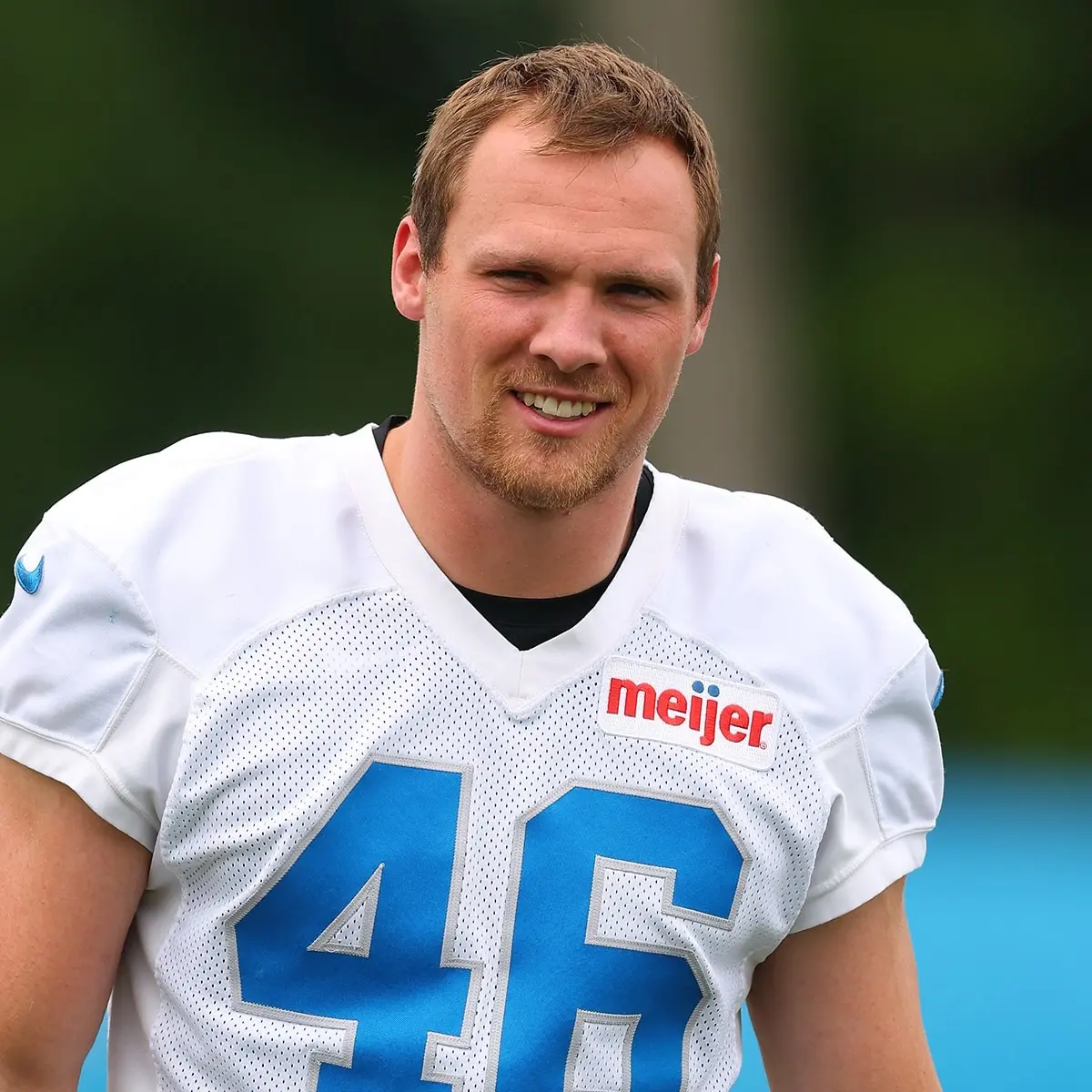
Just weeks later, on November 1, the physical toll of the sport manifested in visceral, real-time fashion during a matchup between the Detroit Lions and the Minnesota Vikings. In the game’s fourth quarter, following his third tackle of the contest—a routine defensive stop against tight end T.J. Hockenson—Lions linebacker Jack Campbell remained face-down on the turf, entirely motionless.
The immediate aftermath brought the stadium to a hushed standstill. Medical staff rushed the field to stabilize the 26-year-old athlete, executing strict spinal precaution protocols. Campbell was strapped firmly to a backboard before being loaded onto a medical cart as concerned teammates and opposing players formed a protective, solemn semicircle around him. In a heart-wrenching scene, Campbell’s wife, Megan, and their newborn baby boy were escorted down to field level to accompany him in the ambulance to a local medical center. The Lions’ front office later confirmed via social media that Campbell was admitted overnight for comprehensive neurological and structural evaluations of his neck.
A Legacy of Peril: Historic and Recent Celebrity Trauma
While the NFL crises captured sports headlines, the broader entertainment ecosystem has weathered its own staggering share of freak accidents and medical anomalies over recent years:
- February 2017: Eight-year-old Maddie Aldridge, daughter of Jamie Lynn Spears, nearly lost her life when an ATV she was driving flipped into a Louisiana pond, submerging her for several minutes. Quick-action first responders and subsequent intensive care miraculous restored her to full health within weeks.
- New Year’s Day 2023: Avengers star Jeremy Renner suffered 38 broken bones and clinical death after being crushed by a six-ton snowplow while attempting to protect his nephew at his Lake Tahoe residence. His heart rate bottomed out at 18 beats per minute before emergency medical services revived him.
- December 2023: Australian influencer and orthodontist Dr. Cara Hodgson survived a catastrophic electrocution incident involving exposed power lines during a family vacation in Thailand, spending ten days battling for her life in emergency care.
- January 2024: Tech executive Sanjay Shah tragically lost his life, and colleague Vishwanath Raju Datla sustained severe injuries, when supporting wires snapped on an iron suspension cage during a 25th-anniversary corporate gala for Vistex in India.
- June 2024: British comedian Tony Knight was killed during a freak weather event at France’s Rock & Cars festival when heavy branches detached from an aging tree.
- May 2025: Tiktoker Emilie Kiser and her husband Brady endured an unspeakable family tragedy when their three-year-old son, Trigg, tragically drowned in a backyard pool in Chandler, Arizona.
- June 2025: Fourteen-year-old hiker Zane Wach suffered severe altitude-induced hallucinations and a harrowing 120-foot fall off a cliff on California’s Mount Whitney, ultimately surviving severe head trauma and fractures after an intensive mountain rescue operation.
- June 2025: Brazilian tourist Juliana Marins tragically perished following a cliff fall while trekking on Indonesia’s active Mount Rinjani volcano, highlighting the lethal unpredictability of extreme ecotourism.
Supporting Context & Metrics
The Medical Mechanics of Pulmonary Embolism in Athletes
The diagnosis facing Jalen Hurts—bilateral pulmonary embolisms linked to deep vein thrombosis—is rare among elite, young athletes, yet it represents a known hazard in contact sports. DVT occurs when a blood clot forms in one or more of the deep veins in the body, typically in the legs. This can be triggered by trauma, such as a severe calf strain, combined with periods of immobilization (such as post-injury recovery, surgical bed rest, or prolonged flights).
When a portion of that clot breaks loose, it travels through the bloodstream, through the right side of the heart, and lodges in the pulmonary arteries, causing a pulmonary embolism (PE). Bilateral PEs—clots in both lungs—severely impair oxygen exchange, placing immense strain on the cardiovascular system.
[Deep Vein Thrombosis (Calf Injury/Trauma)]
                    │
                    ▼
       [Clot Dislodges & Travels]
                    │
                    ▼
[Pulmonary Embolism (Blockage in Lung Arteries)]
                    │
                    ▼
 [Anticoagulation Therapy / Sidelined from Contact]
According to sports cardiology data, treatment requires immediate cessation of contact sports. Because anticoagulants ("blood thinners") prevent the formation of new clots and allow the body to naturally dissolve existing ones, any blunt trauma sustained while on these medications risks uncontrolled internal bleeding. Consequently, Hurts’ timeline to return is dictated strictly by the pharmacological window required to safely complete his blood-thinning regimen and clear subsequent vascular imaging.
Catastrophic Spinal and Neck Injuries in Football
Jack Campbell’s emergency hospitalization underscores the ongoing evolution of football-related neurological and cervical trauma. The cervical spine comprises seven vertebrae (C1-C7) housing the spinal cord, which transmits neural signals between the brain and the rest of the body.
Football-related cervical injuries generally fall into two categories: transient neurapraxia (commonly known as "stingers") and structural trauma involving fractures, ligamentous instability, or disc herniation. The implementation of rigid backboards, head immobilization blocks, and immediate field-side emergency stabilization protocols has dramatically reduced the incidence of permanent paralysis over the past three decades. However, the margin for error remains razor-thin, necessitating rigorous overnight observation in a trauma-certified hospital to monitor for delayed spinal cord swelling or neurological deficits.
Official Statements & Institutional Responses
The reactions from sports franchises, agencies, and public figures reflect a measured balance between organizational transparency and athlete privacy.
-
The Detroit Lions Organization: Immediately following the conclusion of their victory over the Minnesota Vikings, the Lions’ Public Relations branch issued an official statement via X (formerly Twitter):
"Jack Campbell is being transported to a local hospital to be evaluated for a neck injury."
This was followed by confirmation that he would remain hospitalized overnight under specialized medical observation.
-
Head Coach Dan Campbell: Addressing the media in his post-game press conference, the Lions’ head coach offered an emotional assessment of the situation:
"Our thoughts and prayers are with Jack and his family. He’s being taken care of. We don’t have any new information. We’ll keep you updated as this goes, but we’re thinking about him."
-
Nicole Lynn, Agent for Jalen Hurts: Providing clarity on the quarterback’s sudden indefinite absence, Lynn released a comprehensive medical status update:
"His treatment should only involve anticoagulation (i.e. ‘blood thinners’). We anticipate that he will have the opportunity to resume contact football activities when off the blood thinners. In the meantime, he will remain active around the team and continue to condition. More importantly, we anticipate that he will have no long-term effects."
These statements illustrate a modern shift in sports management: prioritizing human welfare, transparent communication with fans, and absolute deference to specialized medical professionals over short-term competitive expediency.
Future Outlook
As the sports and entertainment industries look toward the future, the compounding weight of these incidents—from Jalen Hurts’ vascular challenges and Jack Campbell’s cervical scare to the broader catalog of high-profile traumas—is driving significant operational transformations.
- Advanced Screening and Diagnostics: Medical staffs across the NFL and other major leagues are expected to ramp up proactive screening for hypercoagulability and deep vein thrombosis following lower-extremity soft-tissue injuries. Early detection of sub-clinical clotting could prevent life-threatening pulmonary events before they manifest on or off the field.
- On-Field Emergency Infrastructure: The seamless coordination between stadium medical personnel, local emergency services, and specialized trauma centers demonstrated during Campbell’s collapse validates recent investments in emergency action plans (EAPs). Future seasons will likely see continued refinement in rapid-response neurotrauma extraction drills.
- Mental Health and Recovery Support: Beyond the physical healing process, the psychological toll of facing career-threatening medical crises or near-death accidents requires robust mental health frameworks. Organizations are increasingly integrating sports psychologists and trauma counselors to support athletes and performers navigating the long road back to normalcy.
Ultimately, whether on a snowy Lake Tahoe driveway, an active Indonesian volcano, a Hollywood movie set, or the turf of Ford Field, these events serve as a sobering reminder of human vulnerability. They challenge institutions to place athlete and performer safety above all else, ensuring that the pursuit of excellence never compromises the preservation of life.