

Executive Overview
ALBUQUERQUE, N.M. — In a significant legal development for a high-profile Hollywood case, a New Mexico state district judge has officially dismissed child sexual abuse charges against veteran actor and director Timothy Busfield. The ruling, handed down on Friday by State District Judge Joseph Montano, centered on significant flaws within the grand jury process, with the court finding that prosecutors actively undermined the fairness and impartiality of the proceedings.
Busfield, 69—best known for his Emmy Award-winning television work in ABC’s thirtysomething and NBC’s The West Wing, as well as his memorable film role in Field of Dreams—had faced four counts of criminal sexual contact with a minor. The allegations originated from his professional capacity as a director on the set of the Fox drama series The Cleaning Lady, filmed in New Mexico. Throughout the proceedings, Busfield has vehemently maintained his innocence, entering a plea of not guilty.
While Friday’s dismissal brings a temporary halt to the current legal architecture of the state’s case, Judge Montano’s ruling does not completely exonerate the actor. The decision leaves the door explicitly open for the Bernalillo County District Attorney’s Office to seek a new indictment. Consequently, while Busfield and his legal team celebrate a crucial procedural victory, the specter of renewed criminal proceedings looms large.
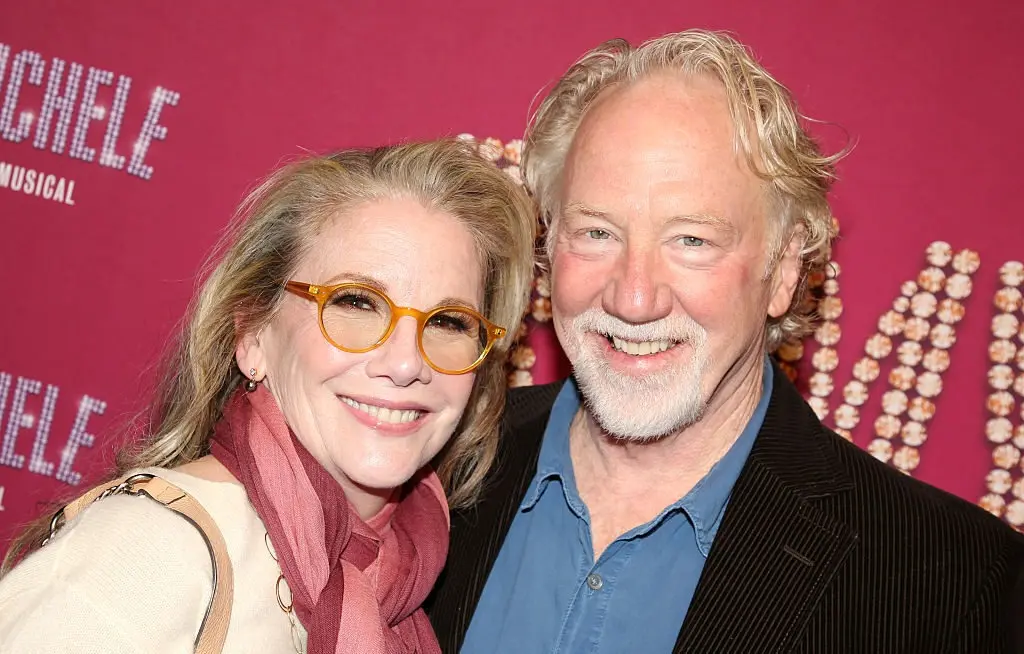
The case has also drawn intense media scrutiny due to its personal toll, thrusting Busfield’s marriage to fellow actor Melissa Gilbert (Little House on the Prairie) into the public eye. Gilbert has remained a steadfast pillar of support for her husband, publicly proclaiming his innocence and standing alongside him throughout the ordeal. As both legal camps weigh their next maneuvers, this case underscores the fragile balance between prosecutorial power, grand jury integrity, and the high-stakes world of entertainment industry accountability.
Detailed Chronology of Events
To understand the current legal landscape, it is vital to trace the timeline of events that led to Judge Montano’s blistering critique of the prosecution.
2022–2024: Production on The Cleaning Lady
The allegations against Busfield stem from his time working behind the camera as a director on the set of the Fox television series The Cleaning Lady, which is primarily produced and filmed on location in New Mexico. According to investigators, the alleged inappropriate contact involving a young actor on the set occurred intermittently across a two-year window, spanning from 2022 to 2024. During this period, Busfield maintained an active directing schedule within the production, working with various cast and crew members.
February 2026: The Grand Jury Indictment
The covert phase of the legal process culminated in February 2026, when a New Mexico grand jury formally indicted Busfield on four felony counts of criminal sexual contact with a minor. The indictment immediately sent shockwaves through the entertainment industry, given Busfield’s decades-long, largely unblemished reputation as a dependable television director and character actor. Upon the unsealing of the charges, Busfield surrendered, pleaded not guilty, and vowed to fight the allegations through the judicial system.
Spring 2026: Public Fallout and Family Defense
As news of the indictment circulated, the public fallout was swift. In April 2026, Melissa Gilbert sat down for an exclusive, highly publicized interview with ABC’s Good Morning America. During the broadcast, Gilbert detailed the emotional devastation the charges inflicted upon their household.
"Our life as we knew it is done," Gilbert told ABC News, while firmly asserting her belief in her husband’s innocence. She expressed absolute confidence that Busfield would ultimately be vindicated. Throughout the spring and summer, the couple faced the grueling task of managing both the reputational damage and the preliminary stages of criminal discovery.
October 16–17, 2026: The Motion to Quash and Judicial Ruling
The turning point in the case arrived in mid-October 2026. Busfield’s defense team, led by defense attorney Amber Fayerberg, filed a decisive motion to quash the grand jury indictment. The defense argued that the state had fundamentally compromised the integrity of the grand jury by manipulating testimony and blocking key witnesses from speaking.
On October 16, 2026, Judge Joseph Montano signed a formal order granting the defense’s motion. The following day, October 17, the details of the ruling were made public, revealing that the court found explicit evidence of prosecutorial misconduct. The judge ruled that the state had overstepped its bounds, effectively withholding defense-requested witnesses from the grand jury and violating the fundamental tenets of a fair and impartial proceeding.
Supporting Context & Metrics: The Mechanics of Grand Jury Misconduct
To appreciate the gravity of Judge Montano’s ruling, it is necessary to examine the legal mechanics governing grand juries in New Mexico and the specific failures cited by the court.
The Role of the Grand Jury
In the American legal system, a grand jury is convened by a prosecutor to determine whether there is probable cause to believe that a crime has been committed by a suspect. Unlike a trial jury, a grand jury does not determine guilt or innocence; rather, it acts as a screening body. Because grand jury proceedings are traditionally secret and conducted entirely under the supervision of the prosecuting attorney—without a judge present and without defense counsel cross-examining witnesses—the prosecutor holds a quasi-judicial duty to act with absolute fairness and impartiality.
Judge Montano’s Findings on Prosecutorial Overreach
In his written opinion (Case No. 61-Order on Defendant’s Motion to Quash Grand Jury Indictment, filed October 16, 2026), Judge Montano pulled no punches regarding the conduct of the Bernalillo County prosecutors.
- Withholding Requested Testimony: The core of the dismissal rested on the state’s handling of witness testimony. Grand jurors had explicitly expressed a desire to hear from specific witnesses. Rather than facilitating this request, the prosecuting attorney acted in a manner that effectively prevented these individuals from testifying.
- Compromising Institutional Integrity: Judge Montano wrote bluntly that "[t]he prosecuting attorney failed to act in a fair and impartial manner." By steering the grand jury away from requested testimonies, the state violated procedural safeguards designed to protect defendants from arbitrary or one-sided indictments.
- The Legal Remedy: In New Mexico jurisprudence, when a prosecutor’s conduct so severely taints the grand jury process that it prejudices the outcome or deprives the grand jury of its independent investigative capacity, courts possess the authority to quash the indictment. However, unless the statute of limitations has run or the court finds that the evidence is fundamentally legally insufficient to ever support a charge (neither of which applied here), a dismissal based on grand jury defects is typically "without prejudice"—meaning the state is legally permitted to reset the clock and try again.
Official Statements and Legal Perspectives
Reactions to the ruling reflect the cautious optimism of the defense and the measured deliberation of the prosecution, contrasted with the unwavering personal solidarity demonstrated by Busfield’s family.
The Defense Position
Amber Fayerberg, counsel for Timothy Busfield, spoke candidly outside the courtroom regarding the significance of the ruling. While acknowledging that the immediate crisis of the indictment had been lifted, Fayerberg made it clear that the defense team remains fully prepared for future legal sparring.
"We are relieved and grateful for the court’s careful review and correct application of the law," Fayerberg stated following the ruling. "However, we know this may not be the end. If the State chooses to try again, Tim is ready, and so are those witnesses."
The defense’s emphasis on "those witnesses" highlights the strategic importance of the individuals the state allegedly blocked from the original grand jury. Should the prosecution attempt a second indictment, those very witnesses are expected to form the cornerstone of Busfield’s pushback against the allegations.
The Prosecution’s Stance
The Bernalillo County District Attorney’s Office released a brief, measured statement acknowledging Judge Montano’s ruling. Representatives for the office confirmed that they are actively reviewing the court’s written opinion and evaluating their institutional options moving forward. Prosecutors have not yet formally announced whether they will present the case to a new grand jury, though the language in the judge’s order grants them the legal latitude to do so.
Public and Familial Support
The emotional epicenter of the case continues to be the steadfast partnership between Timothy Busfield and Melissa Gilbert. Following the release of Judge Montano’s decision, Gilbert took to social media to share news coverage of the dismissal, signaling to the public and her followers that her support remains unshaken.
Industry analysts note that while public opinion in high-profile entertainment cases can be volatile, Gilbert’s calculated and public defense of her husband has established a unified narrative from the couple’s camp. By continually reinforcing their belief in Busfield’s ultimate vindication, they have positioned the legal victory not as a technicality, but as the first step toward clearing his name entirely.
Future Outlook: What Lies Ahead for Timothy Busfield
As the dust settles on this preliminary chapter, several critical questions define the road ahead for Timothy Busfield, his career, and the New Mexico judicial system.
1. Will the State Re-Indict?
The most pressing legal question is whether the Bernalillo County District Attorney’s Office will choose to cure its procedural errors and take the case before a fresh grand jury. Doing so would require the state to allow the previously barred witnesses to testify, potentially altering the grand jury’s assessment of probable cause. Given the severity of the charges—child sexual abuse—prosecutors face immense public and institutional pressure to pursue cases involving minors to their logical conclusion. However, the rebuke from Judge Montano may force the office to exercise heightened caution and perhaps assign new prosecutors to the matter to ensure absolute procedural purity.
2. Career and Industry Repercussions
For an artist with a career spanning nearly five decades—from iconic stage work to memorable television runs on thirtysomething, The West Wing, and critically acclaimed directorial credits—the allegations have inflicted a severe professional toll. Even with the dismissal of the indictment, the shadow of criminal accusations often creates a chilling effect within Hollywood production circles. Rebuilding a directing and acting career will depend heavily on the final, definitive resolution of these legal proceedings. If the state declines to re-file charges, or if a new grand jury ultimately declines to indict, Busfield faces the monumental task of rehabilitating his public profile and returning to active production work.
3. Timeline for Future Action
There is no statutory deadline imposed immediately by Friday’s ruling that forces the district attorney’s office into an instantaneous decision, though statutes of limitations for the alleged offenses will dictate the outer boundaries of any future prosecution. Legal experts anticipate that the Bernalillo County D.A.’s office will spend the coming weeks consulting with alleged victims, reviewing the judge’s specific citations of misconduct, and deciding whether a second grand jury presentation is viable.
Until that decision is formally announced, Timothy Busfield remains legally uncharged, basking in a hard-fought procedural victory while bracing himself—and his legal team—for what may yet become a protracted courtroom battle.