

Executive Overview
In the winter of 2023, a suburban home in Duxbury, Massachusetts, became the epicenter of a national reckoning regarding severe postpartum mental illness, the glaring inadequacies of the American healthcare system’s maternal psychiatric care, and the dark underbelly of viral social media vigilantism. Lindsay Clancy, a dedicated labor and delivery nurse, killed her three young children—5-year-old Cora, 3-year-old Dawson, and 8-month-old Callan—in their basement before attempting to take her own life by jumping from a second-story window, an act that left her paralyzed.
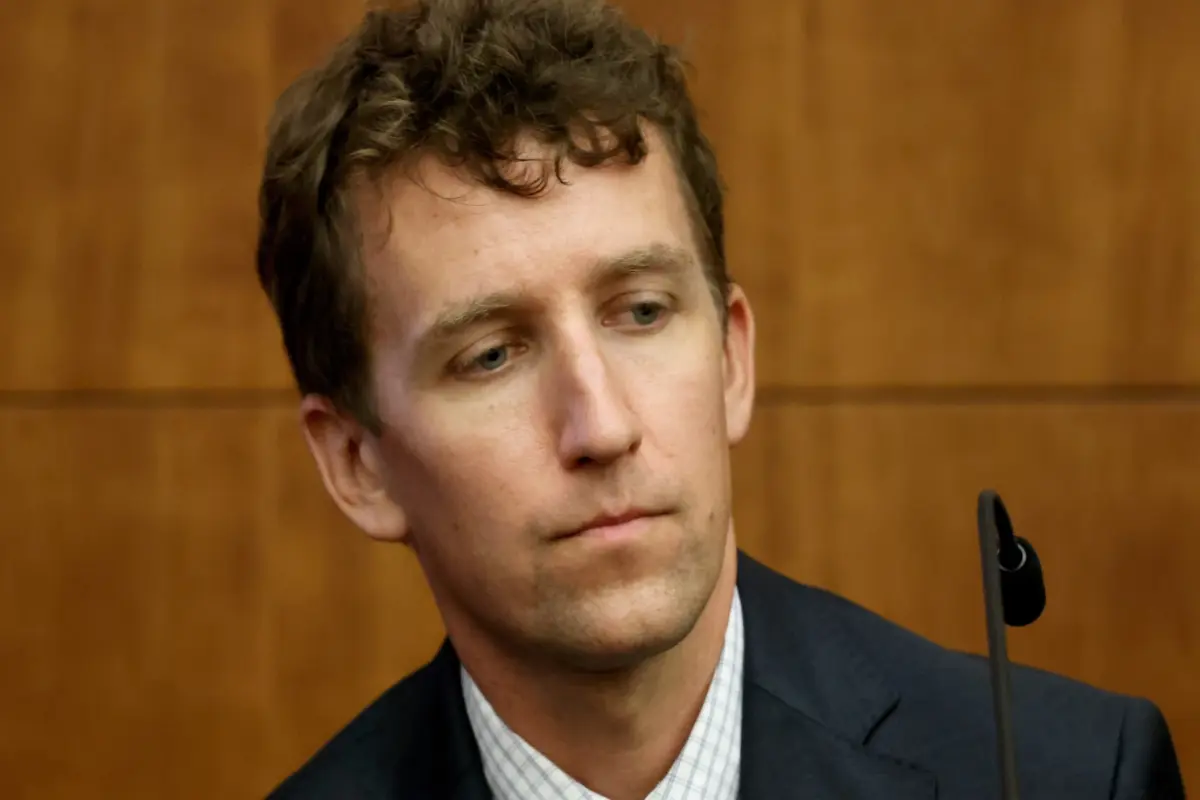
For more than three years, her former husband, Patrick Clancy, remained largely out of the public eye, processing a grief so profound it nearly cost him his own life. Now, in a sweeping and emotionally raw interview with CBS News’ 60 Minutes, the 38-year-old is breaking his silence.
Patrick’s public return sheds light on multiple facets of an ongoing American tragedy: the tragic, deceptive nature of severe postpartum psychosis, his journey toward a radical and necessary forgiveness, the revictimization he suffered at the hands of unverified "TikTok sleuths" who weaponized conspiracy theories against him, and how he is carefully, courageously rebuilding his life in New York City with his new wife, Rachel Danis.
While Lindsay Clancy’s high-profile triple murder trial recently ended in a mistrial—leaving open the question of whether prosecutors will seek a retrial to determine her legal accountability—Patrick’s focus remains anchored elsewhere. He is determined to steer the national conversation away from sensationalism and toward the silent, life-threatening dangers of untreated perinatal mood and anxiety disorders (PMADs), while honoring the enduring legacy of Cora, Dawson, and Callan.
Detailed Chronology of a Tragedy
To understand the scope of the Clancy tragedy, one must examine the rapid and devastating descent of a family that, to all outward appearances, was living the quintessential American dream.
The Onset of Perinatal Crisis
By the fall of 2022, following the birth of their third child, Callan, Lindsay Clancy began experiencing subtle yet alarming shifts in her psychological well-being. What initially appeared to be standard postpartum fatigue and anxiety quickly spiraled into severe insomnia, debilitating dark periods, and intrusive thoughts. As a medical professional herself, Lindsay recognized that something was fundamentally wrong and sought help, attempting to navigate a labyrinth of outpatient psychiatric resources.
Despite her efforts, her condition deteriorated. By December 2022, the intensity of her psychosis necessitated inpatient care; she checked herself into McLean Psychiatric Hospital, a premier psychiatric facility in Belmont, Massachusetts. Yet, as Patrick later reflected to 60Minutes, the medical interventions and discharge plans failed to catch the totality of the darkness consuming her mind.
"I could piece together what it was like to be really, really anxious or depressed, but I didn’t know how to manage a postpartum illness," Patrick admitted, his voice heavy with the burden of hindsight. "I think mental illness has this ability to be tragically deceptive. So I’m sure there are things that I didn’t see."
The Fateful Day
On a bitter-cold day in January 2023, the tragedy unfolded with terrifying swiftness. Lindsay asked Patrick to leave the family home to pick up takeout for dinner and retrieve a specific medication from a local pharmacy.
In the brief window of time that Patrick was away, Lindsay descended into the basement with Cora, Dawson, and infant Callan. Using exercise bands as ligatures, she strangled her three children. Following the killings, she climbed to the second-story window of the home and threw herself to the ground below. The impact shattered her spine, rendering her permanently paralyzed.
When Patrick returned home moments later, he walked into a scene of unspeakable horror. Discovering the bodies of his children, his immediate instinct was one of frantic, desperate hope. First responders, rushing to stabilize the chaotic scene, had not yet conveyed the full, devastating extent of infant Callan’s injuries. Arriving at the hospital, Patrick held onto a fragile thread of hope that his youngest might pull through.
"I remember thinking, ‘Just gimme one kid, and I would raise him as best I could, and I would give him the best life I possibly could. I’d tell him about his brother and sister.’ I was holding out hope for that," Patrick shared through tears. "When I got to the hospital, I saw the doctor. I saw the look on her face, and I knew that it wasn’t gonna be a good prognosis."
The Legal Battle and the Mistrial
In the years that followed, the legal system ground forward. Lindsay Clancy did not deny the physical acts of killing her children; rather, the central debate of the trial—which commanded national headlines—revolved around her mental state at the time of the killings. Defense attorneys argued she was in the grips of profound postpartum psychosis, legally insane, and incapable of conforming her conduct to the requirements of the law. Prosecutors, conversely, sought to prove her actions were calculated.
Earlier this month, the high-stakes triple murder trial concluded in a mistrial after the jury failed to reach a unanimous verdict. Legal analysts and prosecutors have yet to formally announce whether the state will pursue a retrial, leaving the judicial status of the case in a state of unsettling limbo.
When asked about Lindsay’s current comprehension of the events, Patrick noted that when he spoke with her about the stranglings, she described the memory not as a conscious, malicious act, but "the way you would remember a dream after waking up."
Supporting Context & Metrics: The Crisis of Postpartum Psychosis
The tragedy of the Clancy family is not an isolated anomaly, but a catastrophic manifestation of a wider public health crisis surrounding maternal mental health in the United States.
Understanding Postpartum Psychosis
While "baby blues" affect up to 80% of new mothers, and postpartum depression impacts roughly 15 to 20%, postpartum psychosis is a rare, terrifying, and medical emergency occurring in roughly 1 to 2 out of every 1,000 deliveries. Characterized by sudden onset hallucinations, delusions, severe confusion, mood swings, and a total loss of touch with reality, it carries a high risk of suicide or infanticide if left unrecognized and untreated.
Public health advocates have long argued that the American medical infrastructure structurally fails mothers during the "fourth trimester." Pediatricians focus almost exclusively on the newborn, while obstetrician-gynecologists typically schedule only one postpartum check-up at six weeks post-delivery—a window entirely inadequate for catching delayed-onset psychiatric emergencies.
The Rise of Digital Vigilantism
Beyond the medical tragedy, Patrick Clancy’s journey exposes a modern sociological pathology: the rise of "TikTok sleuths" and unverified social media commentators. In the wake of the tragedy, virtual trial-watchers and internet sleuths manufactured elaborate, baseless conspiracy theories accusing Patrick of masterminding the murders and framing his incapacitated wife.
The harassment went far beyond anonymous online commentary; it deeply impacted Patrick’s daily existence, tarnishing his children’s legacy and turning mourning into a public gauntlet.
"I saw headlines that said ‘Killer Mom,’ and ‘Baby Murderer,’ ‘Monster.’ And none of [them] were accurate. I believe that it was her mental illness that caused that," Patrick stated forcefully, defending the reality of his ex-wife’s psychotic break. Addressing the vile rumors accusing him of complicity, he added: "It’s done real harm to real people, myself included but others. It’s painful to see. It makes it difficult to be in public, and it’s possible that some of those people, after seeing lie after lie after lie, they start to believe it."
Psychological experts note that the democratization of true crime content on platforms like TikTok has frequently devolved into toxic parasocial speculation, where algorithms reward sensationalism, victim-blaming, and conspiracy theories at the direct expense of human empathy and factual reporting.
Official Statements and Personal Reckoning
The path from the absolute nadir of grief to a functional, forward-looking existence required Patrick to confront choices that many outside observers found deeply confounding: specifically, his decision to offer forgiveness to the woman who killed his children.
The Anatomy of Forgiveness
In his 60 Minutes interview, Patrick clarified that Lindsay never explicitly asked for his forgiveness. Yet, he realized early on that withholding forgiveness would act as a slow-acting poison within his own soul.
"I think when it comes to forgiveness, I also felt that if I didn’t get there, I would be eaten up inside forever," Patrick explained.
This forgiveness, however, is not synonymous with absolution or a minimization of the horror. It is an internal mechanism for survival. The psychological toll of the aftermath nearly destroyed him. In the darkest months following the tragedy, Patrick battled severe suicidal ideation.
"There was a time where I didn’t live to see my 35th birthday," he confessed. "And I was completely fine with it."
Facing Self-Doubt
In moments of profound trauma, survivors invariably grapple with agonizing retrospection. When asked directly by interviewers whether he felt he had failed Lindsay or missed critical warning signs, Patrick offered a grounded, sorrowful assessment:
"I think I did the best I could with what I had at the time," he said. "And I live with the outcome. I live with it every day."
Future Outlook: Rebuilding Life and Honor in New York City
Today, Patrick Clancy’s life looks radically different than it did in the suburban quiet of Duxbury, Massachusetts. He has relocated to New York City, turning a symbolic and physical corner in his healing process.
A New Chapter
In April 2026, Patrick married Rachel Danis, a woman he met organically at a local running club. In a testament to emotional maturity and deep empathy, Danis noted that one of their very first conversations over coffee was about Patrick’s late children.
"I always try to take some of the weight from Pat. I always wanna strive to do that. I know I can’t fix [it]. I can’t bring his kids back," Danis told CBS News. "Pero if I can honor them and allow Pat to grieve but also just continue to honor them in the present, I guess that’s all I can do."
The couple has confirmed they are looking toward the future and "starting a family," though they have chosen not to disclose a specific timeline.
Preserving a Sacred Legacy
Despite the physical move to Manhattan, Cora, Dawson, and Callan remain vividly and tangibly present in Patrick’s daily life. His New York City apartment functions as a shrine to their memory. On shelves and tables sit the physical artifacts of a cut-short childhood: Cora’s beloved plush baby sloth figurine, photographs capturing their bright, smiling faces, and Dawson’s toy helicopter—complete with its original sound functions and minor scrapes from play.
Patrick has made it clear that any future children he and Rachel welcome into the world will grow up knowing the exact names, personalities, and stories of their older siblings.
As the legal battles potentially wind down and the media storm slowly recedes, Patrick Clancy’s enduring legacy will not be defined by the night of terror in January 2023, nor by the cruel whispers of internet sleuths. Instead, it will be marked by an extraordinary, heartbreaking testament to human resilience: a father who chose forgiveness over vengeance, memory over erasure, and love over despair.