

By Global Retail & Consumer Insights Desk
In partnership with Zappi
Executive Overview
In an era defined by rapid technological disruption and fleeting consumer loyalties, maintaining the relevance of a century-old brand is one of corporate strategy’s most formidable challenges. For legacy companies, the trap is twofold: either lean too heavily on nostalgic past glories and risk alienating modern buyers, or pivot so aggressively toward current trends that the foundational identity of the enterprise is lost entirely.
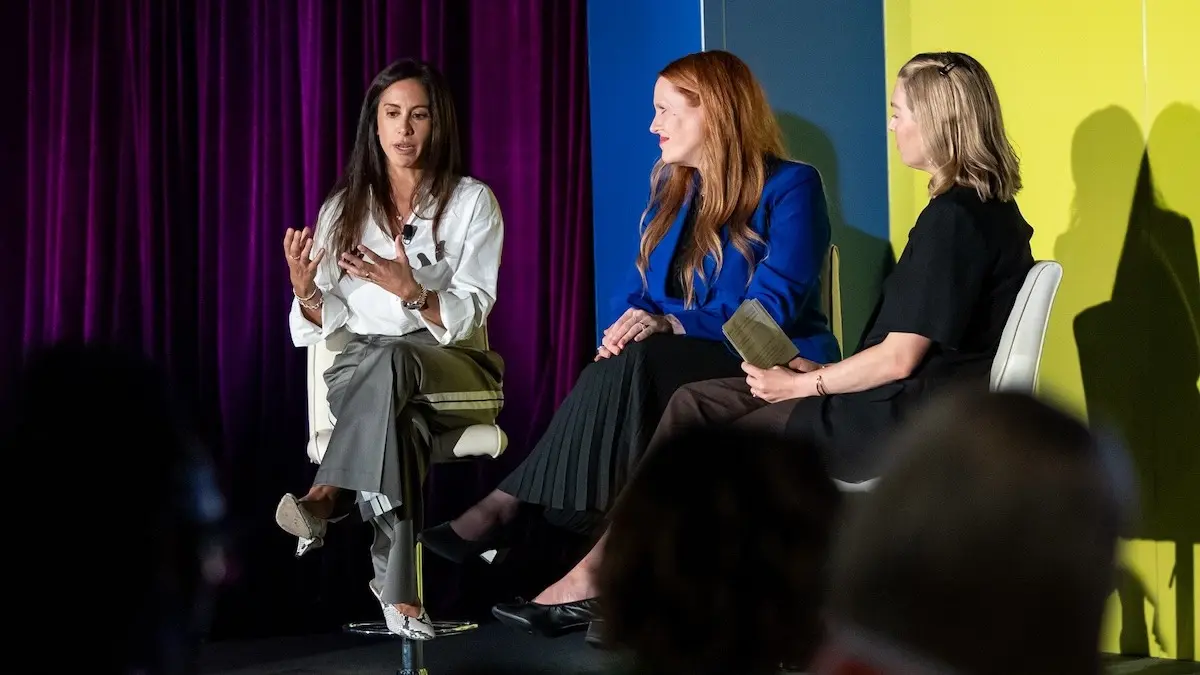
Navigating this delicate tightrope requires a sophisticated synthesis of rich historical equity, real-time consumer data, and deep cultural empathy. This dynamic was the focal point of a compelling fireside chat at Brandweek 2026. Co-hosted by consumer insights platform Zappi and moderated by ADWEEK Brand Editor Rebecca Stewart, the session brought together Aubrie Corey, Global Vice President of Brand Marketing at Carter’s, and Nataly Kelly, Chief Marketing Officer at Zappi.
The discussion centered on a singular, critical question: How can a heritage brand spanning generations successfully reinvent itself for a digital-first, culturally diverse demographic of parents?
The answer, as revealed through Carter’s recent brand evolution, lies in understanding that modern parenting has fundamentally shifted. Millennials previously leaned toward a "mini-me" styling aesthetic, projecting their own tastes onto their children. By contrast, Generation Z parents view their children as autonomous individuals whose native self-expression must be protected and encouraged.
To meet these shifting paradigms, Carter’s has leaned into an agile, data-driven framework. By centralizing consumer insights and breaking down internal organizational silos, the 161-year-old company has bridged the gap between timeless emotional resonance and modern cultural relevance. As Corey famously summarized during the panel: "We’re not a heritage brand—we’re a brand with heritage."
Detailed Chronology of a Rebrand: Adapting Carter’s for the Modern Era
To understand how Carter’s maintains its market dominance today, it is necessary to examine the strategic evolution of the brand over recent years. Rather than treating its 161-year history as a museum piece, the company has actively deployed its past as an active asset while simultaneously aggressively modernizing its operational playbook.
Phase 1: Identifying the Intergenerational Shift
The journey toward the modern Carter’s identity began with a comprehensive audit of changing parental archetypes. Historically, children’s apparel marketing relied heavily on predictable tropes: traditional color-coding, functional utility, and parental projection. However, as Gen Z began entering parenthood en masse, the marketing team at Carter’s noticed a sharp statistical and qualitative divergence in how consumers approached child-rearing.
Research indicated that Gen Z parents reject the notion of dressing their children as miniature versions of themselves. Instead, they view style as a medium for their children’s emerging, unprompted individuality. Recognizing this, Carter’s initiated a holistic reintroduction to today’s parents. The messaging pivoted away from dictating what children should wear toward celebrating who children inherently are.
"Gen Z isn’t necessarily picking brands because they were their parents’ brands, but because they’re choosing those brands on their own terms," Corey noted during the Brandweek panel. "With each generation, you have to ensure that the way you’re expressing yourself really resonates."
Phase 2: Mining the Archives via the OshKosh Reissued Collection
While modernization was vital, data-driven consumer listening revealed an unexpected parallel trend: a massive wave of nostalgic longing. Conversations across social media and proprietary focus groups indicated that parents—specifically Millennials and Gen Xers—held profound emotional attachments to vintage apparel styles from their own childhoods.
Rather than ignoring this retro wave, Carter’s leveraged its subsidiary brand, OshKosh B’gosh, to execute a strategic masterclass in nostalgia marketing: the OshKosh Reissued Collection.
By reviving iconic styles from the 1980s and 1990s down to exact, print-for-print fabric reproductions, the brand tapped directly into the collective memory of an aging demographic. Crucially, the collection did not feel dated to younger parents; instead, it offered an authentic, retro-chic aesthetic that felt fresh, distinctive, and culturally relevant to Gen Z consumers who value vintage authenticity.
Phase 3: Tapping into Global Cultural Moments
Beyond fashion trends, Carter’s expanded its strategic footprint into major cultural events that unite diverse demographics. Recognizing the growing importance of multicultural households in shaping modern family life, the company formed a high-profile partnership with Umbro.
Timed strategically around global soccer moments like the World Cup, the collaboration introduced a line of athletic, soccer-themed children’s apparel. This initiative was not merely about selling sports merchandise; it was an intentional play to be present during moments of collective joy, family bonding, and cultural celebration.
"We know that our multicultural consumer is more important than ever," Corey explained. "How do we show up in this moment where the world’s going to be watching?"
Supporting Context & Metrics: The Engine of Consumer Insights
Behind every successful brand evolution is a robust data infrastructure. In the modern retail landscape, intuition alone is no longer sufficient to guarantee survival. Brands require an uninterrupted, real-time stream of consumer signals to guide their creative and financial investments.
The Role of Real-Time Consumer Data
During the Brandweek fireside chat, Zappi CMO Nataly Kelly emphasized that sustaining the delicate balance between brand consistency and rapid adaptability is impossible without continuous consumer feedback loops.
"Striking that balance between consistency and adaptability—and evolving to where the consumer is headed—really requires a constant pulse of consumer insights to feed how you evolve the brand," Kelly observed.
Forlegacy organizations, data is often fragmented. Sales metrics live in one department, social listening data in another, customer service logs in a third, and creative testing metrics somewhere else entirely. Kelly advised brands looking to decode consumer signals to actively dismantle these internal silos.
Centralization as a Strategic Imperative
When data is locked inside organizational silos, leadership teams struggle to form a unified view of the customer. Centralizing insights allows enterprises to:
- Identify Macro Trends Early: Spotting shifts in parental attitudes months before they become mainstream market requirements.
- Optimize Creative Testing: Using agile consumer testing platforms (such as Zappi) to pre-test ad campaigns, product lines, and reissued collections before committing millions of dollars in manufacturing capital.
- Measure Emotional Resonance: Moving beyond transactional metrics (like click-through rates and sales volume) to evaluate deep emotional engagement and brand affinity.
By unifying these data streams, Carter’s can accurately predict whether a nostalgic product drop or a culturally targeted partnership will resonate with both legacy buyers and first-time parents.
Official Statements & Industry Perspectives
The insights shared by Aubrie Corey and Nataly Kelly at Brandweek 2026 offer a masterclass in modern brand stewardship. Below are key excerpts and contextual analyses of their statements:
-
On Generational Autonomy (Aubrie Corey):
"Children come into this world with a light entirely their own. They come in with such a unique individuality, and it’s not for us to create that uniqueness. It’s for us to recognize that and to protect and encourage it."
Analysis: This philosophy shifts the purpose of children’s retail from prescriptive styling to empowering self-discovery. By aligning corporate values with the progressive mindset of Gen Z parents, Carter’s successfully positions itself as an ally in child development rather than just a clothing manufacturer. -
On the Business of Memory Making (Aubrie Corey):
"We’re in the business of memory making."
Analysis: This conceptual reframe elevates Carter’s from a commoditized apparel retailer into an experiential brand. By anchoring its products to pivotal emotional milestones in a family’s life—be it a child’s first step, a vintage throwback style, or watching the World Cup together—the company builds deep, generational loyalty that price-cutting competitors struggle to erode. -
On Silo Busting and Future-Proofing (Nataly Kelly):
"A lot of those signals appear in different systems and different silos throughout large organizations. Centralizing data enables you to leverage that data over time, see what the trends are, and understand where the consumer is going."
Analysis: Kelly highlights the technical backbone required for brand longevity. Without a centralized insights engine, even the most creative marketing teams are flying blind against nimble, digital-native direct-to-consumer competitors.
Future Outlook: The Next Horizon for Heritage Retail
As we look toward the remainder of the decade, the retail sector will continue to face unprecedented macroeconomic pressures, shifting media consumption habits, and evolving consumer values. What lessons can other heritage brands learn from the Carter’s and Zappi blueprint?
- Evolve the Purpose, Preserve the Core: Brands must respect their historical equity while recognizing that consumer values change. Carter’s proves that honoring heritage does not mean remaining stuck in the past; it means using the past as a springboard for future relevance.
- Embrace Agile Insights: The days of annual focus groups and static demographic personas are over. Brands must invest in real-time consumer testing platforms that allow them to iterate quickly, test hypotheses, and fail fast before major launches.
- From Transactions to Emotional Ecosystems: In an increasingly digital world where products can easily be commoditized, emotional connection is the ultimate differentiator. Brands that position themselves as memory-makers rather than product-pushers will secure lifelong customer loyalty.
Ultimately, Carter’s trajectory demonstrates that longevity is not a passive byproduct of time; it is an active, deliberate discipline. By listening closely to modern parents, respecting the unique individuality of the next generation, and breaking down data silos to uncover actionable truths, this 161-year-old institution has proven that it is more than ready for the future.