

Executive Overview
In the high-stakes arena of Super Bowl advertising, where a single 30-second spot can command upwards of $7 million before production costs, brands are perpetually searching for ways to cut through the noise. Few strategies, however, are as audacious as the one recently announced by Svedka Vodka. Owned by the beverage giant Sazerac Company, the vodka brand has confirmed its return to the Super Bowl broadcast for February 2027, following a polarizing debut in 2026.
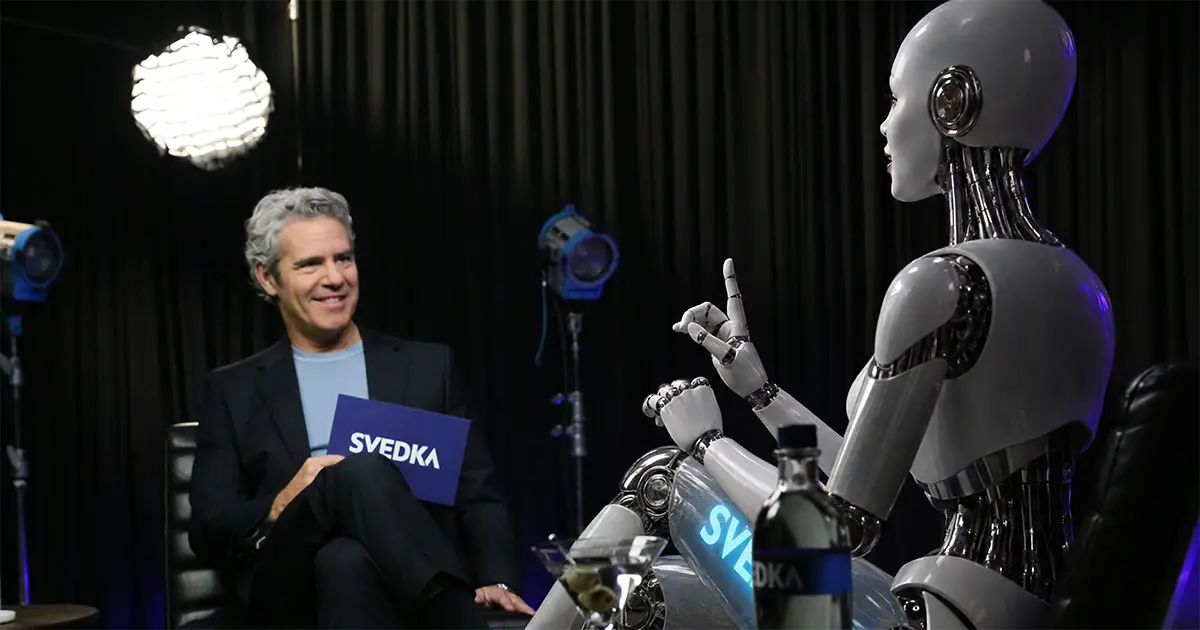
Rather than doubling down on the artificial intelligence-driven methodologies that defined its previous Big Game outing—which heavily featured its iconic, futuristic Fembot mascot—Svedka is executing a radical pivot. The brand is handing the creative reins directly to the public. Through a nationwide user-generated content (UGC) contest, Svedka is inviting everyday consumers, independent creators, and aspiring filmmakers to conceptualize and produce its upcoming national spot. The prize for the winning submission? A cool $500,000 and the ultimate industry accolade: a broadcast slot during Super Bowl LXI.
This move represents a watershed moment in beverage-alcohol marketing. It bridges the gap between traditional broadcast dominance and the participatory, digital-first ethos of platforms like TikTok and YouTube. By crowdsourcing its creative vision, Svedka aims to transform passive viewers into active stakeholders. However, the strategy is not without profound risks. Entrusting a multi-million-dollar broadcast asset to an amateur or unvetted creator requires an immense leap of faith, strict quality controls, and a robust legal framework.
Furthermore, this campaign serves as a direct response to the critical reception of Svedka’s 2026 commercial, signaling an acute brand self-awareness. By acknowledging that its AI-crafted, Fembot-led debut divided audiences, Svedka is attempting to weaponize its own controversy. The brand is positioning itself as a responsive, consumer-centric entity willing to laugh at itself and course-correct in real time.
Alongside Svedka’s return, its parent company Sazerac is doubling down on the event, confirming that a second, yet-to-be-named brand within its expansive portfolio will also advertise during Super Bowl LXI. This comprehensive deep dive explores the mechanics of Svedka’s upcoming campaign, the technological and cultural context of its 2026 experiment, the broader financial implications of user-generated Super Bowl advertising, and what this means for the future of the advertising industry at large.
Detailed Chronology: From AI Fembots to Crowdsourced Creativity
To understand the weight and strategic necessity of Svedka’s 2027 crowdsourcing initiative, one must trace the evolutionary timeline of the brand’s recent marketing endeavors. The narrative is one of rapid technological adoption followed by immediate cultural reckoning, culminating in an unprecedented democratization of high-budget advertising.
The 2026 Super Bowl Debut: Entering the AI Era
In February 2026, Svedka made its much-anticipated maiden voyage into the exclusive club of Super Bowl advertisers. In an era where generative artificial intelligence was rapidly transforming Hollywood and Madison Avenue alike, Svedka decided to plant its flag firmly on the bleeding edge of technology. Developed in tight collaboration with advanced AI tools, the commercial heavily leaned into the brand’s long-standing visual anchor: the Svedka Fembot.
The resulting spot was a high-gloss, hyper-stylized visual spectacle. It featured synthetic landscapes, digitally manipulated character performances, and a futuristic aesthetic designed to appeal to digitally native demographics. However, the reception was deeply fractured. While industry technologists and avant-garde design critics praised the brand for pushing the boundaries of what generative AI could achieve within a compressed production timeline, mainstream audiences and traditional advertising purists were less forgiving.
Critics pointed to the uncanny valley effect inherent in early-stage commercial AI video generation, arguing that the spot lacked emotional resonance, human warmth, and authentic storytelling. Social media platforms erupted with polarized commentary. Some users lauded the bold futuristic gamble, while others dismissed the commercial as cold, robotic, and creatively bankrupt. For Svedka, the gamble had generated immense earned media and undeniable buzz, but it had also alienated a segment of consumers who craved genuine human connection over algorithmic perfection.
The Mid-2027 Product Pivot: Introducing Svedka Vodka Water
Amidst the fallout of its AI experiment, Svedka executed a critical product launch in June 2026. Recognizing the explosive, sustained consumer demand for low-calorie, ready-to-drink (RTD) beverages and wellness-oriented alcoholic options, the brand introduced Svedka Vodka Water. Packaged in sleek, convenient cans, the product was designed to target health-conscious millennials and Gen Z consumers who prioritize moderation, portability, and clean ingredient profiles without sacrificing socialization.
The launch of Svedka Vodka Water immediately established a new marketing imperative. While the Fembot and AI imagery worked well for a high-concept brand awareness play, a refreshing, low-calorie canned beverage required a different tone. It needed to feel approachable, effervescent, real, and intimately tied to consumer lifestyles—pool parties, weekend getaways, and casual social gatherings. The cold, synthetic sheen of the 2026 AI experiment was fundamentally misaligned with the organic, down-to-earth appeal required to drive trial and adoption for Svedka Vodka Water.
The 2027 Announcement: The $500,000 Creative Challenge
Recognizing the dual challenges of moving past its polarizing AI debut and effectively positioning its new canned product line, Svedka leadership convened to design its next Big Game strategy. Rather than returning to traditional agency-led production or doubling down on automated generation, the brand opted for a paradigm shift.
In late 2026, Svedka officially announced its return to the Super Bowl LXI broadcast scheduled for February 2027. The centerpiece of this announcement was the confirmation of a 15-second national spot dedicated exclusively to Svedka Vodka Water. More importantly, the brand revealed its grand crowdsourcing initiative: the $500,000 Creator Contest.
By inviting the public to take the creative wheel, Svedka solved multiple strategic dilemmas simultaneously. First, it guaranteed immense PR coverage across trade and consumer publications, as a half-million-dollar cash prize for an amateur-designed Super Bowl ad is inherently newsworthy. Second, it positioned the brand as radically democratic, contrasting sharply with the cloistered, algorithmic approach of its 2026 campaign. Third, it ensured that the creative execution for Svedka Vodka Water would be authentically informed by actual consumers who understand what resonates within contemporary social circles.
Supporting Context & Metrics: The Economics of Super Bowl Advertising and UGC
To fully appreciate the magnitude of Svedka’s strategy, one must examine the hard numbers and market dynamics governing modern Super Bowl advertising and the psychology of user-generated content.
The Financial Realities of Super Bowl LXI
Purchasing inventory during the Super Bowl broadcast is the single most expensive media buy in global commerce. For Super Bowl LXI in February 2027, networks are commanding upwards of $7 million for a standard 30-second commercial spot. While Svedka’s confirmed buy is a 15-second spot—costing roughly half that rate, or approximately $3.5 million to $4 million—the financial commitment remains staggering for a spirits brand.
When factoring in production costs, talent residuals, legal vetting, and the accompanying digital and social media amplification campaigns, a brand’s total Super Bowl investment easily clears the $5 million to $10 million threshold. Allocating $500,000 of that budget directly to a consumer prize winner is not merely a promotional gimmick; it is a calculated reallocation of production expenditure. By shifting funds from traditional agency fees and expensive production houses to a consumer creator, Svedka is effectively crowdsourcing the most labor-intensive and expensive phase of commercial development.
The Rise of User-Generated Content (UGC) in Corporate Marketing
Svedka’s contest arrives at a time when user-generated content has eclipsed polished, top-down corporate advertising in terms of consumer trust and engagement. According to recent digital marketing benchmarks:
- Trust Factor: Over 79% of consumers state that UGC highly impacts their purchasing decisions, compared to less than 13% for traditional branded content.
- Engagement Rates: Ads featuring community-created or user-generated elements experience an average click-through rate (CTR) that is up to 4 times higher than standard studio-produced commercials.
- Platform Synergy: Platforms like TikTok, Instagram Reels, and YouTube Shorts have conditioned an entire generation of creators to produce broadcast-quality video content using smartphones, affordable editing software, and grassroots creative direction.
By tapping into this vast, decentralized creative workforce, Svedka is bypassing the echo chambers of traditional advertising agencies. The brand is betting that an independent creator, free from corporate bureaucracy and insular boardroom thinking, can capture a culturally resonant nerve that a legacy agency might easily miss.
The Spirits Sector and the RTD Boom
Svedka’s focus on Svedka Vodka Water for its Super Bowl spot underscores the fierce competition within the Ready-to-Drink (RTD) and low-calorie beverage sectors. According to data from the International Wines and Spirits Record (IWSR), the RTD category has experienced explosive double-digit growth over the past half-decade, driven primarily by younger demographics shifting away from heavy beer and high-sugar cocktails.
Vodka-based waters and seltzers represent a crowded marketplace dominated by massive conglomerates and nimble independent disruptors alike. To stand out, brands must do more than simply state their product attributes; they must forge an emotional connection with consumers. Svedka’s decision to feature Vodka Water during the Super Bowl—and to let the public define how that product is introduced to over 100 million viewers—is a high-stakes play to capture market share in a category where brand loyalty is notoriously fickle.
Official Statements and Industry Analysis
The announcement of Svedka’s 2027 Super Bowl strategy has elicited widespread commentary from marketing executives, industry analysts, and cultural commentators.
Brand Positioning and Self-Awareness
Marketing insiders have widely praised Svedka for its candid acknowledgment of its 2026 performance. Rather than sweeping the polarizing reception of its AI Fembot spot under the rug, the brand leaned into the discourse.
"When you swing for the fences with cutting-edge technology like we did in 2026, you accept that reactions will be intense," noted a senior brand spokesperson during the initial rollout of the 2027 strategy. "Our AI debut got people talking, debating, and thinking about the future of creativity. But for Svedka Vodka Water—a product built on refreshing simplicity and real-world refreshment—we knew we needed a different approach. We listened to our audience, and we realized the best way to tell our next story isn’t through algorithms or boardroom executives. It’s by handing the microphone directly to the people who drink our products."
This transparency has been hailed as a masterclass in modern brand accountability. In an era where consumers are quick to penalize brands for perceived insincerity or corporate aloofness, Svedka’s willingness to pivot from artificial intelligence to authentic human creativity is viewed as a brilliant defensive and offensive maneuver.
The Sazerac Portfolio Strategy
Industry analysts have also highlighted the broader implications for Sazerac Company, one of the world’s largest and most prolific spirits companies. By securing not just one, but two advertising slots during the Super Bowl LXI broadcast, Sazerac is signaling immense confidence in its portfolio’s market strength.
While Svedka handles the consumer-powered, high-engagement crowdsourcing angle for its Vodka Water line, Sazerac’s second, undisclosed brand will likely occupy a more traditional, prestige-driven broadcast slot. This dual-presence strategy allows Sazerac to hedge its bets: deploying one brand as an interactive, viral social experiment, while leveraging the other for classic, high-impact mass-market persuasion.
Industry Skepticism and the Risks of Crowdsourcing
Despite the overwhelmingly positive buzz, seasoned advertising veterans have raised valid operational and legal concerns regarding the $500,000 contest. Crowdsourcing a Super Bowl commercial is fraught with logistical hurdles:
- Legal and Regulatory Compliance: Advertising alcoholic beverages in the United States is subject to a labyrinth of federal, state, and self-regulatory guidelines set by the Distilled Spirits Council of the United States (DISCUS). Ensuring that thousands of user-submitted concepts comply with age-restriction laws, responsible drinking mandates, and truth-in-advertising standards is an immense legal undertaking.
- Brand Safety: Allowing the public to pitch concepts for a multi-million-dollar broadcast creates vulnerability to coordinated internet trolling, copyright infringement claims, and culturally insensitive submissions.
- Quality Control: Transforming an amateur concept into a federally compliant, professionally polished 15-second commercial that meets the stringent technical broadcast standards of major television networks requires significant post-production intervention by the brand’s internal teams.
To mitigate these risks, Svedka has established a rigorous vetting process, ensuring that while the creative spark originates from the public, the final production adheres strictly to broadcast and legal guidelines.
Future Outlook: What Svedka’s Gamble Means for Madison Avenue
As the clock ticks down to Super Bowl LXI in February 2027, the eyes of the global marketing community will be firmly fixed on Svedka. The success or failure of this crowdsourced experiment will likely reverberate across the advertising industry for years to come.
The Democratization of Big Game Advertising
If Svedka’s consumer-created spot resonates with viewers, drives massive engagement for Svedka Vodka Water, and avoids major PR missteps, it could fundamentally alter how brands approach high-profile media buys. For decades, the Super Bowl has been the exclusive playground of elite creative agencies and multi-million-dollar production houses. A successful campaign driven by an independent creator could prove that authentic, grassroots storytelling can outperform hyper-polished, expensive agency work on the world’s biggest stage.
Conversely, should the experiment falter or fail to capture the cultural zeitgeist, critics of crowdsourcing will feel vindicated. They will point to the incident as proof that high-stakes, multi-million-dollar investments require the seasoned expertise, strategic rigor, and risk management of professional agencies rather than democratic free-for-alls.
The Evolution of AI and Human Collaboration
It is also worth noting that Svedka’s trajectory—moving from AI-generated Fembots in 2026 to human-generated UGC in 2027—does not necessarily spell the permanent death of artificial intelligence in spirits marketing. Rather, it highlights a nuanced evolution in how brands deploy technology.
Future campaigns may see a hybrid model emerge: where AI tools are utilized not to replace human creativity entirely, but to assist independent creators in storyboarding, visual effects generation, and rapid prototyping. Svedka’s journey suggests that technology is most effective when it serves human intent, rather than attempting to bypass human emotion altogether.
Final Reflections
Svedka Vodka’s decision to sponsor Super Bowl LXI with a crowdsourced, consumer-designed spot for Svedka Vodka Water is a testament to the power of bold, adaptive marketing. By turning the page on its polarizing AI experiment and handing the keys of its brand narrative over to the public, Svedka has transformed a potential marketing vulnerability into an unmissable cultural event.
Whether the eventual $500,000 winner delivers a masterwork of modern advertising or a charmingly chaotic internet sensation, one thing is certain: when the commercial airs during Super Bowl LXI, millions of viewers will not just be watching an ad—they will be watching an experiment in the democratization of mass media. And in the relentless battle for consumer attention, that level of engagement is priceless.