The 2026 midterm election cycle has rewritten the financial playbook of American politics, shattering previous benchmarks to establish a staggering new high-water mark of $11.9 billion in total political advertising outlays. Surpassing even the presidential-year expenditure of $11.2 billion recorded in 2024, this massive capital deployment spanned television, digital, and audio platforms—excluding the millions more poured into direct mail and outdoor campaigns.
Yet, beneath the staggering sums lies a profound strategic paradox: despite record-shattering investments, the expected political returns largely failed to materialize. In some of the country’s most expensive battlegrounds, heavy financial outlays produced little to no tangible shift in electoral outcomes.
Data compiled by advertising intelligence firm AdImpact, cross-referenced with state voter rolls, reveals that thinly populated battleground states bore the brunt of this financial saturation. Maine, Alaska, and Iowa emerged as the nation’s most expensive media markets on a per-capita basis, with campaigns pumping up to $331 per registered voter into the local media ecosystem.
Compounding the issue of bloated spending was a widespread breakdown in targeting. The aggressive pivot toward digital and Connected TV (CTV)—hailed by campaigns as a precision tool—frequently devolved into indiscriminate carpet-bombing. Advertisements tackling deeply mature and sensitive topics spilled out of national sports broadcasts and trickled down into youth-oriented streaming platforms, exposing elementary school children to incendiary political messaging.
As party strategists pick through the wreckage of the 2026 cycle, the consensus is shifting. With high-spending candidates faltering in key races nationwide, political operatives are confronting an uncomfortable reality: brute-force media saturation has hit a wall of diminishing returns, forcing a necessary, existential rethink ahead of the 2028 presidential cycle.
Detailed Chronology & Regional Breakdown: The Anatomy of a Spending Surge
To understand the sheer magnitude of the 2026 financial arms race, one must examine the hyper-localized battlegrounds where competition drove costs to unprecedented heights. While national totals grabbed headlines, the true intensity of the spending was felt in low-population states with high-stakes Senate and gubernatorial contests.
The Triple-Digit Per-Voter Club
In 2026, competitive races pushed per-voter spending past the $100 threshold in multiple states—a rare phenomenon in previous cycles, but one that doubled or even tripled compared to figures from just two years prior.
Maine ($331 per voter): Securing the top spot nationwide, Maine’s media markets were flooded with political messaging driven by fierce congressional and state-level battles. The density of ad placements meant that virtually every available commercial break, streaming pod, and digital banner was saturated.
Alaska ($313 per voter): Pushed by prolonged, nail-biting legislative and Senate contests—the latter of which dragged on in a tense, protracted vote count—Alaska became a black hole for political capital.
Iowa ($252 per voter): Long known for its outsized political influence, Iowa lived up to its reputation as campaigns fought tooth and nail over shifting agricultural and economic demographics.
Ohio ($112 per voter) & Kansas ($102 per voter): Both states entered the exclusive triple-digit per-voter club, fueled by competitive Senate and gubernatorial showdowns that attracted national super PAC attention.
While these figures are staggering, they narrowly missed the absolute all-time record set during the 2024 cycle by Montana, which reached $335 per voter on the back of an extraordinarily expensive Senate showdown. However, the true story of 2026 is not merely the peak of the wave, but its breadth: multiple states hovered near record highs, creating an environment where voters were relentlessly targeted.
The Paradox of Defeat
Perhaps the most startling takeaway from the regional data is the disconnect between capital and victory. According to AdImpact metrics, Republicans outspent Democrats in four out of the five triple-digit-spending states (Maine, Alaska, Iowa, Kansas, and Ohio). Yet, despite holding a substantial financial advantage in nearly all of these key battlegrounds, conservative candidates ultimately lost crucial races, with Alaska’s protracted Senate race serving as the final lingering contest.
This sweeping underperformance by heavily funded campaigns has triggered a wave of post-mortem analyses. When hundreds of dollars per voter yield electoral defeat, it signals a fundamental structural failure in how campaign funds are allocated and deployed.
Supporting Context & Metrics: The Shift to CTV and the Targeting Crisis
The financial escalation of 2026 was accompanied by a structural shift in where the money went. For the first time in a midterm election cycle, Connected TV (CTV) and digital channels overtook traditional cable in total political ad spend. Campaigns eagerly embraced streaming platforms, OTT devices, and programmatic video buys, operating under the assumption that digital delivery mechanisms would offer surgical precision compared to the blunt instruments of legacy broadcast television.
In theory, algorithmic targeting should have ensured that ads reached only persuadable voters within specific demographic and geographic parameters. In practice, however, the campaign season deteriorated into a massive, unregulated land grab for inventory, characterized by a near-total disregard for frequency capping and audience verification.
The Cost of "Land Grab" Advertising
By October, the spillover effect was unmistakable. Senate campaign ads originally slated for localized battlegrounds—such as Iowa, Texas, Florida, Maine, and Kansas—routinely bled into national broadcasts, appearing uninvited during marquee NCAA and NFL football games watched by audiences far outside the intended voting jurisdictions.
More alarmingly, the intense demand for streaming inventory caused programmatic ad networks to fail basic brand safety and audience segregation standards. Sal Tuzzeo, an executive at Fabric Media based near Cleveland, discovered this flaw firsthand when his eight-year-old son became the target of relentless political indoctrination.
While watching age-appropriate, family-friendly content on the big screen via popular YouTube creators such as TerraGreen, The Fish Guys, and Unspeakable, Tuzzeo’s child was subjected to a relentless barrage of political commercials.
"The amount of political money flowing into streaming and CTV seemed absurd," Tuzzeo remarked. "The mistargeting was egregious."
He attributed the failure to a systemic industry flaw: "A broad reach land grab coupled with overt aversion to frequency capping."
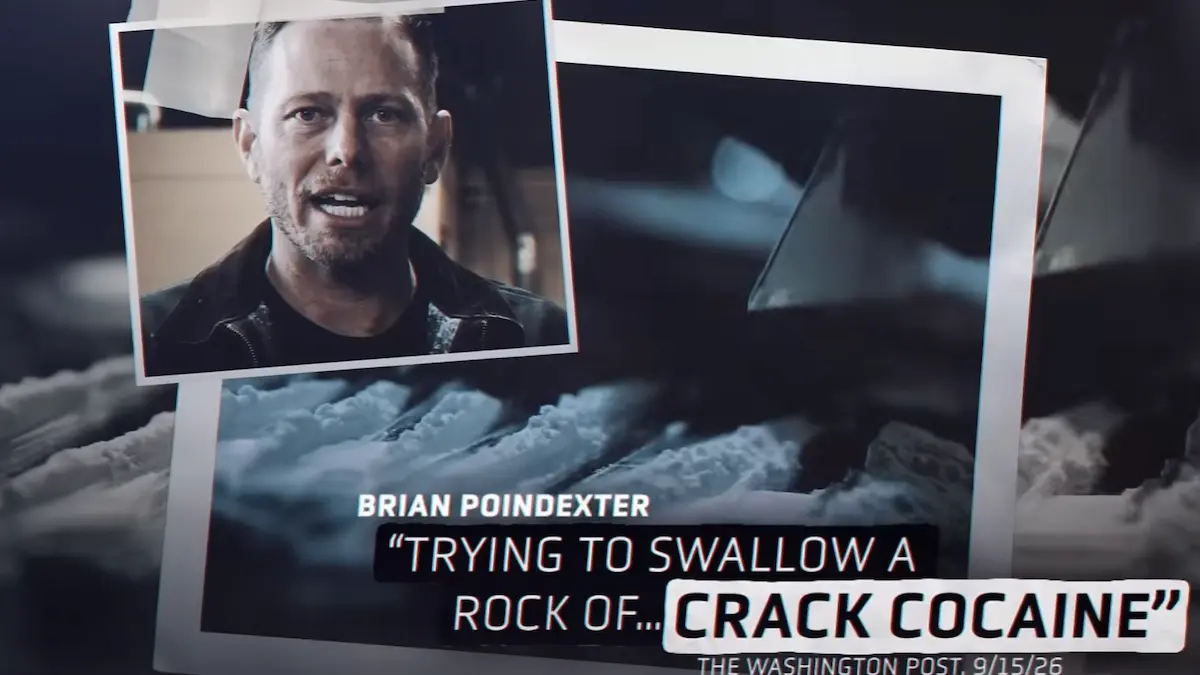
By the final stretch of the campaign, Tuzzeo noted that nearly every ad pod within his son’s viewing sessions consisted entirely of political spots. The messaging was neither sanitized nor softened for youth audiences; the child could recite verbatim complex, visceral political ads addressing graphic subjects such as abortion, gender transition surgeries, illicit drug epidemics, and domestic violence. The incident highlighted a glaring vulnerability in programmatic political media buying: the race to spend capital quickly often overrides basic audience vetting, eroding consumer goodwill and exposing vulnerable demographics to inappropriate content.
Official Statements & Industry Perspectives: Why the Strategy Backfired
As the dust settles on the 2026 results, political analysts and technology executives are offering candid assessments of why historic spending failed to secure historic victories.
Nationwide, Republicans outspent Democrats by a margin of $5.5 billion to $5 billion. Yet, this half-billion-dollar national advantage proved largely illusory. A glaring example cited by industry experts involves America PAC, the political action committee backed by billionaire tech entrepreneur Elon Musk. According to Travis Trawick, CEO of the nonpartisan election technology firm FullPAC, out of 87 distinct candidates backed by America PAC, a staggering 80 lost their races.
The Diminishing Returns of Late-Stage Saturation
Trawick points to a fundamental timing error as the primary culprit behind these high-profile failures. According to his analysis, campaigns made the critical mistake of locking up massive blocks of traditional broadcast inventory over the final five weeks of the election cycle. This period—traditionally viewed as the ultimate crunch time—is when media costs skyrocket to their absolute peak.
However, buyer behavior in the modern media landscape no longer aligns with this legacy strategy.
"At least in this election, most people’s minds were already made up," Trawick explained. "Running the same ad in front of people 60 times just has diminishing returns."
When voters are bombarded with redundant messaging week after week, the effect ceases to be persuasive. Instead, it breeds voter fatigue, annoyance, and eventual cognitive shut-down, rendering the multi-million-dollar final-week media blitz an inefficient use of donor funds. The sheer volume of repetition failed to move the needle because the audience had already locked in their choices well before the final advertising wave crested.
Future Outlook: The 2028 Strategy and the Rise of AI-Driven Engagement
The sobering realities of the 2026 midterms are already shaping the strategic blueprints for the 2028 presidential election cycle. Industry leaders and campaign technologists agree that a continuation of old-school media tactics—characterized by massive television outlays, late-cycle broadcast saturation, and careless programmatic digital spending—will no longer suffice in an increasingly skeptical and fragmented electorate.
Shifting the Timeline
For 2028, experts anticipate a fundamental recalibration of the campaign calendar. Rather than holding back vast war chests for expensive, late-stage media buys, campaigns are expected to shift capital much earlier in the cycle. By engaging voters during the formative phases when opinions are still fluid, strategists hope to avoid the dead-end of trying to convert entrenched voters during the final weeks.
The AI Revolution in Voter Communication
More importantly, the technological tools deployed by campaigns are slated for a massive overhaul. Travis Trawick and other election technology pioneers argue that the future of political marketing lies in artificial intelligence—not merely as a tool for basic ad optimization, but as an engine for dynamic, scalable two-way communication.
Historically, digital advertising has been a one-way street: campaigns talking at voters. Trawick believes the advent of advanced AI capabilities changes this paradigm permanently.
"Being able to create a conversation between a voter and a candidate or an issue, not just talking at them, and doing that at scale, is something that’s never really been possible before," Trawick stated. "Now it is."
Looking toward 2028, next-generation campaigns are projected to leverage AI not just to slice audience segments or buy programmatic CTV inventory, but to actively collect return path signals. By utilizing AI-driven conversational interfaces, localized feedback loops, and hyper-personalized creative generation, campaigns aim to foster genuine voter engagement rather than relying on brute-force repetition.
The $11.9 billion lesson of 2026 is clear: money alone cannot buy victory, and volume is no substitute for precision. As campaigns look toward the horizon of 2028, the mandate for political strategists is adapt or perish—moving away from indiscriminate media saturation and toward intelligent, conversational, and timely engagement.