

Executive Overview
The American television landscape is undergoing a sweeping wave of structural reorganization, high-profile talent transitions, and ambitious digital expansions. As major networks brace for shifting consumer habits and a hyper-competitive multi-platform ecosystem, executive suites are enacting sweeping strategic blueprints designed to lock in legacy broadcast dominance while aggressively capturing streaming-native audiences.
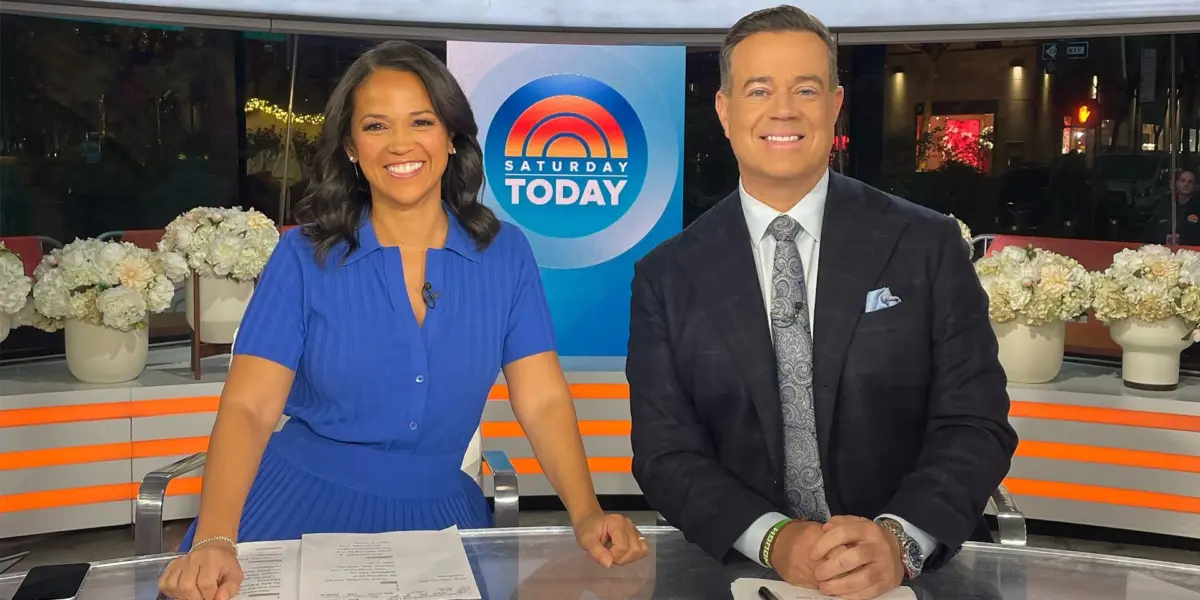
At NBC News, the programming grid is seeing a significant evolution as multi-hyphenate personality Carson Daly steps into an expanded six-day-a-week commitment, filling a long-vacant anchor seat on Saturday Today. This move underscores the network’s reliance on trusted, versatile faces to anchor its flagship franchise across the entire week. Meanwhile, across the corporate family, business news powerhouse CNBC has unveiled a massive structural overhaul of its dayside programming, editorial leadership, and newsgathering apparatus. Anchored by a landmark long-term contract extension for market fixture Jim Cramer—which includes an innovative digital subscription play for 2027—CNBC is systematically streamlining its day-to-day operations to maximize efficiency and cross-platform synergy.
Concurrently, the broader media ecosystem continues to evolve. Networks like MS NOW are rolling out high-impact brand campaigns and aggressively expanding their connected TV (CTV) footprint to capture cord-cutters. Beyond the boardroom and the anchor desk, the industry’s most recognizable journalists are also celebrating major personal milestones, offering a human touchpoint to a fast-paced business cycle. This comprehensive report explores the multifaceted developments shaping the television news and business media sectors, examining the strategic implications of these executive shuffles, talent appointments, and technological expansions.
Detailed Chronology
NBC News: Carson Daly’s Weekend Expansion and the Hunt for Stability
The structural adjustments at NBC News mark a pivotal chapter for its morning broadcasting dominance. Beginning Saturday, November 7, Carson Daly will officially step into the role of co-anchor for Saturday Today, extending his presence at the network to a grueling, yet coveted, six-day-a-week schedule. Daly, who first embedded himself into the Today brand in 2013 as the host of the program’s interactive "Orange Room," has steadily woven himself into the fabric of morning television through his affable interview style and multi-platform versatility.
"I’m thrilled to add Saturday Today to my weekday morning schedule," Daly remarked regarding his expanded portfolio. In his new weekend capacity, Daly will helm the desk alongside co-anchor Laura Jarrett, feature anchor Joe Fryer, and meteorologist Angie Lassman, forming a formidable team tasked with maintaining weekend morning dominance against fierce rival networks.
Daly’s promotion directly addresses the vacancy left by Peter Alexander, who departed the Saturday anchor chair in March before ultimately leaving NBC News entirely after a distinguished two-decade tenure. Alexander’s departure to join MS NOW as a daytime anchor signaled a broader talent migration within the cable and broadcast spheres. By tapping Daly—who successfully balances his weekday Today responsibilities with hosting duties for NBC’s primetime juggernaut The Voice—the network is banking on star power and cross-platform continuity to secure its weekend ratings.
CNBC’s Dayside Overhaul and Leadership Realignment
While NBC News fine-tunes its morning layout, its sister financial network, CNBC, is undergoing a profound, wall-to-wall operational reorganization. At the center of this strategy is a landmark long-term contract renewal for Jim Cramer, the high-energy host of Mad Money. As part of his new multi-year agreement, Cramer will spearhead the rollout of a premium subscription tier for the CNBC Investing Club in 2027, signaling the network’s aggressive push into monetization models outside of traditional advertising.
Complementing Cramer’s re-signing is a sweeping realignment of CNBC’s dayside programming and editorial architecture. Todd Bonin, operating in his dual capacity as vice president of programming and senior executive producer, has been tapped to helm the Business Day block spanning from 5 a.m. to noon ET. Running the subsequent block, Sandy Cannold—also a vice president of programming and senior executive producer—will assume oversight of the network’s lineup from noon to 6 p.m. ET.
Further down the executive ladder, production and editorial responsibilities have been redistributed to maximize output across digital and linear properties:
- Jason Gewirtz transitions to the Digital Control Room to spearhead real-time digital integration.
- Anne Tironi maintains her editorial command over Squawk Box.
- Lisa Villalobos retains managerial control over all three hours of Squawk on the Street. Both Tironi and Villalobos will report directly to Todd Bonin.
- Maria Boden expands her portfolio, taking on executive oversight of Fast Money in addition to her established leadership of Closing Bell: Overtime.
- Matt Quayle shifts from his executive producing duties on The Exchange and Power Lunch into a newly minted role dedicated entirely to cross-platform content development.
Newsgathering and Investigative Reorganizations
CNBC’s structural evolution extends far beyond the control room and into the reporting trenches. Lacy O’Toole, serving as vice president and managing editor, has had the network’s prestigious Specials unit added to her executive portfolio. In an effort to streamline field reporting, all network correspondents will now report directly to O’Toole, with the sole exception of those embedded within strategic verticals managed by Max Meyers.
Geographical news bureaus are also experiencing leadership tweaks. Correspondents stationed out of the vital political and tech hubs of Washington, D.C., and San Francisco will now report directly to MC Wellons and Christina Passariello, respectively. Furthermore, CNBC’s marquee Investigations unit has been placed under the direct purview of Ken Brown, who will steer the investigative desk supported by reporting stalwarts Scott Zamost and Paige Tortorelli.
Supporting Context & Metrics
The convergence of talent shuffles and corporate restructuring highlights a broader truth about modern media: traditional broadcast and cable networks cannot afford to stand still.
The ascension of Carson Daly to a six-day schedule reflects the economic reality of morning television production. Weekend news blocks have transformed from low-stakes, rerun-heavy slots into critical battlegrounds for live viewership and ad revenue. By deploying an established, cross-demographic draw like Daly, NBC minimizes the risk of audience attrition during weekend transitions.
Conversely, CNBC’s aggressive management shakeup is deeply rooted in the shifting financial news landscape. As retail investing surges and digital subscription models prove their viability—evidenced by the planned 2027 rollout of the CNBC Investing Club’s premium tier—legacy business networks are racing to fuse linear immediacy with high-margin digital products. According to recent media consumption studies, audiences increasingly demand real-time financial insights paired with actionable digital tools. CNBC’s executive reassignments, particularly placing Matt Quayle in a dedicated cross-platform development role, directly target this consumer behavior, ensuring that linear mainstays seamlessly feed digital membership pipelines.
At the same time, MS NOW’s aggressive push into Connected TV (CTV) platforms—making its 24/7 live linear feed and on-demand library available on Roku, Apple TV, Samsung, Google TV, and Amazon Fire TV without a traditional cable subscription—illustrates the inevitable industry-wide retreat from legacy cable bundles. Paired with its new brand campaign, "Now There’s More That Unites Us," MS NOW is positioning itself as an agile, direct-to-consumer news destination designed for the post-cord-cutting era.
Official Statements
Network executives and anchors alike have utilized public statements to frame these sweeping transitions around themes of collaboration, audience engagement, and forward-looking growth.
Expressing his enthusiasm for his expanded weekend duties, Carson Daly emphasized the synergy between his existing weekday commitments and his new Saturday role:
"I’m thrilled to add Saturday Today to my weekday morning schedule," Daly shared in a statement released by NBC News, highlighting his eagerness to join Laura Jarrett, Joe Fryer, and Angie Lassman at the weekend anchor desk.
Regarding the strategic brand evolution of MS NOW and its new ad campaign, network executives noted that the initiative was born from deep engagement with contemporary societal trends:
The campaign was directly inspired by "the groundswell of participation, with millions of individuals making their voices heard, standing up for what they believe in," according to MS NOW’s creative and promotional divisions.
While financial terms of Jim Cramer’s long-term agreement with CNBC remain confidential, the network’s leadership has repeatedly stressed that securing top-tier talent and restructuring dayside operations are foundational to maintaining market leadership in an era of rapid digital disruption.
Future Outlook
As the dust settles on these executive shuffles and talent appointments, the media industry is bracing for a transformative future defined by cross-platform convergence and decentralized news consumption.
For NBC News, the immediate test will be whether Carson Daly’s undeniable screen presence can successfully drive weekend ratings growth and stabilize the Saturday Today franchise following years of high-profile departures. If successful, Daly’s six-day schedule could serve as a blueprint for other networks looking to maximize talent efficiency across both broadcast and streaming vectors.
Meanwhile, CNBC’s structural gamble will be closely watched by industry analysts. By consolidating dayside operations under seasoned leaders like Todd Bonin and Sandy Cannold, and by pivoting the Investigations and Specials units under centralized editorial management (Lacy O’Toole and Ken Brown), CNBC is attempting to create a leaner, more responsive newsroom. The success of these internal reorganizations will ultimately be measured by how effectively they feed into high-value digital products, such as the upcoming premium tiers of the CNBC Investing Club.
Ultimately, whether through the expansion of connected TV ecosystems by outlets like MS NOW or the personal milestones celebrated by prominent journalists across the networks—such as the recent additions to the families of Fox News’ Peter Doocy and CNN’s Abby Phillip—the human and corporate elements of the news business remain inextricably linked. As networks navigate the remainder of the decade, adaptability, multi-platform integration, and trusted anchor talent will remain the ultimate currencies of the realm.
