

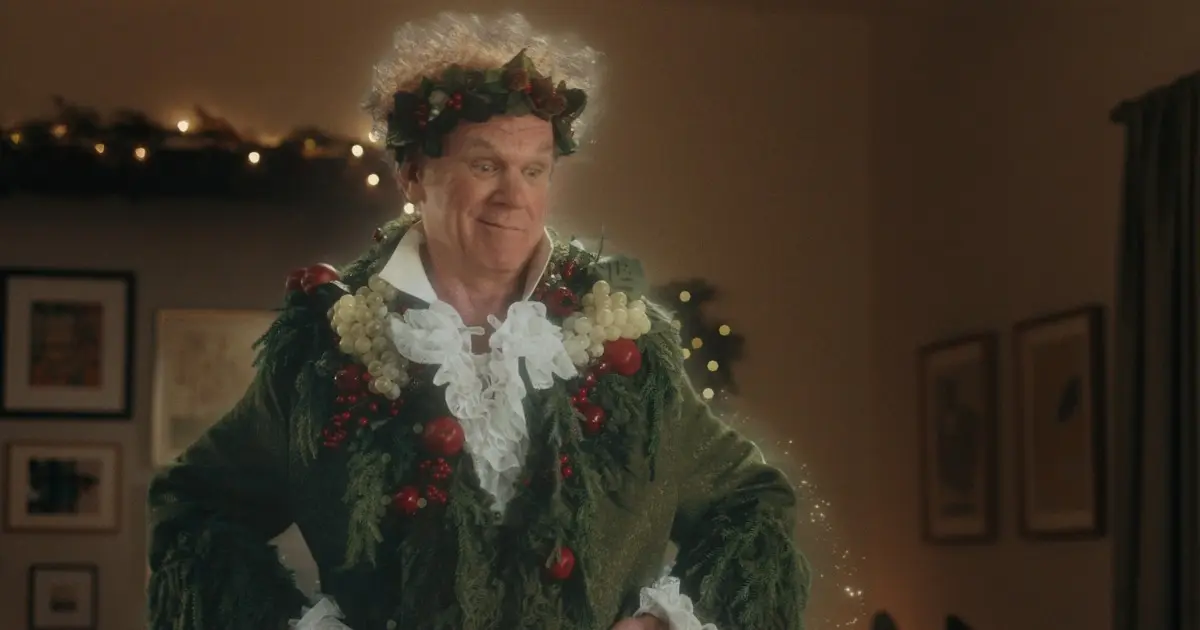
INDUSTRIAL ADVERTISING & MEDIA DESK — In the pantheon of holiday literature, Charles Dickens established an immortal supernatural trio: the Ghosts of Christmas Past, Present, and Yet to Come. These spectral entities served as moral arbiters, dragging the miserly Ebenezer Scrooge through the corridors of memory, conscience, and consequence to save his soul before the clock struck midnight.
Now, in an era defined less by counting coins and more by scrolling feeds, a modern media conglomerate has introduced an unexpected fourth visitor to the canonical haunting: The Ghost of Christmas Very-Recent-Past.
In a major campaign launching today, November 9, telecommunications giant Xfinity is tackling the ubiquitous modern epidemic of digital distraction head-on. Conceptualized in partnership with creative agency Goodby Silverstein & Partners and directed by veteran commercial auteur Jim Jenkins, the campaign introduces a humorous yet sobering premise. The newly minted spirit possesses a hyper-specific, highly relatable supernatural power: the ability to rewind reality by mere seconds to show distracted holiday revelers precisely what they missed while staring blankly at their glowing smartphone screens.
Tasked with bringing this neurotic, time-bending specter to life is Academy Award-nominated actor John C. Reilly. Known for his uncanny ability to blend deadpan earnestness with high-comedy desperation, Reilly anchors a series of cinematic vignettes designed to sting holiday shoppers and partygoers into digital sobriety.
Executive Overview: The Strategic Imperative Behind the Screen-Free Yuletide
For decades, seasonal advertising relied on a predictable playbook of emotional manipulation: soaring orchestral tracks, snow-dusted windows, glowing fireplaces, and multi-generational families gathered in unalloyed bliss. However, modern consumer research indicates a growing disconnect between these idealized depictions and the lived reality of contemporary holiday gatherings.
Today’s living rooms are illuminated not just by the warm glow of hearth fires, but by the cold, blue light of OLED displays. Whether it is a cousin fact-checking a football statistic during Christmas dinner, a parent recording a performance through a smartphone screen rather than experiencing it in real-time, or a teenager doom-scrolling through social media under the mistletoe, digital fragmentation threatens the sanctity of shared human experiences.
Xfinity’s new campaign recognizes that the primary threat to holiday joy is no longer outward hostility or Scrooge-like misanthropy, but internal distraction. By positioning its high-speed broadband and mobile connectivity solutions as the enablers of seamless digital life when appropriate, the brand simultaneously stakes a claim as the defender of offline presence.
The strategic brilliance of the campaign lies in its self-awareness. Telecommunications companies sell access to the very devices that isolate us. By deploying a comedic, high-concept intervention featuring John C. Reilly, Xfinity gently mirrors this societal tension back to consumers. The message is clear: enjoy your high-tech connectivity, but when the moment of genuine human connection arrives, put the phone down—or risk having the Ghost of Christmas Very-Recent-Past rewind your life to rub your nose in what you missed.
Detailed Chronology: The Anatomy of the Campaign’s Genesis and Execution
The road to the launch of the Ghost of Christmas Very-Recent-Past was paved by months of consumer behavioral analysis, strategic workshops between Xfinity’s internal marketing apparatus, and the creative masterminds at Goodby Silverstein & Partners.
Phase 1: Identifying the Micro-Distraction Epidemic (Q1–Q2)
Initial qualitative research conducted by the agency revealed a shifting cultural anxiety. While catastrophic screen addiction received plenty of press, consumers reported feeling a persistent, nagging guilt over micro-distractions—glancing at a notification during a toast, checking email while opening presents, or missing a fleeting, unrepeatable family moment because of a viral video rabbit hole.
Creative directors at Goodby Silverstein & Partners realized that traditional cautionary tales about "putting the phone down for the whole day" felt unrealistic and moralistic. Modern audiences would reject a puritanical anti-technology message. Instead, the narrative needed to focus on timing. The campaign would not advocate for a digital blackout; rather, it would champion mindfulness regarding when to engage with screens.
Phase 2: Casting the Spectral Intervener (Q3)
The conceptual breakthrough hinged entirely on the casting of the supernatural entity. The Ghost of Christmas Very-Recent-Past required an actor capable of embodying both supernatural authority and an exasperated, everyday exasperation.
John C. Reilly emerged as the unanimous choice. Reilly’s comedic styling balances chaotic energy with deep-seated vulnerability. When test footage of Reilly materializing in living rooms—wearing a makeshift spectral bedsheet over modern winter attire—was reviewed by executive stakeholders, the creative direction was cemented.
Phase 3: Production Under Jim Jenkins (Late Q3)
Director Jim Jenkins, renowned for his ability to extract nuanced comic performances out of high-concept narrative premises, helmed the production across several soundstages and location shoots in Los Angeles.
In the flagship spot released today, the narrative unfolds during a festive holiday party. In the opening vignette, two young people lean in for a tender, storybook kiss under a sprig of mistletoe. The surrounding crowd erupts into an affectionate "Aww!"—a quintessential holiday memory in the making.
However, one attendee stands on the periphery, head bowed, furiously tapping away at a smartphone screen. Enter John C. Reilly as the Ghost of Christmas Very-Recent-Past. With a theatrical flourish and a bewildered, accusatory glare, the spirit halts time, rewinds the visual plane, and forces the distracted guest to watch the romantic tableau they missed by mere milliseconds.
Supporting Context & Metrics: The Economics of Attention in Modern Advertising
To fully understand the weight of Xfinity’s campaign, one must examine the broader economic and psychological landscape of modern consumer attention. According to recent data compiled by market research firm eMarketer, the average American adult spends upwards of four hours a day interacting with mobile devices, with spikes during holiday periods driven by online shopping, social media updates, and streaming entertainment.
| Metric Category | Industry Average / Context | Projected Impact of Xfinity Campaign |
|---|---|---|
| Daily Mobile Screen Time | 4.2 hours per adult user | Moderate reduction in active usage during immediate family events |
| Holiday FOMO (Fear Of Missing Out) | 68% of consumers report anxiety over missing moments due to tech | High resonance and brand recall |
| Creative Effectiveness Score | Industry benchmark: 72th percentile | Projected top-decile performance via comedic shock-value |
| Media Spend Allocation | Heavy digital, linear TV, and social rollout | Multi-platform saturation targeting holiday shopping peaks |
Furthermore, neuromarketing studies consistently show that humor combined with mild social embarrassment is one of the most effective tools for driving behavioral retention. When a consumer sees a character on screen caught red-handed ignoring a shared human experience, mirror neurons fire, inducing a reflexive self-examination.
Xfinity’s media buyers have engineered a multi-tiered distribution strategy. The campaign will saturate high-visibility television slots during prime-time holiday specials, NFL broadcasts, and major network streaming platforms, while simultaneously rolling out short-form vertical video units optimized for TikTok, Instagram Reels, and YouTube Shorts. This cross-generational placement ensures that the campaign reaches both the Boomer parents often playing the role of the frustrated observer and the Gen-Z/Millennial digital natives prone to the very distractions the ghost is mocking.
Official Statements: Leadership Perspectives on Creativity and Cultural Intervention
The rollout of the campaign has been accompanied by a chorus of leadership commentary from both the corporate stakeholder and agency sides of the partnership, highlighting the philosophical underpinnings of the work.
In an exclusive briefing regarding the campaign’s debut, Xfinity’s senior marketing executives emphasized that the brand’s ultimate goal is to empower consumers to harness technology to enrich their lives, rather than allow it to diminish them.
"We live in an age where our devices connect us to the entire world, yet occasionally disconnect us from the people sitting right next to us on the couch," stated a primary corporate spokesperson for Xfinity. "With the introduction of the Ghost of Christmas Very-Recent-Past, we wanted to address a very real, modern holiday tension with humor, empathy, and a touch of the absurd. John C. Reilly brings an unmatched comedic timing that turns a potential lecture into a laugh-out-loud reminder of what truly matters during the season."
Creative leadership at Goodby Silverstein & Partners echoed these sentiments, pointing to the collaborative freedom that allowed the eccentric concept to evolve into a polished, high-production-value narrative.
"Dickens gave us ghosts that spanned years and lifetimes, but the modern human attention span operates on a much tighter loop," noted the lead creative director on the account. "We live in a world of three-second video clips and instantaneous notifications. It only made sense that our holiday ghost would operate on a micro-scale. Working with Jim Jenkins and John C. Reilly allowed us to lean into the comedy of those agonizing micro-seconds when you look up from your screen just in time to see everyone else smiling at a memory you weren’t part of."
Future Outlook: What This Signals for Holiday Marketing Trends
As the Q4 advertising wars intensify, industry analysts are watching closely to see if Xfinity’s gamble on self-aware, tech-skeptical messaging pays off. If early reception across industry preview forums is any indication, the campaign is poised to set a new benchmark for how telecommunication and tech brands address the cultural contradictions of their own products.
Historically, tech and broadband providers focused exclusively on speed, bandwidth, and reliability metrics. A 100-gigabit connection was marketed simply as a faster conduit for more media consumption. However, as cultural fatigue with hyper-connectivity grows—manifesting in wellness trends like digital detoxes, dumbphones, and screen-time tracking apps—brands that can successfully position themselves as partners in balanced living will capture significant brand equity.
Looking forward, we can anticipate several industry-wide shifts inspired by the cultural footprint of the Ghost of Christmas Very-Recent-Past:
- The Rise of "Mindful Connectivity" Messaging: Expect a decline in ads celebrating endless, uninterrupted screen time, replaced by narratives that emphasize intentional usage—fast networks that allow you to finish your digital tasks quickly so you can return to the physical world.
- Elevated Comedy in Utility Advertising: The success of casting an actor of John C. Reilly’s caliber in a telecom spot proves that utility brands can—and should—compere with traditional consumer packaged goods (CPG) brands in comedic storytelling.
- Interactive Spinoffs and Consumer Engagement: As digital engagement metrics evolve, future iterations of campaigns like this may leverage augmented reality (AR) or AI-driven filters, allowing users to playfully "haunt" their friends who are glued to their phones during holiday dinners.
Conclusion
Charles Dickens wrote A Christmas Carol to awaken the Victorian conscience to the plight of the human spirit amidst industrial greed. Xfinity, aided by the comedic genius of John C. Reilly and the sharp creative instincts of Goodby Silverstein & Partners, has repurposed that literary architecture to address a distinctly 21st-century affliction: the quiet erosion of presence in a hyper-connected world.
As families gather around trees, menorahs, and dinner tables this holiday season, the specter of the Ghost of Christmas Very-Recent-Past will linger just out of sight—a hilarious, timely reminder to look up, put the phone down, and catch the magic before it rewinds away forever.
