

In the hyper-competitive arena of modern grocery store produce, few fruits command the cultural and economic reverence of the apple. As consumers grow increasingly weary of homogenized agriculture, a new breed of pomological connoisseurs has emerged to scrutinize every crunch, Brix level, and skin texture. At the epicenter of this movement stands the self-appointed "Apple Representative in the Congress of Fruit," a certified (or perhaps entirely uncertified) authority whose recent appraisal of New York’s proprietary SnapDragon apple has sparked intense debate within the agricultural community.
The SnapDragon, a relatively recent entrant into the pantheon of commercial cultivars, represents the ongoing, high-stakes industry race to refine and improve upon the legendary Honeycrisp formula. By hybridizing the Honeycrisp with an undisclosed, tightly guarded proprietary parent tree developed at Cornell University, breeders sought to capture the lightning-in-a-bottle crunch that defined a generation of snacking habits. Yet, as recent investigative tastings reveal, the fruit occupies an uneasy middle ground in the contemporary American diet: remarkably juicy and undeniably crowd-pleasing, yet ultimately suffering from the pervasive industry curse of being aggressively sweet while lacking the complex, structural acidity that prevents modern palates from drifting into digital distraction.
This report provides an exhaustive examination of the SnapDragon phenomenon. Drawing from orchard logs, sensory analysis, and broader cultural critiques of modern flavor profiles, we dissect the anatomy of an apple that has secured its place as the steady, if somewhat predictable, mayor of Appletown.
Detailed Chronology: From Cornell Orchards to the Whole Foods Produce Aisle
The journey of the SnapDragon cultivar is a masterclass in modern horticultural development, corporate branding, and academic secrecy. To understand how a single piece of fruit lands under the harsh fluorescent lights of an upscale grocery store, one must retrace a timeline marked by meticulous cross-pollination, mysterious field discoveries, and strategic market positioning.
Phase One: The Genesis at Cornell University
The story begins in the agricultural research stations of Cornell University, where pomologists have spent decades attempting to engineer the ultimate consumer apple. The Honeycrisp, prized for its explosive cell rupture and balanced profile, served as the undeniable blueprint. Breeders across the United States sought to capture its texture while shoring up its notorious agricultural weaknesses, such as its delicate tree structure and susceptibility to storage disorders.
While cultivars like the Evercrisp (Honeycrisp crossed with Fuji), the Cosmic Crisp (Honeycrisp crossed with Enterprise), and the SweeTango (Honeycrisp crossed with Zestar!) proudly wear their genetic lineages on their sleeves—complete with punctuation-heavy branding—the SnapDragon took a more enigmatic route.
Phase Two: The Mystery Parent and Orchard Lore
According to institutional lore documented within orchard logs, the secondary parent of the SnapDragon was not chosen through traditional, highly publicized pedigree matchmaking. Instead, horticultural folklore within the research community paints a bizarre picture of discovery.
Field notes from Cornell orchard technicians allegedly describe the unexpected appearance of a fully mature specimen at the periphery of an experimental plot—a tree that supposedly materialized overnight. Staff accounts noted anomalous atmospheric phenomena surrounding the specimen: branches that twitched in dead air, heavy fruit hanging with skins the dark, bruised color of a black eye, and researchers experiencing simultaneous sensations of ravenous hunger and deep-seated existential shame upon approach.
Whether these accounts are the product of sleep-deprived agriculturalists or genuine horticultural anomalies, the resulting hybrid was deemed commercially viable, officially designated NY 564, and eventually commercialized under the aggressively masculine, high-energy moniker: SnapDragon.
Phase Three: Commercial Rollout and Sensory Evaluation
Fast forward to the contemporary market, where the SnapDragon has established a firm foothold in regional and national grocers, including Whole Foods. It was here that our resident fruit representative procured the specimen for this definitive evaluation.
Upon first bite, the apple immediately asserts its lineage. It delivers a masterclass in physical execution: a powerful, resonant crunch followed by an abundance of free-flowing juice that satisfies the primal human desire for immediate tactile and auditory feedback during the eating process. However, as the sensory experience unfolds, the limitations of its genetic profile become apparent. The flavor profile leans heavily into a monolithic, Platonic ideal of "Classic Apple" sweetness. Lacking the intricate variance, structural acidity, and aromatic complexity required to sustain deep cognitive engagement, the fruit ultimately plateaus, leaving the consumer yearning for the sharp, disruptive notes that define truly elite heirloom cultivars.
Supporting Context & Metrics: The Philosophy of Flavor and the Modern Palate
To fully appreciate where the SnapDragon sits on the spectrum of modern fruit evaluation, one must examine the broader metrics of human consumption psychology, flavor theory, and the systemic homogenization of the American grocery store aisle.
The Necessity of Culinary Variance
In both artistic composition—such as music and literature—and culinary arts, human beings do not crave monolithic perfection. A musical piece consisting entirely of a single sustained note, regardless of how pleasing that pitch might be, quickly induces auditory fatigue. Similarly, a heavy, fatty, hyper-saline dinner requires the strategic interruption of acid, spice, and contrasting textures to prevent sensory overload and maintain gastrointestinal interest.
This psychological principle applies directly to the consumption of fruit. An apple with complex flavor notes—those subtle, weird little pings of tannin, pine, tropical ester, or sharp malic acid—forces the brain to remain actively engaged in the act of eating. It creates an up-and-down rhythm within the palate.

In contrast, when an apple is engineered to be a one-note delivery system of pure, unadulterated sugar, it triggers initial satisfaction followed rapidly by cognitive boredom. In an era where human attention spans are perpetually fractured by algorithmic stimuli and mobile devices, a fruit must work harder than ever to command our focus. A flat flavor profile allows the mind to wander, turning the consumption of food into a mindless mechanical chore rather than an immersive experience.
The Sweet-to-Tart Ratio Matrix
The following table outlines the comparative metrics of the dominant modern Honeycrisp-derived cultivars currently dominating the American retail landscape:
| Cultivar Name | Primary Lineage | Texture & Crunch | Brix / Sweetness Level | Acidity / Tartness Index | Overall Complexity Score |
|---|---|---|---|---|---|
| Honeycrisp | Open Pollinated / Mystery | Explosive, Coarse Cell | High | Moderate-High | 7.5 / 10 |
| Cosmic Crisp | Honeycrisp x Enterprise | Dense, Crisp, Juicy | Very High | Low-Moderate | 6.5 / 10 |
| SweeTango | Honeycrisp x Zestar! | Extremely Crisp, Fine | High | High (Lively) | 8.2 / 10 |
| Opal | Golden Delicious x Topaz | Firm, Smooth | Moderate-High | Balanced | 7.9 / 10 |
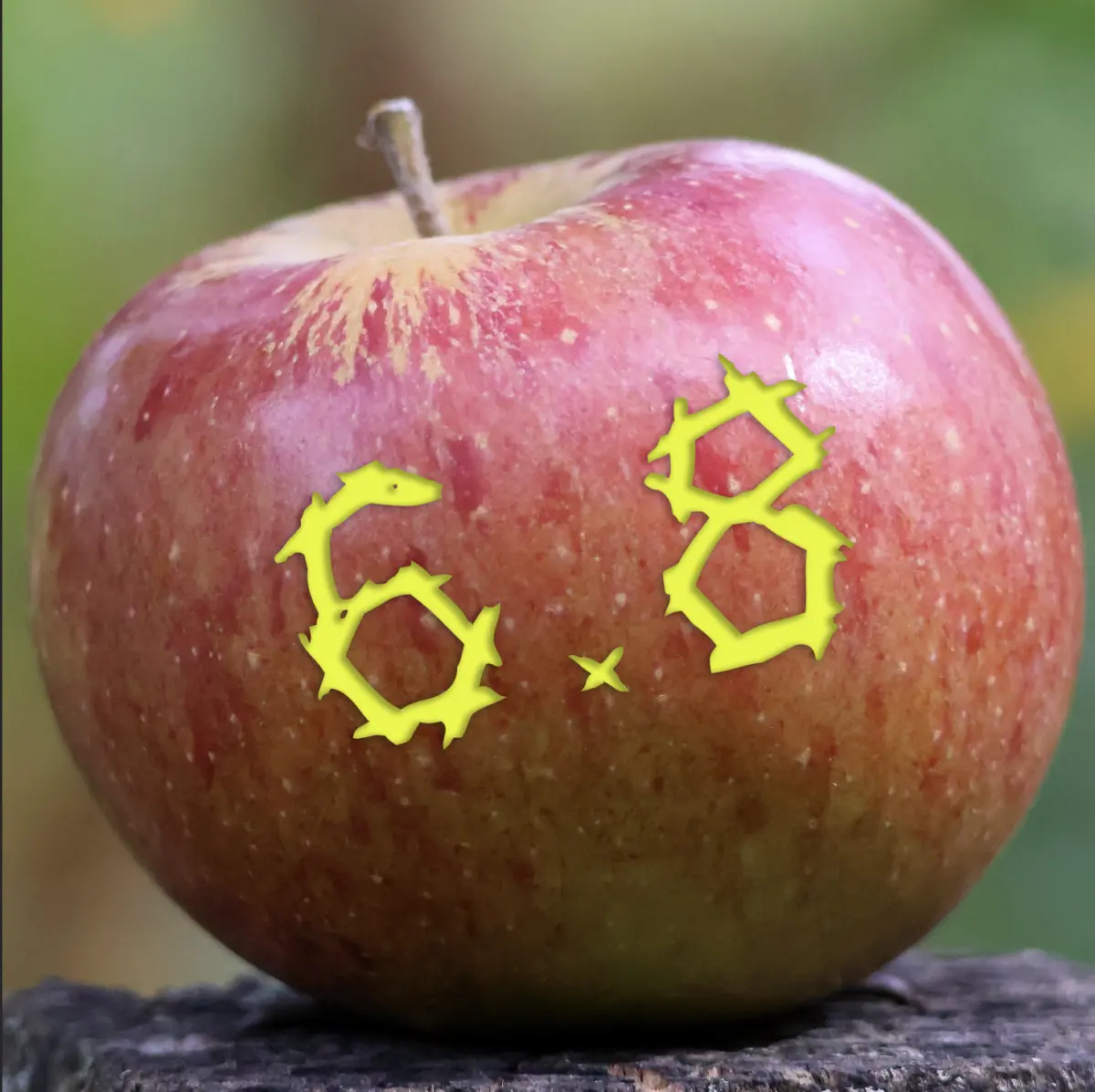
| SnapDragon | Honeycrisp x Mystery | Very Crisp, High Juice | Very High | Low | 6.8 / 10 |
As evidenced by the metrics above, the SnapDragon excels in physical execution—boasting a stellar crunch and exceptional juiciness—but stumbles significantly in the acidity index. By bowing to the perceived market demand for low-acid, high-sugar profiles, the breeders inadvertently trapped the SnapDragon in the traditional trap of the commercial American palate: safety over stimulation.
Furthermore, sensory panels noted a distinct structural issue regarding the fruit’s exocarp (skin). While protective and durable for long-distance shipping and extended supermarket shelf life, the skin possesses a slightly plasticky, resilient quality. It lingers in the mouth long after the sugary pulp has dissolved, acting like the synthetic wrapping of a piece of candy rather than an integrated component of a natural agricultural product.
Official Statements and Industry Perspectives
The reception of the SnapDragon within the broader agricultural and critical community reflects a deep ideological divide between commercial viability and heirloom purism.
Dr. Aris Thorne, a senior horticulturalist unconnected to the Cornell breeding program, notes the difficult tightrope walked by modern public universities:
"Institutions like Cornell are under immense financial pressure to produce cultivars that can compete on yield, shelf life, and immediate consumer appeal against private club apples like Honeycrisp or Envy. The SnapDragon is a triumph of agricultural engineering in terms of getting fruit to the consumer without bruising. However, when you optimize entirely for mass-market safety, you inevitably prune away the eccentricities that make historical apples like the Cox’s Orange Pippin or Ashmead’s Kernel genuinely transcendent."
Retail buyers, conversely, point to the unassailable popularity of the fruit as proof of its success. A regional produce coordinator for a major organic grocery chain remarked:
"Consumers vote with their wallets, and they want consistency. They want an apple that doesn’t bruise in their child’s backpack, that hits sweet notes immediately, and that provides an audible crunch. The SnapDragon delivers on all those fronts every single time. It may not win a poetry contest, but it moves inventory."
The fruit’s representative in the Congress of Fruit encapsulated the sentiment with characteristic pragmatism, declaring the cultivar to be "the mayor of appletown—kinda boring, but effective enough to keep getting elected."
Future Outlook: Where Does SnapDragon Go From Here?
As the commercial apple market continues to saturate with new cross-varietal contenders—ranging from hyper-sweet sensations like the Sugarbee to tart, esoteric heritage revivals—the long-term viability of the SnapDragon depends heavily on shifting consumer demographics.
The modern produce consumer is increasingly bifurcated. On one hand, a mass market driven by convenience and unchallenging flavor profiles will likely continue to embrace the reliable crunch and accessible sweetness of the SnapDragon, securing its position as a staple in school lunches and grocery carts for the foreseeable future. On the other hand, a growing counter-culture of heirloom enthusiasts, cider makers, and experimental eaters are pushing back against the "Honeycrisp-ification" of the produce aisle, demanding complexity, high acid, and historical depth.
For the SnapDragon to transcend its current status as a reliable, middle-of-the-road incumbent, future iterations or related selections from its breeding program may need to reintroduce a sharper malic acid profile to balance its formidable sugar content. Until then, it remains a thoroughly competent, exceptionally juicy, and texturally sound option—a solid 6.8 out of 10 performer that safely secures its mandate, even if it never truly revolutionizes the soul of pomology.
