

Executive Overview
The phrase “as American as apple pie” occupies a foundational space in the cultural lexicon of the United States, invoking images of wholesome agrarian landscapes, small-town bakeries, and domestic tranquility. Yet, like many foundational national myths, this idiom collapses under historical scrutiny. Neither the apple nor the apple pie is indigenous to the Americas.
This investigative report unpacks the complex, myth-shrouded history of the apple in Western culture—tracing its trajectory from European origins and the turbulent era of American Prohibition to its modern commercial domination by nations like China. Furthermore, this piece transitions from macro-level agricultural geopolitics to micro-level pomology, delivering an authoritative tasting review and historical analysis of the Karmijn de Sonneville, a distinguished Dutch apple variety bred in the mid-20th century. By evaluating its lineage, flavor profile, and structural characteristics, we explore how this cultivar honors its elite parentage while carving out a distinct niche in contemporary fruit breeding.
Detailed Chronology: The Evolution of the Apple in Western Civilization
The Pre-Columbian and European Roots
To understand the cultural mythology of the apple, one must first disabuse oneself of the notion that the fruit is native to the Western Hemisphere. The genus Malus originated in the mountains of Central Asia, specifically Kazakhstan, where wild progenitors such as Malus sieversii still grow in dense forests. Through the ancient trade routes of the Silk Road, apples migrated westward into Europe, where they were cultivated, cross-bred, and integrated into European agriculture long before European contact with the Americas.
Apple pie itself is similarly foreign to American soil. Culinary historians trace the genesis of the spiced, pastry-encased apple dessert to medieval Europe, with Dutch and British culinary traditions establishing the template centuries before the United States was founded. Early European settlers brought apple seeds and grafting stock to the New World not for fresh eating, but primarily for the production of hard cider—a vital source of safe hydration and alcoholic recreation in early colonial communities.
The Prohibition Purge and the Rehabilitation of the Apple
The transformation of the apple from a source of intoxicating vice to a symbol of wholesome purity occurred during a specific historical crucible: the American Prohibition era (1920–1933).
Prior to the 20th century, the vast majority of American apples were "spitter apples"—astringent, highly tannic varieties unsuitable for fresh consumption but ideal for fermentation into hard cider. Figures such as John Chapman, better known in folklore as "Johnny Appleseed," populated the American frontier with seedling orchards. However, Chapman’s theological beliefs—rooted in Swedenborgianism—led him to oppose the artificial grafting of trees, viewing it as a transgression against divine natural order. Consequently, his orchards produced vast quantities of seedling apples destined for the cider press.
With the ratification of the 18th Amendment and the enactment of Prohibition, federal and local authorities systematically targeted and destroyed commercial cider orchards. To salvage the agricultural industry and reframe public perception, apple growers, agricultural extension agents, and federal marketers launched an aggressive rebranding campaign. The apple was successfully recast not as the precursor to alcoholic sin, but as a dietary anchor of health and moral rectitude—cementing the idiom of eating an apple "out of hand."
The World War II Mythos and Modern Realities
The final cultural cement binding the apple to American identity was poured during World War II. Popular culture and wartime propaganda frequently framed the global conflict around domestic ideals, with soldiers famously reported to be fighting for "mom and apple pie."
Despite this psychological entrenchment in the American psyche, the global economics of apple production tell a different story. The United States is no longer the world’s leading consumer or producer of apples; that distinction belongs decisively to the People’s Republic of China, which commands the lion’s share of global apple cultivation. Nevertheless, the cultural mythology persists, proving that agricultural folklore often outlives economic reality.
Supporting Context & Metrics: Pomological Lineage of the Karmijn de Sonneville
Stepping away from geopolitical agriculture, the focus turns to pomology—specifically the evaluation of modern cultivars that challenge standard supermarket offerings. Today’s subject is the Karmijn de Sonneville, a mid-20th-century Dutch innovation that bridges European and American breeding lines.
                  [Cox’s Orange Pippin]       [Jonathan]
                           (UK)                 (USA)
                                                /
                                               /
                               [Piet de Sonneville]
                                  (Netherlands)
                                        |
                            [Karmijn de Sonneville]
Breeding and Provenance
Bred in the Netherlands during the 1940s by fruit enthusiast and breeder Piet de Sonneville, the Karmijn de Sonneville represents a masterclass in cross-breeding. The etymology of Karmijn translates to carmine, pointing to the rich, deep red coloration typical of the fruit’s exterior under optimal ripening conditions.

Its pedigree is an assembly of pomological royalty:
- Paternal/Maternal Line 1: Cox’s Orange Pippin. Widely regarded as an English masterpiece known for its complex, aromatic, and spicy flavor profile.
- Paternal/Maternal Line 2: Jonathan. A classic American variety celebrated for its snappy tartness and fine-grained texture. (Notably, the Jonathan’s own lineage includes the legendary Esopus Spitzenburg).
Thus, the Karmijn de Sonneville stands as a literal hybrid of British and American agricultural excellence, nurtured in Dutch soil.
Sensory and Physical Metrics
Evaluating the Karmijn de Sonneville requires an examination of its structural and organoleptic properties:
- Visual Assessment: A mottled, often russeted skin featuring carmine-red splashes over a greenish-yellow background. It avoids the glossy, uniform perfection of modern club apples, favoring a rustic, artisanal appearance.
- Texture: Coarse-fleshed and exceptionally juicy. The cell structure yields a robust, substantial bite that avoids mealy degradation.
- Flavor Profile: A brilliant, high-acid, effervescent flavor profile. It delivers a strong, bright surge of lemon and pear notes, underpinned by a remarkably complex, herbaceous skin flavor reminiscent of fresh arugula (rocket).
- Sugar-Acid Balance: Highly tart yet balanced by deep, underlying sugars. It leans aggressively toward the sharp end of the spectrum rather than cloying sweetness.
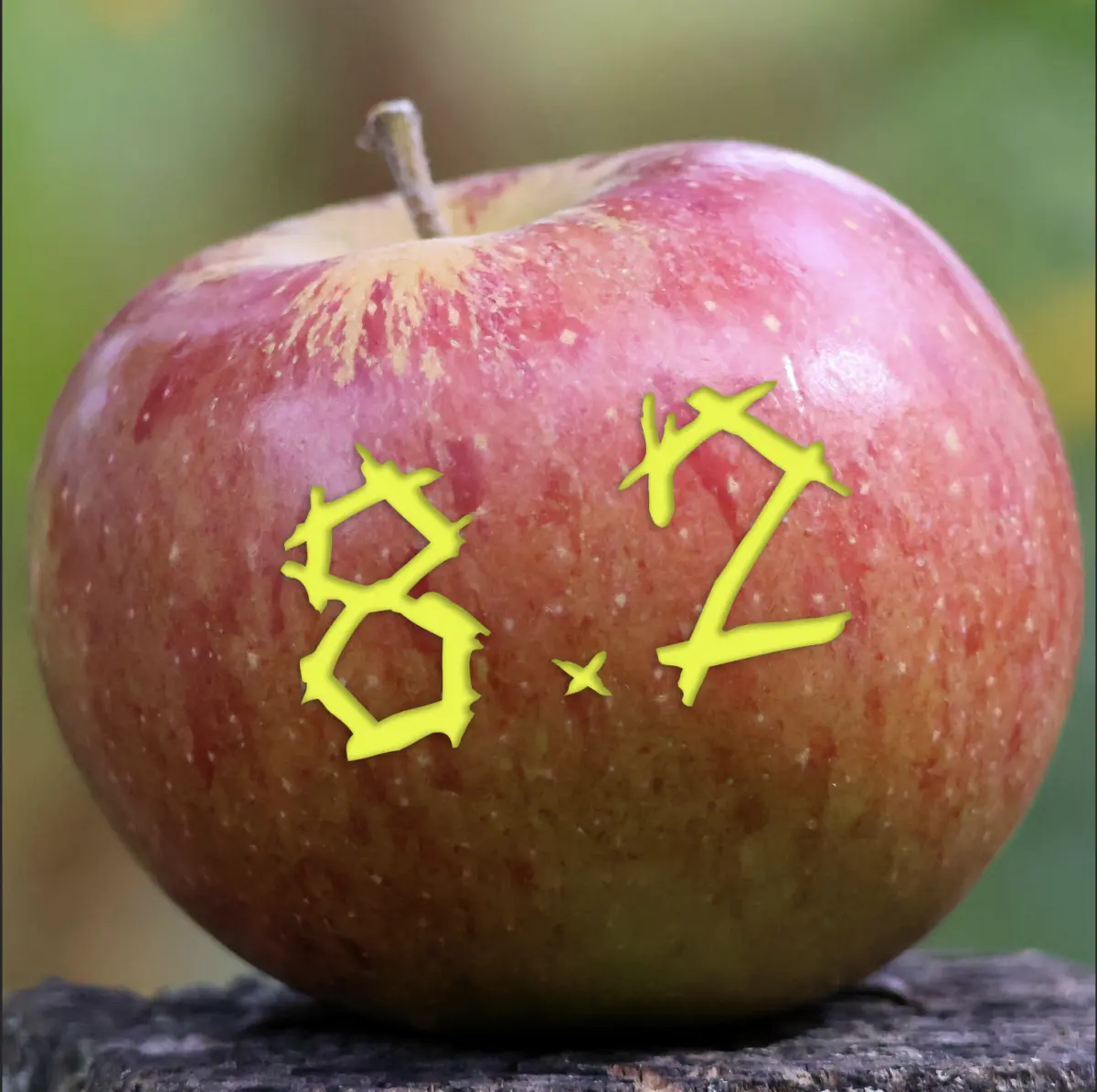
- Overall Rating: 8.2 / 10
While it occasionally falls just short of the absolute, peerless perfection of its legendary parents (Cox’s Orange Pippin and Jonathan), it remains a phenomenal fruit for pomological connoisseurs who prioritize complexity and acidity over one-note sugary sweetness.
Official Statements and Expert Perspectives
Agricultural historians and master orchardists have long debated the balance between heritage flavor complexity and modern consumer convenience. Modern commercial breeding programs heavily favor cultivars like the Honeycrisp or Gala—varieties optimized for shelf life, uniform size, and non-offensive, mild sweetness.
In contrast, horticultural preservationists champion heritage and complex cross-varieties like the Karmijn de Sonneville. Dr. Aris van der Meer, a European pomological researcher, notes:
"The modern consumer has been conditioned to accept uniformity at the expense of character. Varieties bred in the mid-20th century—such as the Karmijn de Sonneville—prioritize high aromatic compounds, balancing intense acidity with rich secondary flavor notes. They are not engineered for the bottom shelf of a discount supermarket; they are engineered for the palate that appreciates wine-like depth in fruit."
Furthermore, culinary critics emphasize that apples with high acidity and coarse, juicy textures perform exponentially better in artisanal culinary applications, holding their structure and releasing complex volatiles when baked, pressed, or macerated.
Future Outlook: The Re-Enchantment of Pomology
As global agriculture moves deeper into the 21st century, the apple market stands at a crossroads. On one side lies corporate homogenisation—a landscape dominated by patented club varieties backed by millions of dollars in marketing. On the other lies the preservationist movement: a dedicated network of orchards, heirloom cultivators, and fruit enthusiasts rescuing complex, challenging, and historically rich cultivars from extinction.
The Karmijn de Sonneville serves as a vital bridge in this ecosystem. It proves that breeding programs can successfully marry historical heavyweights to produce something novel, daring, and unapologetically bold. Whether future generations—whether categorized by traditional demographics or emerging generational cohorts—will embrace the sharp, arugula-tinged bite of a truly complex Dutch apple remains to be seen.
What is certain, however, is that as long as independent orchards cultivate varieties that prioritize flavor over shelf-life, the true story of the apple will remain infinitely more fascinating than the comforting, oversimplified myth of the American apple pie.