

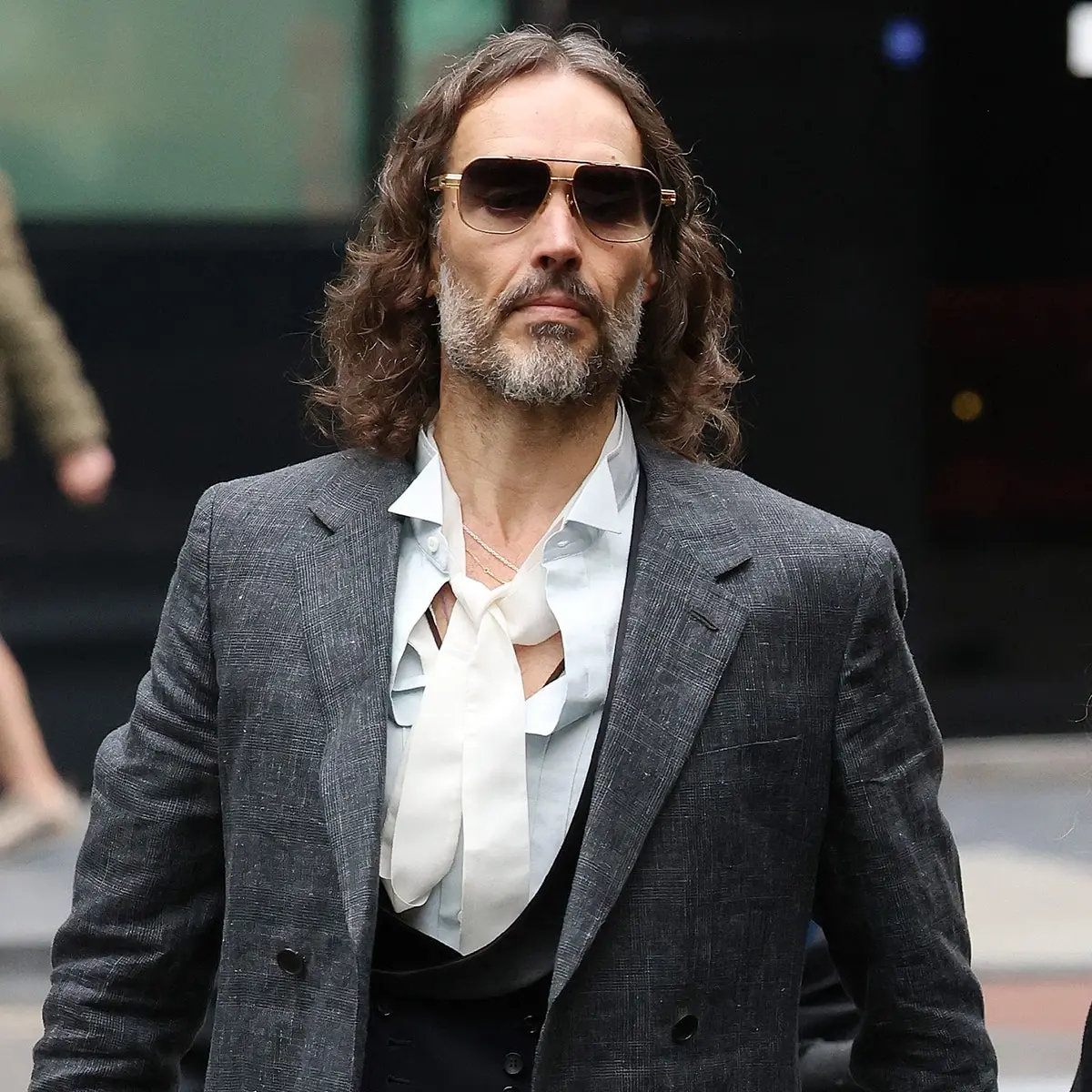
LONDON — British actor and media personality Russell Brand has been sentenced to 10 years and six months behind bars following a high-profile criminal trial in London. The sentencing, handed down by Judge Joel Bennathan during a court appearance on November 9, brings a definitive judicial conclusion to a core chapter of legal proceedings that have systematically dismantled the public career of one of Britain’s most polarizing cultural figures.
Just days prior to his sentencing hearing, a London court convicted the 51-year-old entertainer on one count of rape and three counts of sexual assault. While the verdict marked a major victory for the prosecution and the multiple complainants involved, it followed a heavily scrutinized trial that also saw Brand cleared of two separate counts of rape and one count of indecent assault.
Despite the mixed verdicts, the substantial prison sentence reflects the gravity of the offenses and underscores a watershed moment for accountability within the entertainment industry. Furthermore, legal analysts note that Brand’s legal troubles are far from over, as London’s Metropolitan Police confirmed that investigations into separate, additional allegations remain active.
Executive Overview
The sentencing of Russell Brand marks a seismic shift in a cultural landscape where powerful public figures have historically faced minimal institutional accountability for historical misconduct. Brand, known internationally for his roles in films such as Forgetting Sarah Marshall and Get Him to the Greek, as well as his prolific evolution into a digital pundit and conspiracy theorist, has now joined the ranks of high-profile celebrities whose careers have dissolved under the weight of criminal convictions.
The legal reckoning stems from a multi-year investigation spearheaded by the London Metropolitan Police, which examined a series of non-consensual sexual encounters spanning a decade from 1999 to 2009—a period during which Brand was at the height of his mainstream media influence in the United Kingdom and the United States.
Judge Joel Bennathan’s decision to impose a cumulative custodial sentence of 10 and a half years signals a firm judicial stance against sexual violence, particularly when perpetrated by individuals wielding significant social and professional leverage. Under UK sentencing guidelines, while rape carries a maximum statutory penalty of life imprisonment—with average sentences typically ranging between four and 19 years—the court opted for a substantial, punitive term that ensures Brand will spend a significant portion of his middle age incarcerated.
As the legal dust settles on this trial, the broader implications for Brand’s family, his online media empire, and the ongoing investigations by British authorities continue to unfold, ensuring that this case remains at the forefront of international media coverage.
Detailed Chronology: From Allegations to Conviction and Sentencing
The criminal proceedings against Russell Brand did not materialize overnight; rather, they represent the culmination of painstaking investigative journalism, institutional inquiries, and the courage of multiple complainants who came forward to detail decades-old abuses.
The Initial Charges (April 2025)
The formal criminal case against Brand commenced in April 2025. Following an extensive inquiry by the London Metropolitan Police into historical reports of sexual misconduct, authorities formally charged Brand with a battery of serious offenses. These initial charges included:
- One count of rape
- One count of oral rape
- Two counts of sexual assault
- One count of indecent assault
These charges pertained to alleged incidents that transpired between 1999 and 2009, a timeline that coincided with Brand’s meteoric rise through UK radio, television, and eventually Hollywood blockbusters. At the time the charges were made public, they sent shockwaves through the global entertainment industry, prompting swift reassessments of his past behavior and professional partnerships.
Expansion of the Indictment (December 2025)
The legal pressure intensified later that year. In December 2025, London police announced that the scope of the prosecution was expanding. Brand was formally slapped with additional criminal counts, comprising one extra count of rape and another charge of sexual assault stemming from separate, newly uncovered incidents.
These supplementary charges demonstrated to the court and the public that the initial allegations were not isolated incidents, but rather indicative of a broader pattern of predatory behavior during his years as a mainstream celebrity.
The Trial and Verdict (November 2026)
The long-awaited criminal trial commenced in late 2025 and early 2026, culminating in early November 2026. Over the course of the proceedings, prosecutors presented a detailed mosaic of testimony from complainants, supported by contemporaneous evidence and expert witness statements.
On November 5, 2026, the jury returned its verdict. Brand was found guilty on:
- One count of rape
- Three counts of sexual assault
However, the jury acquitted him on two separate counts of rape and one count of indecent assault, reflecting the high evidentiary threshold required in criminal trials, particularly concerning historical offenses where physical forensic evidence is often absent.
Despite securing acquittals on three counts, the convictions on the remaining four charges were more than sufficient to secure a severe custodial sentence. Following the verdict, Judge Joel Bennathan explicitly stated his intention to hand down "significant custodial time," laying the groundwork for the definitive sentence delivered days later.
The Sentencing Hearing (November 9, 2026)
On November 9, 2026, Brand returned to a London courtroom to face his fate. Judge Bennathan formally sentenced the disgraced actor to 10 years and six months in prison. With time served remanded or awaited during trial factored in, Brand was immediately transferred to begin serving his sentence in the UK prison system.
Supporting Context & Metrics: Legal Frameworks and Industry Impact
To fully contextualize the severity of Russell Brand’s sentence, it is essential to examine the legal framework governing sexual offenses in the United Kingdom, as well as the cultural ecosystem that allowed his behavior to go unchecked for years.
UK Sentencing Guidelines for Rape and Sexual Assault
In the United Kingdom, sexual offenses are prosecuted under the Sexual Offences Act 2003, which modernized and codified legislation surrounding consent and bodily autonomy. According to the UK’s Sentencing Council guidelines:
- Rape: Carries a statutory maximum sentence of life imprisonment. Judicial benchmarks dictate that sentences are categorized based on culpability and harm, with typical custodial terms ranging from four years at the lower end for lesser culpability to 19 years or more for high-harm, highly aggravating offenses.
- Sexual Assault: Carries varying maximum penalties depending on the severity of the assault, ranging from 10 years to life imprisonment if the assault involves penetration or severe aggravating factors.
Judge Bennathan’s imposition of a 10.5-year sentence places Brand firmly in the middle-to-upper tier of sentencing severity for these specific combinations of offenses. The judge balanced the multiplicity of victims and the abuse of a position of trust against the partial acquittals on the separate rape counts.
The Evolution of Brand’s Public Persona
The legal downfall of Russell Brand represents a dramatic bookend to a career defined by reinvention.
- The Early Years (1990s–2000s): Brand first gained notoriety as an outrageous, counter-cultural stand-up comedian and presenter on MTV UK and Channel 4. His persona was unapologetically hedonistic, often leaning into his past struggles with drug addiction and self-confessed promiscuity as comedic material.
- The Hollywood Migration: By the late 2000s, Brand crossed the Atlantic, starring in major Hollywood studio films like Forgetting Sarah Marshall (2008) and Arthur (2011). During this era, his public image was carefully managed by publicists who framed his past transgressions as harmless rock-and-roll eccentricity.
- The Digital Pundit (2015–2026): In the latter half of his career, Brand pivoted away from traditional entertainment, building a massive digital footprint on video-sharing platforms and social media. Cultivating a persona as a spiritual seeker, populist anti-establishment critic, and wellness guru, Brand amassed millions of followers who consumed his daily broadcasts on politics, health, and philosophy.
Throughout his shifting career phases, allegations regarding his treatment of women circulated in industry whispers, but it was not until institutional investigative reporting and subsequent police interventions that these rumors were tested in a court of law.
Official Statements and Public Reactions
The legal outcome has elicited strong reactions from legal advocates, law enforcement agencies, and Brand himself, who utilized his massive digital presence to address his followers even as the legal walls closed in around him.
Brand’s Public Statements and Social Media Post
While maintaining a posture of not guilty throughout the formal judicial proceedings, Brand largely avoided traditional press interactions, choosing instead to address his audience directly via video-sharing platforms.
Following the escalation of charges in late 2025, Brand released a widely circulated video message. Speaking directly to his supporters, he urged viewers to "understand the truth of my situation and scenario," while framing himself as a victim of external forces.
"I pray Lord, anyone that I’ve harmed or hurt in my years of mindlessness and sin would be healed, Lord," Brand said in the emotional clip. "And I pray, Lord, for the absolute truth of who I am to be abundantly revealed."
Brand—who shares three young children with his wife, Laura Brand—offered these prayers while casting doubt on the integrity of the allegations against him. However, the subsequent jury verdicts decisively rejected this narrative, establishing criminal culpability in a court of law.
Law Enforcement and Prosecution Responses
Representatives from the London Metropolitan Police emphasized the tireless work of specialist detectives who supported the complainants through a grueling, multi-year investigative process. The complexity of handling historical sexual assault cases—where decades separate the alleged offense from the reporting date—requires immense psychological resilience from victims and meticulous forensic evidence-gathering from investigators.
Detective Chief Inspector leading the case noted that the courage of the women who came forward was the singular driving force behind the successful prosecution, proving that the British justice system remains committed to pursuing accountability regardless of a perpetrator’s fame, wealth, or social standing.
Future Outlook: Ongoing Investigations and Legal Horizon
While Russell Brand begins serving his 10-year and six-month prison sentence, his legal battles are far from finished. The conclusion of this trial represents only one phase of a much broader judicial reckoning.
Ongoing Metropolitan Police Investigations
Following the verdicts delivered on November 5, the London Metropolitan Police confirmed to international media outlets that their work concerning Brand is actively continuing. Crucially, authorities verified they are investigating two additional allegations of rape involving Brand that were not part of the current indictment.
In an official statement to the press, the Metropolitan Police elaborated on the status of these supplementary inquiries:
"The suspect has previously been interviewed under caution in connection with the allegations. Files have been submitted to the Crown Prosecution Service in relation to both complainants. Detectives remain in close contact with prosecutors as enquiries continue and further investigative work is carried out."
This means that Crown Prosecutors are currently reviewing evidence regarding these two additional complainants. If the Crown Prosecution Service (CPS) decides to move forward, Brand could face a secondary criminal trial, potentially adding years to his total time behind bars should he be convicted of these additional charges.
Institutional and Cultural Repercussions
Beyond the courtroom, Brand’s conviction serves as a permanent landmark in the cultural reckoning surrounding the entertainment industry. Platforms that once hosted his lucrative digital broadcasts have faced renewed scrutiny regarding their content moderation policies and monetization of creators facing severe criminal allegations.
For the entertainment industry at large, the case reinforces the reality that historical misconduct, no matter how distant, carries profound legal liabilities. As the UK justice system processes the remainder of the active files involving Russell Brand, the case will undoubtedly be studied by legal scholars, criminologists, and advocates for survivors of sexual violence for generations to come.
