

Executive Overview
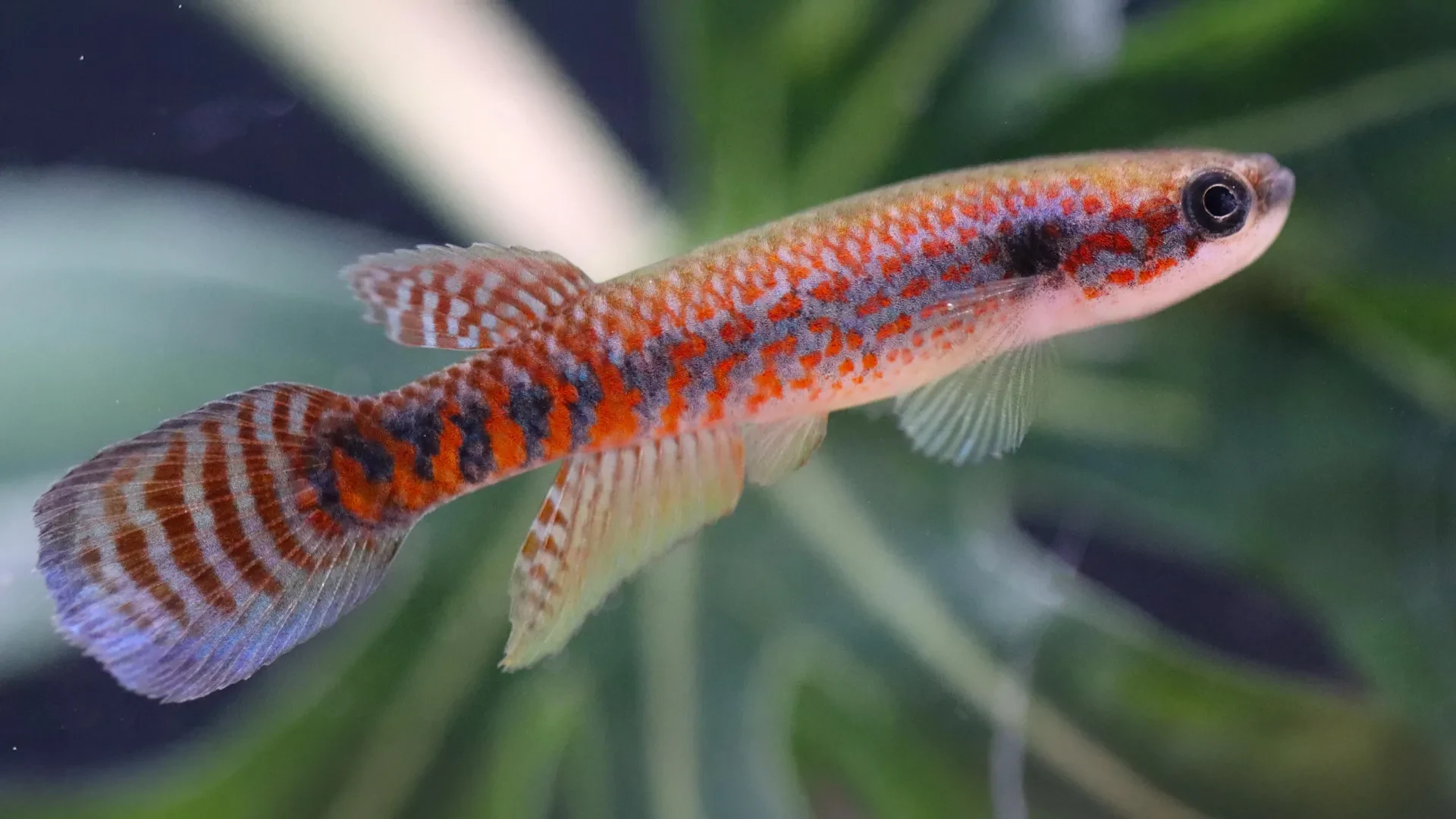
Deep within the labyrinthine forests of the Brazilian Amazon, amid shaded leaf litter and stagnant forest pools, scientists have uncovered a vibrant new vertebrate species whose very existence is already balanced on a knife-edge. Named Laimosemion laranja, this miniature freshwater fish measures less than three centimeters in standard length yet commands immediate attention through its dazzling, fiery-orange ornamentation. The discovery, detailed in the open-access journal Zoosystematics and Evolution, is a testament to the staggering, uncataloged biodiversity still hidden within South America’s rapidly shifting landscapes.
Yet, this scientific triumph is tempered by an alarming conservation reality. Known to inhabit only a severely restricted range spanning approximately 25 square kilometers in southern Amapá state, L. laranja is besieged on multiple fronts by anthropogenic pressures. Deforestation, localized mining operations, and sprawling urban encroachment have directly compromised its fragile aquatic habitats. Already, researchers caution that the species meets the stringent criteria for classification as Endangered under the guidelines of the International Union for Conservation of Nature (IUCN).
This comprehensive report explores the arduous expedition that led to the fish’s identification, examines its unique evolutionary biology within the family Rivulidae, outlines the mounting ecological threats to its survival, and highlights the urgent policy interventions proposed by an international coalition of ichthyologists to prevent its extinction before it is fully understood.
Detailed Chronology
The Expedition into the Rio Cajari Drainage
The journey of Laimosemion laranja from an unrecorded aquatic organism to a formally described species began during routine, methodical ecological fieldwork in northern Brazil. An interdisciplinary team of researchers—representing the Universidade Federal do Rio Grande do Norte (UFRN), the Instituto Peixe das Nuvens, the Universidade Federal do Pará (UFPA), and the University of West Florida—embarked on an extensive expedition into the Rio Cajari drainage basin.
The primary scientific objective of the expedition was broad yet foundational: to investigate the evolutionary trajectories, life-history strategies, and ecological adaptations of freshwater fishes belonging to the family Rivulidae. Commonly referred to as killifish, these organisms are celebrated in ichthyology for their exceptional physiological and behavioral adaptations to fluctuating tropical environments.
The researchers focused their sampling efforts on small, shallow forest streams and ephemeral pools locally known in the region as igarapés. These tannin-stained, slow-moving aquatic systems wind through dense jungle canopies, creating isolated microhabitats that often harbor high rates of endemism—species found nowhere else on Earth.
The Moment of Discovery in the Igapós
It was within one such shallow, unassuming igarapé near the municipality of Laranjal do Jari that the team encountered an anomaly. While sorting through sweep-net samples, lead researcher Yuri Abrantes and his colleagues noticed a specimen that defied immediate identification.
Unlike the drab, cryptically colored fishes that typically inhabit the dim understory pools to evade predation, this minuscule creature possessed striking, saturated pigmentation. Males exhibited distinct rows of brilliant orange spots along the anterior half of their bodies, transitioning into bold, high-contrast orange chevron patterns near the caudal peduncle. These incandescent markings blazed against a muted, pale-gray background, rendering the fish immediately conspicuous.
"We are developing a research project aimed at investigating the evolution of life-history strategies in freshwater fishes of the family Rivulidae across different biomes in Brazil," explained lead researcher Yuri Abrantes. "During our sampling in small rivers locally known as ‘igarapés’ in the Rio Cajari region, in Amapá State, we found this fish with a very striking coloration, which immediately caught our attention."
Initial observations revealed that both males and females bore pigmentation patterns entirely distinct from any known regional congeners. However, morphological distinction in the field is merely the first step in formal taxonomic description.
Rigorous Verification: Morphology Meets Genomics
To confirm whether the brightly colored fish represented a novel species, the research team initiated a rigorous multi-stage verification process back in the laboratory. Taxonomy in modern ichthyology relies on an integrative approach, combining classical anatomical examination with cutting-edge molecular genetics.
First, the researchers performed detailed morphometric and meristic analyses. This involved meticulous measurements of body proportions, counting scale rows along specific lateral tracks, and examining skeletal structures under high-powered stereomicroscopes. These physical attributes were systematically cross-referenced against type specimens and taxonomic keys of closely related Laimosemion species.
Simultaneously, the team extracted and sequenced mitochondrial DNA from the specimens. Genetic barcoding—specifically analyzing standard gene regions such as cytochrome c oxidase subunit I (COI)—provided the definitive phylogenetic context. The genetic divergence between the Rio Cajari specimens and their closest evolutionary relatives far exceeded the threshold typically required to designate a distinct species.
"It was an unexpected moment," Abrantes recalled. "Initially, what most caught our attention was the impressive coloration of the males and females, which was unlike anything we had previously encountered in the study area. This sparked our admiration and a great deal of curiosity."
With genetic data aligning with the physical anomalies, the discovery was confirmed: Laimosemion laranja was formally established as a brand-new species to science.
Supporting Context & Metrics
Taxonomy, Morphology, and Etymology
Laimosemion laranja belongs to the order Cyprinodontiformes, a diverse group of ray-finned fishes that includes livebearers, pupfishes, and killifish. Within this order, they fall under the family Rivulidae, a lineage well-known for its propensity to inhabit marginal, highly dynamic aquatic ecosystems.
- Standard Length: Adult specimens measure consistently under three centimeters (30 millimeters), placing them among the smaller vertebrate inhabitants of the Amazonian understory.
- Sexual Dimorphism: Marked differences in coloration and pattern exist between sexes. Males showcase the iconic rows of brilliant orange spots and chevron tail markings, while females exhibit muted yet distinctly unique patterns that baffle predators while aiding in conspecific recognition.
- Etymology: The specific epithet laranja is derived from Portuguese, translating directly to "orange." It serves a dual purpose: acknowledging the fish’s vibrant coloration and paying homage to Laranjal do Jari, the municipality in Amapá state where the type specimens were initially collected.
Evolutionary Significance: The Killifish Life Cycle
Beyond its striking aesthetic appeal, Laimosemion laranja provides crucial insights into the evolutionary mechanics of the Rivulidae family. Killifish are widely studied by evolutionary biologists due to the independent evolution of "annualism"—a life history strategy where populations complete their entire life cycle, from hatching to reproduction, within a single rainy season as their temporary pools evaporate.
While some killifish species are fully annual—producing drought-resistant embryos that enter diapause (suspended animation) in damp mud until seasonal rains return—the genus Laimosemion represents a fascinating transitional or alternative evolutionary pathway.
" Laimosemion represents one of the five independent origins of the annual life cycle within the family Rivulidae," noted Abrantes. "Laimosemion laranja is particularly interesting because it expands our knowledge of the diversity and evolution of this group in the region."
Understanding how these fish manage survival in seasonally volatile environments sheds light on broader ecological resilience mechanisms in tropical freshwater systems under climate stress.
Conservation Metrics and Habitat Vulnerability
The geographical distribution of Laimosemion laranja is exceptionally restricted, a factor that immediately elevates its conservation profile.
+-------------------------------------------------------------+
|               CONSERVATION STATUS METRICS                   |
+-------------------------------------------------------------+
| Known Locations:       3 isolated forest pools              |
| Estimated Range:       ~25 square kilometers                |
| Primary Threats:       Deforestation, Mining, Urbanization  |
| Proposed IUCN Status:  Endangered (EN)                      |
| Proposed Action:       Expansion of Rio Cajari Reserve      |
+-------------------------------------------------------------+- Restricted Range: Field surveys indicate that the species is currently restricted to just three small forest pools in the immediate vicinity of Laranjal do Jari. The total estimated area of occupancy spans a mere 25 square kilometers.
- Habitat Degradation: Every known location where L. laranja has been documented exhibits visible signs of severe anthropogenic stress. One pool sits alarmingly close to mining operations, where heavy machinery and mineral extraction have released sediment that visibly discolors and chokes the surrounding waterways. Another pool is located within the urban limits of Laranjal do Jari itself, suffering from industrial runoff, domestic waste, and heavy plastic pollution.
Official Statements
The formal announcement of Laimosemion laranja has drawn commentary from leading researchers involved in the study, emphasizing the dual imperatives of biodiversity cataloging and immediate habitat protection.
"We are developing a research project aimed at investigating the evolution of life-history strategies in freshwater fishes of the family Rivulidae across different biomes in Brazil. During our sampling in small rivers locally known as ‘igarapés’ in the Rio Cajari region, in Amapá State, we found this fish with a very striking coloration, which immediately caught our attention."
— Yuri Abrantes, Lead Researcher, Universidade Federal do Rio Grande do Norte (UFRN)
Reflecting on the psychological and scientific weight of discovering a vertebrate species unknown to human science, Abrantes detailed the emotional arc of the research:
"It was an unexpected moment. Initially, what most caught our attention was the impressive coloration of the males and females, which was unlike anything we had previously encountered in the study area. This sparked our admiration and a great deal of curiosity."
Once the genetic data finalized the species’ unique taxonomic status, the tone among the researchers shifted from academic curiosity to urgent advocacy:
"Once we confirmed it was something special, we saw an opportunity to contribute to increasing our knowledge of Amazonian biodiversity and to draw attention to the conservation of areas that are still poorly explored but highly threatened."
Explaining the cultural and biological rationale behind the species’ nomenclature, Abrantes emphasized community connection:
"We wanted to choose a name that would highlight a characteristic of the fish while also fostering a sense of connection with the people of the region where it was discovered."
Finally, addressing the physiological uniqueness of the genus within the broader context of ichthyology, Abrantes underscored the value of the find:
“Laimosemion represents one of the five independent origins of the annual life cycle within the family Rivulidae. Laimosemion laranja is particularly interesting because it expands our knowledge of the diversity and evolution of this group in the region.”
Future Outlook
The Race Against Time
The discovery of Laimosemion laranja is both a triumph for Brazilian science and a sobering reminder of the pressures facing the Amazon biome. As human infrastructure expands deeper into remote municipalities like Laranjal do Jari, micro-endemic species with highly specialized habitat requirements face an unprecedented squeeze. For a fish restricted to three tiny forest pools spanning just 25 square kilometers, a single localized toxic spill, an unmitigated mining expansion, or poorly planned urban zoning could drive the entire species to extinction before its ecological role is fully understood.
Policy Recommendations and Conservation Strategy
In response to these acute threats, the research team—comprising scientists from UFRN, Instituto Peixe das Nuvens, UFPA, and the University of West Florida—has formulated concrete policy recommendations aimed at regional and federal environmental authorities.
- Formal IUCN Red List Assessment: The authors have formally recommended that Laimosemion laranja be assessed and classified as Endangered (EN) under IUCN Red List criteria B1ab(iii)+2ab(iii), citing its extremely limited extent of occurrence, area of occupancy, and ongoing habitat degradation.
- Expansion of Protected Areas: The primary strategic intervention proposed by the team is the expansion of the boundaries of the nearby Rio Cajari Extractive Reserve (Reserva Extrativista do Rio Cajari). By legally incorporating the micro-basins and forest fragments currently housing L. laranja into the reserve’s protected perimeter, authorities can establish strict zoning laws that prohibit disruptive mining, curb illegal logging, and buffer the pools against urban sprawl.
- Local Water Quality Mitigation: Immediate remediation efforts are required for the urban-adjacent pools affected by plastic pollution and domestic runoff. Local municipal authorities in Laranjal do Jari must implement sustainable waste management practices and riparian zone restoration projects to filter agricultural and industrial runoff.
- Continued Ichthyological Surveys: The discovery underscores the reality that vast stretches of the Amazonian understory remain biologically under-explored. Funding must be sustained for exploratory biodiversity surveys that integrate molecular genetics with traditional taxonomy to identify other hidden vertebrate species before habitat destruction outpaces scientific discovery.
Conclusion
Laimosemion laranja burns bright—both through the incandescent orange chevrons of its scales and as a glaring warning light for Amazonian conservation. Whether this tiny killifish becomes a celebrated symbol of successful targeted conservation or another tragic casualty of undocumented extinction depends entirely on how swiftly environmental agencies respond to the researchers’ urgent calls to action. The orange jewel of the Rio Cajari has made its entrance; now, humanity must decide whether it is allowed to stay.
