In the hyper-competitive arena of modern search engine optimization (SEO), data precision is the ultimate currency. Digital marketers, content strategists, and enterprise brands are continuously locked in a zero-sum game for the top spots on Search Engine Results Pages (SERPs). At the epicenter of this digital land grab is Semrush, a powerhouse suite of SEO toolkits designed to cut through the noise of billions of search queries.
This comprehensive guide serves as an exhaustive, journalistic walkthrough of how to operationalize Semrush for advanced keyword research. Moving far beyond basic search volume checks, this analysis explores complex methodologies including existing keyword optimization, sophisticated competitor subfolder analysis, multi-channel PPC-organic gap analysis, massive topical scaling with the Keyword Magic Tool, and automated keyword clustering. By leveraging these integrated tactics, organizations can systematically uncover high-intent traffic, streamline content workflows, and capture exponential organic growth.
Detailed Chronology: The Evolution of Modern Keyword Research & Semrush’s Ascent
To understand the current dominance of Semrush in the SEO ecosystem, it is vital to trace the evolution of keyword research over the past two decades.
Phase 1: The Era of Exact Match and Keyword Stuffing (Early 2000s)
In the nascent days of search engines, keyword research was a rudimentary science. Webmasters relied on exact-match keyword targets, frequently repeating phrases indiscriminately within web page text and meta tags to manipulate rankings. Search algorithms were simple, and user intent was largely ignored in favor of sheer keyword density.
Phase 2: The Semantic Shift and Competitor Reverse-Engineering (2010s)
As Google’s algorithms evolved—ushering in foundational updates like Hummingbird, Panda, and RankBrain—search engines became sophisticated enough to understand context, synonyms, and user intent. Keyword research transitioned from isolated terms to holistic topic modeling. During this era, third-party SEO platforms began building massive link and keyword indexes, allowing marketers to reverse-engineer competitor strategies rather than guessing search trends. Semrush emerged as a critical frontrunner by offering rapid, reliable organic position tracking and domain comparison tools.
Phase 3: The Big Data, Intent-Driven Ecosystem (Present Day)
Today, platforms like Semrush operate massive, multi-billion-keyword databases (boasting over 24 billion keywords globally). Keyword research is no longer just about finding words people type into a search bar; it is about mapping the entire buyer’s journey. Modern toolkits feature advanced intent classification (informational, navigational, commercial, transactional), automated semantic clustering, and cross-channel PPC-organic data integration. Semrush has evolved from a simple rank tracker into a centralized operating system for modern content and search marketing.
Supporting Context & Metrics: Core Frameworks for Semrush Keyword Execution
Executing an effective keyword strategy requires systematic navigation of Semrush’s core pillars: the SEO Toolkit, Organic Research, the Keyword Magic Tool, Keyword Gap, and Keyword Manager. Below is an exhaustive breakdown of how to apply these features across distinct business models, complete with actionable frameworks.
1. Unearthing Existing Keyword Opportunities (Quick SEO Wins)
For websites with an established content footprint, hunting for brand-new keywords is often inefficient. The fastest path to organic growth lies in optimizing keywords where the domain is already ranking on the cusp of page one (positions 4 through 15).
The Execution Path: Navigate to the Semrush SEO Toolkit, access the Organic Research >> Positions report, and input your domain.
Applying Advanced Filters: To isolate low-hanging fruit, apply targeted filters:
Position: 4 to 15 (capturing pages sitting on page one or page two).
Search Volume: Tailored to your niche (e.g., minimum 100 monthly searches).
Keyword Difficulty (KD): Filter for realistic targets based on your site’s authority score.
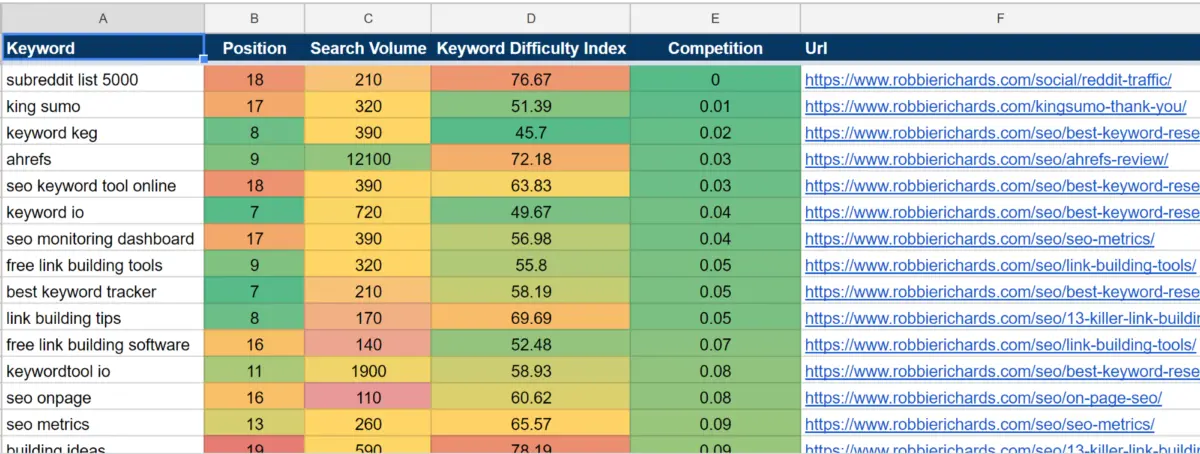
The Workflow: Extract these keywords into a dedicated "Existing" list inside Semrush, or export them into an external automated spreadsheet template. By sorting these opportunities by descending search volume and low SERP competition, you can immediately identify which near-miss pages require content expansion, schema markup, or internal linking updates to break into the top three positions.
2. Advanced Competitor Subfolder and Modifier Analysis
Analyzing competitors is the most reliable shortcut to identifying high-intent monetization terms. However, analyzing an entire competitor domain can yield thousands of irrelevant results. Precision filtering is required.
Subfolder Analysis (E-Commerce and Local Services):
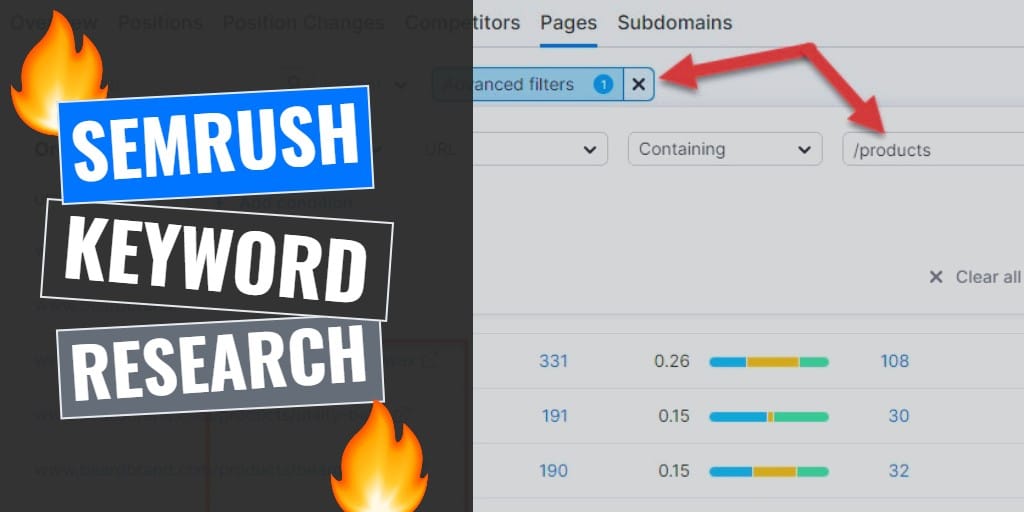
E-Commerce Example: If you run an online beard care brand, analyzing a competitor like Beardbrand via the Organic Research >> Pages report reveals top-traffic URLs. By applying a URL contains /products filter, you instantly isolate product-specific pages driving the highest-converting organic traffic.
Local Service Example: For a personal injury law firm in Florida analyzing a competitor like Dolman Law Group, filtering for the –legal-services subfolder isolates exact service-line traffic, revealing which localized legal keywords are driving high-value client acquisitions.
Keyword Modifier Filtering: If competitors do not organize content neatly into subfolders, leverage keyword modifiers. For affiliate monetization sites, filtering competitor organic position reports for terms containing "best", "vs", "review", or "software" strips away informational noise and isolates pure commercial-intent phrases.
3. Comprehensive Keyword Gap Analysis
Semrush’s Keyword Gap Tool is a formidable asset that allows users to cross-examine their domain against multiple competitors simultaneously to identify missed opportunities.
Missing Keywords: Identifies terms for which all selected competitors rank in the top 100, but your domain does not.
Weak Keywords: Highlights keywords where your domain currently ranks, but your competitors outrank you. These represent immediate optimization targets.
Advanced Filtering Protocols: To make Keyword Gap outputs actionable, layer on filters:
Set maximum KD limits to filter out unachievable enterprise keywords.
Apply search volume minimums to ensure traffic viability.
Use intent filters (e.g., Commercial and Transactional) to prioritize bottom-of-the-funnel revenue drivers.
PPC-Organic Gap Analysis: Semrush allows marketers to bridge paid and organic search data. By identifying keywords where your organic rankings sit outside the top 3, you can check if you are currently bidding on those terms in paid search. This strategy provides "paid aircover"—funding PPC ads for high-intent keywords while your organic SEO strategy works to secure the top unpaid ranking. Furthermore, analyzing competitor paid search bids reveals high-intent terms that your competitors validate with real advertising dollars, making them prime targets for your organic content calendar.
4. Massive Topical Scaling with the Keyword Magic Tool
With a database exceeding 24 billion keywords, the Keyword Magic Tool is designed for expansive topical exploration. By inputting a broad seed term, marketers can generate thousands of granular ideas.
Mid-Funnel and Comparison Targeting: For affiliate and SaaS businesses, filtering the Keyword Magic Tool for consideration-stage modifiers (such as product comparisons like "Ahrefs vs Semrush" or "Moz vs Semrush") surfaces high-intent searchers actively evaluating solutions. Ranking for these comparison terms captures qualified referral traffic ready to convert.
Question-Based Keyword Mining: By utilizing the Questions filter tab within the Keyword Magic Tool, marketers can extract bottom-, middle-, and top-of-the-funnel inquiries (e.g., "how to do keyword research" or "what is search intent in SEO"). These question keywords typically feature lower keyword difficulty scores, making them ideal for capturing featured snippets and building broad topical authority.
5. Automated Topical Keyword Clustering via Keyword Manager
One of the most labor-intensive aspects of SEO historically has been manual keyword grouping. Semrush’s Keyword Manager automates this by creating topical clusters from scratch or organizing massive uploaded keyword lists.
Creating Clusters from Scratch: Inputting up to 5 seed keywords and a target domain allows Semrush to automatically group hundreds of related terms into distinct semantic clusters. The tool flags "high ranking potential" clusters—indicating high search volume paired with manageable keyword difficulty.
Analyzing Content References: Before writing, marketers must inspect the "Content references" section within a cluster. This reveals whether competitors are ranking for the cluster using a single consolidated page or separate, dedicated sub-service landing pages. Matching this structural intent dictates whether you should optimize an existing page or deploy a brand-new URL.
Clustering Existing Lists: Marketers can paste unorganized lists of hundreds of raw keywords into the Keyword Manager, which instantly segments them into coherent, siloed topical buckets, dramatically streamlining the content production roadmap.
Official Statements & Industry Perspectives
Industry leaders and digital marketing pioneers have long praised the interconnected architecture of modern SEO platforms. The capacity to seamlessly transfer curated keyword lists directly from research tools into the Position Tracking module for ongoing monitoring, or into the SEO Writing Assistant for on-page content optimization, represents a paradigm shift in workflow efficiency.
"The true power of an enterprise SEO suite does not lie merely in the size of its database, but in the seamless frictionlessness of its workflow integration. When research, gap analysis, clustering, and content production live within a single ecosystem, execution velocity multiplies exponentially."
— Senior Enterprise SEO Strategist
Rather than forcing marketers to export CSV files across disparate, standalone software utilities, integrated ecosystems like Semrush preserve metadata integrity, maintain historical tracking continuity, and drastically reduce human error during data migration.
Future Outlook: The Next Frontier of Keyword Research
As artificial intelligence, large language models (LLMs), and Search Generative Experience (SGE) continue to reshape the search landscape, the role of traditional keyword research is undergoing a profound metamorphosis.
Intent Over Exact Match: The future belongs to semantic intent modeling. As AI-driven search engines synthesize answers directly on the SERP, users are submitting more conversational, complex, and multi-intent queries. Tools like Semrush are adapting by leaning heavily into intent classification and deep topical clustering.
Entity-Based Optimization: Keyword research is rapidly merging with entity SEO. Moving forward, platforms will increasingly map relationships between real-world concepts, brands, locations, and products rather than isolated text strings.
Real-Time Data Agility: The velocity of digital algorithms demands real-time keyword tracking and dynamic gap analysis. As search volatility increases due to continuous core algorithm updates, agile marketers who utilize automated clustering and integrated tracking suites will maintain a decisive competitive advantage.
Conclusion
Mastering Semrush for keyword research is no longer an optional skill for digital marketers—it is a core operational requirement. By systematically executing existing keyword optimizations, performing rigorous subfolder and competitor gap analyses, scaling topical reach via the Keyword Magic Tool, and leveraging automated semantic clustering, brands can future-proof their organic strategies and secure enduring authority in their respective markets. To begin implementing these advanced frameworks, professionals can leverage a full-access trial of Semrush to audit their digital footprint step-by-step.