

Executive Overview
In the high-stakes world of Search Engine Optimization (SEO), one question continues to baffle site owners, marketers, and agency heads alike: "How many backlinks do I actually need to rank?"

For years, the conventional wisdom surrounding link building has leaned heavily toward brute force. Many digital marketers operate under the assumption that outranking a competitor requires matching or doubling their raw backlink counts, leading to bloated budgets, wasted outreach efforts, and diminishing returns.

However, a granular examination of Search Engine Results Pages (SERPs) reveals a more nuanced reality: often, you need far fewer backlinks than you think.

Achieving first-page dominance is not merely a numbers game dictated by raw volume. Instead, it is a calculated equation that balances content relevance, domain authority distribution, precise backlink filtering, and ongoing link velocity. This comprehensive guide outlines a repeatable, five-step framework designed to eliminate guesswork. By conducting an upfront analysis of your high-converting assets, you can accurately forecast the quantity and quality of backlinks required to climb into the top three to five positions—and determine the maintenance links needed to defend your real estate over time.

Detailed Chronology & Methodology: The 5-Step Ranking Blueprint
To transition from speculative link building to a predictable, data-driven acquisition model, SEO professionals must adopt a structured analytical sequence. This methodology leverages industry-standard intelligence tools—such as Ahrefs Site Explorer—to reverse-engineer competitor success and isolate the exact pathways required for ranking ascension.

Step 1: Identify Your Highest Priority Backlink Targets
Before calculating how many links you need, you must determine where those links will generate the highest return on investment (ROI). Throwing links at low-value, non-converting pages is a cardinal sin in advanced SEO. Your primary targets should always be high-converting commercial or informational assets already lingering on the bottom half of page one (positions four through ten).

There are two primary pathways to unearth these high-priority assets:

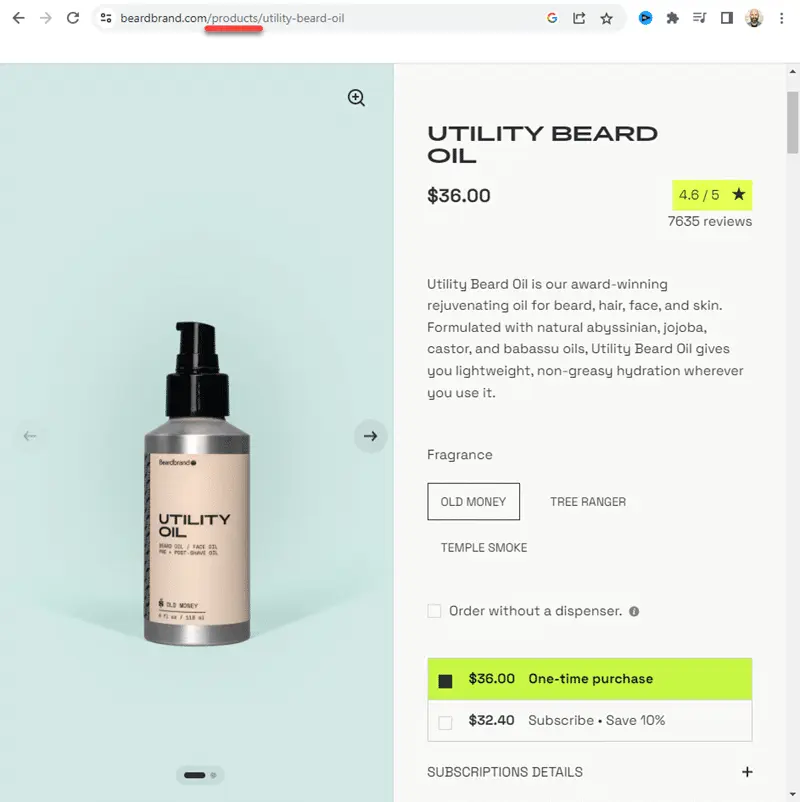
- Analyzing Subfolders: Many structured websites house their most critical business assets within dedicated subfolders, such as
/products/,/features/,/industries/,/reviews/, or/services/. By navigating to your main navigation, footer, or plugging your domain into Ahrefs Site Explorer’s Subfolders report, you can map out these hubs. Once identified, insert the subfolder path into the Top Pages report and apply a Positions filter for ranks 4–10. This exposes immediate opportunities where a minor influx of authority can catapult your revenue-driving pages into top-tier visibility. - Leveraging Keyword Modifiers: If your site architecture does not rely heavily on clean subfolder segmentation, keyword modifiers offer an alternative route. Within the Top Pages report, apply a Keyword Contains filter capturing commercial intent terms such as best, software, tools, platform, solutions, alternatives, vs, or specific product and service types. This instantly curates a list of high-intent comparison and listicle articles ripe for optimization and link enhancement.
Step 2: Review SERP Data and Benchmark Competitors
Once you have isolated a target asset—such as an established listicle reviewing industry tools—the next phase involves deep-diving into the SERP ecosystem.

- Navigate to the primary keyword in your Top Pages report and open its Keyword Explorer overview.
- Scroll to the SERP overview report to examine the current top 10 ranking URLs and their associated organic traffic potential.
- Pay close attention to the Referring Domains (RD) column.
A critical caveat: Raw referring domain counts can be deeply misleading. A competitor might boast hundreds of referring domains, but many could be low-quality, obsolete, or irrelevant. To conduct an accurate "apples-to-apples" comparison, filter your gaze through three specific lenses:

- Domain Rating (DR) Parity: Identify a competitor whose Domain Rating is comparable to or slightly lower than your own.
- Content Type and Format Match: Ensure you are comparing similar content structures (e.g., comparing a blog-style listicle against another listicle, rather than a product landing page).
- The Leanest Competitor: Select the ranking competitor within your tier that has the lowest referring domain count. This establishes your baseline minimum viable target.
Step 3: Cleanse and Filter Competitor Backlink Profiles
Raw competitor metrics often inflate the perceived difficulty of a keyword. To uncover the true volume of links moving the needle, you must audit the competitor’s backlink profile.

- Right-click on the competitor’s Referring Domains count and open the Referring Domains report.
- Apply strict backlink filters to strip away noise. Filter for dofollow links, active status, and specific domain rating thresholds.
- For example: A competitor might initially display 85 referring domains. However, once filtered for high-value criteria, that number may plummet down to a lean 22 domains.
- Manually skim the remaining list to eliminate topically irrelevant sites (such as spam directories or unrelated niche blogs). Subtract these from your target tally to arrive at your final, highly realistic backlink requirement.
Step 4: Assess Domain Rating Distributions and Acquisition Tactics
Quantity without quality is a recipe for algorithmic stagnation. Knowing you need 22 domains is only half the battle; you must understand the caliber of those domains by evaluating Domain Rating distributions.

Examine how many links your benchmark competitor holds in elite tiers (e.g., DR 80+ or DR 70–79). If a competitor’s profile is stacked with high-authority links, closing the gap will require a patient, sophisticated outreach campaign.

Furthermore, click through the competitor’s referring domain links to reverse-engineer how they built them. Look for patterns:

- Are they acquiring links via strategic guest posting on industry publications?
- Are they leveraging digital PR, expert roundups, or content collaborations?
Arming yourself with this tactical intelligence ensures your link-building strategy mirrors what is already proven to work within that specific SERP ecosystem.

Step 5: Determine Link Velocity Targets for Long-Term Defense
Ranking on page one is an achievement; defending that real estate is an ongoing campaign. High-priority SERPs are dynamic, meaning competitors continually inject new links to protect their rankings. To remain competitive, you must calculate your link velocity targets—the number of links you need to build each month or quarter.

By toggling your competitor analysis reports to display New backlinks across 30-day, 90-day, and 180-day windows, you can gauge ongoing acquisition activity. If a competitor has generated zero new qualifying referring domains over the past month, your ongoing maintenance burden will be minimal. You simply execute your initial campaign to close the current gap, followed by a modest quarterly cadence (e.g., one or two high-value links per quarter) to secure your position.

Supporting Context & Metrics: Case Studies in Efficiency
To contextualize this theoretical framework, consider two practical applications from established SEO case studies:

- Case Study A (The Listicle Refresh): An established affiliate marketer evaluated a core listicle targeting "SERP tracking tools." The post was stagnant in the mid-lower tier of page one, holding only 9 referring domains against a primary competitor (Marketing Arsenal, DR 56) with 85 raw referring domains. A surface-level glance suggested an insurmountable 76-link deficit. However, after applying rigorous backlink filters and removing irrelevant noise, the true competitive threshold dropped to just 22 targeted domains. Factoring in a domain rating advantage (DR 70 vs. DR 56) and a low monthly link velocity from the competitor, the publisher realized they only needed ~22 quality links to close the gap, paired with a minor content refresh, to capture top-three visibility and potentially triple their organic traffic.
- Case Study B (Enterprise Tools Optimization): A secondary audit focused on an "enterprise SEO tools" post ranking at position nine. A competitor (Plerty, DR 71) held position five with a mere three referring domains. After filtering Plerty’s profile, the requirement shrank to just two high-authority domains in the DR 70–79 bracket. With zero proactive link building previously applied to the author’s post, deploying a lightweight content update combined with a couple of targeted, high-DR acquisitions offered a clear, high-ROI pathway into the top five positions, unlocking a projected 3x to 4x surge in monthly organic visits.
Future Outlook: The Evolution of Link Equity in Modern Search
As search engine algorithms continue to evolve through advancements in machine learning, natural language processing, and semantic search (such as Google’s continuous core updates and AI-driven Search Generative Experiences), the mechanical nature of link building is undergoing a profound transformation.

The future of ranking does not belong to those who build the most links, but to those who deploy capital and resources with surgical precision. As demonstrated by this 5-step methodology, data-driven SEO audits prove that massive link budgets are frequently misallocated. By carefully calculating true referring domain deficits, filtering out link spam, matching content formats, and tracking ongoing competitor velocity, digital marketers can maximize their operational efficiency.

Ultimately, the publishers who win in tomorrow’s SERPs will be those who treat backlinks not as a volume game, but as a high-precision instrument—securing the exact quantity and quality of authority needed to satisfy user intent, elevate content relevance, and maximize bottom-line business growth.
