

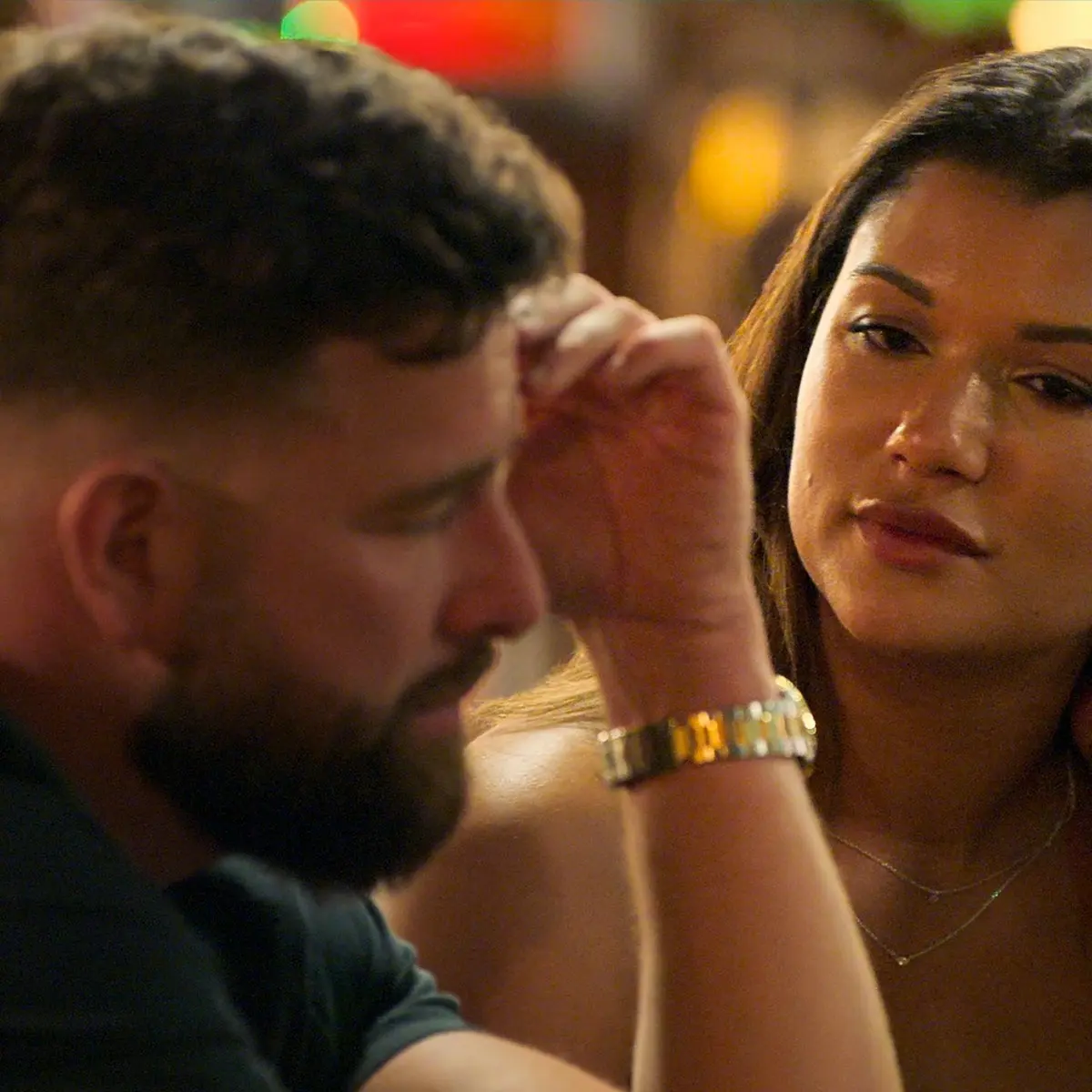
The cultural phenomenon that is Netflix’s Love Is Blind continues to captivate millions globally, transforming the traditional dating show format into a high-stakes sociological experiment. However, beneath the glossy sheen of pod-formed romances and fairy-tale altars lies an intense pressure cooker that frequently tests the psychological limits of its participants. Season 11, in particular, delivered unprecedented drama, culminating in explosive meltdowns, unexpected altar breakups, and subsequent off-screen fallout that has kept the reality television community buzzing.
At the center of this season’s firestorm is Rob Feeley, a 40-year-old AI software salesman whose volatile behavior and subsequent public outbursts drew intense scrutiny from viewers. In an exclusive post-show interview, Feeley finally broke his silence regarding the unseen pressures, defensive mechanisms, and emotional toll that led to his dramatic unraveling on camera. Alongside Feeley’s tumultuous journey, Season 11—and the retrospective tracking of previous seasons spanning Seasons 7 through 10—illustrates a broader, sobering truth: the transition from the insulated pod environment to the harsh realities of the real world often shatters even the most promising connections. This comprehensive retrospective explores the chronological breakdown of these high-profile relationships, the psychological mechanics behind reality TV pressure, and the current status of couples navigating life after the cameras stop rolling.
Detailed Chronology
The Season 11 Meltdown: Rob Feeley and Michaella Giorgio
The unraveling of Rob Feeley and Michaella Giorgio stands out as one of the most jarring arcs of Season 11. Initially appearing as a frontrunning couple whose chemistry in the pods felt natural and secure, their relationship hit a brick wall during Episode 10. The catalyst involved two separate public outbursts by Feeley: the first following an incident where a bartender cut off one of his friends at a local hangout, and the second occurring at a group mixer.
Confronted with an on-camera sit-down alongside his pod ex, Diana Perrone—despite being happily engaged to Michaella and maintaining that they had achieved total closure—Feeley spiraled. Believing the interaction was an unnecessary production setup designed to manufacture drama, Feeley shouted at the mixer that he was going to be "cancelled" and accused Netflix of trying to "manipulate this whole thing into something crazy."
The fallout was immediate. Michaella, deeply shaken by Feeley’s volatile behavior and the mounting red flags, broke down in tears and called off the wedding, declaring that she could not marry him under any circumstances. In retrospect, Feeley acknowledged that the intense filming environment, coupled with unaddressed personal stressors, caused him to "crack." Following the split, Feeley reportedly committed to a rigorous 50-day period of absolute sobriety and intense professional focus, followed by 75 days of strict health regimens, therapy, and cold plunges to recalibrate his life.
Season 11: Other Notable Splits and Standouts
While Feeley and Giorgio dominated headlines, the rest of the Season 11 roster faced similarly rocky roads:
- Blake Carver & Erika Ellis (Split): Despite seemingly smooth sailing post-pods, yacht captain Blake and marketing manager Erika realized their lifestyles were fundamentally incompatible just one week before their wedding. Blake’s extended absences at sea and differing timelines for starting a family led to a mutual, albeit emotionally draining, parting of ways at the altar.
- Wilson Monteiro & Wilnie Louis (Split): Domestic friction sank this pairing. Disagreements over household chores, cooking duties, and Wilnie’s emotionally draining career as a mental health counselor created an insurmountable divide, culminating in Wilson calling off the marriage.
- Cam Halloran & Aneha Singh (To Be Determined): Cultural and religious differences, compounded by family disapproval, plagued this couple in the real world. At the altar, Aneha asked for more time, leaving Cam in a state of emotional limbo that required off-camera processing.
- John Shannon & Sarah Williams (Divorced): Serving as the sole successfully married couple of Season 11—initially overcoming fundamental ideological disagreements on politics and healthcare—their union ultimately dissolved when Sarah filed for divorce just over a year after tying the knot.
- Scott "Stew" Stewart & Jacqueline "Jax" Guelli (Split): Fizzling out immediately after the reveal, the pair nevertheless managed to salvage a mature friendship once the emotional overload of the experiment subsided.
A Retrospective Look: Seasons 7 Through 10 Status Updates
The volatility of Love Is Blind extends far beyond Season 11, with previous seasons yielding equally dramatic long-term outcomes:
- Season 10 Highlights: While couples like Victor "Vic" St. John and Christine Hamilton found lasting marital bliss, others suffered high-profile fractures. Brittany Wicker and Devonta Anderson’s broken engagement paved the way for Devonta to marry an old friend and welcome a son, Kyler Lee. Meanwhile, Jessica Barrett found a second chance at love with pod-mate Haramol Gill after Chris Fusco confessed a lack of physical attraction.
- Season 9 & 8 Milestones: Megan Walerius and Jordan Keltner’s lifestyle clashes ended in a dramatic split, though Megan later welcomed a son, Brooks, with partner Paul Wegman. Taylor Haag and Daniel Hastings successfully weathered early social media storms to celebrate two years of marriage, proving that some pod connections can endure the test of time.
- Season 7 Turbulence: Marissa George and Ramses Prashad’s shocking altar split stunned viewers, though Marissa later found happiness by marrying former Perfect Match contestant D. Johnson. Conversely, Taylor Krause and Garrett Josemans celebrated their second wedding anniversary, remaining a shining example of the show’s rare compatibility success stories.
Supporting Context & Metrics
The recurring breakdown of relationships across multiple seasons of Love Is Blind raises critical questions regarding the psychological sustainability of accelerated dating formats. Industry analysts and behavioral psychologists frequently point to the "pod architecture" as a unique variable that distorts traditional relationship progression.
In the controlled environment of the pods, participants communicate without the distractions of physical appearances, socio-economic markers, or external environmental stressors. This hyper-focused intimacy often compresses months—or even years—of emotional bonding into a matter of days. Consequently, couples frequently mistake intense emotional vulnerability for foundational compatibility.
When these pairs transition to the "real world"—facing financial realities, career pressures, domestic chore divisions, and public scrutiny—the disparity between pod-reality and worldly-reality becomes stark. Metrics from franchise history show that overall divorce and breakup rates post-experiment hover significantly higher than traditional marriage demographics, underscoring the immense friction generated when manufactured intimacy collides with everyday life.
Official Statements
The participants at the center of these media storms have been vocal about their experiences, offering rare glimpses into the inner workings of reality television production and personal accountability.
Reflecting on his explosive behavior, Rob Feeley maintained a stance of accountability while highlighting the immense psychological pressure of the set:
"I acted not in character," Feeley admitted in his exclusive interview. "That’s not really who I am. Those couple scenes weren’t who I am. I don’t want to blame production. I don’t want to blame anybody but myself… It’s just a lot of pressure, and I didn’t know how to deal with the pressure."
Michaella Giorgio captured the heartbreak of the experience during her emotional on-screen exit:
"I don’t deserve any of what I’m getting," she expressed through tears. "I love him. It’s just a lot. And we’re not getting married. I cannot marry this man under any circumstances."
Similarly, past participants have emphasized the vital need for personal reflection post-show. Reflecting on her journey during a podcast appearance, Season 7’s Hannah Jiles noted:
"I’ve learned a lot, I’ve learned there’s things I need to work on… I am a very direct person. I know that, but I think my delivery is rough. And I’ve learned that delivery is everything."
Future Outlook
As Love Is Blind continues to greenlight subsequent seasons and expand its global footprint, the franchise faces a dual mandate: maintaining the dramatic, high-engagement storytelling that fans crave while addressing the growing mental health concerns of its cast members.
The candid admissions from participants like Rob Feeley signal a shifting cultural conversation surrounding reality television. As audiences become more sophisticated, there is an escalating demand for transparency regarding the psychological support provided to contestants before, during, and after filming.
Looking ahead, future seasons will likely need to incorporate more robust psychological vetting and post-production integration support to mitigate the severe burnout and public scrutiny experienced by participants. For the couples currently navigating the pods, and for those yet to enter them, the ultimate takeaway remains clear: while love may be blind, surviving the harsh light of reality requires far more than emotional intensity—it demands resilience, shared values, and a willingness to confront the unvarnished truth of everyday life.
