

Executive Overview
With less than a week remaining before the high-stakes midterm elections, the Republican Party’s strategy has descended into a desperate reliance on overt xenophobia and anti-Muslim bigotry. Across the country, the political landscape is shifting away from the GOP. President Donald Trump has been dispatched to states like Mississippi to shore up tightening races, such as Senator Cindy Hyde-Smith’s unexpectedly vulnerable reelection bid, while various Cabinet members traverse the map speaking to low-attendance rallies.
Yet, beneath these logistical maneuvers lies a deeper panic. Recognizing that traditional messaging and economic talking points are failing to secure a decisive advantage, Republican leadership has resurrected a familiar, regressive playbook: weaponizing racial and religious animus.
For the better part of a decade, the organizing principle of the modern conservative movement has been xenophobia. While promises of economic relief and domestic stability have largely gone unfulfilled, the administration has doubled down on immigration crackdowns, targeting Latino populations and Black immigrants from Haiti. However, as these tactics yield diminishing returns and fail to capture the suburban demographic momentum required to hold key congressional seats, the MAGA machinery has pivoted back to a deeply entrenched political tool: Islamophobia.
From attacks on prominent Muslim lawmakers to baseless smears against candidates running in crucial swing states, the GOP’s final sprint to the midterms is characterized by rhetoric that abandons even the thin veil of political dog-whistling, opting instead for raw, unabashed bigotry.
Detailed Chronology: The Escalation of Right-Wing Rhetoric
The ideological trajectory of the contemporary Republican Party did not arrive at this juncture overnight. It is the culmination of years of calculated rhetorical escalation, shifting from coded language to explicit prejudice.
The Spring and Summer Pivots
Months prior to the final weeks of the campaign, the GOP experimented with several distinct lines of attack. Initially, the party leaned heavily into red-baiting, attempting to paint mainstream Democrats as communist sympathizers. This reactionary wave was triggered by the unexpected 2025 mayoral victory of Zohran Mamdani in New York and the legislative primary wins of several democratic socialist candidates. Concurrently, the party maintained its perennial focus on transgender Americans, with leadership repeatedly—and falsely—claiming that elementary schools were performing gender-affirming procedures without parental consent.
As the calendar turned toward the final stretch of the midterms, these strategies proved insufficient to mobilize the base uniformly. Consequently, the focus shifted back to immigration, broadening the scope of targeted communities. Haitian immigrants became focal points of right-wing conspiracy theories, most notably amplified by Vice President JD Vance’s amplification of baseless claims regarding cultural integration. A brief detour into anti-Indian American sentiment—highlighted by a viral social media post from Texas Railroad Commissioner nominee Bo French—revealed internal fractures within a party whose ranks include prominent figures of South Indian heritage, such as Vance and Ohio gubernatorial nominee Vivek Ramaswamy.
The Return to Islamophobia
When these disparate avenues failed to achieve the desired polling traction, the conservative apparatus defaulted to a reliable historical cornerstone: Islamophobia. The modern strain of anti-Arab and anti-Muslim rhetoric traces its roots deeply into the post-9/11 political psyche, though it was significantly mainstreamed during Donald Trump’s 2016 presidential run.
During that cycle, Trump capitalized on anxieties surrounding lone-wolf terrorist attacks, promising extreme interrogation tactics and floating proposals to bar Muslim immigrants from entering the United States. This rhetoric culminated in the signing of Executive Order 13769—widely known as the "Muslim ban"—in January 2017, which, following multiple legal revisions, was ultimately upheld by the Supreme Court in the landmark Trump v. Hawaii ruling of 2018.
In the closing days of the 2026 midterms, this historical playbook has been updated for contemporary electoral utility, targeting specific political figures and candidates to stoke maximum outrage among the base.
Supporting Context & Metrics: Targeting Somalis and Progressive Leadership
The current wave of Islamophobic rhetoric has centered intensely on two primary focal points: the Somali American community—particularly in Minnesota—and Dr. Abdul El-Sayed, the Democratic nominee for the U.S. Senate in Michigan.
The Targeting of Minnesota’s Somali Community
Minnesota has long been a primary target for right-wing political antagonism, intensified after former Governor Tim Walz was selected as the Democratic vice-presidential nominee in 2024. In the years since, the state’s vibrant Somali American community has faced relentless scrutiny from conservative media and administration officials.
President Trump has frequently used dehumanizing language to describe Somalia, characterizing it as a "sh*thouse country" and asserting that the vast majority of Somali immigrants are unemployed criminals who disproportionately drive luxury vehicles. During recent campaign stops, Trump explicitly urged white Minnesotans to "fight back" against the state’s Somali population, claiming that local residents are viewed by immigrants as "weak and stupid people."
This rhetoric targets Representative Ilhan Omar (D-Minn.), who has long weathered personal and political attacks due to her identity as a Black, Muslim, immigrant woman who wears a hijab. Fleeing the Somali Civil War as a child and spending years in a Kenyan refugee camp, Omar has represented Minnesota’s 5th Congressional District since 2019, consistently serving as a prominent symbol for the intersectional targets of MAGA animus.
The Michigan Senate Race and Dr. Abdul El-Sayed
The escalation of anti-Muslim rhetoric has also manifested sharply in the Great Lakes State, where Dr. Abdul El-Sayed is locked in a competitive race for the U.S. Senate. El-Sayed, a Michigan-born epidemiologist and former health official, has found himself on the receiving end of unprecedented personal attacks from national Republican figures.
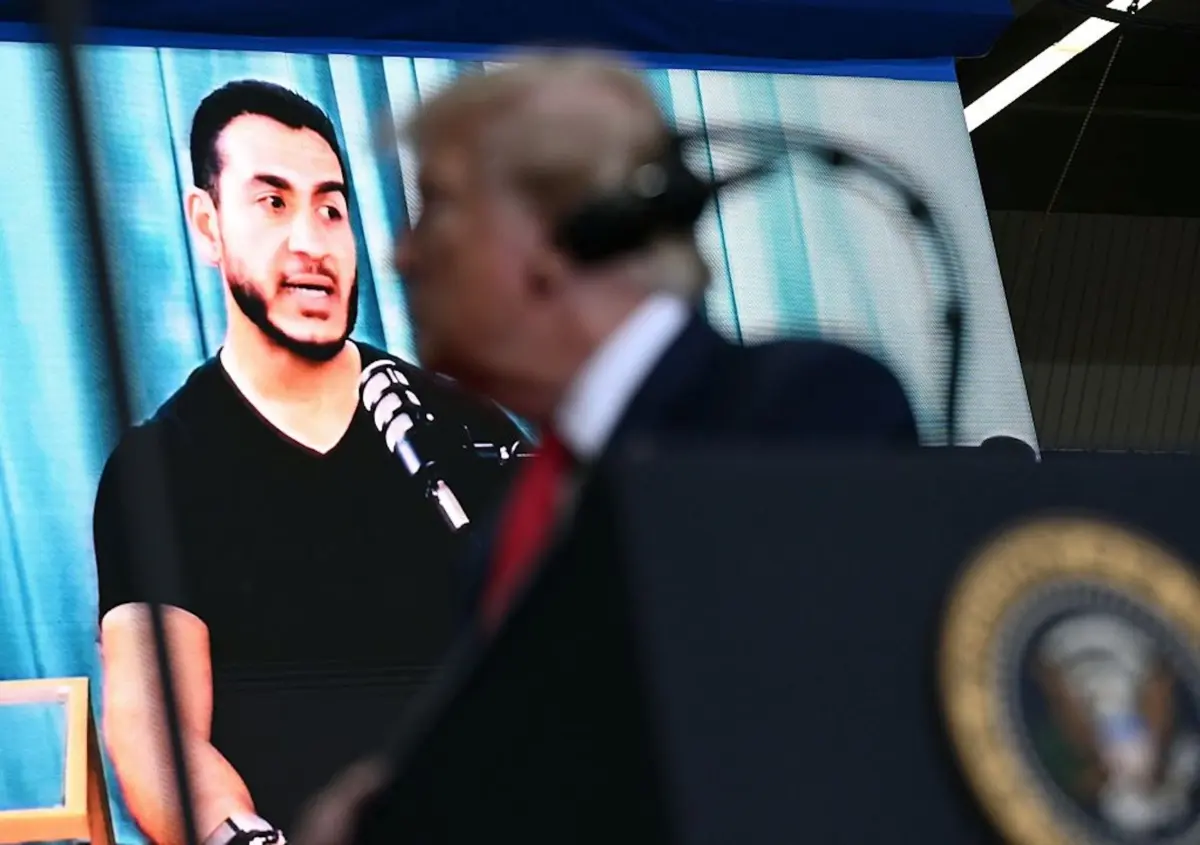
Earlier in the week, Vice President JD Vance characterized El-Sayed during a campaign appearance as a "very, very evil" and a "psychopath" who actively promotes "anti-white racial hatred"—deploying the modern right’s frequent inversion of racial grievance. President Trump compounded these attacks at a Michigan rally, baselessly labeling El-Sayed a "violent jihadist."
The rhetoric reached the administration’s broader apparatus when Health and Human Services Secretary Robert F. Kennedy Jr. echoed these sentiments, publicly claiming that the global population of over one billion Muslims has contributed nothing to civilization and has never produced major intellectual or scientific achievements—a verifiable falsehood easily disproven by centuries of historical contributions in mathematics, medicine, and the arts.
Official Statements and Political Analysis
The open embrace of explicit bigotry represents a distinct strategic evolution from historical Republican campaign tactics. For decades, the party relied heavily on sophisticated dog-whistling to maintain a plausible deniability regarding racial animus, ensuring that suburban, college-educated voters were not alienated by overt prejudice.
The Legacy of Coded Language
Political analysts frequently point to the strategic framework laid out by late GOP strategist Lee Atwater in the late 20th century. Atwater famously detailed how the Republican Party transitioned from using explicitly racist language to employing coded terminology—such as references to "welfare," "busing," and "forced integration"—to appeal to racial anxieties without triggering moral outrage.
This strategy was pioneered under President Richard Nixon, whose adoption of the phrase "law and order" served as a rhetorical proxy for cracking down on civil rights protests and urban unrest. Similarly, Ronald Reagan utilized imagery such as the mythic "welfare queen" during his 1976 primary campaign and launched his 1980 general election campaign in Philadelphia, Mississippi—near the site where three civil rights workers were murdered—by explicitly championing "states’ rights."
Decades later, Donald Trump modernized this methodology by spearheading the "birther" conspiracy theory against President Barack Obama, seamlessly fusing the conservative movement’s burgeoning Islamophobia with foundational American nativism. Trump’s deliberate and frequent emphasis on Obama’s middle name—"Barack Hussein Obama"—served as an early blueprint for the rhetorical normalization of xenophobia in mainstream politics.
Observers Sound the Alarm
Civil rights organizations, watchdogs, and independent analysts have expressed profound alarm at the mainstreaming of unvarnished Islamophobia in the final stretch of the midterms. Critics argue that moving past the subtle dog-whistles of the Atwater era into direct, dehumanizing attacks on entire nationalities and religious groups creates an immediate physical danger for minority communities across the country.
"When national leaders characterize millions of people based on their faith or national origin as ‘garbage,’ ‘evil,’ or ‘jihadists,’ they are not engaging in policy debates," said a spokesperson for a prominent civil rights advocacy group. "They are actively inciting hostility, lowering the threshold for political violence, and tearing at the fabric of a pluralistic society."
Future Outlook: The Post-Midterm Political Horizon
As the 2026 midterms reach their final hours, the long-term implications of the GOP’s messaging strategy are coming into sharp focus.
Should the strategy succeed in turning out the base and preserving narrow legislative margins, it will institutionalize open bigotry as a primary, permanent instrument of conservative electoral strategy. The historical guardrails that once forced political figures to distance themselves from explicit racism or Islamophobia have been entirely dismantled. Observers note that once a political party crosses the threshold from coded dog-whistles to open dehumanization, de-escalation becomes exceedingly difficult.
Conversely, if the strategy fails to salvage the midterms for Republicans, the party faces an internal reckoning over its demographic viability. The reliance on shrinking voter coalitions through exclusionary rhetoric risks alienating a rapidly diversifying American electorate, particularly in fast-growing suburban and metropolitan counties where demographic shifts are reshaping the political map.
Regardless of the immediate electoral outcome on election night, the normalization of Islamophobia and racial animus at the highest levels of government has fundamentally transformed the American political lexicon, setting a dangerous precedent for future democratic cycles.
