

Executive Overview
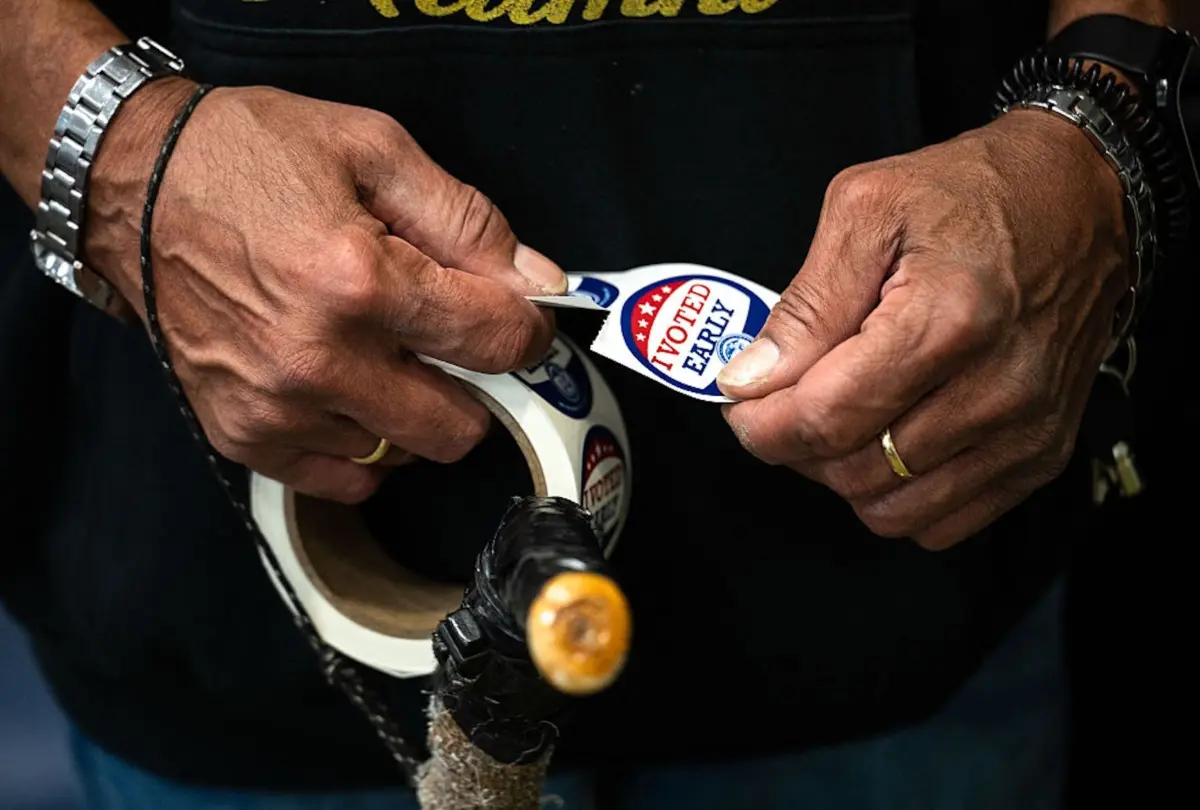
As the United States stands on the precipice of the 2026 midterm elections, an extraordinary political phenomenon is unfolding across the American South. Driven by a psychological principle as old as human behavior—loss aversion—and a historical lineage rooted in resilience against systemic oppression, Black Americans are turning out for early voting in numbers that have stunned political analysts, pollsters, and campaign strategists alike.
This mass mobilization comes just six months after the U.S. Supreme Court issued a landmark ruling in Louisiana v. Callais, effectively gutting the remaining enforcement mechanisms of the historic Voting Rights Act (VRA). Rather than suppressing political participation, the conservative court’s decision—paired with aggressive, partisan redistricting maps orchestrated by MAGA Republicans—has ignited a profound electoral backlash. Coined by political scientists as the "Blacklash," this wave of civic engagement is rewriting expectations in deeply conservative strongholds like Mississippi, Louisiana, and South Carolina.
What makes this mobilization uniquely potent is its multi-generational character. While veterans of past civil rights struggles remain steadfast at the polls, early-voting metrics indicate a powerful surge among young Black voters. This collective muscle memory threatens to upend the conventional wisdom of the Trump administration’s second term and could deliver historic upsets that alter the balance of power in Washington.
Detailed Chronology: From Courtroom Blows to the Ballot Box
To understand the urgency driving Black voters to the polls in the fall of 2026, one must examine the rapid escalation of legal and political maneuvers that have defined the post-2024 political landscape.
- November 2024: Donald Trump secures a surprising victory in his second presidential campaign, capturing approximately 15% of the national Black vote—nearly doubling his 8% share from the 2020 election. The result emboldens Republican strategists, who begin to view Black communities as fertile ground for future conservative realignment.
- January 2025: Trump returns to the White House. The administration immediately initiates sweeping, aggressive policies, including mass deportation sweeps and aggressive rollbacks of civil rights protections, alongside the targeted dismantling of policies supporting the LGBTQ+ community and marginalized groups.
- April 30, 2026: The U.S. Supreme Court delivers its catastrophic ruling in Louisiana v. Callais. By invalidating key provisions of the Voting Rights Act, the conservative majority clears the path for Southern legislatures to radically redraw congressional maps, systematically diluting minority voting power and reducing heavily Black regions into single majority-minority districts.
- May–August 2026: Republican-controlled state legislatures in the South act swiftly on the Callais ruling, passing new electoral maps designed to lock in structural advantages for the white majority.
- September–October 2026: Rather than causing political apathy, the legal disenfranchisement sparks immediate grassroots organizing. Data begins to reflect an unprecedented surge in early voting among African Americans. High-profile Senate and congressional races in Mississippi, Louisiana, and South Carolina suddenly tighten from safe Republican holds into true toss-ups.
- November 3, 2026: As early voting concludes, final metrics confirm historic turnout levels among Black voters on the eve of Election Day, setting the stage for potential electoral upsets.
Supporting Context & Metrics: The Anatomy of the "Blacklash"
Behavioral economics teaches that loss aversion dictates that the pain of losing something is felt twice as acutely as the joy of gaining it. In the context of modern American politics, when fundamental rights are stripped away—as seen with the overturning of Roe v. Wade in 2022 and the gutting of the Voting Rights Act in 2026—the resulting civic reaction is fierce and uncompromising.
The statistics emerging from early voting data in the 2026 midterms paint a vivid picture of this dynamic:
- South Carolina: According to polling aggregates and early voting breakdowns reported by The New York Times, Black voters accounted for approximately 28% of all early votes cast, despite making up roughly 20% of the overall electorate in recent election cycles. This surge has forced Donald Trump to make multiple emergency campaign stops to rescue floundering Republican candidates.
- Louisiana: Following the redrawing of its congressional maps to leave only a single majority-Black district in a state where one-third of the population is African American, Louisiana has experienced presidential-level early turnout among Black residents. In a surprisingly tight open Senate race, early voting data reveals that 34% of early ballots were cast by Black Louisianans, with Democratic challenger Jamie Davis holding a six-point advantage among early voters over Republican Julia Letlow.
- Mississippi: Home to the nation’s largest percentage of Black residents, the state has witnessed a massive national mobilization. Former prosecutor and judge Scott Colom’s insurgent Senate campaign against incumbent Republican Cindy Hyde-Smith has drawn heavy-hitting surrogates—including former President Barack Obama, Bill Clinton, and Kamala Harris—as surging Black voter turnout combines with disaffected moderate white voters to narrow polls.
This groundswell defies the narrative that minority voters would permanently drift toward the MAGA coalition following the 2024 shift. Instead, the administration’s aggressive policy agenda catalyzed a profound re-engagement.
Official Statements and Political Reactions
The unexpected tightening of races across the Deep South has forced national party leadership and political analysts to reevaluate their assumptions about the 2026 midterms.
Democratic Strategists and Surrogates have framed the high turnout as a direct repudiation of judicial overreach and legislative suppression. In a recent digital campaign video produced for the Mississippi Senate race, former President Barack Obama emphasized the stakes:
"The fundamental right to have your voice heard at the ballot box is the bedrock of our democracy. When those rights are systematically dismantled by the courts and partisan politicians, the only remedy is an undeniable display of civic power."
National Republican Figures, meanwhile, have scrambled to adjust their messaging as internal polling indicates severe vulnerability in traditionally safe districts. Following emergency rallies in South Carolina, campaign spokespersons for the National Republican Senatorial Committee (NRSC) downplayed the early voting disparities, insisting that traditional Election Day turnout models would favor conservative candidates.
However, independent data analysts have expressed skepticism. Noted pollster and election forecaster Nate Silver noted in recent analyses that the shifts in early demographics are "not statistical anomalies, but systematic indicators of deep enthusiasm gaps that favor the challengers in ways the conventional polling models initially failed to capture."
Legal scholars specializing in voting rights have also weighed in on the legacy of Louisiana v. Callais. Civil rights attorneys point out that while the Supreme Court’s conservative majority succeeded in removing statutory protections, they fundamentally miscalculated the social resilience of the electorate.
Future Outlook: The Stakes Beyond Election Day
As the 2026 midterms reach their climax, the implications of this election extend far beyond the immediate outcomes of individual Senate and House races.
- The Resiliency of Grassroots Organizing: The reliance on multi-generational mobilization—specifically the unexpected integration of young Black voters alongside seasoned activists—demonstrates that voter suppression tactics can produce the exact opposite of their intended effect. The "muscle memory" of civil rights resistance has proven to be a durable political force.
- A Blueprint for Future Resistance: If candidates like Scott Colom in Mississippi or Jamie Davis in Louisiana pull off upsets—or even force razor-thin margins in deeply red states—it will establish a new strategic blueprint for Democrats running in hostile, gerrymandered jurisdictions nationwide.
- Judicial and Legislative Reckoning: The aggressive redrawing of maps post-Callais has supercharged calls for federal legislative reform. Should the midterms result in a legislative stalemate or a shift in congressional control, the battle over the future of voting rights will immediately return to the legislative branch, setting up high-stakes constitutional battles ahead of the 2028 presidential cycle.
Ultimately, the events of November 2026 serve as a stark reminder of a central truth in American history: while the levers of power can be manipulated to restrict access and diminish rights, the collective resolve of a determined electorate remains an unpredictable and formidable counterweight.
