

Executive Overview
As organizations globally rush to integrate generative artificial intelligence into their daily operations, a familiar pattern of strategic failure is emerging. According to digital transformation expert and author Paul Boag, the current wave of enterprise AI adoption often resembles a farce rather than a coherent business strategy. Revisiting the lessons outlined in his seminal 2014 Smashing Magazine book, Digital Adaptation, Boag argues that businesses are repeating the exact same foundational mistakes they made a decade ago during the rollout of content management systems, enterprise resource planning tools, and mobile apps.
The core error remains constant: treating a profound cultural and structural evolution as a mere IT implementation project. Today, senior leadership teams are purchasing enterprise AI licenses—such as Microsoft Copilot Studio—handing them down to exhausted workforces, and expecting immediate productivity dividends. In doing so, they are ignoring the human element, failing to provide psychological safety, establishing paralyzing governance frameworks, and inadvertently driving employees toward unsecured "shadow AI" solutions.
This journalistic analysis explores how lessons from the digital transformation era can rescue modern AI initiatives. By examining why staff resist current AI tools, how overly strict governance stifles innovation, and why embracing calculated risks is essential, organizations can pivot from chaotic, top-down rollouts to sustainable, human-centric integration.
Detailed Chronology: From CMS to Copilot
To understand why contemporary AI adoption is floundering, one must trace the historical parallels between the technological shifts of the early 2010s and the generative AI boom of the 2020s.
The Digital Transformation Era (2010–2018)
In the wake of the mobile revolution and cloud computing maturation, enterprises recognized that traditional business models were rapidly becoming obsolete. However, their response was overwhelmingly technocentric.
- The IT Mandate: IT departments were tasked with deploying massive enterprise software suites—including complex Content Management Systems (CMS), Customer Relationship Management (CRM) platforms, and internal intranets—often without consulting the end-users.
- The Customer Disconnect: On the customer-facing side, companies rushed to build flashy websites and mobile applications simply to check a strategic box, placing virtually no emphasis on actual user experience or behavioral workflows.
- The Bureaucratic Gridlock: Because changes required multi-layered approvals from steering committees, projects dragged on for years. When they finally launched, the technology frequently failed to meet user needs, leading to astronomical failure rates for digital transformation projects.
The Generative AI Era (2022–Present)
Following the public release of transformer-based large language models, businesses found themselves facing a similar FOMO (Fear Of Missing Out)-driven imperative.
- The Top-Down Purchase: Senior management, galvanized by aggressive media hype, purchases organization-wide AI licenses. They deploy generic tools across departments with minimal custom training.
- The Productivity Trap: Employees are instructed to "use AI" to achieve greater output, yet they are given no reduction in their existing workloads, no financial incentives, and no localized workflow integration.
- The Emergence of Shadow AI: Frustrated by official tools that fail to solve specialized departmental challenges—such as user experience (UX) research repositories or tailored data analysis—staff members bypass internal IT controls. They open personal accounts on ChatGPT, Claude, or Gemini using personal devices, inadvertently exposing proprietary corporate data to external platforms.
Supporting Context & Metrics: The Human Element of Change
The fundamental flaw in modern AI rollouts is the assumption that technology adoption is a mechanical process. In reality, introducing AI represents a massive cultural shift that forces employees to question and rebuild decades of procedural knowledge.
Why Employees Resist AI
From an employee’s perspective, corporate enthusiasm for AI often presents a direct threat rather than a professional benefit.
- The Threat to Job Security: Staff members read the same headlines predicting widespread automation and workforce reduction. Corporate reassurances ring hollow when paired with efficiency mandates.
- The Zero-Sum Productivity Equation: When leadership champions AI for its productivity gains, employees interpret this not as "working smarter," but as "doing more work in the same amount of time." Because employees do not receive extra pay or reduced hours for utilizing AI, their motivation to embrace the technology remains low.
- Cognitive Overload: Most modern professionals are already overworked and struggling to maintain their baseline tasks. Finding the time to experiment with a radically new technology, fail, learn, and adapt feels like an impossible burden.
Overcoming Resistance Through Relevance
Organizations cannot mandate enthusiasm from the top down. Instead, successful adoption requires shifting the narrative from corporate productivity to personal empowerment.
"Organizations need to recognize that AI is a cultural shift as much as a technology, and that shift has enormous implications for their staff." — Paul Boag
To build genuine buy-in, management must help employees identify the most frustrating, repetitive parts of their jobs and demonstrate how AI can alleviate those specific friction points. When change is framed as an opportunity to improve daily working lives rather than an instrument of surveillance or replacement, resistance naturally diminishes.
Official Perspectives & Industry Insights
Industry experts, enterprise strategists, and workplace psychologists increasingly agree that the bottleneck in AI adoption is no longer computational capability or algorithm accuracy; it is organizational readiness.
The Danger of a "Zero-Failure" Culture
A major barrier identified across both the digital transformation and AI eras is the presence of a corporate culture that penalizes mistakes. During past digital initiatives, management demanded radical innovation while holding employees strictly to legacy Key Performance Indicators (KPIs) and penalizing errors in annual performance reviews.
In the AI era, this dynamic has intensified. Reports frequently surface of employees being reprimanded for incurring excessive token usage costs shortly after being instructed to experiment with AI tools. Others are so overwhelmed by contradictory compliance warnings that they choose the safest path available: doing nothing and reverting to legacy habits.
Designing Effective Governance
Governance is undeniably necessary when deploying enterprise technologies, but organizations historically handle it through one of two dysfunctional extremes: complete absence of oversight or suffocating bureaucracy.
- The Paralysis of Over-Regulation: When legal and compliance teams draft exhaustive, multi-page prohibitions on what data can be shared with AI models, they instill a paralyzing fear in the workforce.
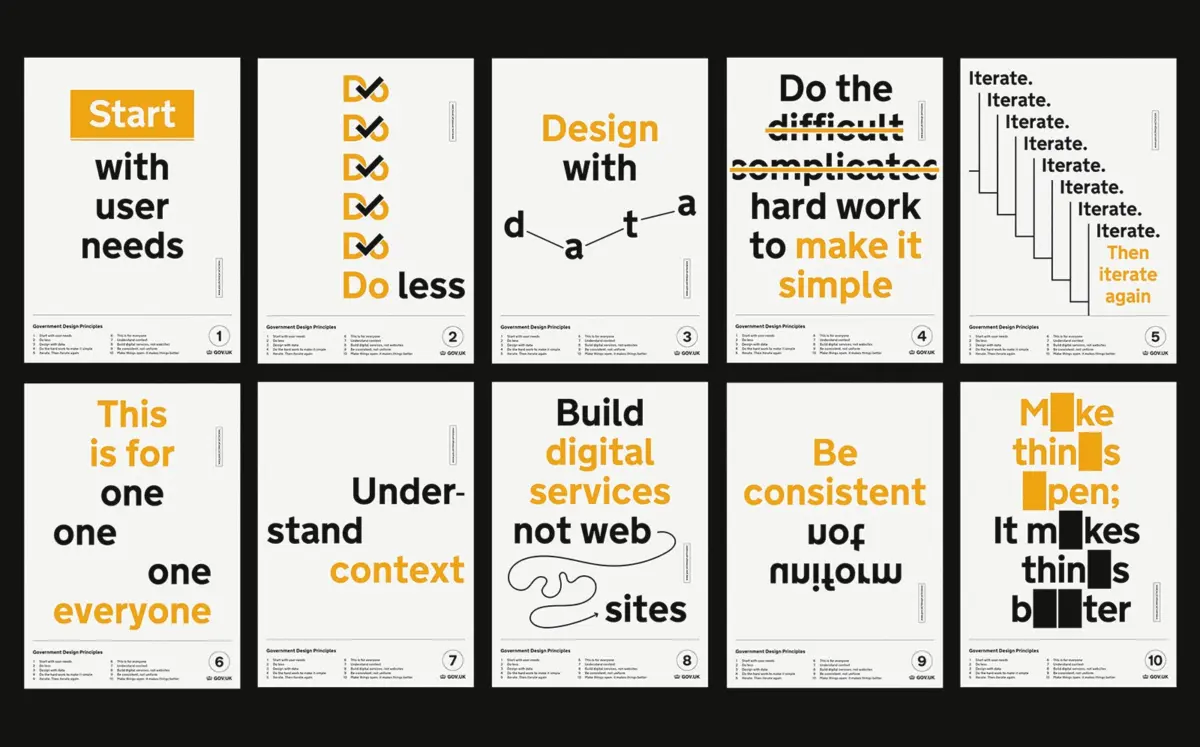
- The Principles-Based Alternative: Rather than issuing restrictive rulebooks that stifle experimentation, leading organizations are moving toward concise, principles-based governance—similar to the GOV.UK design principles. These frameworks provide clear boundaries while trusting employees to apply professional common sense.
The Power of Peer-Led Innovation
Formal training programs and top-down memos have historically proven largely ineffective at driving authentic behavioral change. Instead, organizations must leverage internal social proof.

"Rather than trying to win over the most resistant staff first, organizations should find the people already experimenting with AI, give them time to share what they have learned, and let social proof do the heavy lifting."
Every enterprise houses a cohort of tech enthusiasts who naturally gravitate toward emerging tools, often experimenting outside official channels. Bringing these early adopters together, giving them dedicated time to showcase successful use cases, and allowing their enthusiasm to spread organically yields far greater adoption rates than any executive mandate.
Future Outlook: Managing Chaos and Embracing Adaptive Rollouts
As enterprises look toward the remainder of the decade, the trajectory of AI adoption will depend on leadership’s willingness to accept managed chaos.
The instinctive reaction of corporate IT departments to unauthorized software—commonly known as Shadow AI—is to clamp down with stricter firewalls, blocked domains, and threats of disciplinary action. However, historical precedent proves that this approach is counterproductive. Shadow AI is not merely a security violation; it is a diagnostic symptom. It reveals precisely where official enterprise tools are failing to meet the practical needs of the workforce.
Instead of waging war on shadow tools, progressive organizations will treat them as a valuable research and development feedback loop. By interviewing staff to understand why they rely on personal AI accounts, leadership can gather actionable data to shape subsequent technology rollouts.
The Imperative of Speed Over Control
Ultimately, the greatest risk facing modern enterprises is not that they will move too fast and make mistakes with AI; it is that they will move too slowly, paralyzed by a desire for absolute central control.
The lessons of Digital Adaptation remain as urgent today as they were in 2014. Technology is fast, but human beings adapt slowly. Organizations that survive and thrive in the age of artificial intelligence will be those that prioritize culture over code, treat their people with empathy, provide safe spaces for experimentation, and recognize that the true challenge of AI is fundamentally human.
