

Executive Overview
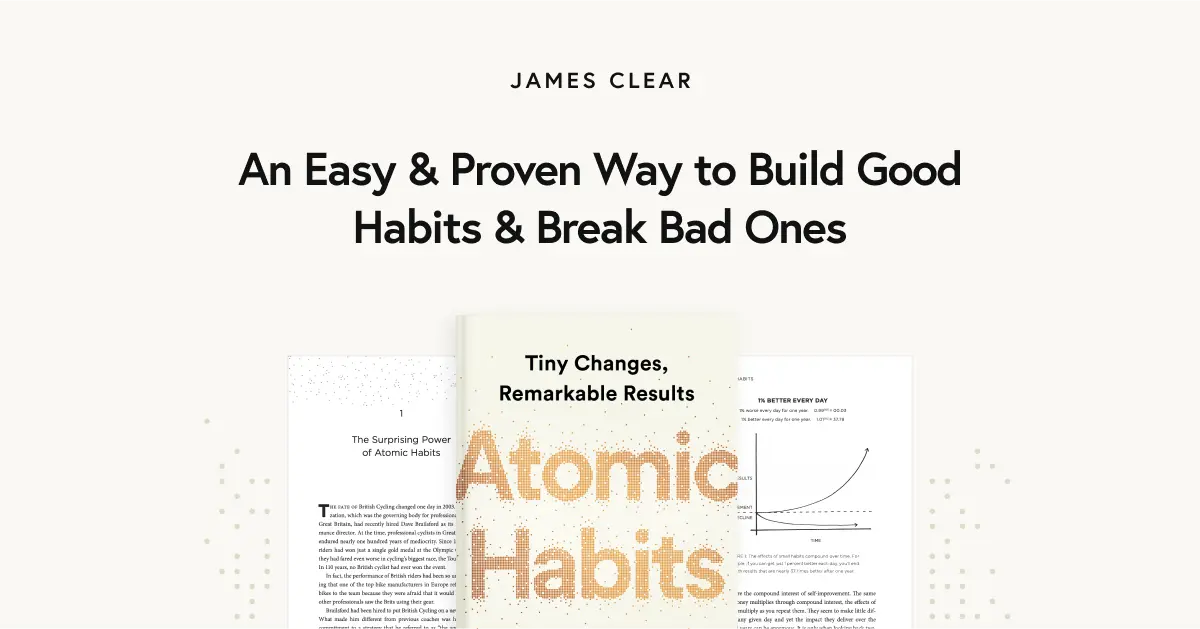
The science of personal transformation has long fascinated psychologists, sociologists, and individuals striving for self-improvement. While theoretical frameworks provide the architectural blueprints for behavioral change, the true test of any methodology lies in its real-world application. In the landscape of contemporary self-regulation literature, James Clear’s bestselling text, Atomic Habits, has emerged as a cornerstone guide. Rather than relying on sweeping resolutions or sheer willpower, the book advocates for marginal gains, system design, and identity-level shifts.
To evaluate the efficacy of these principles outside of controlled laboratory settings, an observational compilation of reader-submitted accounts was recently conducted. This inquiry investigates how everyday individuals translate abstract behavioral concepts into tangible, long-term routines. By examining thirty concise case studies—ranging from overcoming severe substance dependencies to cultivating advanced linguistic fluency and fitness regimens—this report illuminates the pragmatic mechanisms of habit acquisition and extinction.
The findings reveal that successful behavioral modification is rarely the product of motivation alone. Instead, it is systematically engineered through strategic identity adoption, environmental architecture, habit stacking, and rigorous progress tracking. This article provides an in-depth exploration of these methodologies, mapping reader experiences directly to established frameworks of behavioral science.
Detailed Chronology: The Evolution of Habit Implementation
The journey of habit formation typically follows a distinct trajectory, moving from cognitive reframing to environmental restructuring, and finally to automated execution. Analyzing the chronology of reader successes reveals how these phases interact over weeks, months, and years.
Phase One: Cognitive Reframing and Identity Alignment
The foundational stage
of effective habit building involves shifting focus from external outcomes to internal identity. In the early weeks of behavioral intervention, participants reported that redefining who they are superseded attempts to alter what they do.
- Case Example: Roland, who struggled for years with dietary modifications, noted that success only materialized after he stopped trying to "stop eating bad food" and instead adopted the identity of "someone that eats healthy and lives a healthy life."
- Case Example: Similarly, Robert addressed smoking cessation by linguistic reframing. Shifting his internal narrative from "I can’t smoke" to "I don’t smoke" reframed the cessation process not as a deprivation of pleasure, but as a proactive investment in future well-being.
Phase Two: Environmental Architecture and Friction Management
Once cognitive alignment is established, the chronology of habit formation moves to the immediate physical and digital surroundings. During this phase, individuals actively manipulate friction—increasing obstacles for undesirable behaviors while lowering barriers for positive actions.
- Case Example: Cyd addressed late-night snacking by introducing extreme friction: storing her trigger foods (Pringles) inside a locked vehicle parked in cold weather.
- Case Example: Conversely, Justin lowered the barrier to physical activity by selecting a gymnasium situated less than a mile from his residence, eventually scaling his routine to eight to ten workout sessions per week over a two-and-a-half-year period.
Phase Three: Behavioral Stacking and Substitution
As routines become more familiar, participants advanced to habit stacking—anchoring a novel behavior onto an established keystone habit—and habit substitution, replacing the craving loop with a healthier alternative.
- Case Example: David established a consistent mindfulness practice by rigidly coupling it with an existing morning routine: "I meditate for 20 minutes after brushing my teeth in the morning."
- Case Example: Mark combated daily stress-drinking by systematically substituting beer with flavored sparkling water and phasing out home inventory over a multi-month period, eventually regaining total control over his consumption patterns.
Phase Four: Long-Term Automation and Tracking
In the final phase, behaviors transition from conscious effort to automatic execution, sustained through continuous tracking mechanisms.
- Case Example: Cindy utilized a visual wall calendar to track multiple parallel goals—including fitness, reading, and language acquisition—creating unbroken chains of red "X" marks that spanned six months and resulted in a 30-pound weight loss and diversified skill acquisition.
Supporting Context & Metrics: The Mechanics of Behavioral Design
To contextualize these individual success stories, it is essential to examine the underlying metrics and psychological principles governing human action loops: the cue, the craving, the response, and the reward.
The Impact of Environmental Friction
Behavioral economists have long noted that humans naturally gravitate toward the path of least resistance. Reader data strongly supports this premise:
- Digital Decoupling: Multiple users reported that introducing minor digital hurdles—such as logging out of Instagram after every session, deleting Facebook applications to force manual web browser logins, or physically removing computer graphics cards—was sufficient to entirely eliminate compulsive screen-time habits.
- Visual Priming: Heather utilized color theory and strategic placement, positioning a bright aqua water bottle on her nightstand to serve as an unmissable visual cue upon waking, significantly increasing daily hydration metrics.
Substitution Metrics and Substitution Curves
When attempting to extinguish deeply entrenched neurological loops, complete eradication often triggers psychological backlash. Reader testimonials highlight the success of gradual substitution curves:
- The Snickers Protocol: Shawn successfully ended a long-term smoking habit by substituting fun-sized candy bars for cigarettes during peak craving windows, gradually tapering the substitute as neurological pathways rewired.
- The Stair-Step Approach: Marc phased out daily beer consumption over a nine-month timeline by systematically transitioning through fruit juice, iced tea, and seltzer water, reducing his intake by one unit per week until cravings were fully neutralized within two weeks of final cessation.
Official Statements and Framework Analysis
Behavioral experts and the author of Atomic Habits emphasize that these anecdotes are not isolated anomalies, but predictable outcomes of applied choice architecture.
"None of these stories are mine. They were sent to me by readers of Atomic Habits. My hope is that these examples will illustrate how real people are putting the book into practice," notes James Clear. "They will show you what people are actually doing to build good habits and break bad ones. And hopefully, they will spark some ideas for how you can do the same."
Expert Insights on Cue Identification and Implementation Intentions
Behavioral research underscores the necessity of clear implementation intentions—specifying the exact time and location for a new behavior.
- The Mandarin Case Study: Illustrating the power of high-frequency habit stacking, a reader who relocated to China committed to initiating a conversation with taxi drivers on every single cab ride (averaging five or more daily trips) for two consecutive years, ultimately achieving fluency in Mandarin through sheer volume of contextual repetition.
- The QR Code Alarm: Daniel solved chronic morning snooze habits by placing a mandatory QR code scan inside his bathroom to deactivate his morning alarm, leveraging physical locomotion to break the inertia of sleep.
Future Outlook: The Scalability of Micro-Habits
As society faces increasing digital fragmentation, attention fatigue, and lifestyle-related health challenges, the reliance on rigid macro-resolutions is proving increasingly obsolete. The future of personal development points directly toward scalable, micro-habit architecture.
The Integration of Digital and Analog Tracking Systems
The convergence of analog tools—such as the Clear Habit Journal and wall-mounted visual chains—with digital automation allows individuals to monitor marginal gains with unprecedented precision. As demonstrated by Günter, who maintained a daily workout regimen for over six months by simply scaling down his routine rather than skipping it entirely on high-stress days, flexibility within systems is vital for long-term survival.
Conclusion
The empirical evidence drawn from these real-world narratives confirms that monumental life transformations are rarely achieved through sudden, Herculean efforts. Instead, they are built upon the foundation of atomic adjustments: shifting identity, redesigning environments, stacking routines, and tracking progress. By treating behavioral change as an engineering problem rather than a test of moral fortitude, individuals can systematically construct the lives they desire, one micro-habit at a time.
