If modern corporate artificial intelligence (AI) rollouts were adapted into a screenplay, film critics would universally pan it as entirely unbelievable. The premise—that multibillion-dollar enterprises could invest heavily in transformative technologies while simultaneously alienating their entire workforce—would be dismissed as lazy, satirical fiction. Yet, this is the daily reality across boardrooms worldwide.
Organizations are repeating the exact same strategic blunders made during the digital transformation boom of the early 2010s. Senior leadership teams are treating generative AI as a plug-and-play IT upgrade, purchasing enterprise-wide software licenses, and assuming the cultural and operational heavy lifting is done. They issue blanket mandates to innovate, introduce punishing key performance indicators (KPIs), establish draconian compliance frameworks, and then express profound confusion when staff push back, freeze in fear, or resort to "Shadow AI."
Paul Boag, a veteran digital transformation consultant and author of Digital Adaptation, argues that this persistent systemic failure stems from a fundamental misdiagnosis. AI adoption is not a technological challenge; it is an unprecedented cultural shift. Until leadership acknowledges that human psychology, procedural disruption, and psychological safety dictate technological success, companies will continue to throw capital at a crisis of their own making.
Detailed Chronology: A Decade of Deja Vu
To understand why contemporary AI rollouts are careening off the rails, we must look backward. The patterns dictating today’s AI friction were forged a decade ago during the chaotic dawn of widespread enterprise digital transformation.
2014: The CMS and App Rush
Back in 2014, when Boag penned Digital Adaptation for Smashing Magazine, organizations were grappling with their first major technological pivot: moving away from legacy systems toward customer-facing digital ecosystems. IT departments aggressively rolled out complex Content Management Systems (CMS), Customer Relationship Management (CRM) databases, and internal intranets. On the front lines, executives demanded sleek mobile apps and personalized web portals.
However, the execution was fatally flawed. Organizations focused obsessively on the installation of technology while completely ignoring adoption. Internal systems were notoriously counterintuitive, designed by engineers with zero regard for human-computer interaction. Customers and employees alike were handed tools they neither wanted nor understood. Change was forced from the top down, resulting in massive wasted capital, plummeting morale, and widespread user rejection.
The Present: The Generative AI Stampede
Fast forward to the current era of generative AI. The parallels are striking—and alarming. Senior executives, electrified by relentless media hype and fear of missing out (FOMO), are purchasing enterprise packages en masse. IT departments respond by provisioning company-wide licenses for tools like Microsoft Copilot Studio, conducting a single generic webinar, and declaring mission accomplished.
Meanwhile, front-line employees are left stranded. They are expected to master complex, fluid technologies without disrupting their existing workloads or missing demanding performance quotas. The result is a replay of 2014, amplified by higher stakes and existential employment anxiety.
Supporting Context & Metrics: The Human Cost of Poor Adoption
The core friction in AI adoption lies in a basic mismatch of incentives. Management views AI through the lens of productivity gains: doing more work in less time. For the average employee, however, productivity gains translate into a raw deal.
The Productivity Paradox and Employee Motivation
When an employee uses AI to clear their backlog twice as fast, they are rarely rewarded with time off or higher compensation. Instead, they are simply handed more work to fill the remaining hours of their standard 9-to-5 schedule. Under these conditions, why should workers willingly embrace a tool that threatens to streamline their jobs out of existence?
Existential Dread: Unlike the digital transformation era—where software was seen as an assistant—AI is widely perceived as an explicit replacement threat. Headlines about automated white-collar labor have created a climate of ambient workplace terror.
The Cognitive Burden of Rebuilding Procedural Knowledge: Adopting AI requires dismantling years, sometimes decades, of procedural knowledge. Workflows must be re-engineered, prompt engineering must be learned, and critical thinking must be applied to synthetic outputs.
Time Scarcity: Most corporate employees are already operating at maximum capacity. Expecting them to organically master a disruptive technology without carving out dedicated, guilt-free experimental time is an exercise in futility.
The Rise of Shadow AI
When official corporate channels fail to provide tools that meet operational needs, employees inevitably seek workarounds. Just as workers bypassed clunky internal IT systems in the 2010s by adopting unauthorized cloud storage like Dropbox and Google Docs, today’s workforce is turning to "Shadow AI."
Employees are opening personal ChatGPT, Claude, or specialized LLM accounts on their personal devices to draft reports, debug code, and summarize transcripts. This behavior introduces severe corporate risk: proprietary company data, intellectual property, and client information are being funneled into third-party servers with zero organizational oversight.
Rather than viewing Shadow AI as a disciplinary infraction, forward-thinking organizations recognize it as a diagnostic metric. Shadow AI reveals precisely where official enterprise tooling falls short.
Official Perspectives: Navigating Culture, Safety, and Governance
Industry experts and organizational psychologists agree that successful AI integration requires a radical overhaul of traditional change management frameworks.
Creating Psychological Safety
Learning a new technology inherently involves failure. Yet, many corporate cultures penalize mistakes through rigid performance evaluations and micromanagement.
"If management wants staff to adopt AI, then they need to make staff feel safe to experiment. They need to adjust KPIs, change how staff are reviewed, and relax some of the governance while staff are learning."
— Paul Boag, Digital Transformation Strategist
When employees are reprimanded for token overages or warned against straying from rigid operational scripts, they quickly calculate that the safest career move is to avoid AI entirely. Innovation dies in an atmosphere of fear. Organizations must explicitly decouple early learning experiments from punitive performance reviews.
Lightweight Governance vs. Bureaucratic Paralysis
Governance is necessary, but it is frequently weaponized in a way that stifles creativity. Excessive internal policies—pages of dense legal warnings outlining what can and cannot be inputted into an AI model—induce analysis paralysis.
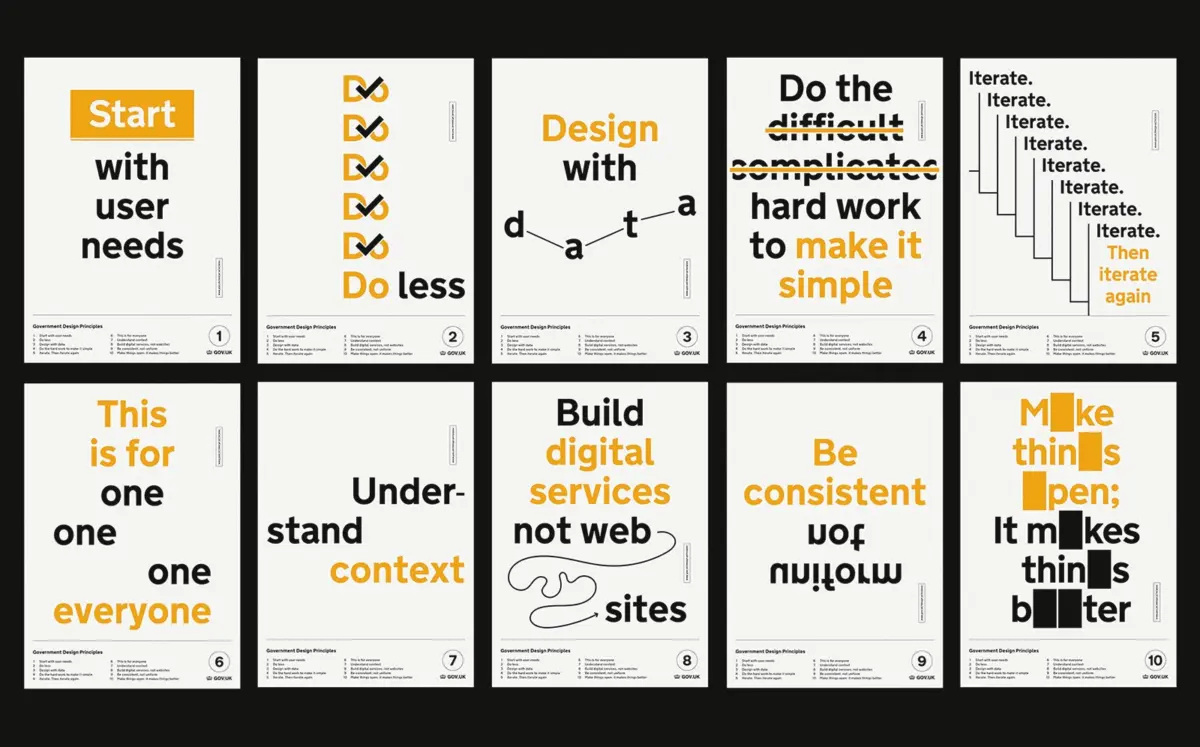
Instead of heavy-handed restrictions, organizations should look to models like the GOV.UK Design Principles: concise, memorable frameworks that fit on a single poster. Beyond a foundational set of ethical and security guardrails, organizations must trust their employees’ professional common sense.
Decentralized Social Proof over Top-Down Mandates
Top-down memos rarely drive genuine behavioral change. The most effective catalysts for AI adoption are internal enthusiasts. Every organization possesses a subset of employees who are already experimenting with AI out of personal curiosity.
Internal Communities of Practice: Bring these early adopters together. Give them dedicated time to showcase what is working for them.
Peer-to-Peer Validation: Employees are significantly more likely to adopt a new workflow when they see a peer in a similar role succeeding with it, rather than when an executive orders it from a podium.
Future Outlook: The Strategic Imperative for Adaptive Leadership
As generative AI continues to mature, organizations stand at a critical crossroads. The future belongs not to the companies with the largest compute budgets or the most expensive enterprise software licenses, but to those that master the human element of technology integration.
What Organizations Must Do Next:
Reframe Incentives: Tie AI adoption directly to the reduction of drudgery. Help employees identify the tasks they despise most and position AI as a liberating tool to eliminate tedious administrative burdens.
Institutionalize Experimentation: Carve out protected time for workers to explore, tinker, and fail without negative impacts on their performance metrics or career trajectories.
Listen to Shadow AI: Analyze unauthorized tool usage as market research. Use employee workarounds to inform official IT infrastructure upgrades rather than defaulting to reactionary crackdowns.
Prioritize Culture Over Code: Recognize that digital transformation and AI integration are continuous cultural journeys, not IT deployment checkboxes.
The risk of moving too slowly in the age of artificial intelligence is catastrophic, but the risk of forcing technological adoption without cultural empathy is equally fatal. Organizations that fail to learn the hard-learned lessons of the 2010s are destined to watch their AI investments devolve into expensive, abandoned relics of a bygone corporate farce.