


Executive Overview
The landscape of freelance writing has irrevocably shifted. Artificial intelligence tools are no longer a futuristic novelty or an experimental playground; they are foundational infrastructure. Writers who refuse to adapt are finding themselves working exponentially harder for diminishing returns, while those who integrate smart workflows are scaling their outputs, protecting their billable hours, and dramatically increasing their revenue.
However, a dangerous chasm has opened in the freelance marketplace. On one side are the thriving professionals who treat AI as a cognitive amplifier—offloading administrative drag, structuring outlines, and synthesizing research to focus entirely on human empathy, original reporting, and strategic thought. On the other side are those struggling to survive: either stubbornly ignoring the technological revolution or relying on generic prompts to churn out flat, indistinguishable content that clients instantly flag and reject.
This comprehensive guide examines 10 high-impact, practical ways freelance writers can integrate AI into their daily routines to elevate their work, optimize their marketing pipelines, and protect the distinct human value that clients are actually paying for.
Detailed Chronology: The Evolution of the AI Writing Assistant
To understand where freelance writing stands today, it is vital to trace how these tools evolved from blunt instruments into sophisticated co-workers.

- The Era of the Raw Generator (2020–2022): Early large language models were viewed primarily as threats or magic tricks. Writers pasted raw prompts into models and hoped for a finished, publishable article. The result was largely generic, plagued by repetitive phrasing, factual hallucinations, and a distinct lack of voice. Many writers dismissed AI outright as a plague of low-quality content mills.
- The Era of the Ideation Partner (2023–2024): As conversational interfaces like ChatGPT and Claude matured, savvy freelancers realized that asking AI to write an article was a mistake, but asking it to think alongside them was revolutionary. Tools like Perplexity emerged to bridge the gap between AI generation and real-time, cited web research. Writers began using AI to break writer’s block, generate alternative headlines, and outline sprawling topics.
- The Modern Integration Era (2025–Present): Today, AI acts as an administrative co-pilot and operational manager. Advanced models handle complex multi-step workflows, from parsing lengthy expert interview transcripts and mapping cross-platform content repurposing to functioning as gamified client-acquisition trackers via specialized platforms like Claude Cowork. The question is no longer if writers should use AI, but how deeply they can integrate it without sacrificing their unique editorial voice.
Supporting Context & Metrics: The Modern Freelance Reality
The freelance economy is operating under unprecedented time pressure. According to recent industry surveys, independent writers spend nearly 40% of their working hours on non-billable administrative tasks—including cold outreach tracking, deep-dive research triage, content promotion, and client invoicing.
Furthermore, marketing fatigue remains the primary reason new freelancers burn out within their first twelve months. Staring at a blank screen to draft Letters of Introduction (LOIs) or hunting across browser tabs for verified industry statistics consumes valuable energy better spent on crafting narratives.
When implemented correctly, AI tooling targets this exact administrative friction. By accelerating research triage and automating outreach tracking, writers report reclaiming up to 10 to 15 hours per week—time that can be reinvested into high-value client acquisition or deep creative flow states.
10 Ways to Supercharge Your Freelance Business with AI
1. Beating the Blank Page
The most intimidating moment of any writing project is staring at an empty document. You understand the topic, yet the cognitive friction of planting that first sentence can stall your entire morning.
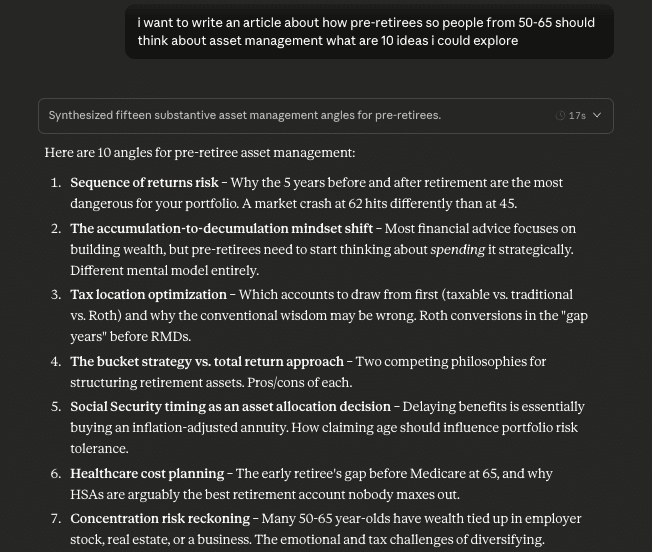
Instead of relying on AI to write the piece, use it as a psychological lever to break paralysis. Prompt ChatGPT or Claude to generate 10 distinct angles on your core subject, suggest unconventional opening hooks, or outline questions a skeptical reader might ask. While much of the output will be discardable, it forces your brain out of passivity and into a reactive state. You now have raw material to critique, edit, and build upon.
2. Streamlining Structural Outlining
Organization is the backbone of clear, compelling writing. Before drafting a blog post, white paper, or pitch, establish a clear blueprint.
Feed your topic into your preferred AI model and ask for a logical structural framework, including optimized subheadings and expected reader pain points. You can even build standardized intake prompts—supplying target audience data, core goals, and primary research notes—to generate bespoke outlines instantly. This structural scaffolding slashes preparation time and frequently surfaces unexpected angles you might have otherwise overlooked.
3. Deploying an Intelligent Research Assistant
Deep-dive research often requires wading through dense academic reports, industry studies, and lengthy articles. AI significantly accelerates this triage phase.

Paste complex documents into an AI assistant and request executive summaries, key data points, or core arguments. For live web research, tools like Perplexity act as dedicated research partners, scanning the live internet to surface verified statistics accompanied by direct source citations. While this does not replace reading primary source material, it ensures you spend your time reading only the most relevant, up-to-date documentation.
4. Drafting Cold Emails and Letters of Introduction (LOIs)
Consistent outreach is essential for freelance growth, but drafting repetitive introductory emails drains creative energy.
Use AI to generate foundational templates for your cold outreach campaigns, requesting multiple variations ranging from concise executive pitches to story-driven hooks. However, human intervention is mandatory here. An AI-generated shell gets you 70% of the way there, but the final 30%—specifically the personalized opening sentence referencing a company’s recent award, milestone, or piece of content—must be authored by you. This distinction prevents your emails from landing in the spam folder alongside generic, copy-pasted pitches.
5. Crafting High-Converting Headlines and Hooks
An article’s headline dictates its survival. Great prose means nothing if readers never click. Because balancing curiosity, search intent, and conciseness is notoriously difficult, AI is uniquely suited to headline generation.
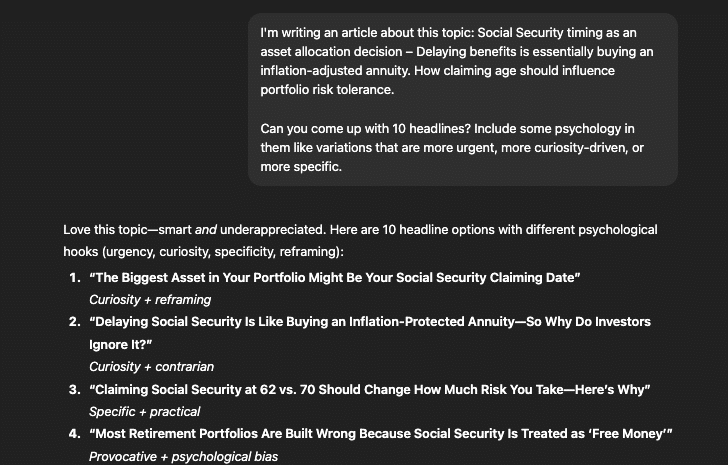
Ask your model for 10 distinct headline variations tailored to different emotional triggers: urgency, curiosity, authority, or specificity. If the initial results miss the mark, use them as a springboard. Often, combining elements from two different AI-generated suggestions yields a powerful, highly engaging title that breaks through the noise.
6. Advanced Editing and Proofreading
Human eyes are notoriously poor editors of their own work; our brains naturally gloss over structural gaps and fill in missing words based on what we intended to write.
Treating AI as an objective editor can catch costly oversights. Paste your finished draft into Claude or ChatGPT and instruct it to role-play as a ruthless editor or, better yet, your precise target audience. Ask it to flag wordiness, convoluted phrasing, or logical leaps. Combined with dedicated proofreading extensions like Grammarly, this multi-tiered review process ensures your final manuscript is polished, punchy, and clear.
7. Automated Content Repurposing
Writing a 1,500-word authoritative article is only half the battle; promoting it across social channels is where audience growth happens. Unfortunately, reinventing the wheel for LinkedIn, X (formerly Twitter), and newsletters is exhausting.
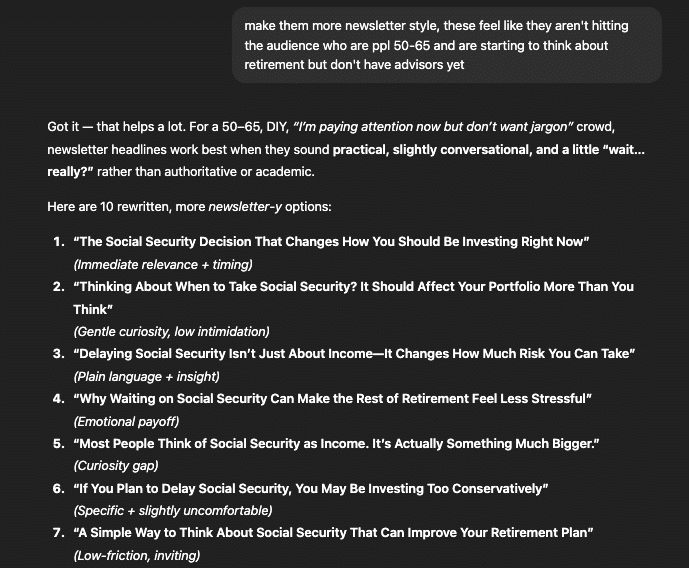
By feeding your completed article back into an AI tool, you can instantly extract micro-content. Ask the model to generate:
- 5 distinct LinkedIn thought-leadership hooks pulling specific data points from the piece.
- A concise newsletter summary highlighting the core takeaways.
- A sequential thread breaking down step-by-step methodologies.
This approach maximizes the ROI of your initial writing effort, allowing you to establish a robust multi-channel presence without doubling your workload.
8. Comprehensive Interview Preparation
Securing interviews with Subject Matter Experts (SMEs) is a privilege; wasting their time with basic, easily searchable questions is an amateur mistake.
Before heading into an interview, use AI to map out a strategic line of inquiry. Provide the expert’s background, their industry, and your core article angle, then ask for 10 probing, sophisticated questions designed to extract vivid quotes and unique anecdotes. This preparation keeps you confident, steers the conversation away from surface-level clichés, and respects your interviewee’s expertise.

9. Managing and Mining Interview Transcripts
Post-interview transcription clean-up can consume hours of manual labor. Utilizing voice-to-text tools equipped with conversational AI features—such as Otter.ai—fundamentally changes this dynamic.
Once your interview is recorded and transcribed, bypass reading the entire wall of text line by line. Use the platform’s chat feature to query the transcript directly: "Extract the three best quotes regarding compliance risks," or "Summarize the expert’s counter-intuitive argument on remote work." Always cross-reference the extracted quotes against the original audio to guarantee absolute accuracy before publishing, but let AI handle the heavy lifting of data retrieval.
10. Gamifying Outreach and Pipeline Tracking
Spreadsheets are where freelance marketing habits go to die. Keeping manual tabs on cold emails, LinkedIn follow-ups, and conversion metrics is tedious, leading most freelancers to abandon their tracking systems entirely.
Advanced conversational models can act as interactive Customer Relationship Management (CRM) tools. By logging your outreach activities in a conversational format—detailing who you contacted, when, and what response you received—you can prompt the AI at the end of every month for a comprehensive performance audit. You can even gamify the process: establish weekly scorecards (Good, Better, Best) to monitor conversion patterns, identify which niches yield the highest response rates, and maintain motivation without touching a traditional spreadsheet.

What NOT to Do With AI: Navigating the Pitfalls
While the productivity gains are undeniable, misusing AI can destroy your professional reputation. Keep these boundaries firmly in mind:
- Never Publish Raw AI Text: Unedited, synthetically generated prose lacks authentic voice, emotional resonance, and lived experience. Clients can spot it immediately, and search engines actively penalize low-quality, derivative content.
- Never Skip Fact-Checking: AI models are prone to hallucinations—confidently stating falsehoods as verified facts. Every statistic, historical date, and quoted claim must be manually verified.
- Never Outsource Human Relationships: The core of a successful freelance writing business is trust, empathy, and communication. Let AI handle the administrative scaffolding, but keep your human touch front and center in every client interaction.
Future Outlook: The Resilient Writer
As artificial intelligence continues to integrate into every corner of the digital economy, the role of the freelance writer is evolving rather than disappearing.
The future belongs to the augmented writer—professionals who combine uncompromising editorial standards, genuine subject matter expertise, and deep interpersonal relationships with the lightning-fast efficiency of modern AI tooling. By automating the tedious administrative machinery of freelancing, you free up the cognitive space required to do what humans have always done best: think deeply, tell compelling stories, and forge meaningful connections that algorithms can never replicate.