


Executive Overview
Artificial intelligence has officially transitioned from a futuristic novelty into the baseline infrastructure of the digital economy. For freelance writers, the modern professional landscape presents a stark binary choice: adapt to artificial intelligence tools or accept a trajectory of declining productivity, burnout, and diminished client demand. Yet, the distinction between professional survival and obsolescence is not defined merely by whether a writer uses AI, but how they integrate it into their daily workflows.
The most successful freelancers today are not outsourcing their core intellect to large language models (LLMs). Instead, they are leveraging AI as a force multiplier to eliminate operational friction, automate administrative overhead, and bypass the paralyzing friction of the blank page. Conversely, those struggling in the current marketplace are falling into one of two traps: treating AI as a existential threat to be ignored entirely, or using it as a lazy shortcut to churn out homogenous, low-quality content that discerning clients can spot instantly.
This report provides a comprehensive blueprint of ten strategic methodologies for deploying AI tools to enhance—rather than replace—the critical human elements of freelance writing, including high-level strategy, original thought, relationship building, and deep investigative reporting.
Detailed Chronology: The Evolution of AI in Freelance Writing
To understand where the freelance industry stands today, it is essential to examine how AI capabilities have rapidly evolved over recent years:
- Phase 1: The Novelty Wave (Late 2022 – Early 2023): The public release of foundational generative AI models sparked panic and excitement alike. Freelancers initially experimented with asking bots to write entire articles from scratch, resulting in stilted, formulaic prose riddled with hallucinations and predictable linguistic patterns. Clients quickly caught on, leading to a temporary backlash against AI-generated text.
- Phase 2: The Efficiency Realization (2023 – 2024): Writers and content strategists realized that asking an LLM to write an essay was the wrong approach. Instead, professionals began shifting toward targeted task assistance—using AI for outlining, summarizing research, and generating headline variations. The narrative shifted from "AI will replace writers" to "writers using AI will replace writers who don’t."
- Phase 3: The Workflow Integration Era (2025 – Present): AI has evolved from standalone chat interfaces into deeply integrated workspace tools (such as Claude Cowork, Perplexity Pro, and advanced transcription ecosystems). Freelancers now utilize AI not just for text manipulation, but as collaborative operational partners—managing CRM data, structuring marketing outreach, repurposing multi-format content assets, and maintaining gamified scorecards to track business growth.
Supporting Context & Metrics: The State of AI-Enhanced Freelancing
The modern freelance economy demands unprecedented output volume coupled with uncompromising quality. According to recent industry surveys, independent professionals face mounting pressure to diversify their service offerings, manage aggressive client turnaround times, and maintain active personal brands across saturated channels like LinkedIn and specialized newsletters.
- Content Repurposing Multipliers: Industry data indicates that producing a single 1,500-word cornerstone article is no longer economically sufficient if it lives on a single URL. Modern content strategies require every long-form asset to be atomized into 5 to 10 distinct promotional fragments (such as social threads, newsletter excerpts, and executive summaries) to capture algorithmic mindshare.
- The Administrative Burden: Freelancers historically spend up to 40% of their working hours on non-billable tasks, including cold outreach, tracking letters of introduction (LOIs), transcribing subject matter expert (SME) interviews, and updating marketing spreadsheets. Automating these workflows via AI has been shown to reclaim upwards of 10 to 15 hours per week for billable creative output.
Ten Strategic Ways to Leverage AI Without Losing Your Professional Value
1. Overcoming the Blank Page Paralysis
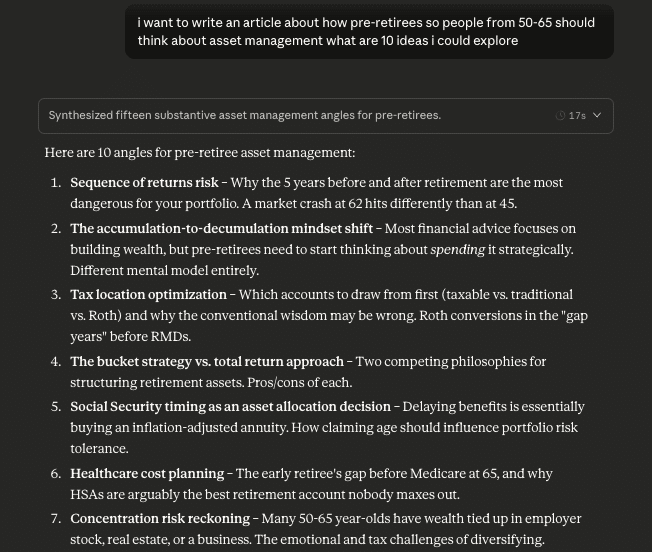
The psychological barrier of the blinking cursor has stalled more writing careers than a lack of talent ever could. Staring at an empty document while knowing your topic inside and out is a uniquely frustrating form of cognitive friction. AI shines brightest not as a ghostwriter, but as a cognitive sparring partner.

- Actionable Strategy: Feed platforms like ChatGPT or Claude a prompt asking for 10 distinct angles, unconventional opening hooks, or anticipated reader objections regarding your topic. While much of the initial output may be discarded, the primary objective is achieved: the cognitive paralysis is broken, leaving you with tangible text to react to, edit, and refine.
2. Architectural Outlining and Intake Structuring
Before drafting a single paragraph, professional writers construct an architectural framework. AI can accelerate this phase by taking raw, messy thoughts—target audience demographics, primary campaign goals, key data points, and unstructured notes—and organizing them into logical subheadings and content sections.
- Actionable Strategy: Build a standardized intake template in your preferred LLM. Feed it your raw research and notes, and ask it to propose structural variations. It may surface an organizational angle or subtopic you had not previously considered, significantly reducing the time spent rearranging disorganized drafts later in the process.
3. Accelerated Research Triage and Summarization
Modern investigative writing involves digesting vast quantities of academic reports, white papers, and long-form industry journalism. AI acts as an initial triage mechanism, allowing writers to quickly evaluate the relevance of source material before committing deep reading time.
- Actionable Strategy: Utilize real-time web-search AI assistants like Perplexity Pro to gather verified statistics, full citations, and current data in minutes rather than hours. Paste lengthy PDF transcripts or competitor articles into an LLM to instantly extract core arguments, key metrics, and publication dates—ensuring you never build an article on outdated or inaccurate data.
4. Drafting Cold Outreach and Letters of Introduction (LOIs)
Securing high-paying freelance retainers requires consistent cold outreach, yet writing personalized pitch emails repeatedly is emotionally draining. While AI can draft 70% to 80% of an introductory email structure, the human element remains non-negotiable for the final polish.
- Actionable Strategy: Prompt an LLM to generate multiple structural variants of a cold email tailored to a specific marketing agency. However, you must execute the final personalization step yourself. Incorporate a hyper-specific, human-researched opening line referencing a recent company milestone, award, or published study to prove you are a living professional, not an automated bot.
5. Generating Compelling Headlines and Hooks
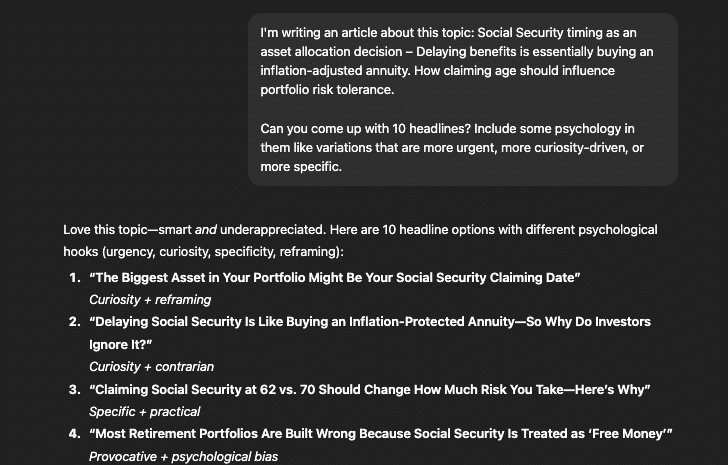
An article’s headline dictates its commercial viability; even the most brilliant prose is worthless if it fails to secure the click. Because balancing curiosity, urgency, and precision is exceptionally difficult, generating bulk variations through AI provides an invaluable creative springboard.
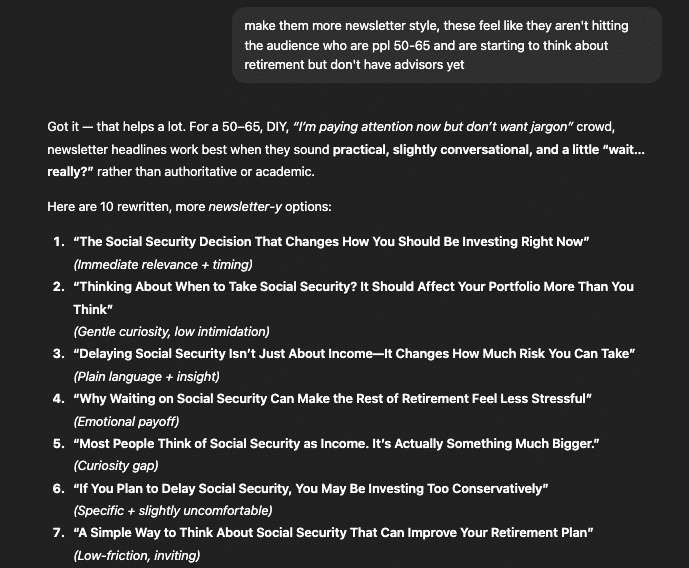
- Actionable Strategy: Ask an AI tool to output 10 to 20 headline options filtered by specific psychological triggers (e.g., curiosity-driven, highly specific, urgent, or contrarian). Treat these options as ingredients: mix and match elements from multiple AI-generated suggestions to craft a headline that resonates with your personal editorial standards.
6. Multi-Layered Editing and Audience Role-Playing
Human eyes are notoriously unreliable when proofreading self-authored work; our brains naturally fill in missing words and gloss over structural ambiguities. AI can serve as a tireless, objective copy editor and an interactive focus group.
- Actionable Strategy: Beyond standard syntax tools like Grammarly, prompt an LLM to role-play as your exact target audience. Ask it to read your draft and explicitly flag confusing phrasing, logical gaps, or sections where it wanted deeper explanation. You retain absolute creative control over every final revision, but benefit from an instant second pair of "eyes."
7. Systematic Content Repurposing
Maximizing the return on investment for a single piece of long-form writing is a fundamental tenet of modern digital marketing. Converting a comprehensive white paper or blog post into platform-native micro-content is essential for audience development.

- Actionable Strategy: Feed your published article into an LLM with specific prompt parameters: request five data-driven LinkedIn hooks, three newsletter summaries, and two Twitter/X thread structures. This transforms one heavy creative lift into a multi-channel distribution campaign, building your personal brand without requiring proportional increases in writing time.
8. Advanced Subject Matter Expert (SME) Interview Prep
The quality of an expert interview is directly correlated with the quality of the questions asked. When writing in unfamiliar industries, inadequate preparation wastes valuable time on basic concepts that could have been researched in advance.
- Actionable Strategy: Use research-backed AI tools to synthesize background dossiers on your interview subjects and their industries. Prompt the model to generate 10 rigorous, highly specific interview questions designed to elicit compelling quotes and proprietary insights, ensuring you maximize your allotted time with the expert.
9. Transcript Mining and Thematic Synthesis
Post-interview workflows often conclude with unwieldy, multi-page transcripts from voice-to-text engines like Otter.ai. Sifting through a wall of conversational text to find a specific quote or statistical reference can derail an editing schedule.
- Actionable Strategy: Leverage the native chat features within modern transcription platforms or export the text into an LLM. Prompt the tool to organize the sprawling conversation by thematic pillars, summarize key arguments, and extract verbatim quotes. Crucial Note: Always cross-reference extracted quotes against the original audio file prior to publication to guarantee absolute accuracy and contextual integrity.
10. Operational Tracking and Marketing Gamification
Many creative professionals harbor an aversion to administrative spreadsheets, leading to neglected marketing pipelines and unpredictable income streams. AI workspaces can function as automated Customer Relationship Management (CRM) tools and accountability partners.
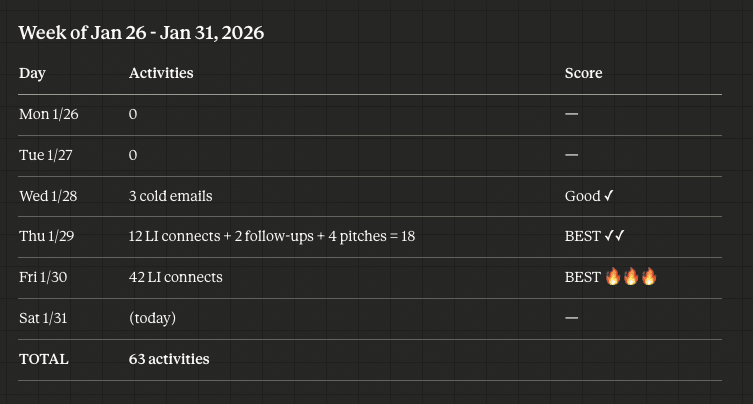
- Actionable Strategy: Use conversational workflow tools (such as Claude Cowork) to log your daily marketing outreach—recording dates, contact names, outreach channels, and response statuses. At month-end, prompt the AI to analyze your conversion metrics (e.g., LOI volume versus discovery calls booked). By gamifying your pipeline with weekly scorecards, you can objectively evaluate which niches, pitches, or follow-up cadences are yielding the highest financial returns.
What NOT to Do With AI: Avoiding the Pitfalls of Lazy Automation
While strategic AI adoption accelerates output and reduces friction, improper implementation destroys professional reputation. Writers must actively avoid the following traps:
- Publishing Unedited AI Text: Passing raw, hallucination-prone LLM output off as finished human journalism destroys trust with editors and clients.
- Abandoning Original Voice and Experience: AI models synthesize existing internet data; they lack lived experience, personal anecdotes, original reporting, and genuine human empathy. If your writing consists solely of regurgitated summaries, you are competing directly with a commodity algorithm.
- Neglecting Fact-Checking: Generative tools are prone to fabricating statistics, case studies, and citations. Failing to verify every data point exposes your work to catastrophic factual errors.
Future Outlook: The Resilient Writer in an Automated World
Looking ahead, the role of the freelance writer will continue to shift away from mechanical word generation toward higher-order curation, strategic thinking, investigative reporting, and relationship management. As AI floods the digital ecosystem with cheap, synthetic text, authentic human expertise, original reporting, and distinct authorial voice will become increasingly rare and valuable commodities.
The bottom line for independent professionals is clear: artificial intelligence tools are permanent fixtures of the modern workplace. By embracing AI to handle the tedious administrative friction of the profession, forward-thinking freelancers can reclaim their time, scale their businesses, and focus entirely on the irreplaceable human insight that makes their work truly valuable.