In the modern literary ecosystem, a fundamental and increasingly urgent question looms over every debut manuscript and seasoned author alike: Which comes first—the finely crafted manuscript, the traditional book deal, or the massive, algorithm-pleasing social media following required to drive instant sales?
As social media upends traditional publishing, contemporary writers are finding themselves caught in a high-stakes tug-of-war. Platforms like TikTok, Instagram, and X (formerly Twitter) have fundamentally altered consumer behavior, shifting the literary landscape from one driven by critical reviews and word-of-mouth recommendations to one governed by viral visibility, aesthetic branding, and digital metrics.
Rather than fleeing from this digital saturation, a compelling new wave of authors is actively leaning into it. These writers are mining their own visceral experiences of internet anxiety, performative identity, and digital burnout to craft powerful, resonant novels. To these authors, the internet is no longer merely a marketing tool or a distraction from real life; it is an active, breathing character, a psychological landscape, and a pervasive societal "soup" that shapes how we love, grieve, and understand ourselves.
Detailed Chronology: The Evolution of the Digital Author
To understand how literature arrived at this digital crossroads, one must trace the timeline of how the internet transformed from a secondary promotional outlet into the central nervous system of the publishing industry.
Phase One: The Rise of Digital Communities (Early 2010s)
More than a decade ago, platforms like Instagram and early book-blogging spaces began giving readers a direct line to authors. Writers like Hallie Elizabeth Newton, who has been active on Instagram since 2013, witnessed firsthand the quiet psychological shift of curated digital spaces. "It has an alluring way of curating exactly what you already know," Newton observes, noting its paradoxical comfort. "And in that way it can be very comforting. Not necessarily healthy, but definitely comforting." During this era, social media was largely optional—a place to share behind-the-scenes glimpses of the writing life rather than a mandatory engine for commercial survival.
Phase Two: The Algorithmic Takeover and "BookTok" (2020–2024)
The COVID-19 pandemic accelerated humanity’s migration online, permanently altering how cultural products are consumed. During the lockdowns, communities like "BookTok" on TikTok emerged as titanic kingmakers. Publishers quickly realized that a handful of viral videos could transform a mid-list title or a stagnant backlist book into an overnight national bestseller. By 2024, industry tracking revealed that nearly 60 million print-book sales were directly tied to content originating on BookTok. This trend stabilized through 2025, cementing a hard truth: while books could still succeed organically, the path of least resistance ran straight through the algorithm.
Phase Three: The Era of the Digital Metanarrative (2026 and Beyond)
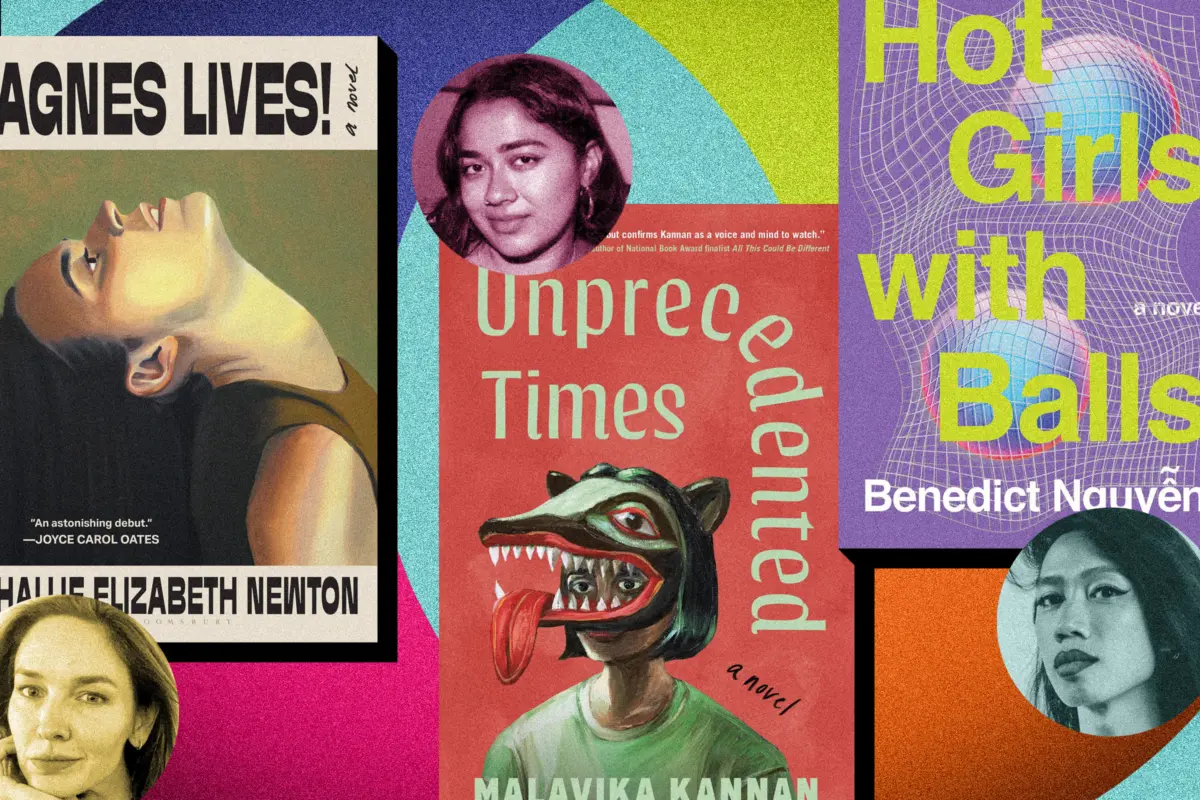
Today, the pressure to maintain a public-facing persona has collided directly with the creative process. Authors are no longer just writing stories despite the internet; they are writing about the psychological fractures caused by it. From Malavika Kannan’s exploration of pandemic-era digital facades in Unprecedented Times to Benedict Nguyễn’s satirical look at online fandom and grief in Hot Girls With Balls, today’s literary landscape reflects an artistic awakening. Writers are processing the exhaustion of living online by turning their digital anxieties into high-art fiction.
Supporting Context & Metrics: The Economics of Attention
The intersection of modern literature and social media is defined by stark economic realities and psychological pressures. Authors today are operating within a crowded marketplace where attention is treated as a finite, heavily contested currency.
The Numbers Behind the Buzz
According to data compiled by Publishers Weekly, print-book sales heavily influenced by digital content platforms have broken historical norms. The direct pipeline from a viral 15-second video to retail checkout lines has forced publishing houses to re-evaluate their marketing strategies, frequently favoring authors who already possess built-in digital audiences.
However, this commercial reality creates a severe double-edged sword:
The Exposure Trap: While social media offers an unprecedented democratization of reach, it demands constant, uncompensated labor from artists.
The Financial Precarity of Young Artists: As Malavika Kannan bluntly puts it, young creators are frequently trapped in a punishing loop: "Please stream my songs so my cat doesn’t die, or please buy my book."
The Myth of the Milestone: Iman Hariri-Kia notes the psychological toll of chasing traditional markers of success—like New York Times bestseller lists—only to realize that external validation does not cure internal burnout. "I had so many voices in my head telling me that if my first book wasn’t a bestseller… then I had failed," Hariri-Kia reflects. "And then I reached all of those tentpoles, and nothing changed."
Official Perspectives: Voices from the Front Lines of Digital Fiction
Several prominent contemporary authors are directly engaging with these themes, using their recent releases to dissect the modern digital psyche.
Malavika Kannan and Unprecedented Times
At just 25 years old, Malavika Kannan published her debut adult novel, Unprecedented Times. The book follows Rishi, a college freshman trying to shed her online youth activism for tangible real-world experiences—only for the COVID-19 pandemic to force her back into a reality where her online persona and adult life violently collide.
"A lot of Rishi’s sense of self is cultivated on the internet," Kannan explains. "Throughout the book, the gag is that she sometimes has an over-inflated sense of her own control and agency in the world, just because she has language for it."
Kannan views the internet as an unavoidable atmospheric condition rather than a temporary distraction. "It’s just the soup that we’re swimming in," she says. "As much as I like to imagine literature as a refuge from the internet, the two are super intertwined."
Hallie Elizabeth Newton and Agnes Lives!
For Hallie Elizabeth Newton, the journey to publishing her June novel Agnes Lives!—which follows a thirtysomething New Yorker spending 24 chaotic hours trying to find a friend to murder her—involved overcoming a deep personal fear of digital exposure. Though she had used Instagram for over a decade, making her account public to promote her book felt intimidating.
"There’s this gap between Agnes’ reality and what she’s putting [online]," Newton notes, addressing the central theme of her experimental, commentary-driven narrative. "We’re seeing what it does to image and what it does to our sense of self and identity."
Iman Hariri-Kia and Once in a Timeline
Iman Hariri-Kia, author of three books exploring modern career anxieties, found inspiration for her romance novel Once in a Timeline in the most mundane of digital prisons: a stalled New York City subway car. Underground, with no cell service, her phone loaded a single influencer’s day-in-the-life video on an infinite loop.
"It almost felt like there had been a hole in the space-time continuum, and the only thing that existed was me and this creator," Hariri-Kia recalls. "I could not open my Notes app fast enough."
The novel features a lifestyle influencer trapped in a time loop reliving her own vlog, raising a haunting central question: Is working hard to appease an omniscient audience worth the sacrifice of your sanity?
Benedict Nguyễn and Hot Girls With Balls
Benedict Nguyễn’s 2026 novel, Hot Girls With Balls, explores the toxic underbelly of internet fandom, public grief, and the political firestorm surrounding trans athletes through the lens of a fictional men’s volleyball power couple. Nguyễn erases the boundary between digital and physical existence entirely.
"The democratization of public speech through social media allows anonymous users to have a disproportionate sway," says Nguyễn, highlighting how online outrage dictates real-world consequences.
Future Outlook: Reclaiming the Creative Space
As the tensions between the literary arts and the digital world solidify into a permanent fixture of modern culture, authors are actively redefining their boundaries. The future of publishing will undoubtedly continue to grapple with algorithmic influence, but writers are finding power in detachment and intentionality.
The prevailing sentiment among this new generation of novelists is not one of defeat, but of strategic realignment. Social media can serve as a community-building utility, but it must never be allowed to hijack the creative engine.
As Malavika Kannan summarizes regarding her relationship with online platforms:
"I just realized at some point that the internet is a place that I could exist, but it’s not my stage, it’s not my medium. It’s not where I actually want to put my energy."
By refusing to let the noise of the digital world drown out their internal artistic voices, these writers are proving that while the internet may provide the anxiety, it is human literature that ultimately provides the cure.