

Executive Overview
The playbook of digital marketing has undergone a radical, paradigm-shifting evolution over the past decade. Traditional brand building—reliant on top-down media spends, billboards, and interruptive paid ads—is increasingly yielding to a more organic, human-centric approach: the creator-led economy. At the forefront of this revolution is Alvaro Gellings, a Spanish-born serial entrepreneur whose career path embodies the transition from brute-force paid acquisition to narrative-driven cultural dominance.
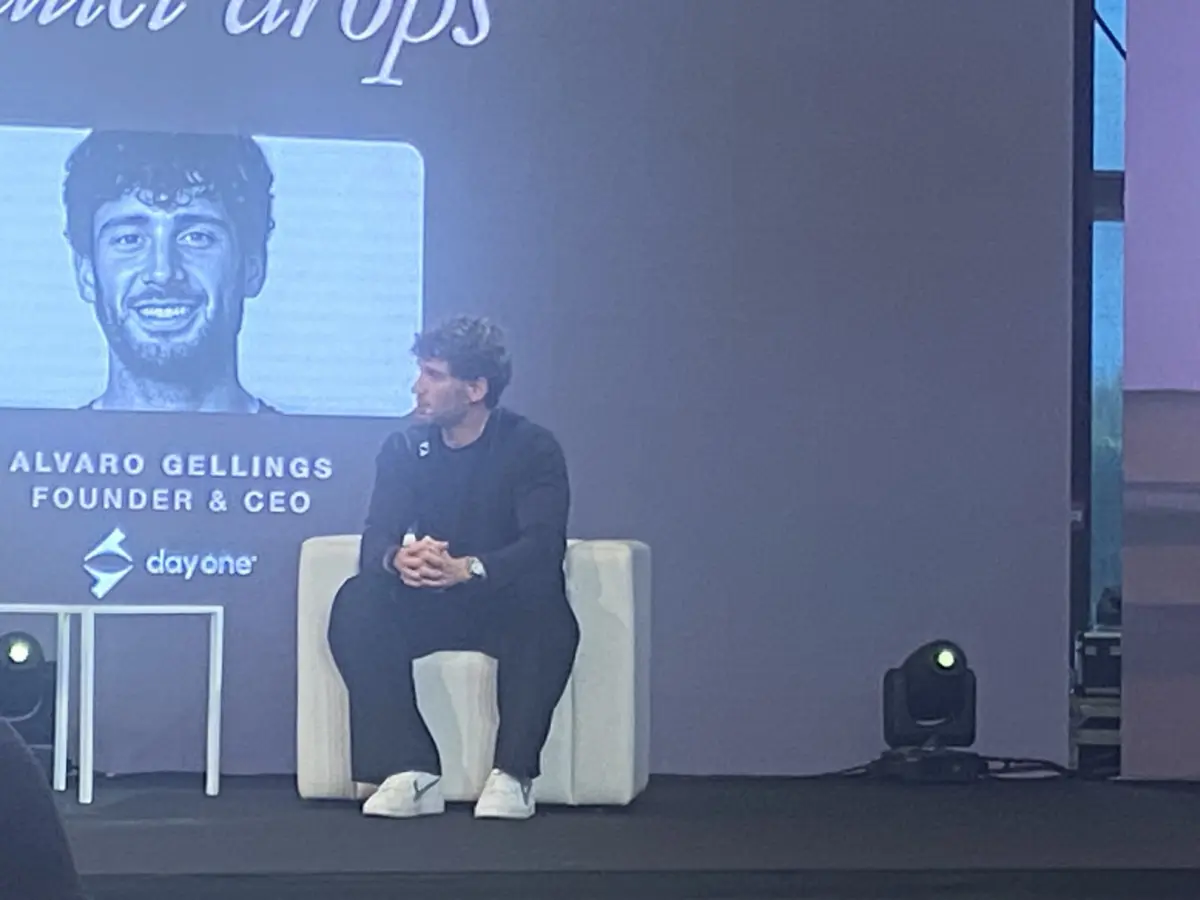
Speaking recently at the exclusive OOAK Mastermind conference in Castelfalfi, Italy, Gellings laid bare the blueprint that took him from scaling traditional gaming companies to generating billions of organic views and multi-million-dollar revenues in record-shattering timeframes. Having masterminded explosive ventures like Ama Studios and the high-performance sportswear brand Day One, Gellings has established a reputation not merely as an e-commerce operator, but as an architect of modern consumer attention.
This report explores the mechanics of Gellings’ ascension, detailing his pivot from traditional digital advertising to creator-driven ecosystems, the structural framework of his multi-billion-impression campaigns, and his visionary strategy for transitioning a personal brand into a self-sustaining corporate asset. Through a rigorous examination of metrics, creative methodologies, and strategic risk management, we analyze how Gellings is rewriting the rules of global brand scale.
Detailed Chronology: From Paid Acquisition to Cultural Dominance
The Formative Years: The World of Paid Reach
Long before his name became synonymous with the creator economy, Gellings operated within a conventional digital paradigm. Born and raised in Spain, his early entrepreneurial endeavors centered on building and scaling a gaming company powered by paid advertising. In this environment, the equation was straightforward and transactional: acquire user data, optimize ad spend, buy reach, and convert sales.
"That’s all I knew," Gellings reflected during his keynote in Tuscany. "Buying reach and selling the product."
While this model generated steady revenue and taught him the fundamentals of digital conversion, it was limited by the transactional nature of ad-based interactions. Consumers were constantly interrupted by pitches for products they did not actively seek out. The ceiling of this approach was inherently tied to ever-increasing customer acquisition costs (CAC) and ad fatigue.
The Hamburg Encounter and the Paradigm Shift
The trajectory of Gellings’ career fundamentally shifted in 2021. Following the successful sale of his gaming venture, he relocated to an apartment in Hamburg, Germany. By sheer coincidence, his living arrangement placed him directly above a prominent Twitch creator.
At a subsequent birthday party hosted by this creator, Gellings engaged in a conversation with a top-tier online streamer that would completely alter his philosophy on marketing and distribution.
"You have to buy your reach," the streamer told him bluntly. "I have the reach."
This simple realization exposed the asymmetrical power dynamic of modern media. Traditional brands were spending fortunes trying to rent audiences through algorithmic gatekeepers, while individual creators owned direct, deeply loyal relationships with millions of consumers. Gellings began to question why legacy brands paid creators staggering sums for superficial endorsements, concluding that true creator influence carried immense, underutilized commercial leverage.
The Birth of Ama Studios
Seeking to test this hypothesis, Gellings partnered with two of Germany’s most influential digital personalities, Trymacs and Amar, to launch Ama Studios, a premium streetwear label. Rather than relying on months of traditional market research and drip-feed advertising, Gellings orchestrated a high-velocity, creator-led launch plan executed in just three months.
The results stunned even seasoned e-commerce veterans. Within the first hour of going live in 2021, Ama Studios generated an astonishing €1.2 million (approximately $1.4 million USD) in sales.
"I was like, Wow, that’s insane," Gellings recalled, sitting at his laptop as the revenue metrics rolled in. The success of Ama Studios proved that a well-executed creator-led launch could bypass traditional retail warming phases entirely, leveraging pre-existing community trust to generate immediate, massive liquidity.
Scaling Up: The Inception of Day One
Encouraged by the success of Ama Studios, Gellings arrived at a transformative conclusion: creators should not be treated merely as paid media channels or temporary advertising mouthpieces. Instead, they could serve as the narrative engine and cultural heartbeat of an entire brand—particularly in product categories where consumer urgency is naturally low.
This conviction laid the groundwork for his next major venture, Day One, a technical sportswear brand co-founded with German endurance athlete and creator Arda Saatçi. Gellings recognized that in mature consumer spaces like sportswear, a functional product alone is rarely enough to drive organic demand.
"Nobody’s looking for the next gym tank to buy," Gellings noted. "Nobody’s in urgent need of the next T-shirt, the next socks, the next shoes. You have to create a story."
Supporting Context & Metrics: The Mechanics of the "Cyborg Season"
To build a narrative around Day One, Gellings needed a collaborator capable of embodying extreme human capability. In 2024, he crossed paths with Arda Saatçi, an endurance athlete who at the time possessed roughly 100,000 followers—a modest audience compared to the millions he would later amass. Yet, Gellings recognized elite potential. Within 48 hours of their initial meeting regarding a sports-teaching app, Gellings presented Saatçi with a fully fleshed-out brand proposal featuring a product deck, physical samples, lifestyle imagery, and a radical marketing campaign.
Understanding the psychology of digital stars, Gellings’ pitch did not lead with traditional equity stakes or standard influencer compensation packages. Instead, he offered something creators value far more than cash: expanded reach, audience growth, and heightened global fame.
The Berlin-to-New York Concept and "Cyborg Season"
The resulting strategy was audacious: Saatçi would undertake a punishing 3,000-kilometer (1,864-mile) ultramarathon, running from Berlin to New York (via staged segments and global endurance feats). The entire journey would be comprehensively documented, transformed into long-form narratives, and atomized into high-volume short-form clips distributed across TikTok, Instagram Reels, and YouTube Shorts. Upon Saatçi’s arrival in New York, Day One would officially launch.
This initiative evolved into the signature Cyborg Season campaign. To execute the vision at scale, Gellings deployed a decentralized content engine:
- The Clipper Network: The company hired approximately 200 freelance and agency-backed content "clippers" whose sole job was to ingest raw footage of Saatçi’s endurance feats and repackage them for viral, short-form algorithms.
- The Reaction Ecosystem: Gellings activated his broader network of Twitch streamers and digital creators, encouraging them to react to Saatçi’s punishing physical challenges live on stream.
- Organic Amplification: Independent fan-run clipping accounts eventually began distributing the content organically, creating a self-sustaining flywheel of brand awareness.
Quantifying the Impact: By the Numbers
The scale of the Cyborg Season campaign shattered industry benchmarks:
- Impressions: The campaign generated more than 1.5 billion impressions in German-speaking markets alone, eventually surpassing 3.5 billion impressions across three sequential campaign iterations.
- Audience Growth: Arda Saatçi gained over 800,000 new followers in Germany during the campaign, with individual YouTube documentary episodes consistently pulling in 400,000 to 600,000 views.
- Live Streaming Peaks: Later live-streaming activations reached staggering heights, drawing more than 2 million concurrent YouTube viewers and 1.2 million concurrent Twitch viewers. A single YouTube livestream accounted for 50 million views, while TikTok Live activity surpassed 3 billion likes.
- Financial Return: Backed by an initial personal investment of €500,000 ($582,517) from Gellings to fund marketing and operations, Day One recorded nearly $1 million in revenue on the day of Saatçi’s landmark arrival, rapidly selling out its entire inventory in the days that followed.
Strategic Risk Management: Solving the "Human Risk" Dilemma
Despite the phenomenal success of founder-centric campaigns, Gellings is keenly aware of the structural vulnerabilities inherent in these models. A brand whose identity is inextricably linked to a single individual faces a profound strategic risk: what happens if the creator walks away, experiences burnout, or loses public favor?
"You have a huge human risk," Gellings warned. "Nobody’s going to invest in you. What if he doesn’t want to do it anymore?"
To secure long-term viability and institutional investment readiness, Gellings developed a calculated dilution framework designed to transition the business from a personal project to an institutional asset:
- Top-Line Acceleration: The core objective is not to minimize the creator’s involvement, but to scale total company revenue so aggressively that the enterprise outgrows its reliance on any single individual. The top line must grow exponentially faster than the creator’s direct revenue share.
- The Three-Phase Evolution: Gellings outlines a universal framework for creator-led brands:
- Phase 1: The Founder is the Brand. (The persona drives initial awareness and emotional connection).
- Phase 2: The Founder Curates the Brand. (The brand begins introducing broader collaborations, limited-edition seeding boxes, and expanding product lines).
- Phase 3: The Brand Stands Alone. (The company achieves cultural equity independent of its original founder, recognizable on the street purely through brand merit).
Elite Seeding and the Art of Collector’s Items
To accelerate Phase 2, Day One implemented sophisticated physical seeding campaigns. Instead of traditional PR packages sent to low-engagement influencers, the brand manufactured ultra-exclusive, numbered collector’s items. For instance, elite athletes, footballers, musicians, and streamers received custom presentation boxes containing personalized video messages, handwritten letters, and authentic fragments of shoes worn by Saatçi during his ultramarathons, encased in glass with numbered metal plates.
This strategy transformed recipients into brand ambassadors who felt genuine ownership over the brand’s narrative. Unsolicited unboxing posts from high-profile cultural figures expanded Day One’s footprint far beyond Saatçi’s core endurance community.
Institutionalizing Culture: The "99 Laps" Event
To cement its status as a legitimate pillar in the global sportswear ecosystem, Day One moved beyond digital screens into physical cultural infrastructure by co-founding 99 Laps.
Held in late July, the elite endurance event brought together 100 top-tier athletes to run 99 laps of 1.2 kilometers (0.75 miles) each, with the slowest competitor eliminated after every single lap. The event blended high-stakes athletic competition with cinematic entertainment.
While the financial metrics of the event reflected a calculated short-term loss—generating roughly €400,000 ($467,152) in sponsorships against production costs of €450,000 ($525,546)—the brand equity return was immeasurable. Attracting 30,000 concurrent live viewers and generating between 100 million and 200 million impressions, 99 Laps positioned Day One directly alongside legacy brands like Garmin and Blackroll.
"We didn’t want to make money," Gellings explained. "We wanted to create relevance for our brands."
By outfitting competing elite athletes in unreleased gear from its new Ultra performance collection, the company used the event as a launchpad for future product lines, cementing the psychological association between Day One and elite physical achievement.
Future Outlook: The Next Frontier of Creator Commerce
As Alvaro Gellings looks to the future, his journey offers a definitive roadmap for the next generation of digital entrepreneurs. The era of blindly throwing capital at paid search and interruptive display ads is rapidly giving way to narrative-first commerce.
Gellings views the creator not as the final destination of a marketing funnel, but as the initial ignition stage of a rocket. "It helps you reach a certain height super, super fast," he notes. Yet, the ultimate objective remains building a sustainable, standalone enterprise that resonates with consumers on the gym floor, long after the initial campaign hype has faded.
With nine years of intense entrepreneurial experience behind him, Gellings maintains that he is still at the very beginning of his professional journey. As creator-led businesses mature into institutional powerhouses, operators following Gellings’ framework will redefine global retail, proving that in the modern attention economy, story and community remain the ultimate currencies.