

Executive Overview
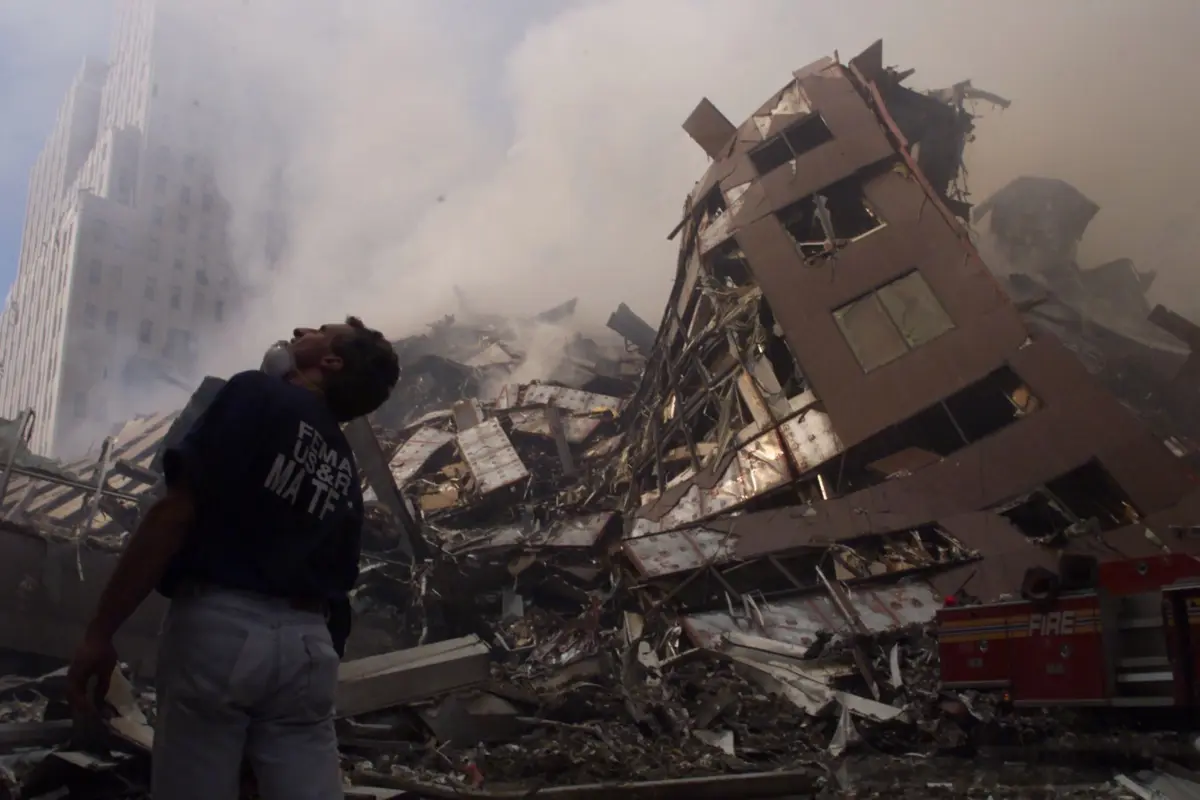
In the immediate aftermath of the September 11 terrorist attacks, lower Manhattan underwent a profound metamorphosis. What had been a global epicenter of finance, fashion, and media was instantaneously transformed into an improvised military staging ground and an epicenter of collective grief, resilience, and logistical surrealism. At the heart of this transformation was Ground Zero—a smoking, towering ruin that recast the surrounding streets into a sprawling, frantic monument of American relief efforts.
By Thursday, September 13th, the perimeter had hardened. Federal and local authorities established strict access control points, drastically altering the geography of the financial district. Yet, just outside these military-style cordons, Chambers Street and the surrounding West Side corridors evolved into an aid station of epic, almost baroque proportions. Fueled by an overwhelming impulse to help, thousands of ordinary citizens, self-appointed volunteers, and corporate donors flooded the area with an abundance of supplies that exposed both the unique generosity and the bizarre commercial realities of American consumer culture.
This retrospective examines the chaotic ecosystem of lower Manhattan in the days following the collapse of the World Trade Center towers. Through the lens of the workers, volunteers, and emergency responders who navigated the dust-choked corridors of the disaster zone, this report explores the friction between official bureaucracy and grassroots altruism, the surreal convergence of corporate supply chains and profound human tragedy, and the psychological toll etched onto the faces of a city forced to confront the unimaginable.
Detailed Chronology: The Sealing and Savoring of Lower Manhattan
Thursday, September 13, 2001: 14:00 EST
At approximately two o’clock in the afternoon, federal and municipal authorities tightened their grip on the disaster zone. A chain-link fence was rolled off a flatbed truck and erected across Chambers Street at the West Side Highway, situated five blocks north of the collapsed World Trade Center complex. Within thirty minutes, this makeshift barrier became the primary portal into and out of Ground Zero. Manned strictly by FBI personnel and military police, the checkpoint demanded legitimate credentials for entry, signaling the end of the initial, chaotic free-for-all days of rescue work.
However, bypassing the outer perimeters at Canal Street and descending toward Chambers remained entirely feasible for anyone determined to do so. The sheer scale of the disaster site defied comprehension. From a distance of several blocks, the mountain of pulverized concrete, twisted steel, and office detritus resembled a small mountain range—significantly broader and far taller than most observers had anticipated. In isolated pockets, the heap soared over a hundred feet into the air, continuing to burn with a ferocious intensity. Plumes of thick, grey-black smoke billowed continuously into the atmosphere, creating a thermal haze that made the facades of surrounding, abandoned skyscrapers shimmer in the intense heat.
The Shift in Control
As liability concerns mounted, officials began systematically expelling mutual-aid firefighters from jurisdictions outside New York City. Outside the gates, departing smoke-eaters—many clutching cigarettes in a ritualistic release of tension—offered grim assessments of the interior conditions. Asked what the site looked like up close, one exhausted firefighter from an out-of-state department offered a blunt summary: "It’s a fucking dump. But the most incredible dump that’s ever been."
The demographic landscape of Manhattan had flipped overnight. Prior to September 11, the island’s pulse was dictated by investment bankers, media executives, fashion designers, and celebrities. In the span of forty-eight hours, the city was turned over to men in urban-warfare attire: individuals bearing brawny forearms, high-and-tight military haircuts, and the distinct borough brogues of Brooklyn, Queens, and Long Island.
The security apparatus itself was a dizzying alphabet soup of agencies. National Guardsmen in camouflage fatigues mingled with the dark blue uniforms of the NYPD and the glittery, soot-stained bunker gear of the FDNY. Ironworkers and sandhogs in reflective safety vests worked shoulder-to-shoulder with corporate utility crews from Con Edison and Verizon. Meanwhile, federal representatives from FEMA, the FBI, the ATF, and even the Drug Enforcement Administration (DEA)—identifiable by their blue windbreakers with bold orange lettering—asserted command over the disaster recovery architecture.

The Epic Aid Station on Chambers Street
Immediately surrounding the security checkpoints, Chambers Street had transformed into a surreal bazaar of humanitarian aid. Canteen trucks, corporate donations, and impromptu medical stations lined the asphalt. A Voice-Stream mobile truck dispensed free cellular service to workers attempting to contact anxious relatives. Dual McDonald’s tractor-trailer units operated with ruthless military efficiency, churning out Quarter Pounders and Chicken McNuggets to sustain the relentless stream of laborers.
The supply chain of comfort was staggering in its volume. Oceans of bottled water were stacked at every street corner, dwarfed only by towering palisades of snack foods: boxes of Oreos, Hot Pockets, Ritz Crackers, and Power Bars. This logistical outpouring underscored a grim cultural reality—that the modern American food industry, with its long shelf-life packaging, high-calorie density, and rapid-consumption design, was morbidly well-suited for moments of catastrophic collapse.
Personal hygiene and creature comforts were equally abundant. Responding to emergency broadcasts calling for basic sanitation items, donors flooded the staging area with saline solutions, toothbrushes, and high-end European dental products. Pharmacies worth of topical antifungals, heavy-duty deodorants, and travel-sized mouthwashes arrived by the pallet. Piles of brand-new undergarments—towering stacks of white t-shirts and cotton briefs—stood waiting for men emerging from the dust of the pile.
Supporting Context & Metrics: The Economy of Altruism
The relief effort quickly evolved into a study of excess, driven by New York’s distinct urban resources. Pop-up stations offered Indian cuisine, artisanal pasta bars, and gourmet ice cream served by young women in designer athletic wear. Law enforcement officers routinely washed the ash from their boots using bottles of imported sparkling mineral water. Amidst the solemnity, street vendors offering bootleg rap CDs propositioned exhausted rescue workers with offers of "old school" tracks, while mobile day spas set up folding massage tables to offer chiropractic adjustments and steam treatments.
+-----------------------------------------------------------------+
|               LOGISTICAL RELIEF BREAKDOWN (ESTIMATED)           |
+------------------------------+----------------------------------+
| Category                     | Relative Volume / Impact         |
+------------------------------+----------------------------------+
| Bottled Water & Hydration    | Ubiquitous (Every street corner) |
| High-Calorie Snack Foods     | Industrial Scale (Pallet-level)  |
| Sanitation & Hygiene Items   | Abundant (Pharmacies of stock)   |
| Self-Appointed Volunteers    | Massive Overs-supply             |
| Heavy Machinery & Logistics  | Highly Coordinated               |
+------------------------------+----------------------------------+
This phenomenon highlighted a profound sociological truth about disaster response: volunteers far outnumbered actionable tasks. Self-appointed helpers wearing hard hats salvaged from municipal drop-boxes roamed the perimeter. Laminated identification cards issued on the first night had long since run out, leading citizens to improvise credentials. Men and women proudly wore their state-issued driver’s licenses and commercial membership cards—such as local video rental IDs—dangling from lanyards around their necks.
With actual excavation work restricted to heavy machinery and trained professionals, volunteers improvised menial roles. Women carried heavy-duty trash bags as mobile garbage collection units. Others patrolled the resting zones, offering rides home to weary laborers or wiping ash from the faces of sleeping firemen. The psychological weight of this forced idleness among the helpers occasionally manifested in gallows humor and poignant existential reflections.
Official Statements and Observations
As dusk settled over the financial district, the demographic makeup of the streets shifted again, drawing figures from the fringes of society and philosophy. A Franciscan monk, clad in a coarse cloth robe, rope belt, and leather sandals, wandered the asphalt of Chambers Street. Having taken strict vows of poverty and chastity, he had divested himself of all earthly possessions in California—including his motorcycle—before migrating east to minister to the traumatized populace.
Engaging in surreal theological dialogues with passersby, the monk observed the strange juxtaposition of New York’s cultural contradictions against the staggering loss of life at the World Trade Center, drawing a direct parallel between the estimated fifty thousand workers inside the towers at capacity and the city’s broader societal metrics. Despite the dissonance of his presence—crossing himself solemnly before tearing into a donated McDonald’s Quarter Pounder with Cheese—his mission underscored the deep spiritual vacuum left in the wake of the towers’ collapse.

The Graveyard Shift: 03:00 EST
By three o’clock in the morning, the atmospheric tenor of Ground Zero shifted from frantic daytime rescue to nocturnal extraction. A convoy of heavy dump trucks stretched twenty blocks up the West Side Highway, idling while drivers discussed the grim nature of their payloads. Conversations among teamsters centered on the haunting reality of recovering human remains embedded within the aggregate stone and pulverized steel, and the surreal psychological transition of driving out of the burning apocalyptic maw of Manhattan and crossing into the quiet, brightly lit suburban streets of Staten Island, where sleeping children and flickering television screens appeared jarringly, almost obscenely, normal.
       [ Ground Zero: 03:00 AM Shift ]
                     |
       +-------------+-------------+
       |                           |
       v                           v
[ Convoy of Dump Trucks ]   [ Stranded Volunteers ]
- West Side Highway         - Roaming with empty trays
- Transporting rubble/remains - Serving leftover rations to peers
Meanwhile, civilian aid workers remained trapped in a loop of compulsive generosity. Unwilling to abandon their posts despite being barred from the active recovery zone, they wandered the cordoned streets carrying trays of soup, cheeseburgers, and water bottles. Finding no operational rescue workers to feed, they turned their ministrations inward, offering sustenance to one another in an endless loop of mutual care: "You look tired manning the underwear table—want some water?" or "You look hungry carrying that water around, can I offer you a hot burger?"
Future Outlook & Historical Legacy
At approximately four o’clock in the morning, the rhythm of the street experienced its most poignant rupture. A contingent of firefighters made one of their regular rotations off the mound, marching out of the disaster zone and up West Street.
Instantly, the ambient noise of the aid station quieted. Volunteers rushed forward with trays, cups, and medical supplies, desperate to offer relief. Yet the firefighters marched with single-minded focus toward the municipal buses waiting to transport them back to their respective quarters. Almost none broke stride.
The onlookers watched in silence as the soot-covered, stony-faced men passed by. Their exhausted gazes and profound physical exhaustion projected an archetype of raw, unvarnished endurance that no commercial apparatus could ever manufacture. In their presence, the thousands of volunteers, the mountains of corporate donations, and the frantic logistics of relief suddenly fell silent.
The tragedy of September 11 had introduced a new era to American history—one defined by sudden vulnerability, monumental grief, and an enduring collective resolve that would reshape security, politics, and culture for decades to come. As the buses pulled away into the pre-dawn darkness, the remaining crowds realized a humbling truth: before the sheer scale of the loss and the quiet dignity of those who bore its weight, there was ultimately nothing left to offer, save for witness and remembrance.