

Executive Overview
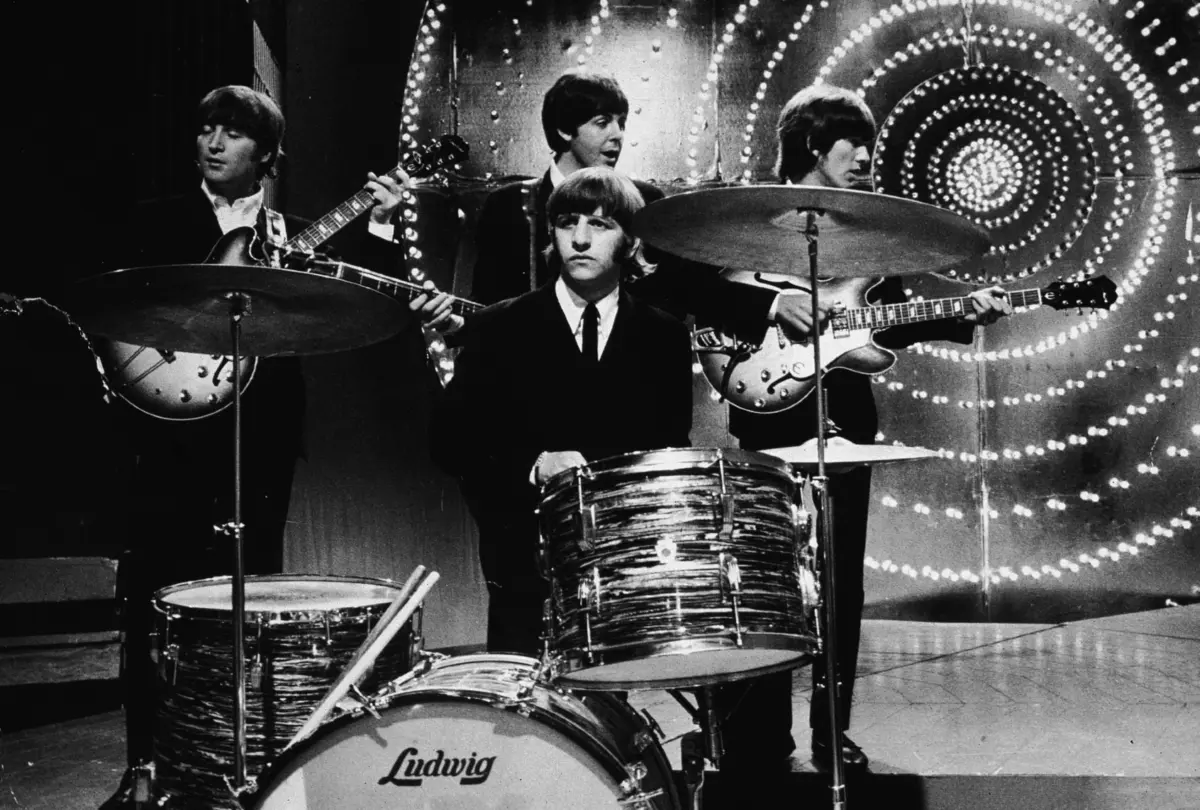
Sixty years after its August 5, 1966, release in the United Kingdom, The Beatles’ Revolver remains the definitive pivot point in popular music history. Arriving at a juncture where rock and roll was shedding its adolescent skin to emerge as high art, the album codified a new grammar for studio recording, songwriting, and cultural reach. While its successor, 1967’s Sgt. Pepper’s Lonely Hearts Club Band, often commands the lion’s share of historical hyperbole as pop’s ultimate canvas, musicologists, cultural historians, and devoted fans increasingly recognize Revolver as the bolder, sharper, and more transformative milestone.
Spanning 14 radically diverse tracks, Revolver was not merely a collection of hit songs; it was an acoustic laboratory. Here, John Lennon, Paul McCartney, George Harrison, and Ringo Starr—operating in tandem with visionary producer George Martin and pioneering engineer Geoff Emerick—shattered the physical and conceptual limitations of four-track recording. They introduced backward tape loops, direct-injection bass, automatic double tracking (ADT), and classical Indian instrumentation to the mainstream consciousness.
Beyond its sonic architecture, the album acted as a demographic lightning rod. In less than three years following their landmark arrival on The Ed Sullivan Show, The Beatles expanded their core listenership from screaming teenagers to working adults, children, and intellectuals alike. As the music community gathers to celebrate the album’s diamond jubilee—including flagship events like the upcoming "Everything Fab Four" Fest at Monmouth University—this commentary explores how Revolver fundamentally redrew the boundaries of Western music and continues to cast a long, unassailable shadow over modern art.
Detailed Chronology: From the Studio Floor to Cultural Immortality
The Precursor: Rubber Soul and the Genesis of Cohesion
To understand the seismic impact of Revolver, one must first examine the creative momentum established by its 1965 predecessor, Rubber Soul. Widely celebrated by contemporaries—including The Beach Boys’ Brian Wilson, who famously viewed it as the first pop album devoid of "filler"—Rubber Soul proved that an LP could be experienced as a unified, artistic statement rather than a rushed compilation designed to cash in on standalone singles.
George Harrison would later reflect on Rubber Soul and Revolver as structural "parts one and two" of an ongoing creative evolution. While Harrison was characteristically modest—undervaluing his own explosive maturation as a composer on the latter—the trajectory between the two records represents a rapid, near-vertical ascent into uncharted territory.
The Sessions at Abbey Road (April – June 1966)
By the spring of 1966, The Beatles had grown profoundly weary of the relentless touring machine that reduced their live performances to inaudible exercises drowned out by seas of screaming fans. Their decision to abandon the concert stage following their 1966 tour gave them an unprecedented luxury: time. They retreated to EMI Studios (later Abbey Road) with George Martin, determined to create music that could no longer be replicated in a standard live setting.
The sessions kicked off on April 6, 1966, with John Lennon’s surrealist masterpiece, "Tomorrow Never Knows." Utilizing tape loops cut into rhythmic snippets and fed through multiple tape machines—manipulated in real-time by Martin and the engineering staff—Lennon sought to emulate the transcendental ego-death described in Timothy Leary’s The Psychedelic Experience. It was an astonishing opening salvo for what would become an album defined by technical audacity.
The Tracklist and Genre-Defying Range
Across its 14 tracks, Revolver functioned as a whirlwind of competing genres, effortlessly traversing musical landscapes that most traditional acts wouldn’t dare touch:
- The Baroque-Pop Elegance: Paul McCartney’s "Eleanor Rigby" discarded traditional rock instrumentation entirely, relying instead on a skeletal, biting string octet arrangement scored by Martin to underscore a stark, melancholic narrative of urban loneliness.
- The Sitar’s Ascendance: George Harrison stepped boldly into the spotlight with three compositions, led by "Love You To," a serious, dedicated exploration of Hindustani classical music featuring traditional Indian sitars and tablas that far outpaced the playful dabbling of "Norwegian Wood."
- Satirical Social Commentary: Harrison’s opening track, "Taxman," offered a biting critique of British taxation policies, driven by McCartney’s ferocious, searing bassline and a razor-sharp electric guitar solo.
- Whimsical Novelty and Universal Appeal: Ringo Starr’s buoyant delivery of "Yellow Submarine" provided a vibrant, nautical sing-along that instantly hooked younger demographics, proving the band’s uncanny knack for accessible storytelling.
Coupled with the contemporaneous non-album single release of "Paperband Writer" and "Rain"—the latter featuring pioneering use of slowed-down drum tracks and backward vocals—The Beatles and George Martin unleashed an astonishing bounty of 16 peerless songs into the global ecosystem in the summer of 1966.
Supporting Context & Metrics: Re-evaluating the American Odyssey and Demographics
The American Reception History
In the United States, Revolver endured a uniquely complex journey. Historically viewed by American critics as a brilliant precursor or "appetizer" to the monumental Sgt. Pepper’s Lonely Hearts Club Band (1967), Revolver suffered for decades from structural discrepancies. Until the global CD standardization in 1987—which finally deleted Capitol Records’ heavily altered American regional versions in favor of the definitive 14-track UK canonical release—many Stateside listeners received a truncated, altered version of the album.
As subsequent generations of music fans rediscovered the authentic British sequencing, Revolver steadily climbed American critical consensus lists. Today, many musicologists argue that its raw, organic experimentation outshines the calculated, conceptual theatricality of its celebrated successor.
Demographic Domination
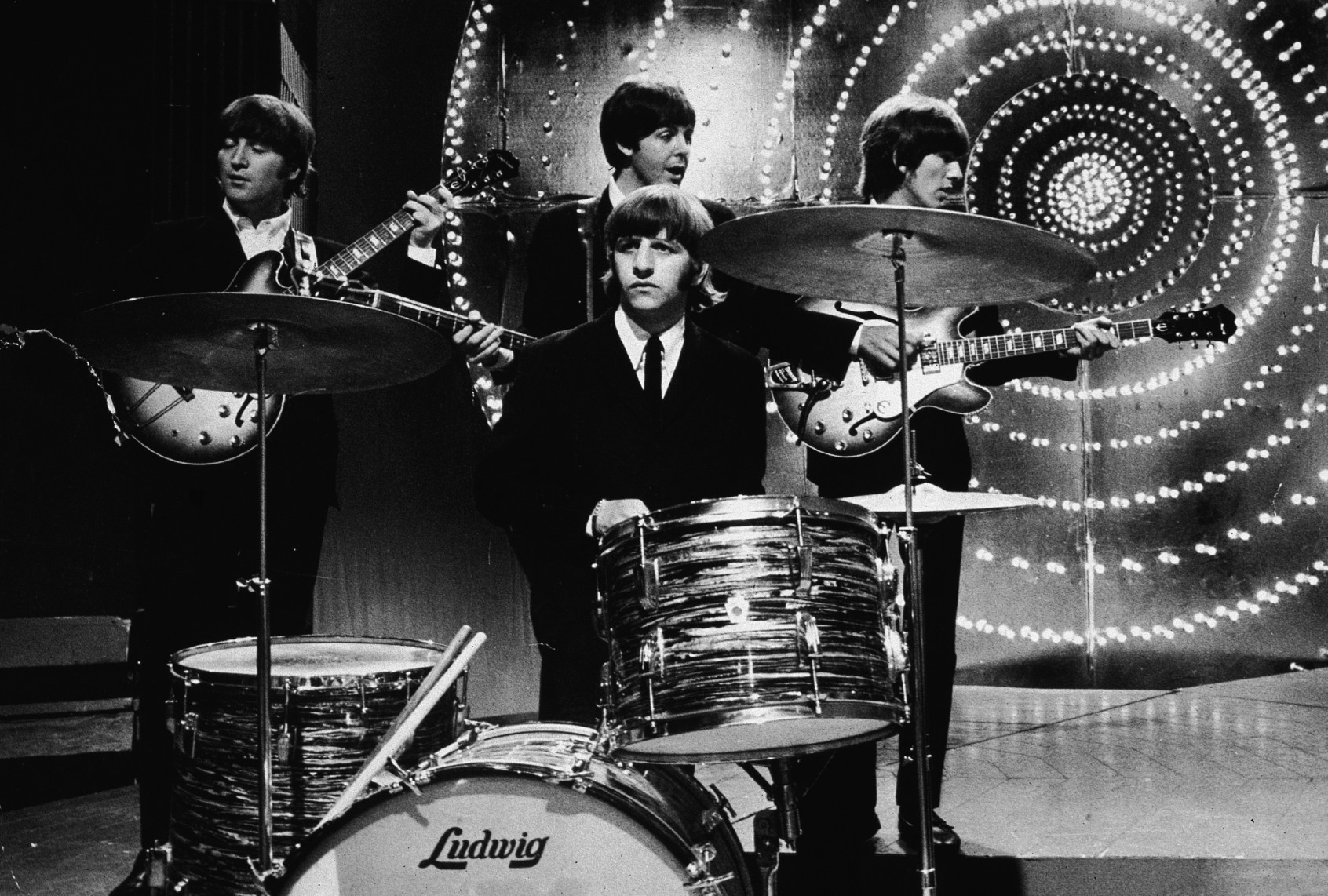
One of the most remarkable metrics of Revolver’s cultural dominance lies in its unprecedented demographic expansion. The Beatles’ career can be mapped by their widening cultural footprint:
[Early Era: 1962–1964] ──> Narrow demographic of teens and young adults.
           │
           ▼
[Mid Era: 1965 ("Yesterday")] ──> Expansion to working adults (ages 25–54) via string arrangements.
           │
           ▼
[Peak Era: 1966 ("Revolver")] ──> Total market penetration:
    ├─ Children & Pre-teens ("Yellow Submarine")
    ├─ Teens & Young Adults (Standard Rock & Pop)
    ├─ Working Adults ("Yesterday", "Eleanor Rigby")
    └─ Older Audiences / Post-55 ("Eleanor Rigby" string octet)
Within less than thirty-six months, a group originally marketed toward teenage girls had successfully captured every living demographic quadrant of consumer culture, establishing a universal artistic language that bridged generational divides.
Official Statements and Academic Legacy
The cultural resonance of Revolver has made it a permanent fixture of academic study and critical analysis. Commentators, historians, and musicians alike continue to unpack its legacy.
Dr. Kenneth Womack, renowned Beatles scholar and cultural critic, notes the album’s unique structural role:
"Ultimately, ‘Revolver’ exists as a weigh-station, of sorts. First, it was the culmination of the most profound demographic growth in the history of entertainment… Yet feats of demography are only part of what ‘Revolver’ bequeathed. The LP served as a runway—or perhaps more accurately, a launching pad—for the more experimental and challenging efforts to follow."
Following Revolver, The Beatles embarked on an unbroken, high-wire act of consecutive artistic triumphs: Sgt. Pepper’s Lonely Hearts Club Band (1967), Magical Mystery Tour (1967), The White Album (1968), the Get Back/Let It Be sessions (1969/1970), and their swan song, Abbey Road (1969).
Yet, as critics frequently observe, it was on Revolver that the safety net was permanently removed. The band proved that pop music could accommodate avant-garde tape loops, philosophical queries about ego death, socio-economic grievances, and bleak portraits of elderly isolation—all while maintaining an irresistible melodic hook.
Future Outlook: Celebrating the Diamond Jubilee
As the music world marks the 60th anniversary of Revolver in 2026, its influence shows zero signs of attrition. Modern production techniques, indie-rock soundscapes, and electronic experimentation all trace their intellectual lineage back to those tense, brilliant months in Abbey Road Studio Two.
To honor this monumental milestone, cultural institutions are rolling out dedicated retrospectives. Among them, the annual "Everything Fab Four" Fest, scheduled for November 5–8, 2026, at Monmouth University in New Jersey—in partnership with the Bruce Springsteen Center for American Music—will dedicate its entire program to celebrating the diamond jubilee of Revolver. Bringing together scholars, musicians, and fans from across the globe, the festival underscores the reality that the album’s material is not viewed merely as nostalgic pop artifacting, but as enduring classical art designed to withstand the test of time.
Sixty years on, Revolver remains pop music’s ultimate proving ground—a glittering, fearless masterwork that fundamentally redefined what a band could do in a room with four tracks and an unbridled imagination.