

Executive Overview
The political landscape of September 2026 will long be remembered as a watershed moment for American governance—a week when the accumulation of ethical breaches, foreign entanglements, and direct financial self-enrichment by the Trump family finally shattered traditional containment. Within hours of each other, two landmark investigative reports published by ProPublica and The New Yorker laid bare a system of institutionalized kleptocracy.
At the center of these revelations was a stunning disclosure: Donald Trump Jr.’s lavish wedding festivities in the Bahamas had been bankrolled by a sanctioned Russian oligarch with direct ties to Vladimir Putin. Simultaneously, a comprehensive profile in The New Yorker detailed how Jared Kushner, serving as a Middle East diplomat, continues to harvest billions in foreign investments for his private fund from the very governments with which he negotiates.
Compounded by new disclosures of sweeping presidential stock trades and a multi-billion-dollar surge in Donald Trump’s personal net worth, these stories presented a complex picture of a presidency converted into a private family enterprise. Yet, while mainstream newsrooms mobilized extensive investigative resources, a stark polarization defined the national response. Major right-wing media outlets largely ignored or deflected away from the foreign-funding bombshell, highlighting a profound asymmetry in how political accountability is pursued and consumed in contemporary America.
Detailed Chronology: A Convergence of Revelations
The political earthquake began on Monday, September 17, 2026, when two independent investigative pieces landed within hours of one another, bridging disparate threads of suspected corruption into a cohesive narrative.
The ProPublica Investigation
The first major shockwave came from ProPublica, which published an explosive report detailing the financial backing of Donald Trump Jr.’s multi-day wedding celebration in the Bahamas. According to the investigation, Umar Kremlev—the head of a scandal-plagued international boxing federation financed by the Russian state energy giant Gazprom—funneled hundreds of thousands of dollars through a Dubai-based entity to cover private island rentals, high-end entertainment, and elaborate fireworks.
The timing and context of Kremlev’s patronage raised immediate red flags for national security experts. Just days before bankrolling the wedding, Kremlev had traveled to China alongside Russian President Vladimir Putin. Shortly after the festivities, he was officially awarded Russia’s prestigious Order of Friendship by Putin himself. Investigative reporters revealed that Kremlev had only recently met Trump Jr., making the six-figure financial sponsorship an extraordinary gesture of foreign patronage.
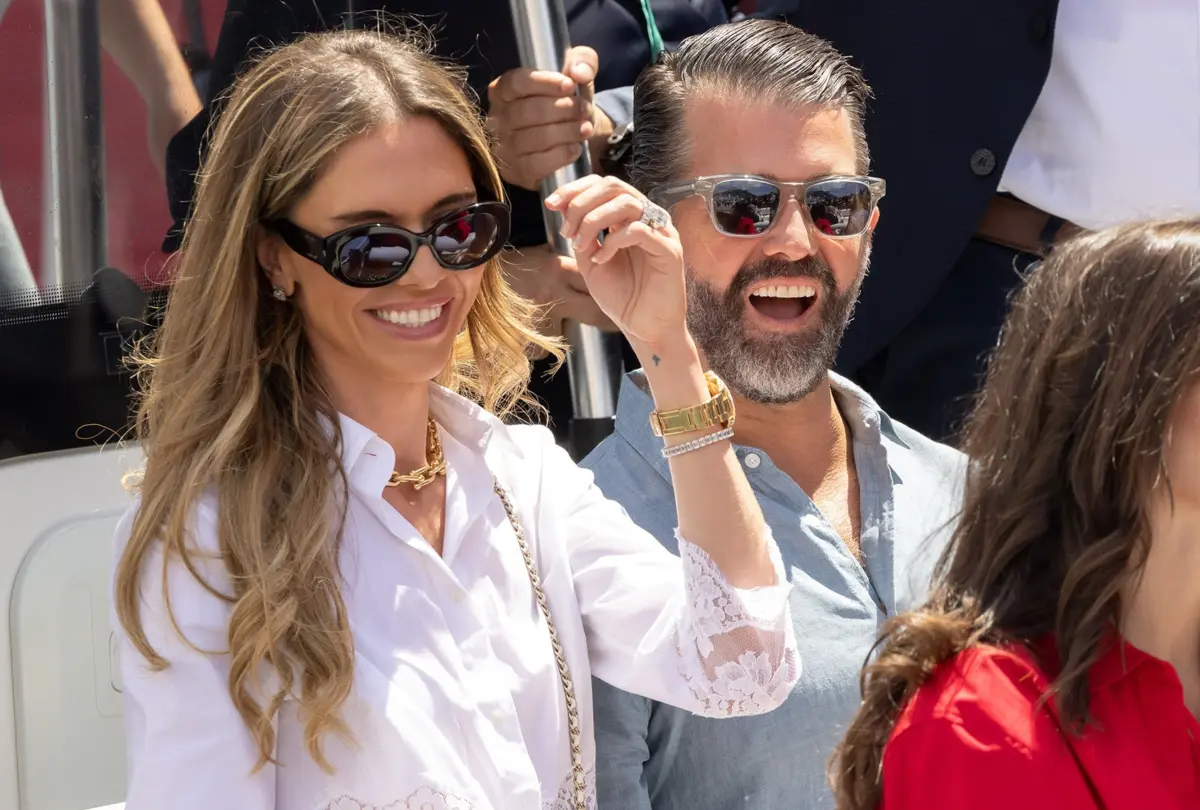
Rather than issuing blanket denials, the principals involved effectively confirmed the core of the reporting. Trump Jr. and his wife, Bettina Anderson, took to Instagram to acknowledge Kremlev’s involvement, describing him as a "dear friend" who had "very generously" hosted the celebration. President Donald Trump, speaking from the White House, offered a contradictory defense: he claimed to have never heard of Kremlev while simultaneously dismissing the event as a minor "afterparty" that was "not a big deal." Eric Trump’s office distanced the family entirely, claiming zero knowledge of the Russian oligarch.
The New Yorker Exposure
Simultaneously, The New Yorker published a deep dive by Dexter Filkins examining Jared Kushner’s dual roles as an informal Middle East peace envoy and a private equity manager. The report illustrated how Kushner’s firm, Affinity Partners, has amassed roughly $5 billion in capital—substantially driven by investments from Gulf sovereign wealth funds, including Saudi Arabia’s Public Investment Fund, which poured $2 billion into the fund following Trump’s first term.
The report mapped out a glaring conflict of interest: Kushner operating as a diplomatic representative to nations that are simultaneously his firm’s most lucrative financial backers, while engaging in direct backchannel talks with Iranian diplomats.
Supporting Context & Metrics: The Scale of Modern Enrichment
The fallout from these September investigations cannot be viewed in isolation; it sits atop a mountain of financial data detailing unprecedented wealth generation by the first family during a presidential term.
- ProPublica Readership Record: Within 24 hours of publication, the ProPublica investigation into Trump Jr.’s wedding became the outlet’s most-read piece of the year, drawing an unprecedented 2.2 million views on its first day and highlighting an acute public appetite for transparency.
- Presidential Net Worth Surge: Forbes reported that President Donald Trump’s net worth has grown by an estimated $2.7 billion since his re-election, a surge powered largely by cryptocurrency ventures and overseas licensing deals.
- Unprecedented Stock Trading: Financial disclosures revealed that President Trump executed nearly 29,000 securities trades over a 17-month period—surpassing the trading volume of every sitting member of the United States Congress combined—all while pushing for legislative stock trading bans that conveniently exempt the executive family.
- The Congressional Response: Prompted by the ProPublica disclosures, Representative Robert Garcia (D-Calif.), ranking member of the House Oversight Committee, formally requested comprehensive records concerning Trump Jr.’s relationship with Kremlev, citing severe public corruption and national security vulnerabilities.
Official Statements and Institutional Reactions
The response from federal law enforcement and congressional leadership exposed deep fractures in the federal oversight apparatus.
When questioned by Senator Richard Blumenthal (D-Conn.) regarding the ProPublica findings, FBI Director Kash Patel stated that he was entirely unaware of the bombshell report, adding that he does not "track public reporting." Critics immediately noted that such a posture from the head of the nation’s premier federal law enforcement agency represented a dereliction of investigative duty.
Similarly, Attorney General Todd Blanche was pressed on whether the Department of Justice intended to open an inquiry into a presidential family member accepting hundreds of thousands of dollars in hidden benefits from a foreign national tied to a hostile intelligence state. Blanche deflected, questioning the legal premise of the investigation and asking what specific statutes would govern such an inquiry.
Meanwhile, conservative lawmakers rushed to defense or deflection. Senator Bernie Moreno (R-Ohio), appearing on CNN, dismissed the reporting as unworthy of serious attention, immediately pivoting to compare the situation to historical investigations involving Hunter Biden.
One rare exception among conservative institutions came from National Review, which published an op-ed bluntly titled "Don Jr. Will Regret It." The piece condemned the wedding arrangement as "entirely inexplicable" and explicitly acknowledged Kremlev’s deep ties to Putin’s regime and international corruption scandals. However, this solitary critique underscored how isolated principled conservative pushback had become.
Future Outlook
The convergence of the ProPublica and New Yorker investigations has permanently altered the political discourse surrounding executive ethics, yet the structural consequences remain uncertain.
In the immediate term, congressional Democrats are utilizing their remaining committee platforms to subpoena financial records and trace the exact pathways of the Dubai-based funds used to pay for the Bahamas celebration. However, with a Republican-controlled Congress largely aligned with the administration’s strategy of deflection and subject-changing, formal legislative sanctions appear unlikely.
The broader implications point toward a permanent erosion of traditional norms surrounding foreign emoluments and executive transparency. As the line between public diplomacy and private equity continues to blur through ventures like Kushner’s Affinity Partners and Trump’s international business and crypto portfolios, future administrations will inherit a playbook where the American presidency functions openly as a family wealth-generation platform. Whether public fatigue and record readership numbers can eventually translate into tangible electoral or judicial accountability will define the trajectory of American democratic institutions for years to come.