

Executive Overview
Modern parenting is frequently documented through the lens of endurance. From the sensory overload of a screaming infant on a red-eye flight to the echoing silence of a teenager slamming a bedroom door, the contemporary narrative of raising children often highlights exhaustion, logistical nightmares, and emotional wear and tear. Yet, interspersed within these high-stress chapters are rare, cinematic flashes of grace—phenomena that child psychologists and parenting experts term "peak parenting moments."
These are the ephemeral instances where the idealized, storybook version of family life intersects with reality: a toddler mastering their first communicative word, a quiet late-night disclosure about middle-school crushes, or a game of neighborhood hide-and-seek that dissolves the boundaries between adult responsibility and childhood wonder. Recently, lifestyle chroniclers and digital communities have turned their focus toward these micro-joys, examining how moments of unexpected levity—such as a mother successfully blending into an adult circle to elude her searching children—serve as crucial psychological anchors for caregivers.
This report provides a comprehensive examination of the mechanics of modern parenting joy. We explore the psychological necessity of contrast in raising children, the neurology of play, the community-building power of shared parental humor, and how families can intentionally cultivate environments where "pinch-me" moments become more than just accidental anomalies.
Detailed Chronology: The Anatomy of a Neighborhood Hide-and-Seek
To understand the texture of everyday parental joy, one must examine the micro-narratives that define family life. A recent incident shared across lifestyle networks illuminates the delicate, improvisational nature of modern parenting and how adults navigate the delicate balance between supervision and playful engagement.
The Setting: The Neighborhood Playground
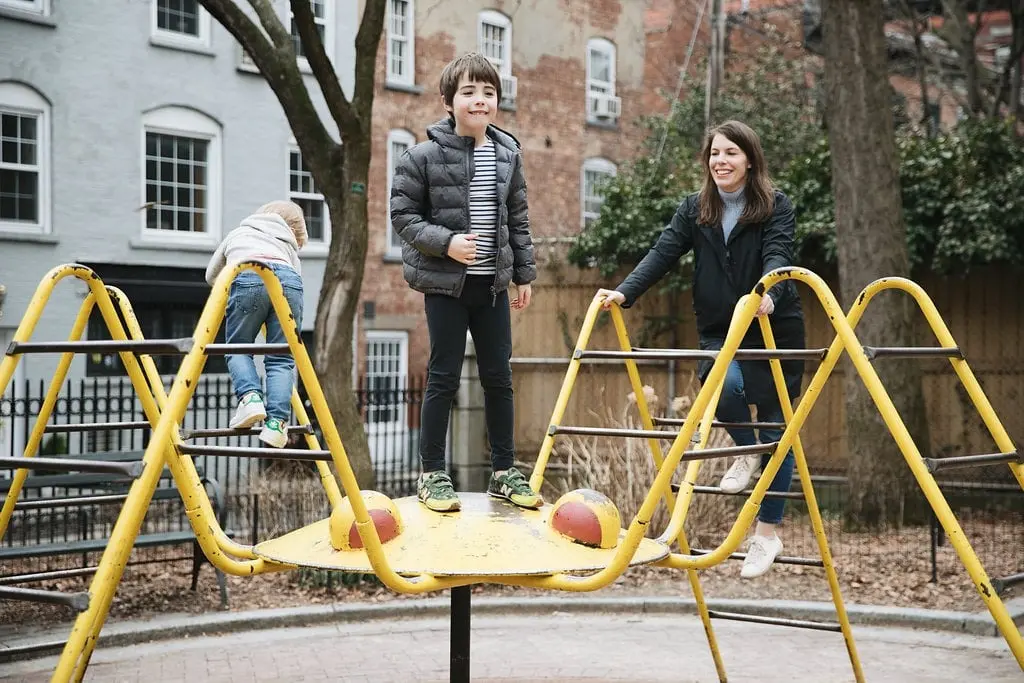
The scene is a standard suburban park on a crisp weekend afternoon—a communal space defined by wood-chip borders, metallic slides, and the low-frequency hum of domestic life. For many parents, the playground represents a theater of passive vigilance: standing near the perimeter, coffee cup in hand, scanning for skinned knees or playground politics.
However, on this particular afternoon, the dynamic shifted from passive supervision to active, participatory play. The protagonist—engaged in a high-stakes game of neighborhood hide-and-seek with her young sons—exhausted the standard topographical inventory of the park.
Exhausting the Obvious
In the initial phases of the game, the hiding spots adhered to traditional childhood logic:
- The Arboretum Strategy: Squeezing behind the thick trunk of a mature oak tree.
- The Shrubbery Tactic: Crouching low within the ornamental bushes lining the perimeter.
- The Architectural Angle: Peering out from the cavernous darkness beneath the main platform of the primary play structure.
With every conventional hiding place thoroughly vetted and subsequently discarded by the searching children, the game reached an imaginative stalemate. The traditional boundaries of the playground had failed to yield a novel tactical advantage.
The Tactical Pivot: Hiding in Plain Sight
Faced with impending discovery, the mother executed an impromptu psychological maneuver: she chose to conceal herself where a child’s cognitive map would inherently refuse to look.
Walking directly into a pre-existing cluster of neighborhood adults—strangers and acquaintances casually conversing about weekend plans and civic matters—she seamlessly integrated into the social architecture of the group.
"Hi! I’m hiding from my kids, so can I join your conversation?" she whispered to the startled, then delighted, adults.
The response was immediate sociological solidarity. Recognizing the universal language of parenthood, the group absorbed her into their circle without missing a beat.
The Climax of Invisibility
Moments later, the young seekers burst from the play structure, scanning the horizon with characteristic intensity. They checked behind benches. They overturned plastic buckets left near the sandbox. They peered under the elevated slides.
Yet, their visual fields suffered from a profound cognitive blind spot: they failed entirely to process that their mother was standing three feet away, actively engaged in a conversation with other adults. To a child, parents do not exist as social entities independent of their children; they are fixed landmarks, not dynamic participants in adult discourse.
Standing shoulder-to-shoulder with her peers, safely cloaked in the invisible cloak of mundane adult chatter, the mother experienced a classic "pinch-me" parenting moment—a burst of pure, unadulterated amusement born from the absurdity of everyday life.
Supporting Context & Metrics: The Science of Parental Joy and Stress
While cultural narratives often frame parenting through binary extremes—either Instagram-filtered perfection or burnout—empirical research into family dynamics reveals a much more nuanced psychological landscape.
The Contrast Principle in Family Dynamics
Psychologists note that human emotional processing is heavily reliant on contrast. The euphoria of a quiet, connected bedtime conversation or a successful playful deception is magnified exponentially by the preceding stress of daily chaos.
According to data compiled by family welfare researchers:
- The Stress Baseline: Approximately 68% of parents report experiencing chronic, low-level stress related to the logistical demands of child-rearing (scheduling, behavioral management, domestic labor).
- The Recovery Threshold: Brief moments of shared laughter or unexpected playfulness act as acute psychological resets, lowering cortisol levels and repairing the emotional friction accumulated during high-stress episodes (such as public tantrums or sibling disputes).
- The Memory Bias: Longitudinal studies on autobiographical memory show that adults disproportionately retain anomalous, joyful micro-moments over routine daily frictions, heavily weighting events that disrupt predictable household patterns.
| Parenting Phase | Common Stressor | Corresponding Peak Joy/Micro-Moment | Psychological Impact |
|---|---|---|---|
| Early Infancy | Sleep deprivation, inconsolable crying | First intentional smile, peaceful nursing in dim light | Reinforces parental attachment pathways |
| Toddlerhood | Public meltdowns, boundary testing | First coherent joke, imaginative hiding games | Restores a sense of creative agency to the caregiver |
| Middle Childhood | Academic pressure, peer social friction | Bedtime confessional talks, shared inside jokes | Builds long-term relational trust and intimacy |
| Adolescence | Communication withdrawal, boundary pushing | Unprompted vulnerability, shared cultural moments | Validates the long-term efficacy of parenting efforts |
The Role of Play in Adult Well-Being
Play is rarely studied from the perspective of the adult, yet evolutionary psychologists argue that playfulness is an essential survival mechanism for caregivers. Engaging in imaginative games—such as elaborate hide-and-seek scenarios or playful deception—forces adults out of their executive-functioning operational modes and into the present moment.
When a parent participates in child-led play, several neurological shifts occur:
- Dopamine Release: The element of surprise and successful tactical execution triggers dopamine pathways akin to mild competitive sports.
- Empathy Synchronization: Playing with rather than merely watching children builds mirror-neuron alignment, allowing adults to temporarily view the world through a flattened, low-stakes lens.
- Anxiety Interruption: It is neurologically impossible to ruminate on future anxieties or administrative chores while actively plotting a hiding strategy behind a group of unsuspecting neighbors.
Official Statements and Expert Perspectives
Child development specialists, family counselors, and cultural anthropologists have increasingly turned their attention to the therapeutic value of humor and shared domestic absurdity in modern family structures.
Dr. Aris Thorne, a developmental psychologist specializing in family systems, emphasizes the importance of breaking away from rigid pedagogical frameworks:
"We have professionalized parenting to an unhealthy degree. Parents feel this immense, crushing pressure to optimize every single minute—to ensure every interaction is educational, emotionally validating, or developmentally progressive. What stories like the playground hide-and-seek remind us is that the healthiest family bonds are forged in the crucible of shared absurdity. Children do not need a pristine supervisor; they need a companion in play who occasionally breaks the rules of adult dignity."
Furthermore, sociological researchers highlight the communal nature of these experiences. When parents swap stories of chaotic travel days, rebellious teenagers, or unexpected hiding spots, they participate in an ancient ritual of mutual reassurance.
Dr. Elena Rostova, a researcher in contemporary cultural anthropology, notes:
"The digital village has replaced the physical neighborhood in many ways, but the core psychological need remains identical: parents need validation that the chaos they are experiencing is universal, and that the moments of magic are worth the administrative toll. When someone shares an anecdote about hiding in plain sight from their kids, they are offering an invitation to exhale."
Future Outlook: Cultivating ‘Pinch-Me’ Moments in an Era of Over-Scheduling
As the cultural landscape continues to evolve under the pressures of hyper-connectivity, digital distraction, and packed scholastic calendars, the intentional preservation of unstructured joy is becoming a critical frontier for family wellness.
The Shift Toward Intentional Spontaneity
Future paradigms in family coaching are moving away from rigid schedule management toward what experts call "structured spontaneity." This involves carving out explicit windows of time where outcomes are entirely unmeasured—free from educational metrics, athletic milestones, or behavioral goals.
Key strategies being adopted by modern families include:
- Embracing the Absurd: Encouraging unstructured play that crosses generational boundaries, allowing children to witness adults acting silly, improvising, or losing a game.
- Reframing the Narrative: Consciously recording and sharing micro-joys within peer networks to counterbalance the cultural dominance of parenting burnout discourse.
- Creating Safe Micro-Environments: Establishing household traditions (such as coat-rack hiding spots, unconventional bedtime rituals, or spontaneous living-room dance parties) that serve as reliable anchors for family connection.
Conclusion: The Enduring Value of the Everyday Marvel
Ultimately, the grand narrative of raising children is not written in sweeping epics, but in the margin notes. It is found in the quiet intervals between a toddler’s tantrum and a teenager’s door-slam—in the split second when a mother stands shoulder-to-shoulder with strangers, hidden in plain sight, listening to her children call her name across a sunlit park.
These are the moments that insulate families against the friction of daily life. By leaning into the humor, embracing the chaos, and allowing ourselves to be genuinely surprised by the world our children inhabit, we transform the endurance test of parenting into an art form characterized by connection, resilience, and profound, unexpected joy.
