

Executive Overview
In an era where digital connectivity allows musical snippets to circle the globe in seconds, the intersection of homage, subconscious influence, and copyright infringement has never been more perilous. For contemporary pop icons, navigating the minefield of online fan theories and litigious music publishing standards is an occupational hazard.
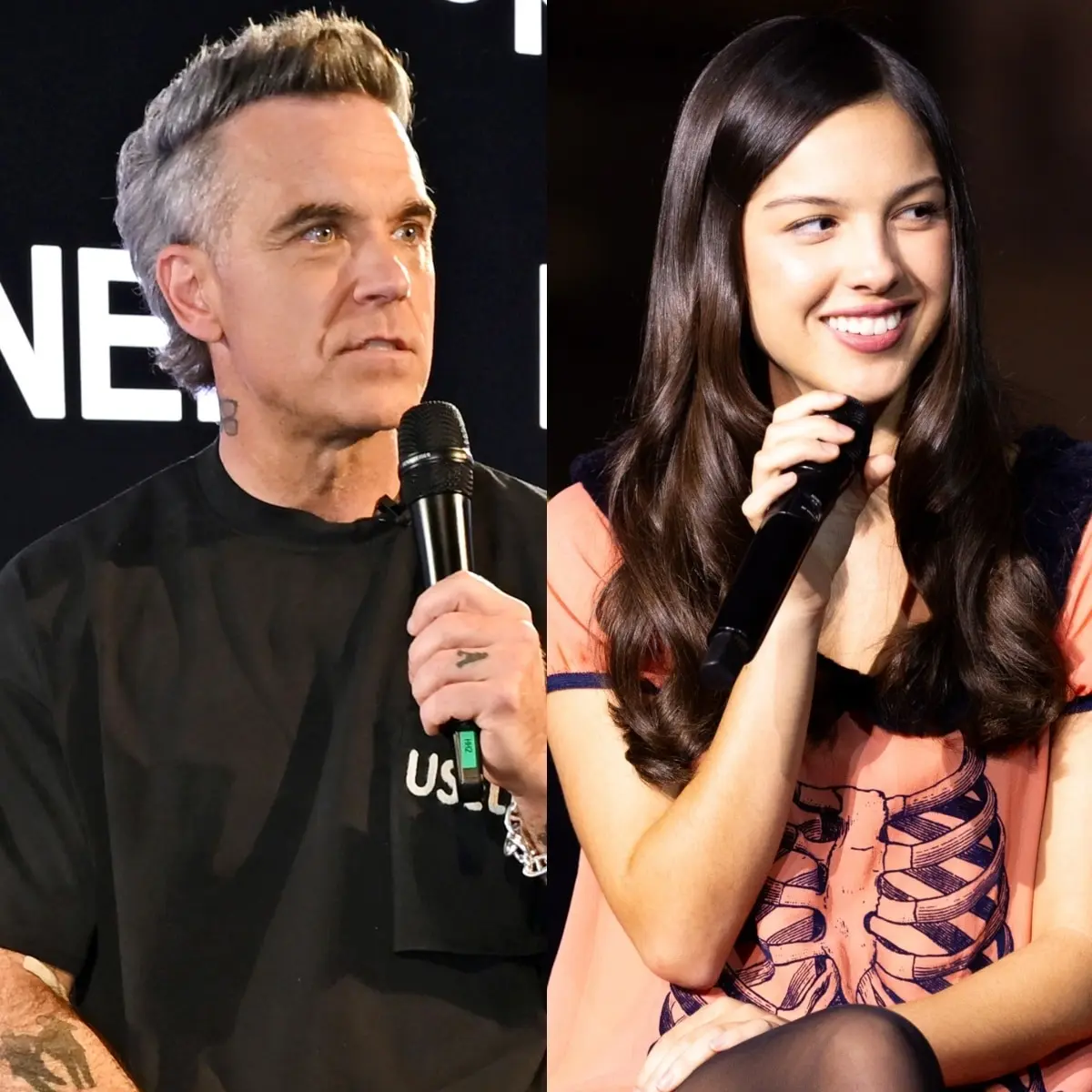
Few artists understand this modern scrutiny quite like Olivia Rodrigo. Ever since her meteoric rise to global superstardom with her 2021 debut single "drivers license," the young singer-songwriter has faced repeated, hyper-analyzed comparisons to classic and contemporary tracks alike. The latest controversy emerged when internet sleuths accused her of lifting elements of Robbie Williams’s 2012 pop hit "Candy" for her new holiday track, "Take Me Home (4 Christmas)."
Rather than fanning the flames of controversy or demanding a forensic musicological investigation, British pop veteran Robbie Williams stepped forward with an emphatic defense. In a candid, profanity-laced statement posted to Instagram on November 9, the former Take That star dismissed the plagiarism accusations outright. More than just clearing Rodrigo’s name, Williams used the moment to launch a broader critique of the modern music industry’s litigious culture, condemning what he termed "ambulance chasing" tactics that threaten to stifle organic artistic expression.
This report examines the anatomy of the controversy, the cultural and legal implications of the modern music copyright landscape, and Williams’s impassioned plea for sanity in an industry increasingly trigger-happy with legal notices.
Detailed Chronology: From Internet Speculation to Public Defense
To understand how a minor social media murmur transformed into a major industry conversation, it is necessary to trace the timeline of events leading up to Williams’s public intervention.
1. The Release of "Take Me Home (4 Christmas)"
As the winter holiday season approached, Olivia Rodrigo dropped her latest seasonal offering, "Take Me Home (4 Christmas)." The track, characteristic of her signature blend of confessional lyricism and energetic pop-rock arrangements, was immediately embraced by her passionate fan base, known colloquially as Livies.
2. The Online Accusations Gain Traction
Within days of the song’s release, sharp-eared internet users and TikTok music commentators began drawing parallels between the track’s melody and Robbie Williams’s 2012 commercial hit "Candy." Social media platforms quickly became saturated with side-by-side audio comparisons. While some fans viewed the similarity as a nostalgic nod or an accidental parallel, corners of the internet began leveling accusations of a direct "rip-off," applying mounting pressure on both artists to respond.
3. Robbie Williams Steps In
Rather than allowing the rumor mill to spiral or empowering legal teams to issue preemptive warnings, Williams took direct control of the narrative. On November 9, the 52-year-old singer utilized his official Instagram account to publish a statement addressing the internet controversy head-on. His remarks were characteristically unfiltered, blending high praise for Rodrigo’s musical capabilities with a scathing critique of modern copyright culture.
Supporting Context & Metrics: The Modern Litigious Landscape
Williams’s defense of Rodrigo touches upon a deeply sensitive nerve within the contemporary music industry. Over the past decade, copyright law and public perception regarding musical borrowing have undergone a seismic shift, largely catalyzed by high-profile legal battles.
The Shadow of "Blurred Lines" and Beyond
The modern era of hyper-vigilant music copyright enforcement is frequently traced back to the landmark 2015 "Blurred Lines" lawsuit. In that case, a federal jury found that Robin Thicke and Pharrell Williams had infringed upon Marvin Gaye’s 1977 soul classic "Got to Give It Up." The verdict—which penalized the artists not for copying exact sheet music or lyrical phrasing, but for capturing the overarching "feel" or "groove" of the original work—sent shockwaves through the songwriting community.
Since then, artists have increasingly found themselves walking a legal tightrope. Songs share chord progressions, rhythmic syncopation, and vocal cadence routinely because Western popular music is built upon a centuries-old foundation of shared building blocks. When every minor coincidence is treated as actionable intellectual property theft, the threshold for what constitutes a "stolen" song drops dangerously low.
The "Ambulance Chasing" Phenomenon
Williams’s use of the term "ambulance chasing" targets a very specific economic reality within the music business. Today, copyright claims are frequently driven not just by aggrieved artists, but by specialized publishing entities, legal firms, and catalogue investors looking to monetize every sonic coincidence.
- The Financial Incentive: With streaming revenues fluctuating and physical sales dwindling, back-catalogue ownership has become a multi-billion-dollar asset class. Consequently, owning a slice of a modern hit via a retroactive co-writing credit or settlement payout represents a lucrative payday.
- The Chilling Effect: As Williams astutely pointed out, this aggressive policing creates a terrifying environment for up-and-coming and established songwriters alike. When creators live in fear that an accidental melodic echo could land them in court, the natural, iterative evolution of music is compromised.
Official Statements & Analysis
Williams’s statement stands out in modern pop culture for its raw authenticity, humor, and unwavering support for a younger peer. Below is a comprehensive breakdown of his key declarations.
On Rodrigo’s Talent and Work Ethic
Williams made no secret of his admiration for the multi-Grammy Award-winning artist, establishing his credibility as a genuine fan rather than a detached industry veteran weighing in for PR purposes:
"I love Olivia Rodrigo. I’ve loved her since ‘Brutal.’ What a f–king record. I wish I’d made it. Also, I cannot believe how much she swears on stage. And that’s coming from me. I’m a Sweary Mary, but she’s making me look like a Victorian schoolmistress."
By validating Rodrigo’s artistic credentials, Williams framed the situation as an interaction between peers rather than a grievance between generations.
Addressing the Musical Similarities
Rather than denying that the songs share a sonic DNA, Williams adopted a pragmatic and realistic stance regarding how music is actually written:
"It sounds to me as though she may have accidentally stumbled across a musical echo of mine in one of her new songs. And do you know what? I couldn’t care less. I don’t know if this is technically a publishing issue, a copyright issue or no issue whatsoever. I don’t want to know. I’m not going after her. Because I think at some point, some f–king sanity has to prevail."
This distinction between malicious theft and organic, subconscious influence is precisely what legal scholars argue is missing from modern judicial standards.
The Philosophy of Musical Evolution
Perhaps the most profound portion of Williams’s statement addressed the foundational reality of human creativity:
"We all stand on the shoulders of people who came before us. Sometimes consciously. Sometimes without even knowing it. That’s how music works. If we keep punishing people for accidentally arriving somewhere somebody else has already been, eventually we’re going to frighten the creativity out of everyone."
This sentiment echoes the long-standing musicological consensus that human memory is a sponge. Artists absorb thousands of melodies throughout their lifetimes, storing them in their subconscious. When writing new material, it is entirely natural for these stored motifs to bubble back up to the surface without any deliberate intention to plagiarize.
Future Outlook: What This Means for the Music Industry
Robbie Williams’s public intervention is more than just a fleeting celebrity headline; it serves as a potential cultural turning point in how the music community addresses intellectual property disputes.
1. A Shift Toward Grace Over Greed
As major heritage artists increasingly control valuable catalogues, the way they respond to internet-driven controversies sets a powerful precedent. By publicly defusing the situation, Williams has provided a masterclass in how legacy acts can protect their work without participating in predatory litigation. If more veteran artists adopt this "live and let live" philosophy, the climate of fear surrounding modern songwriting could begin to recede.
2. Protecting the Next Generation of Songwriters
Artists like Olivia Rodrigo—who broke out during an era where every second of unreleased audio is scrutinized by millions of online detectives—face unique pressures. Knowing that senior statesmen of the industry are willing to stand up and call out overzealous policing offers a vital psychological safety net for young creators trying to push pop music forward.
3. The Need for Legal Reform
Ultimately, the debate sparked by Williams points to a deeper systemic issue within music copyright law. Experts continue to lobby for clearer, more objective standards that differentiate between outright piracy and the natural convergence of pop tropes. Until legal frameworks catch up with the realities of human memory and musical evolution, cultural interventions like Williams’s statement will remain essential bullevards against creative stagnation.
Conclusion
Robbie Williams’s defense of Olivia Rodrigo cuts through the noise of digital outrage culture with refreshing clarity. By refusing to capitalize on a manufactured controversy, Williams has championed a healthier, more sustainable vision for the music industry—one where artists are encouraged to innovate, borrow from the past, and create without the looming threat of unwarranted litigation. As the pop landscape continues to evolve, the industry would do well to heed his final, pragmatic piece of advice: sometimes, sanity simply has to prevail.
