

Executive Overview
The political landscape of the United States shifted beneath its own feet following what political scientists and historians are already calling one of the most consequential midterm elections in modern American history. What initially projected as a steady "blue wave" quickly transformed into an unprecedented "blue tsunami," delivering a sweeping mandate to the Democratic Party and upending the conventional wisdom of American electoral politics.
In a direct and unmistakable repudiation of President Donald Trump’s second-term agenda, American voters overwhelmingly returned control of both the House of Representatives and the United States Senate to the Democrats. The electoral shockwaves extended far beyond traditional blue bastions. Democrats secured high-profile victories not only in historical strongholds but effectively dismantled red walls across the country—flipping seats in states like South Carolina, Kansas, Ohio, and, most notably, Texas.
As political analysts, journalists, and party leaders scramble to parse the data, the consensus is clear: the aftershocks of this election will reverberate for years, fundamentally altering legislative priorities, executive branch oversight, and the broader media ecosystem. Concurrently, advocacy groups like the Committee to Protect Journalists (CPJ) are urging the incoming congressional majority to prioritize the restoration of foundational press freedoms following years of intense institutional friction. This deep-dive report examines the anatomy of the Republican collapse, the surprising absence of widespread election denialism, the muted internal reaction from the White House, and the critical policy shifts anticipated in Washington.
Detailed Chronology of the Electoral Earthquake
Sunday and Monday: The Final Stretch of Campaigning
In the final 48 hours before the polls opened, internal tracking polls across both major parties suggested a tightening electorate, yet few anticipated the scale of the impending voter mobilization. Democratic strategists executed a targeted recruitment drive, focusing on non-traditional candidates with distinct, localized biographies—military veterans, doctors, farmers, and community leaders—who successfully deflected the "professional politician" label weaponized by the GOP.
Tuesday: The Tsunami Breaks
As polls closed across the Eastern Seaboard and moved westward, early returns flashed warning signs for the Republican Party. By midnight, it was evident that the election had morphed into a national referendum on the administration. House races fell rapidly to Democratic challengers, and Senate contests in traditionally safe Republican states began tilting. By the early hours of Wednesday morning, control of both chambers of Congress had decisively shifted.
Wednesday: Processing the Defeat
The morning after the election revealed a striking contrast between public elation and political shell-shock. While Democrats celebrated major milestones—including capturing a historic governorship in Texas and a U.S. Senate seat—the White House appeared strangely muted. Rather than addressing the historic electoral rebuke head-on, President Trump spent significant portions of the day discussing a White House ballroom construction project, retreating into what close aides described as a classic "processing state."
Thursday: Media Analysis and Institutional Pleas
On Thursday, major journalistic institutions released exhaustive post-mortems. Investigative reports from The New York Times detailed internal fractures within the GOP. Simultaneously, the Committee to Protect Journalists issued an urgent formal statement calling on the incoming Congress to enact immediate oversight of federal agencies and pass legislation to protect the First Amendment, setting the stage for a dramatic legislative showdown in the 120th Congress.
Supporting Context & Metrics: The Anatomy of a GOP Collapse
To understand how the Republican Party suffered such a historic reversal, one must examine the confluence of geopolitical, economic, and strategic factors that sank the GOP ship. A comprehensive investigative report by The New York Times, titled "I Have Seen the Enemy, and It Is Us: Inside Team Trump’s Historic Collapse" and based on interviews with more than 70 lawmakers, strategists, pollsters, and White House officials, sheds light on the internal crisis.
The Economic and Geopolitical Perfect Storm
Republicans were ultimately dragged down by a combination of domestic and international pressures that eroded public trust:
- The War in Iran: An unpopular and protracted military conflict in the Middle East closed the critical Strait of Hormuz, driving national gas prices well past the psychological threshold of $4 a gallon.
- Persistent Inflation: Despite administration defenses, voters consistently registered deep dissatisfaction with high grocery and everyday living costs.
- Candidate Quality: Hand-picked or heavily endorsed candidates by President Trump struggled to connect with suburban and independent voters, alienating crucial segments of the electorate.
- Misplaced Priorities: Internal polling repeatedly warned the administration that voters were alienated by an excessive executive focus on vanity projects—such as White House renovations and ballroom construction—while economic anxieties mounted.
The Texas Shockwave
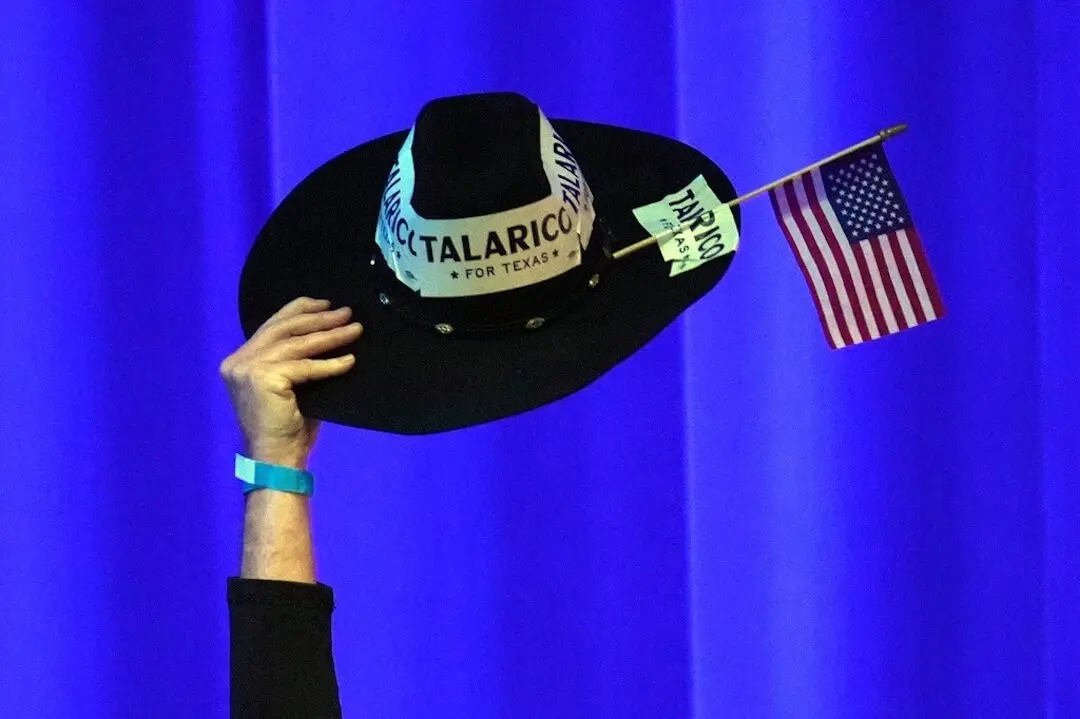
Perhaps the most potent symbol of the blue tsunami occurred in Texas. In a cycle defined by geographic realignment, Democrat James Talarico defeated Republican Ken Paxton to capture a U.S. Senate seat, while the state simultaneously elected its first Democratic governor since the 1990s. This seismic shift in the Lone Star State shattered the myth of invulnerability for southern red states and signaled a profound demographic and ideological evolution.
The Dog That Didn’t Bark: Election Denialism Absent
In a striking departure from previous cycles, the aftermath of this election was notable for the absence of widespread, coordinated allegations of systemic election fraud from MAGA supporters and media personalities.
While conservative commentators expressed deep frustration over the losses, their focus pivoted immediately from "election denial" to internal party finger-pointing. President Trump publicly stated his intention to accept the overall national results—a stark contrast to his post-2020 posture.
The sole notable exception occurred in Alaska, where a tight, multi-candidate race for the Senate seat held by incumbent Republican Dan Sullivan remained too close to call. Pointing to ballot complexities, Trump took to Truth Social to demand that votes cast for rival candidates be immediately assigned to the incumbent, illustrating that remnants of unconventional electoral grievance management persist even in a largely accepted defeat.
Official Statements and Institutional Appeals
The transition of congressional power has immediately energized civil rights and press freedom organizations. With a Democratic majority taking the reins of the 120th Congress, advocacy groups are pushing for immediate legislative remedies to repair institutional norms.
The Committee to Protect Journalists (CPJ) Demands Action
On Thursday, CPJ issued a definitive policy statement calling on the incoming Congress to "restore press freedom protections at home and abroad by immediately strengthening oversight of federal agencies."
Jodie Ginsberg, CEO of the Committee to Protect Journalists, emphasized the urgency of the moment:
"The incoming Congress has a historic opportunity to reverse the United States’ precipitous decline in press freedom and hold officials accountable for attacks on journalists. Lawmakers must defend the First Amendment as a pillar of American democracy and ensure that protecting press freedom is a priority in U.S. foreign policy."
CPJ’s dossier highlighted specific areas requiring immediate congressional intervention:
- Reining in Regulatory Retaliation: Lawmakers must prioritize rigorous oversight of the Federal Communications Commission (FCC) to prevent the weaponization of regulatory powers against independent news outlets.
- Passing the PRESS Act: Congress is urged to reintroduce and pass federal shield laws to protect journalists’ confidential sources and reporting materials from unwarranted government subpoenas.
- Combating Retaliatory Litigation: Addressing the escalating trend of retaliatory lawsuits, restricted government access, and arbitrary administrative pressures directed at media professionals during the preceding political administration.
Future Outlook: What Lies Ahead for Washington and the Media
As the dust settles on the 2026 midterms, political analysts from CNN, The New York Times, and leading academic institutions agree that the political ramifications will dictate the trajectory of American governance for the remainder of the decade.
1. Legislative Gridlock vs. Sweeping Mandates
With Democrats controlling both chambers of Congress, the legislative branch will aggressively challenge executive branch overreach. Expect immediate congressional hearings focusing on the management of the conflict in the Middle East, federal economic policies, and administrative spending priorities. However, navigating a fractured electorate will require Democratic leadership to balance progressive policy ambitions with the pragmatic realities of a country deeply divided along cultural and economic lines.
2. The Republican Soul-Searching
The GOP faces a profound existential crisis. The failure of Trump-endorsed candidates and the undeniable rejection of second-term policies have ignited fierce internal debates among party strategists. The central question for the Republican Party moving forward is whether it can recalibrate its populist appeal to address suburban economic anxieties or whether it will double down on its historical base, risking further alienation of independent voters in critical swing states.
3. The Media Ecosystem Under New Oversight
For journalists and media organizations, the shift in congressional power promises a more accessible Washington, yet deep systemic challenges remain. While legislative oversight may curb executive hostility toward the press, the economic pressures facing local and national newsrooms demand ongoing vigilance. As media veteran Tom Jones notes in The Poynter Report, the intersection of politics, public trust, and journalistic integrity will remain the primary beat to watch as Washington prepares for the swearing-in of the 120th Congress.
Ultimately, the blue tsunami of 2026 has rewritten the political playbook. Whether this electoral earthquake marks a temporary correction or a permanent realignment of American politics will depend entirely on how both parties—and the watchful eye of a free press—navigate the turbulent years ahead.