


The United States awoke on Wednesday to a dramatically altered political landscape following a midterm election cycle that media analysts and pollsters alike have characterized as nothing short of a historic seismic shift. What mainstream prognosticators cautiously anticipated as a "blue wave" materialized instead into an overwhelming blue tsunami during the 2026 midterms, shattering expectations and reshaping the balance of power across Washington and state capitals nationwide.
In a staggering rebuke of the incumbent administration, the Democratic Party captured decisive control of both the House of Representatives and the Senate. The fallout extended far beyond traditional legislative battlegrounds, securing massive, unexpected victories in historically conservative strongholds such as Texas and South Carolina. Meanwhile, crucial swing states that have historically dictated the outcome of national presidential elections—including Pennsylvania, Ohio, Michigan, Georgia, Arizona, New Mexico, and Nevada—saw their governorships sweep entirely to the Democratic column. Additionally, key Senate pickups in Maine, North Carolina, Iowa, and Kansas cemented a congressional wipeout that left the Republican Party reeling.
As the dust settled on Wednesday morning, journalists, political commentators, and media executives scrambled to dissect the wreckage. From sweeping mainstream retrospectives to online meltdowns among conservative pundits, the media ecosystem found itself grappling with a political landscape upended by voter frustration over inflation, high gas prices, and an unpopular foreign conflict. Simultaneously, major news networks reported record-breaking viewership numbers, and corporate media giants like The New York Times released robust financial earnings, proving that while political fortunes fluctuate, the public appetite for high-stakes journalism remains insatiable.
Detailed Chronology: The Unfolding of Election Night and Its Immediate Aftermath
Tuesday Night: The Wave Becomes a Tsunami
As polls closed across the eastern seaboard on Tuesday night, early returns immediately signaled an extraordinary deviation from historical midterm trends. Traditionally, the party occupying the White House faces steep headwinds during midterms, but the sheer velocity of the Democratic gains stunned campaign strategists on both sides of the aisle.
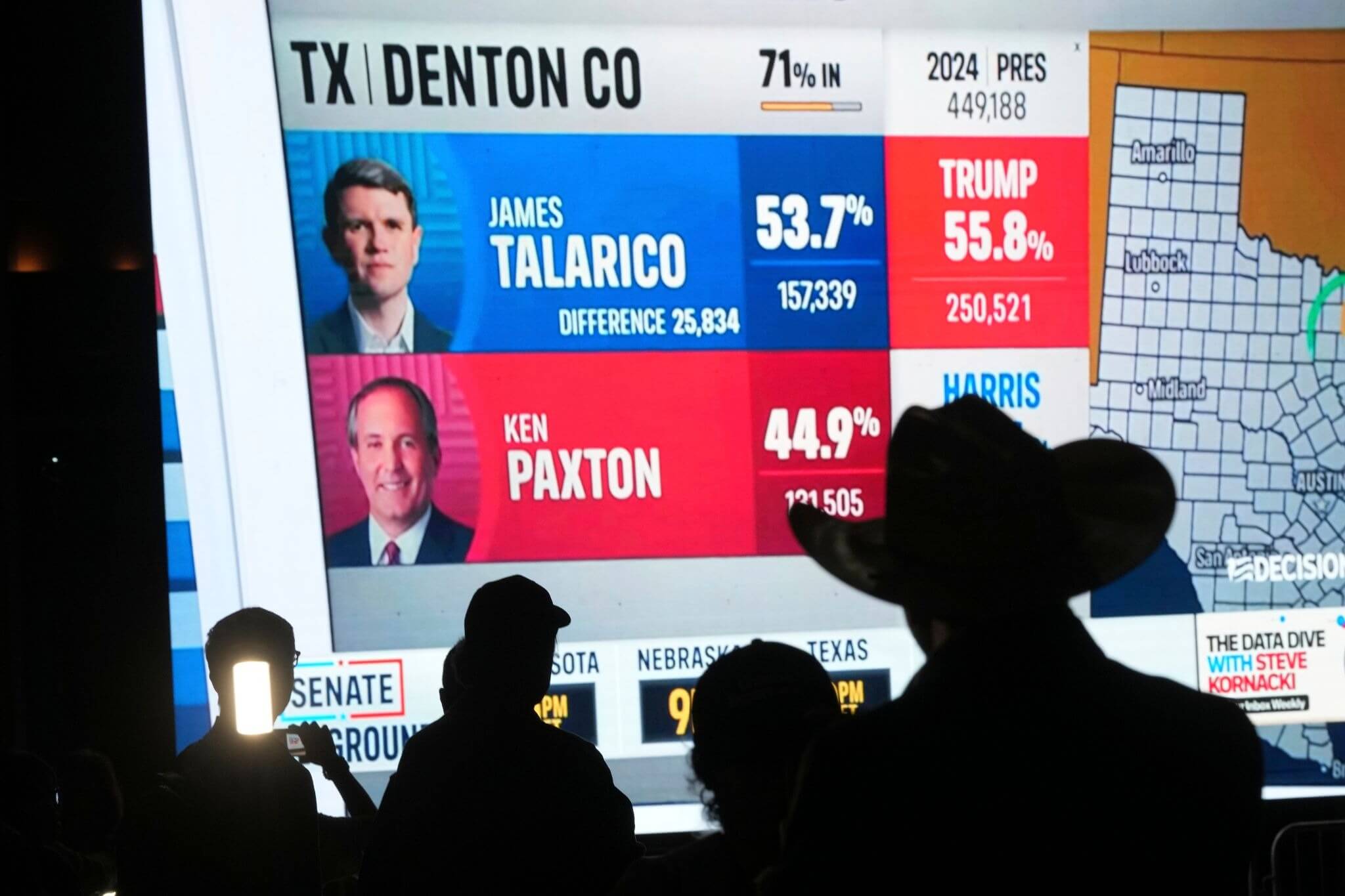
By midnight, networks were calling key House and Senate races for Democrats at a breathless pace. Pockets of the country that had long resisted progressive or moderate Democratic platforms—most notably Texas—flipped their Senate seats. Pundits who had spent the preceding weeks hedging their bets on divided government watched in real-time as the map turned uniformly blue. By Wednesday morning, it was evident that the American electorate had delivered an unmistakable referendum on the sitting administration.
Wednesday Morning: The White House Response and Public Posturing
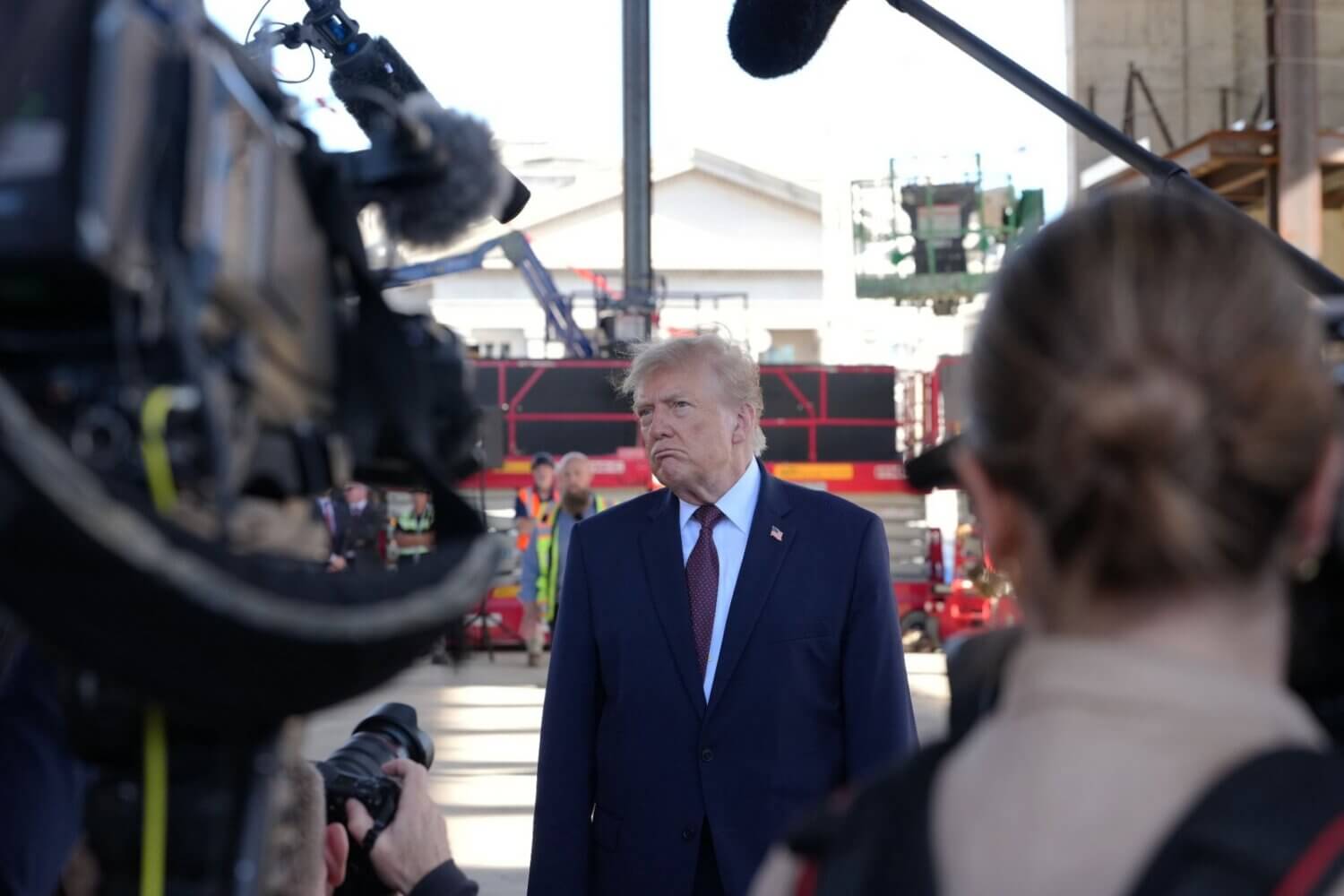
The morning after the electoral debacle brought forced reckonings within the West Wing. President Donald Trump, speaking to reporters during a tour of White House ballroom construction, acknowledged that the protracted and costly military conflict with Iran had played a critical role in alienating voters. Conceding that the war drove up gasoline prices—a primary driver of voter angst alongside lingering inflation—Trump nonetheless defended the strategic necessity of the military engagement, asserting that preventing Iran from acquiring a nuclear weapon justified the geopolitical cost. However, the President quickly pivoted away from the crisis, deflecting inquiries by discussing the installation of a new helipad on the White House lawn.
Simultaneously, prominent administration figures and surrogates took to social media and cable news to process the defeat. Vice President JD Vance published a blunt assessment on X, stating unequivocally, "The reason we lost is the war." Vance argued that while debates over the long-term value of the conflict were valid, honesty demanded acknowledging the heavy political toll paid by the party.
Supporting Context & Metrics: Media Reactions, Viewership, and Financial Fortitude
Conservative Media Meltdown and Public Recalibration
The reaction from the conservative media ecosystem ranged from introspective despair to outright panic. Fox News host Laura Ingraham publicly questioned the strategic calculus of both the White House and foreign allies, asking whether the war with Iran was genuinely worth losing control of Congress. Podcaster Megyn Kelly declared that the Republican Party was "in ruins," arguing that the GOP must finally learn to win without Donald Trump’s name directly on the ballot.
Other conservative commentators were similarly unsparing. Matt Walsh published a blistering critique on social media, condemning the administration for abandoning the "America First" agenda in favor of an unpopular war while everyday citizens struggled to afford groceries and fuel. Meanwhile, far-right activist Laura Loomer launched a sprawling, erratic tirade online, pushing baseless conspiracy theories as the party confronted its historic losses.
Not all conservative voices engaged in denial, however. Radio and podcast host Clay Travis, who had boldly predicted a sweeping Republican victory just days prior, offered a stark and viral public retraction on Wednesday: "I am a Moron, Republicans Get Smoked… The results were far worse than I anticipated."
Record-Breaking Viewership and Media Industry Metrics
Amid the political chaos, the television news industry experienced a massive surge in engagement. Nielsen fast national overnight figures revealed that NBC News dominated election night coverage, averaging an impressive 6.8 million viewers to lead all networks. ABC followed closely behind with 5.1 million viewers.
The cable news landscape remained fiercely competitive during prime time. MSNBC pulled in 4.189 million viewers, narrowly edging out CNN with 4.177 million and Fox News with 4.08 million. CBS continued to struggle in the ratings race, capturing just 2.8 million viewers. On digital platforms, NBC’s innovative "Kornacki Cam," hosted by data analyst Steve Kornacki, shattered records with 29 million views across all platforms, underscoring the public’s hunger for granular, real-time electoral breakdowns.
The New York Times Financial Health
Demonstrating the commercial resilience of independent journalism during times of intense national scrutiny, The New York Times announced its third-quarter earnings on Wednesday. The publication added 420,000 net digital subscribers, bringing its total subscriber base to an astounding 13.76 million.
Reporting an adjusted operating profit of $149.6 million—a 14% year-over-year increase—and total revenues of $768.5 million, CEO Meredith Kopit Levien emphasized that the company’s long-term economic model relies heavily on deep subscriber engagement. While digital advertising revenue grew by 12%—slightly below projected forecasts—leadership remained exceptionally optimistic about the publication’s trajectory toward its goal of 15 million subscribers by the end of 2027.
Official Statements and Political Analyses
The media landscape was saturated with expert analysis dissecting the psychological and structural drivers of the election.
- Peter Baker (The New York Times): Chief White House correspondent Peter Baker observed, "We haven’t seen a sweep like this in 50 years," categorizing the outcome as a sweeping repudiation of the status quo.
- Jonathan Lemire (The Atlantic): In a piece headlined simply Repudiation, Lemire wrote, "He asked voters to make these midterm elections a referendum on him… They listened—and then rejected him. It is a stunning, widespread rebuke."
- Eugene Robinson (The Atlantic): Robinson framed the election as the definitive conclusion of a turbulent political epoch: "The Donald Trump era, I mean. It’s over now. It ended yesterday when voters handed control of both houses of Congress to the Democratic Party, along with a clear set of instructions: Stop the madness. Be honest. Be competent. Be normal. Be nice."
On the winning side of the aisle, newly elected leaders emphasized unity and governance over partisan retaliation. Appearing on ABC’s The View, high-profile Texas Democratic victor James Talarico addressed the hostile rhetoric directed at him during the campaign. "The time for campaigning is over, and the time to lead, the time to serve, is now starting," Talarico stated, affirming his commitment to collaborating across the aisle to lower the cost of living and solve tangible constituent problems.
In internal communications, Washington Post executive editor Matt Murray praised his newsroom for its exhaustive, fair, and authoritative coverage. Urging his staff to view election night as merely the "midfield" of a much larger historical narrative, Murray challenged his journalists to maintain their rigor as the nation navigates two upcoming years of unprecedented political drama.
Future Outlook: Navigating the Next Two Years
As Washington prepares for a complete inversion of congressional authority, the implications of the 2026 midterms will reverberate across every branch of government.
For the Democratic Party, the challenge will immediately shift from electoral mobilization to legislative execution. Having been handed a mandate by an electorate exhausted by inflation and foreign entanglements, congressional leaders must demonstrate immediate competence in stabilizing the economy, lowering household expenses, and restoring faith in institutional governance.
For the Republican Party, the path forward requires a profound and painful reckoning. Stripped of congressional majorities and forced to confront the electoral liabilities of foreign interventionism and economic discontent, conservative leadership faces an identity crisis. The imperative to rebuild "in the image of no man"—as echoed by commentators warning against a cult of personality—will dictate whether the party can successfully rebrand around populist economic pragmatism ahead of future electoral cycles.
Ultimately, the events of Tuesday night and Wednesday morning have rewritten the playbook for American politics. With a newly empowered legislature, a chastened executive branch, and an engaged citizenry watching closely through an evolving media ecosystem, the next two years promise to be among the most consequential and transformative in modern history.