

Executive Overview
As the global sporting calendar steadily marches toward the summer of 2028, the organizers of the Los Angeles Olympic and Paralympic Games have reached a pivotal milestone. With the unveiling of the official slogan, “Stars Align,” the LA28 organizing committee has officially transitioned from logistical planning to cultural storytelling. Revealed to the public alongside an energetic, high-production 60-second campaign film set to the quintessential Los Angeles anthem "Can’t Stop" by the Red Hot Chili Peppers, the new tagline is designed to capture the imagination of athletes, fans, and brands worldwide.
In the fast-paced ecosystem of modern global sports marketing, a slogan is far more than a marketing catchphrase; it is the philosophical anchor of a multi-billion-dollar enterprise. For LA28, “Stars Align” serves a dual purpose. On one hand, it functions as a rallying cry, urging the world’s most elite athletes to prepare for the pinnacle of their competitive careers. On the other hand, it acts as a cultural invitation, leveraging Los Angeles’s unique identity as a global capital of dreams, entertainment, and ambition.
Chief Marketing Officer Alex Merchán and his creative teams spent years evaluating potential directions, rejecting countless concepts before returning to the celestial metaphor of the star. Representing hope, optimism, and universal aspiration, the theme bridges the gap between the storied history of past Los Angeles Games (1932 and 1984) and the modern, forward-thinking ethos of 2028. This comprehensive report examines the genesis of the "Stars Align" campaign, analyzes the strategic positioning behind the rollout, evaluates the economic and cultural context surrounding the upcoming Games, and projects the trajectory of LA28 as it shapes the future of the Olympic and Paralympic movements.
Detailed Chronology: The Road to the "Stars Align" Reveal
The journey toward the 2028 Summer Games has been characterized by meticulous, long-range planning. To understand the significance of the "Stars Align" launch, it is necessary to trace the developmental timeline that brought the LA28 organizing committee to this critical juncture.
Phase One: Securing the Bid and Establishing the Foundation (2017–2020)
When the International Olympic Committee (IOC) officially awarded the 2028 Summer Games to Los Angeles in September 2017—simultaneously awarding Paris the 2024 Games—the landscape of the Olympic movement shifted. Unlike traditional host city campaigns that scramble for a decade to build infrastructure, LA28 was built on an existing foundation of world-class venues, relying heavily on private funding and existing facilities like the Los Angeles Memorial Coliseum, SoFi Stadium, and Pauley Pavilion.
During the initial years, the committee focused heavily on governance, financial structuring, and community engagement. The early narrative centered on sustainability, fiscal responsibility, and leveraging Southern California’s diverse cultural fabric. However, the internal branding teams understood that as the Paris 2024 Games approached and concluded, LA28 would need an unmistakable, resonant identity to capture the global spotlight.
Phase Two: The Creative Exploration and Brand Identity Evolution (2021–2023)
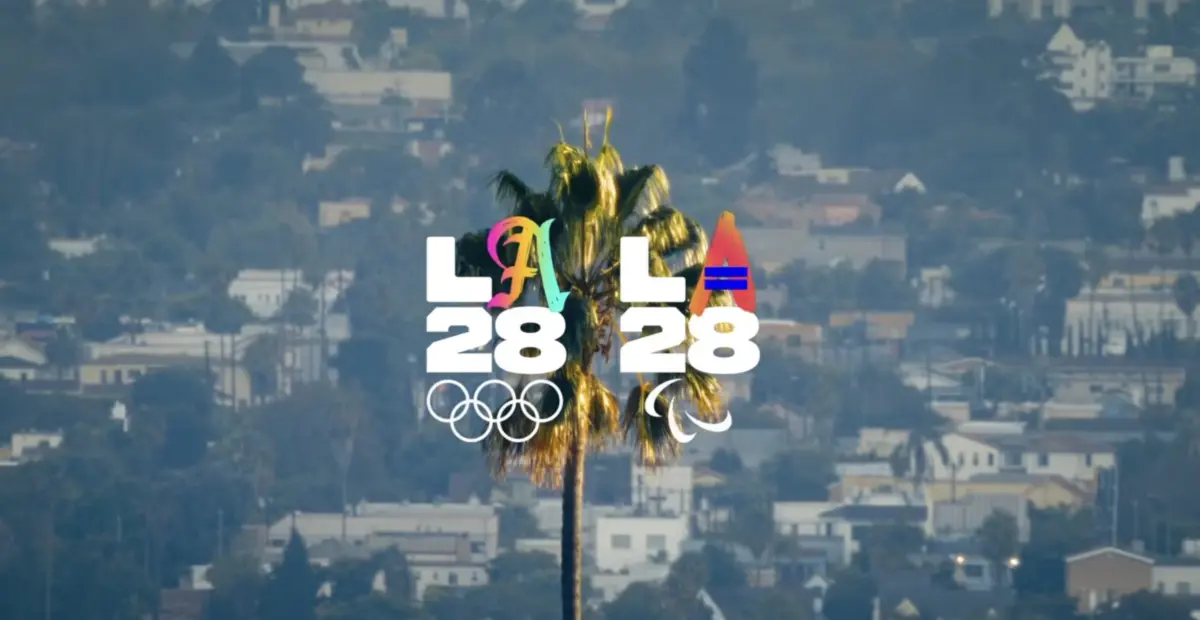
The visual and conceptual identity of LA28 has always been progressive. In late 2020, the committee introduced a dynamic, shape-shifting logo featuring a static "L" and "28," with a flickering, ever-changing "A" designed by a diverse collective of athletes, artists, and cultural icons, including Billie Eilish, Reese Witherspoon, and Bobby Lee. This digital-first, customizable approach signaled that LA28 would break traditional Olympic branding molds.
Behind closed doors, the marketing division embarked on a multi-year quest to develop a corresponding slogan. The team explored dozens of conceptual directions—ranging from themes of unity and technological innovation to geographic pride and post-pandemic resilience. According to CMO Alex Merchán, the team continuously gravitated back to the concept of stars. Whether referencing the celestial canopy, the literal "walk of fame" celebrities of Hollywood, or the astronomical ambition of elite athletes, the star emerged as the most versatile and potent symbol.
Phase Three: The Public Unveiling (Present Day)
The culmination of years of strategic deliberation arrived with the official launch of the "Stars Align" campaign. Released simultaneously across digital platforms, broadcast networks, and international news outlets, the campaign launch was anchored by a cinematic 60-second spot. By partnering with the Red Hot Chili Peppers—a band intrinsically linked to the sonic identity of Los Angeles—LA28 anchored its global message in authentic local culture. The announcement marks the official starting gun for the commercial and cultural buildup to 2028, setting a high benchmark for future announcements regarding ticketing, volunteer programs, and torch relays.
Supporting Context & Metrics: The Business and Culture of LA28
To appreciate the weight of the "Stars Align" campaign, one must examine the broader socioeconomic, media, and marketing metrics that define the LA28 landscape.
Financial Architecture and Private Funding
Unlike many historical Olympic Games that relied on massive government subsidies and frequently suffered from devastating budget overruns, LA28 operates on a strictly privately funded, non-profit model. The current projected budget sits at approximately $6.9 billion. Revenue streams are heavily diversified, relying on domestic sponsorships, broadcast rights agreements negotiated by the IOC, ticket sales, and hospitality packages.
The introduction of a powerful, unifying slogan like "Stars Align" is a crucial asset for the committee’s commercial partners. Global brands seeking alignment with LA28 require a clear narrative framework to build their own marketing campaigns. By establishing a theme centered on ambition, hope, and excellence, LA28 provides corporate sponsors—ranging from tech giants and financial institutions to apparel and consumer goods brands—with a versatile emotional hook that resonates across international demographics.
The Media Landscape and Digital-First Engagement
In 2028, the consumption of sports media will look vastly different than it did during the Tokyo 2020 or even Paris 2024 Games. With younger demographics favoring short-form video, interactive streaming platforms, and social-first storytelling, the LA28 marketing strategy has been engineered for digital ubiquity.
The choice of the Red Hot Chili Peppers’ "Can’t Stop" for the launch film is a masterclass in demographic bridging. The track appeals to Gen X and Millennial sports fans who grew up with the band’s alternative rock dominance, while the driving, relentless rhythm and upbeat tempo translate exceptionally well to TikTok, Instagram Reels, and YouTube Shorts for Gen Z audiences. Metrics from initial social media engagement indicate a massive surge in positive sentiment, proving that the creative risk of a modern, music-driven reveal paid immediate dividends.
Venue Readiness and Urban Integration
The "Stars Align" campaign also serves to unify the sprawling geographic footprint of the Los Angeles metropolitan area. Because LA28 is utilizing existing venues spread across Los Angeles County, Orange County, and the Inland Empire, the Games will not be confined to a single centralized Olympic Park. Instead, they will permeate the entire region. The concept of stars aligning metaphorically pulls these disparate venues—from the beaches of Santa Monica to the arenas of downtown Los Angeles—into a single, cohesive constellation of athletic excellence.
Official Statements and Industry Insights
The rollout of "Stars Align" has generated significant commentary from sports executives, cultural analysts, and the creative minds behind the campaign.
Leadership Perspective
In an exclusive interview with ADWEEK, Alex Merchán, Chief Marketing Officer of the LA28 Olympic & Paralympic Games, elaborated on the psychological and emotional underpinnings of the new slogan:
"This is something we’ve been thinking about for a long time. We explored a lot of different directions, but we kept coming back to stars. They’re a symbol of hope and inspiration, of awe and optimism, and that’s exactly what the Games represent."
Merchán emphasized that the slogan was deliberately crafted to be inclusive. While elite athletes striving for gold medals are the most obvious "stars" of the Games, the tagline extends equally to everyday individuals, grassroots community builders, volunteers, and fans who contribute to the magic of the Olympic and Paralympic movement.
Creative Industry Analysis
Brand strategists and advertising executives have widely praised the simplicity and elasticity of the "Stars Align" tagline. In contemporary sports marketing, overly complex slogans often fail to translate across language barriers or digital mediums. By utilizing a universally recognized idiom—"the stars are aligning"—LA28 has chosen a phrase that is instantly understandable in dozens of languages while carrying rich visual and cultural connotations.
Furthermore, cultural critics have noted the clever duality of the Los Angeles setting. In a city famous for its preoccupation with Hollywood stardom, the LA28 campaign subtly redefines what it means to be a star. It shifts the cultural spotlight away from manufactured celebrity and redirects it toward raw athletic dedication, physical endurance, and the unifying power of international competition.
Future Outlook: Looking Ahead to 2028 and Beyond
As the dust settles on the initial launch of the "Stars Align" campaign, the LA28 organizing committee faces a demanding and exciting roadmap. The coming years will test the committee’s ability to maintain momentum, translate emotional branding into tangible operational success, and deliver an unforgettable experience for athletes and spectators alike.
Key Milestones on the Horizon
- The Handover and Post-Paris Momentum: With the conclusion of the Paris 2024 Olympic and Paralympic Games, the international sporting focus shifts squarely to the United States. LA28 will inherit the mantle on a global stage, utilizing the lessons learned in France to refine its own operational blueprint.
- Ticketing and Volunteer Registration: As venue master plans are finalized, upcoming phases will introduce public ticketing strategies and massive volunteer recruitment drives. The "Stars Align" messaging will heavily feature in calls for millions of volunteers to support the Games.
- Sponsor Activation: Major corporate partners are expected to roll out integrated global campaigns utilizing the "Stars Align" framework beginning as early as 2025 and 2026, leading to a crescendo of advertising during the intervening sporting events.
- Integration of New Sports: LA28 has proposed an exciting slate of additional sports tailored to contemporary youth culture and regional preference, including flag football, squash, lacrosse, baseball/softball, and cricket. The narrative of "Stars Align" will be vital in welcoming athletes from these diverse disciplines onto the Olympic stage.
Conclusion
The unveiling of "Stars Align" marks a defining moment in the lifecycle of the Los Angeles 2028 Olympic and Paralympic Games. By blending local cultural flavor—exemplified by the Red Hot Chili Peppers—with a universal message of hope, ambition, and excellence, LA28 has successfully staked its claim on the global imagination. As the countdown continues, the world watches with bated breath, knowing that in Los Angeles in the summer of 2028, the stars will indeed align.