

Executive Overview
For decades, the architecture of global brand-building was remarkably straightforward. A marketer could anchor a multi-billion-dollar enterprise to a single, high-production-value television commercial, reinforce it with print and radio, and rest easy knowing that the consumer’s journey was linear and predictable. That world is gone. Today, consumers inhabit a fragmented, hyper-connected ecosystem spanning retail floors, algorithmic social feeds, immersive entertainment worlds, search engines, physical pop-ups, and, increasingly, artificial intelligence-driven interfaces.
This dispersion has created a profound existential crisis for modern marketing departments: How do you maintain a cohesive, unshakeable brand identity when the canvas is constantly shifting, and the audience holds the microphone?
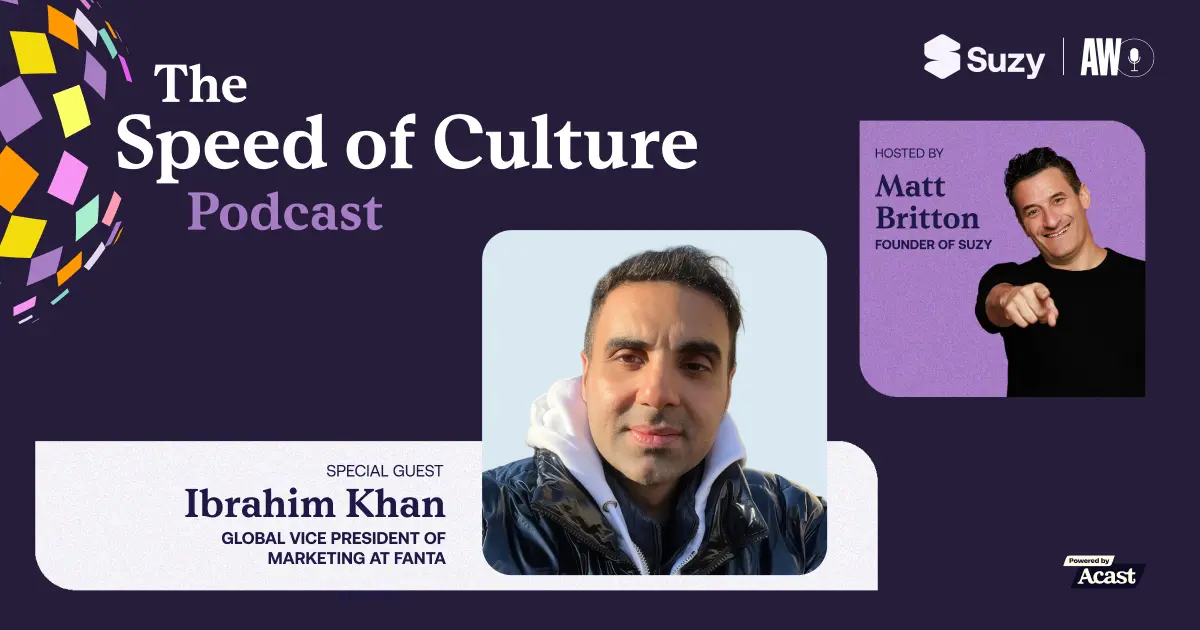
In a recent episode of The Speed of Culture, host Matt Britton sat down with Ibrahim Khan, Global Vice President of Marketing at Fanta, to dissect this very dichotomy. Managing an $18 billion retail giant within The Coca-Cola Company portfolio, Khan offers a masterclass in navigating the complexities of modern consumer engagement. His philosophy is clear: while the fundamentals of a global brand must remain fiercely protected, the ways in which people experience those fundamentals must undergo continuous, radical reinvention.
Khan’s insights serve as an urgent wake-up call for an industry still suffering from what he terms the "hangover of the TV era." As marketers struggle to capture attention in an era dominated by digital noise and generative AI, Fanta’s blueprint—grounded in cultural nuance, long-term platforms like the "Haunted Universe," and a refusal to chase empty trends—presents a compelling roadmap for the future of brand strategy.
Detailed Chronology: The Evolution of Global Brand Strategy
To understand how Fanta manages its massive global footprint across Pakistan, Thailand, Southeast Asia, and Western markets, one must examine how the brand has systematically dismantled outdated paradigms and rebuilt its operational framework for the twenty-first century.
Phase 1: Breaking the "TV Hangover" and Treating the Brand as a Unified System
The structural transformation at Fanta began with a diagnostic look at how marketing as an industry has operated historically. For twenty to thirty years, success was defined by the 30-second spot. If the commercial resonated, sales followed. Khan argues that this legacy of ease actually made the industry lazy.
Marketers became accustomed to relying on broadcast media to manufacture relevance, divorcing the communication layer from the actual product and the retail environment. Khan challenges this orthodoxy by insisting that every touchpoint—the physical product, the packaging, the retail shelf, live activations, and organic consumer conversations—must be integrated into one connected brand system.
In the modern marketplace, the product itself is the medium. If consumers are not actively talking about what a brand is doing in their daily lives, legacy broadcast tools can no longer manufacture artificial relevance. Fanta’s strategic pivot has been to ensure that every consumer interaction, from cracking open a bottle to exploring a digital gaming environment, reinforces the same core brand truth.
Phase 2: Decoupling Brand Truth from Local Execution
One of the most delicate challenges for a global brand with an $18 billion retail footprint is balancing global consistency with local relevance. Many international brands fall into the trap of homogenization—forcing the exact same creative execution across wildly different cultural landscapes.
Khan’s approach rejects this top-down uniformity. He argues that the fundamental reason people choose a product rarely changes dramatically from market to market. However, how they experience that product—the language used, the digital channels frequented, daily routines, cultural habits, and consumption occasions—varies profoundly.
For a global marketer, true consistency does not mean executing identically everywhere. It means possessing the discipline to know which brand pillars are non-negotiable, while giving local markets the autonomy to express those pillars in ways that resonate with domestic audiences.
Phase 3: Dismantling Western Assumptions in Asian Markets
A critical turning point in Fanta’s global strategy involved challenging deeply ingrained Western marketing assumptions. When expanding into diverse Asian markets, Khan and his team encountered consumer behaviors and retail environments that defied traditional Western playbooks.
A prime example lies in beverage consumption patterns alongside food. In many Western markets, soft drinks are deeply integrated into specific mealtime occasions. In parts of Asia, however, this consumption occasion is less developed. Rather than stubbornly trying to force a Western habit onto an unreceptive market, Fanta pivoted its strategy to lean more heavily into leisure and social occasions where the brand naturally fit.
Visual conventions presented a similar lesson. A retail store environment that initially struck Khan as visually overwhelming and cluttered turned out to be precisely what consumers in that market expected and navigated with ease. This experience reinforced a vital rule for global strategists: the instinct of a marketer to "simplify" is not automatically universal. True market intelligence requires listening to the consumer rather than imposing foreign aesthetic standards.
Phase 4: From Seasonal Stunts to the "Haunted Universe" Platform
Many consumer brands approach seasonal holidays—particularly Halloween—with a transactional, single-campaign mindset. They spin up a quick spooky ad, slap a limited-edition label on a bottle, and pack it away on November 1st. Khan viewed this as a missed opportunity.
Fanta recognized that Halloween was a natural cultural fit: indulgence, fun, and soft-drink consumption already belonged inherently to the occasion. However, instead of treating Halloween as a temporary advertising stunt, Fanta spent years building the "Haunted Universe"—an expandable, long-term platform designed to house characters, rich lore, strategic partnerships, and immersive experiences.
Before entering the space in a major way, Fanta conducted extensive research into horror archetypes across various global cultures and fandoms. By treating entertainment intellectual property (IP) with the same strategic rigor as a Hollywood studio, Fanta transformed a seasonal holiday into an evergreen brand asset that can expand and evolve over many years.
Supporting Context & Metrics: The Architecture of Global Scale
To contextualize Ibrahim Khan’s operational philosophy, it is essential to examine the scale and structure of the enterprise he helps steer.
- Global Footprint: Fanta represents a staggering $18 billion in global retail value, placing it among the elite tier of beverage brands worldwide.
- Leadership Experience: Khan’s perspective is forged through nearly two decades of experience across major consumer goods brands, including Coca-Cola, Sprite, and Fanta. His operational footprint spans diverse and complex markets, including Pakistan, Thailand, broader Southeast Asia, and global strategy hubs.
- The Cultural Disciplines: Khan enforces strict governance over cultural participation, governed by his guiding maxim: "Not every festivity needs a brand, and not every brand needs a festivity." In an era where brands routinely scramble to insert themselves into every trending hashtag or cultural moment, Fanta’s data-backed selectivity ensures that marketing investments are directed only where the product has an authentic, earned right to play. Chasing passion points where a brand lacks credibility inevitably alienates modern consumers who can spot inauthentic pandering instantly.
Official Statements & Industry Insights
Synthesizing the core tenets of Ibrahim Khan’s dialogue on The Speed of Culture reveals a profound blueprint for modern marketing leadership:
"Marketing still has to drive the business. We can talk about creativity, culture, and platforms all day long, but at the end of the day, our work must deliver measurable commercial impact."
— Ibrahim Khan, Global VP of Marketing, Fanta
On the delicate balance of global brand governance and local execution, Khan notes:
"Consistency does not mean executing the same way everywhere. It means knowing which parts of the brand are non-negotiable, and giving local markets room to express them differently."
Addressing the industry-wide struggle to move beyond legacy media models, Khan pulls no punches regarding the digital transformation:
"Marketers need to get over the ‘hangover of the TV era.’ Today, the product itself needs to become a marketing channel. Consumers now hold the microphone; if they are not talking about what you are doing, old tools cannot manufacture the relevance they once did."
On the integration of emerging technology, Khan offers a balanced perspective on the role of Artificial Intelligence:
"AI can scale the world without replacing human taste. Technology is an enabler of bigger creative worlds, much as advances in animation changed entertainment before it. But marketing contains art, taste, ethics, and judgment that remain inherently human."
Future Outlook: The Next Frontier for Global Brands
As we look toward the horizon of the 2026 marketing landscape, the lessons drawn from Fanta’s global strategy point toward several definitive shifts in how enterprise brands will operate:
- The Death of the Campaign Era: As consumers continue to fragment across AI-driven discovery engines, spatial computing, and hyper-niche social communities, the traditional annual marketing campaign will continue to lose efficacy. Brands will be forced to follow Fanta’s lead, replacing transient campaigns with living, breathing, multi-year platforms like the Haunted Universe.
- AI as an Infrastructure for Scale, Not a Creator of Soul: The anxiety surrounding generative AI in marketing agencies will mature. As Khan demonstrates, future-forward brands will leverage AI to exponentially scale complex creative worlds, customize regional assets, and optimize supply chains—while fiercely protecting human judgment, taste, and ethical oversight as irreplaceable differentiators.
- The Product-Led Narrative: The era of hiding mediocre product execution behind brilliant advertising is drawing to a close. With consumers wielding unprecedented power through digital advocacy and social critique, the product, the retail environment, and the unboxing experience must perform the heavy lifting of brand storytelling.
Ultimately, Fanta’s journey under Ibrahim Khan proves that navigating the speed of culture requires a rare combination of unwavering foundational discipline and radical operational agility. By abandoning the comforting ghosts of the television era and embracing the messy, decentralized reality of modern consumer behavior, global brands can secure their relevance for decades to come.