

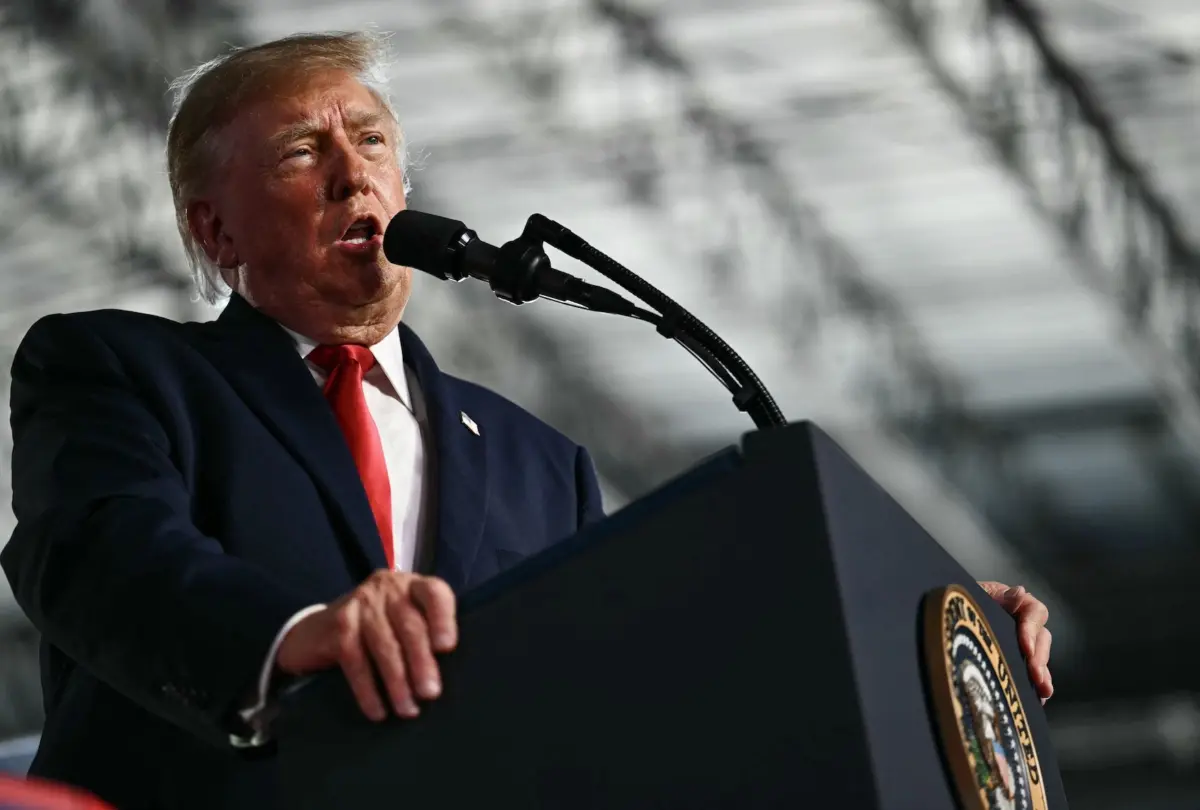
WASHINGTON — With the high-stakes midterm elections now just one week away, President Donald Trump has once again declined to unconditionally accept the democratic outcome should it prove unfavorable to the Republican Party. Speaking to reporters during a campaign stop, Trump offered a familiar caveat when asked if he would honor the results of the November vote: “I will if they’re honest elections.”
This rhetorical posture is part of a consistent, decade-long pattern that has defined Trump’s approach to American democratic institutions. Yet, as the clock winds down to Election Day, watchdogs, legal scholars, and international election experts are sounding the alarm over a dangerous escalation. Unlike in previous election cycles, the administration is not merely casting verbal doubt from the sidelines; it is actively weaponizing the machinery of the federal government—most notably the Department of Justice (DOJ)—to intervene directly in state-level election administration, challenge voter rolls, and lay the groundwork to contest outcomes before a single vote is officially certified.
Executive Overview
As voters prepare to cast ballots in what are shaping up to be some of the most contentious midterm elections in modern U.S. history, the intersection of executive power and election administration has reached a critical flashpoint. President Trump’s refusal to commit to a peaceful, unconditional acceptance of the November results has moved from political rhetoric to active institutional pressure.
In recent weeks, the Department of Justice has launched a series of aggressive legal maneuvers across multiple states. From criminal charges against green card holders in California and a direct federal lawsuit aimed at blocking Alaska’s Senate election certification, to legal threats demanding the mass purging of voter rolls in Washington state, the federal government’s footprint on local elections is unprecedented.
Experts in democratic governance warn that these coordinated actions go far beyond routine legal enforcement. Instead, they form a systematic playbook designed to sow public distrust, harass election officials, and manufacture legal pretexts to subvert unfavorable electoral outcomes.
A Decade of Refusal: The Evolution of Trump’s Election Skepticism
President Trump’s reluctance to honor democratic outcomes without conditions is a cornerstone of his political identity. His recent statement in Corpus Christi, Texas, mirrors a well-documented trajectory spanning three presidential election cycles:
- 2016: When asked during a presidential debate if he would accept the outcome of the race against Hillary Clinton, Trump famously demurred, stating, “I will keep you in suspense.” Earlier that campaign cycle, he asserted he would accept the results “if I win.”
- 2020: Throughout his reelection campaign against Joe Biden, Trump repeatedly declined to commit to a peaceful transfer of power, famously declaring, “We’re going to have to see what happens.” In the wake of his defeat, Trump launched an unprecedented multi-front campaign to overturn the results, refusing to concede despite losing 64 consecutive court cases challenging the outcome and failing to produce credible evidence of widespread fraud. Independent conservative reviews and exhaustive state audits have repeatedly confirmed the integrity of the 2020 vote.
- 2024: Ahead of his return to the White House, Trump maintained his conditional stance, telling interviewers he would accept the results only if the election was “fair and legal and good.”
- 2026: With the midterms looming, the narrative has seamlessly pivoted back to pre-emptive skepticism, establishing a persistent baseline of doubt designed to delegitimize any losses sustained by the GOP.
The Weaponization of the DOJ: State-Level Interventions and Legal Challenges
What distinguishes the current midterm cycle from past elections is the direct mobilization of federal power to alter or challenge state voting processes. Critics and legal analysts point to a sharp pivot in how the Department of Justice is being utilized under Trump’s directive.
California: Criminal Charges Over Registration
Earlier this month, the DOJ took the extraordinary step of filing criminal charges against more than two dozen legal green card holders in California. The federal agency accused these non-citizens of illegally registering to vote or casting fraudulent ballots—a move that voting rights advocates describe as an attempt to sensationalize isolated administrative errors and manufacture a narrative of rampant non-citizen voting ahead of the midterms.
Alaska: Direct Intervention in Senate Certification
In an even more aggressive move last week, President Trump personally requested a federal lawsuit against the state of Alaska. Filed by the DOJ, the lawsuit explicitly seeks to block the certification of Alaska’s high-stakes Senate election if the Republican incumbent trails or loses. Legal scholars have called the suit a stunning federal overreach. The New York Times characterized the filing as “a highly unusual move that signaled an effort to potentially intervene in the outcome,” setting a chilling precedent for federal interference in local electoral counts.
Washington State: The 72-Hour Ultimatum
The administration’s pressure campaign expanded further this week when the DOJ threatened Washington state with immediate legal action unless it purged approximately 400 voters from its active rolls. The federal government alleged, without immediate proof of systemic vulnerability, that these individuals were non-citizens.
The move triggered immediate pushback from state officials committed to protecting voter privacy and due process. Washington Secretary of State Steve Hobbs forcefully condemned the timing and intent of the federal demand.
“The timing of this request — one week before the General Election — is no doubt intended to cast unfounded suspicion on the results,” Secretary Hobbs said in an official statement. “We take our responsibility to protect voter information seriously and will only respond to requests that follow due process. We saw what happened in California and don’t want Washingtonians to be harassed.”
Supporting Context, Metrics, and Expert Analysis
To understand the gravity of the administration’s current strategy, election law and international democracy experts have analyzed the tactics through a comparative global lens.
The International Playbook of Election Subversion
Michael McNulty, a former senior elections adviser for the U.S. Agency for International Development (USAID) who has studied democratic erosion in nations such as El Salvador, Hungary, and Venezuela, sees unmistakable warning signs in the current U.S. landscape.
“This is part of the election takeover playbook that I’ve seen around the world and unfortunately in some other autocratic environments,” McNulty noted in an interview with The New York Times. “Trump has essentially undermined the independence of the DOJ and it’s been weaponized.”
The Myth of Widespread Fraud vs. Layered Election Security
Despite repeated claims from the White House regarding the vulnerability of American voting systems, extensive empirical research demonstrates that U.S. elections are among the most secure in the world.
In a recent analysis published by the Center for American Progress, election security experts Ben Hovland and Emma Hulbert underscored the rigorous safety measures implemented by local authorities:
“Time and again, the evidence shows U.S. elections are secure. State and local election officials, in communities across the country, painstakingly implement layered security to protect the integrity of elections. Despite all this evidence, the Trump administration continues to call the security of elections into question. As the Center for American Progress has detailed, alleging voter fraud or invoking national security emergencies provide powerful pretexts for challenging election results, despite the fact that these claims are contrived to justify just such election subversion. Widespread voter fraud is a myth, and presidents have no constitutional or legal authority to take control of elections.”
Key Metrics on Election Integrity & Contestation:
- 0: Verified instances of coordinated, widespread non-citizen voting capable of altering a federal election outcome.
- 64+: The number of state and federal court cases lost by the Trump campaign and its allies following the 2020 presidential election due to a lack of legal standing or substantive evidence.
- 400: The number of voters targeted by the DOJ’s recent emergency purge demand in Washington state just days before the general election.
- 28: Green card holders criminally charged in California by the DOJ in an October sweep criticized by voting rights groups as politically timed.
Official Statements and Responses
The escalation has drawn sharp condemnation from a bipartisan coalition of local election officials, secretaries of state, and legal advocacy groups who argue that the federal government’s actions undermine public trust and place undue burdens on under-resourced local election offices.
- Washington Secretary of State Steve Hobbs: Emphasized that state election systems operate under strict statutory safeguards and that the state will refuse to bow to politically motivated federal pressure tactics designed to induce voter intimidation.
- Voting Rights and Civil Liberties Coalitions: Organizations such as the American Civil Liberties Union (ACLU) and the Brennan Center for Justice have ramped up monitoring efforts, preparing emergency legal defenses to protect registered voters from unlawful purges and administrative harassment.
- The Department of Justice: Defends its recent lawsuits and criminal filings as necessary steps to enforce federal election integrity laws and ensure that only eligible U.S. citizens participate in federal elections.
Future Outlook: What Lies Ahead on November 3 and Beyond
As voters head to the polls over the next week, the immediate future of American democracy hinges on the resilience of local election infrastructure. Even if the Trump administration’s pre-election lawsuits and DOJ interventions fail to achieve their desired legal outcomes in court, analysts warn that the broader objective may already be succeeding: deeply eroding public confidence in the legitimacy of democratic institutions.
The post-election landscape is expected to be fraught with tension. Should razor-thin margins define key Senate and House races, the groundwork laid by the DOJ’s pre-emptive challenges in states like Alaska, California, and Washington will likely serve as templates for widespread, protracted legal battles over certification.
Ultimately, election experts emphasize that the resilience of the American electoral system rests not with federal agencies, but with the thousands of bipartisan local election workers, state officials, and independent judges dedicated to upholding the rule of law and ensuring that every legitimate vote is counted.