

Executive Overview
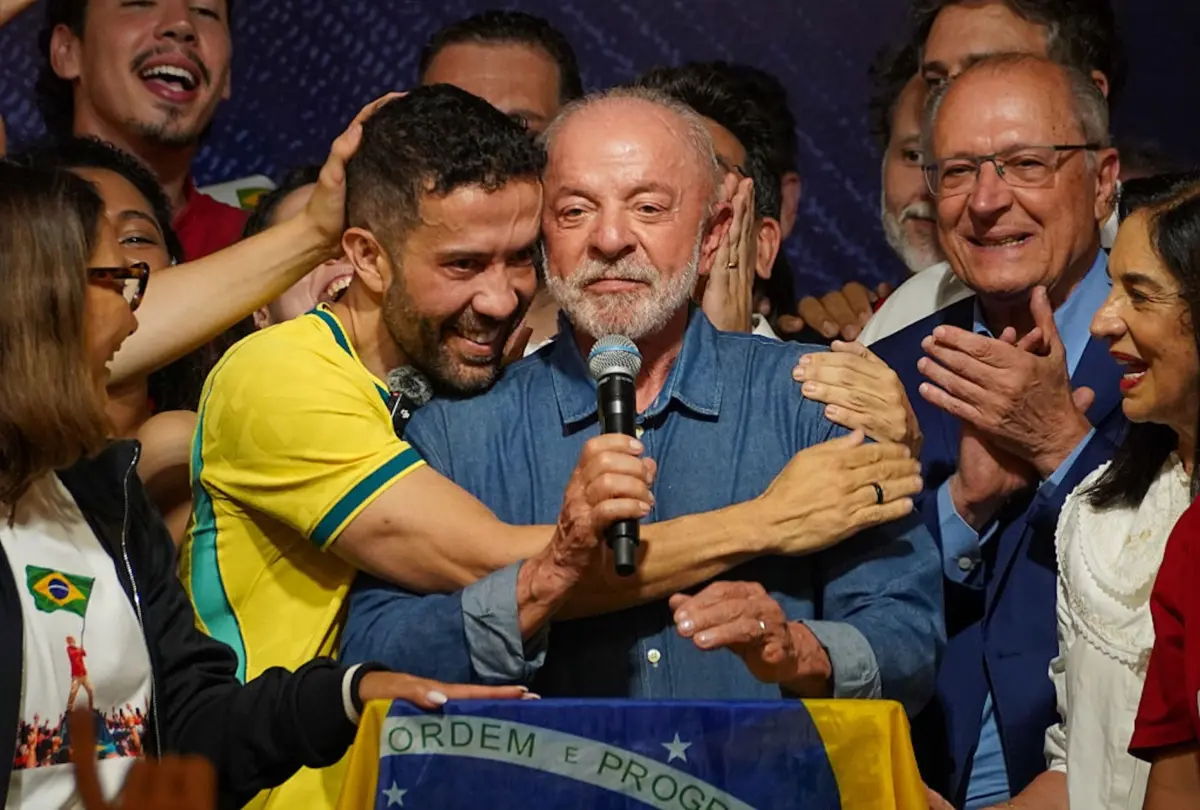
In the wake of Brazil’s historic presidential runoff on October 25, 2026, which saw incumbent leftist Luiz Inácio Lula da Silva secure a historic fourth term, a familiar playbook of election denialism was instantly deployed across American right-wing media. Defeating Senator Flávio Bolsonaro—son of the former right-wing president—Lula engineered an unprecedented political comeback, becoming the first candidate in modern Brazilian democratic history to reverse a first-round deficit in a runoff.
Yet, rather than viewing the results through the lens of standard democratic participation, influential voices within the United States’ MAGA (Make America Great Again) movement seized upon the outcome to manufacture an elaborate international fraud narrative. Prominent political figures, high-profile podcasters, and right-wing influencers rushed to delegitimize the Brazilian electoral process. In doing so, they provided a clear preview of the rhetorical strategies likely to follow the upcoming U.S. midterm elections.
By framing a conservative defeat as an impossibility driven by shadowy state intervention, the American right is actively priming its base to reject any unfavorable electoral outcomes at home. This synchronized transnational response highlights deep ideological and strategic alignments between the Brazilian right-wing apparatus and the architects of modern American populism.
Detailed Chronology of the Brazilian Runoff and Immediate Backlash
The road to the October 25 runoff was marked by fierce partisan polarization and fervent public demonstrations. In the first round of voting, Flávio Bolsonaro capitalized on widespread conservative sentiment, outperforming expectations and putting the incumbent administration on the defensive. However, Sunday’s final tally revealed a dramatic shift: Lula rallied his base to secure a decisive victory by roughly 4.4 million votes, cementing his legacy as a four-time president of Latin America’s largest democracy.
The reaction from international right-wing commentators was swift and coordinated:
- Pre-Election Buildup: Digital creators like 24-year-old YouTuber Nick Shirley traveled to Brazil to amplify the Bolsonaro campaign, broadcasting massive rallies and feeding their audiences a narrative of an inevitable right-wing revolution. When early crowd sizes and enthusiastic chants were juxtaposed against the final ballot counts, these influencers quickly pivoted from celebrating grassroots democracy to alleging systemic corruption.
- The Voting Extension Controversy: The centerpiece of the fraud narrative revolved around a two-hour voting extension ordered on Sunday by Supreme Court Justice Cristiano Zanin. The extension was implemented to accommodate widespread transportation delays and severe weather disruptions. Crucially, both campaigns had petitioned the court for more time—Lula’s camp citing bus delays in urban strongholds, and Bolsonaro’s camp pointing to severe flooding in regions favorable to the right.
- The Statistical Reality: Despite early data indicating that fewer than 40,000 votes were cast during the disputed two-hour window—in an election decided by millions of votes—high-profile figures like tech billionaire Elon Musk used social media platforms to tell his 241 million followers that "the math doesn’t add up."
- The Concession and U.S. Intervention: Initially, Flávio Bolsonaro denounced the extension as a "dirty trick" and vowed to challenge the results. President Donald Trump, speaking to reporters at Joint Base Andrews before boarding Air Force One, lent immediate credence to these claims, remarking that "It looked like another rigged election, frankly." However, shortly after international signals indicated minimal U.S. diplomatic backing for an insurrectionist challenge, Bolsonaro walked back his calls to annul the election. Instead, he announced plans to pursue legal action alleging the abuse of incumbency power, declaring, "I wasn’t the one who lost; the system won."
Supporting Context & Metrics: Examining the Claims vs. Facts
To fully understand the rhetoric emerging from right-wing media platforms, it is essential to examine the mechanics of the election alongside the broader geopolitical mythology promoted by American populist figures.
The Math of the Extension
Conspiracy theorists relied heavily on the premise that the Supreme Court’s voting extension fundamentally altered the outcome of the race. Legal scholars and electoral authorities in Brazil noted that scheduling adjustments during inclement weather and logistical crises are standard administrative protocols designed to protect franchise access. With a final margin of roughly 4.4 million votes, the microscopic fraction of ballots cast during the extended window could not mathematically account for Lula’s victory.
Transnational Right-Wing Networks
The rapid convergence of American MAGA rhetoric with Brazilian conservative grievances is no accident. Over the past decade, political operatives such as former Trump strategist Steve Bannon and senior advisor Jason Miller have cultivated deep, intimate ties with the Bolsonaro family. Organizations like the Conservative Political Action Conference (CPAC) have regularly hosted regional summits in South America, fusing American-style culture war grievances with local right-wing nationalism. Furthermore, Mar-a-Lago has increasingly served as a sanctuary and strategic networking hub for international populist leaders facing domestic legal scrutiny.
The "Creation Myth" of Regional Dynamics
A recurring theme within MAGA media post-mortems is the erroneous claim that left-wing political dominance in Latin America is a manufactured illusion propped up by foreign interference. Pundits frequently credit the dismantling of USAID operations with shifting regional dynamics, ignoring the historical reality that many of Latin America’s enduring left-wing governments actively expelled American aid agencies decades ago precisely because they viewed them as ideological instruments rather than neutral benefactors.
Official Statements and Reactions
The fallout from Brazil’s election reverberated loudly through the halls of American political commentary and official discourse, illustrating a stark partisan divide over the sanctity of democratic institutions.
- Steve Bannon’s "War Room": Serving as a central hub for global election denialism, Bannon used his platform to demand radical punitive actions against Brazil. He aggressively urged Secretary of State Marco Rubio to sever diplomatic relations and impose a total trade embargo, framing the election as proof that democratic institutions worldwide have been irreversibly captured by hostile forces.
- Prominent Pundits and Figures: Disgraced former national security adviser Michael Flynn questioned whether Brazil was transforming into a "banana republic," while conspiracy theorist Alex Jones declared that the nation must be "liberated." Kari Lake, drawing on her own repeated challenges to electoral outcomes in Arizona, publicly asserted that Brazil’s election mirrored her domestic experiences with alleged fraud.
- Democratic Counter-Response: In Washington, Democratic leaders warned that the international rhetoric is a dangerous rehearsal for domestic political strategy. House Minority Leader Hakeem Jeffries (D-N.Y.) cautioned the public that the American electorate must remain vigilant against coordinated schemes designed to undermine the integrity of upcoming U.S. elections. As Jeffries observed following the Brazilian runoff, strategies aimed at delegitimizing democratic results are no longer hidden behind closed doors—they are openly announced.
Future Outlook: Implications for the U.S. Midterms and Global Democracy
The immediate deluge of claims alleging manipulation, shadowy state intervention, and compromised judiciaries in Brazil extends far beyond standard political posturing. It represents a calculated, systematic effort to condition the American electorate. By training their followers to view any political defeat as the product of a rigged system, right-wing media architects have constructed a self-reinforcing worldview: visible enthusiasm and large rally crowds are treated as absolute proof of a candidate’s popular mandate, while official vote tallies that produce an unwelcome result are summarily dismissed as fraudulent.
As the United States approaches the crucial November 3 midterm elections, the playbook witnessed in Brazil offers an ominous preview. When electoral outcomes can no longer be disproven by facts, math, or judicial oversight, the foundational premise of democratic governance is placed under severe strain. The normalization of transnational election denialism suggests that the battle over truth and institutional legitimacy will remain a central, volatile fixture of modern political landscape for years to come.