

Executive Overview
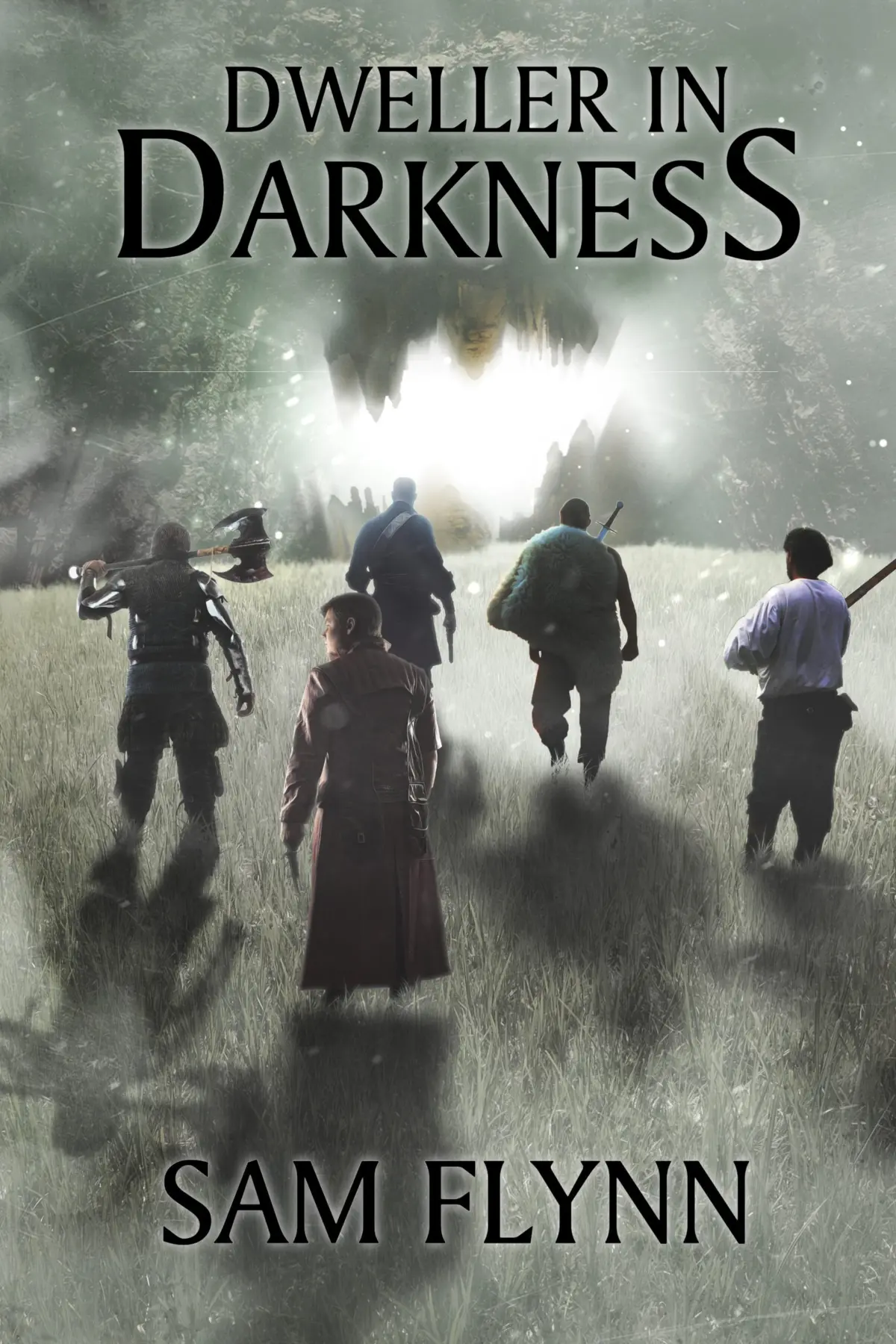
In the shifting landscape of contemporary speculative fiction, few subgenres demand as delicate a balance of intellectual rigor and visceral emotion as cosmic horror. Blurring the boundaries between dark fantasy, psychological terror, and systemic critique, author Sam Flynn has cemented his place among rising voices in the genre with his acclaimed Deadlights Duology. Published by Timber Ghost Press, the series began with the 2024 breakout novella The Mystery of the Pale King—lauded as one of the standout reads of the year by Grimdark Magazine—and reaches its harrowing conclusion with the release of Dweller in Darkness.
Set against the blighted backdrop of Hathur, the narrative follows Cassius Marius, a sixteen-year-old raised to serve the autocratic Pale King by participating in a ritualistic hunt for a chthonic entity known as the "Dweller in Darkness." However, as Flynn’s recent insights reveal, the series is far more than a conventional monster hunt. It is an exploration of institutional corruption, the psychological weight of "misbelief," and the cathartic purging of real-world socio-political anxieties through speculative storytelling.
In this comprehensive feature, we examine the genesis of Flynn’s dark fantasy universe, dissect his structural approach to worldbuilding and cosmic dread, and explore how the author transformed personal and political turmoil into a searing narrative about revolution, complicity, and the destruction of oppressive systems.
Detailed Chronology: From Ephemeral Seed to Final Manuscript
The journey of the Deadlights Duology is a masterclass in creative pivoting, demonstrating how setbacks in a writer’s career can serve as the catalyst for unprecedented artistic breakthroughs.
The Spring 2022 Pivot
For years, Sam Flynn poured his creative energies into drafting a sprawling, doorstopper epic fantasy novel. However, upon attending the prestigious Futurescapes Writers’ Workshop in the spring of 2022, he encountered a harsh market reality: debut authors face insurmountable odds when attempting to sell massive, multi-volume epic manuscripts to traditional publishers.
Disabused of his initial trajectory by industry agents and editors, Flynn found himself sitting in a comps class taught by literary agent Elizabeth Copps. The assignment was deceptively simple: reverse-engineer a narrative premise from a pair of comparative titles.
Coincidentally, Flynn’s reading list at the time was primed for dark inspiration. He was actively reading Robert W. Chambers’ classic weird fiction collection The King in Yellow and had recently fallen down a historical research rabbit hole regarding Gilles de Rais, the medieval French nobleman and notorious serial killer. Both narratives shared a chilling narrative intersection: a mysterious, potentially occult play at the heart of their respective horrors.
The Explosion of the Deadlights Universe
From the conceptual collision of The King in Yellow and Gilles de Rais, the framework of the Deadlights Duology violently erupted. Armed only with these two comparative anchors, Flynn was able to bypass months of aimless drafting. He immediately envisioned his protagonists, antagonists, and the central hook that would define the series.
While the hundreds of thousands of words spent on his abandoned epic fantasy manuscript might have seemed wasted to an outside observer, Flynn views them as an essential crucible. The grueling years of drafting forged his technical efficiency, transforming his writing process. The abandoned work served as the engine; the comps provided the fuel; and the Deadlights Duology was launched onto a rapid trajectory toward publication.
This creative momentum culminated in the release of The Mystery of the Pale King, which earned critical acclaim for its atmosphere and dread, setting the stage for the explosive emotional and narrative stakes of its sequel, Dweller in Darkness.
Supporting Context & Metrics: Crafting the Mechanics of Fear
To understand the impact of Dweller in Darkness, one must examine the theoretical framework Flynn employs to construct his fictional worlds. In dissecting his own creative methodology, the author highlights several foundational tenets essential to speculative fiction.
Building the Box Before Breaking It
Worldbuilding in speculative fiction operates under different pressures than realist literary fiction. While realist authors can rely on shared cultural understandings of the physical world, speculative writers must explicitly orient the reader to extraordinary environments—whether a tidally-locked planet or a surreal societal hierarchy.
Flynn emphasizes the necessity of establishing clear, foundational rules before subverting them. These rules can range from the quantifiable hard magic systems popularized by Brandon Sanderson to the opaque, atmospheric ambiguities found in the works of Jeff VanderMeer.
[Established World Rules]
       ↓
[Character Relies on "Misbelief"]
       ↓
[The Truth Bubbles Up]
       ↓
[Cognitive Dissonance / Rug-Pull]
Central to this structural integrity is the psychological concept of "misbelief." Authors must align their characters with the established rules of the world, having them actively rely on flawed societal paradigms. Only once this foundation is secured can the author pull the rug out from under both the character and the reader. In Dweller in Darkness, protagonist Cassius Marius was raised to worship a namesake hero, only to discover that his historical idol was, in fact, a villain. This systemic reckoning drives the emotional core of the narrative.
The Anatomy of Dread
While traditional horror often relies on shock value and physical revulsion, Flynn argues that cosmic horror operates on a fundamentally different emotional frequency: dread.
Dread is the realization of human insignificance in the face of a universe that is indifferent at best and actively malicious at worst. Unlike immediate physical threats, dread cannot be fought, outrun, or intellectually resolved. It creeps inexorably, much like inertia.
Flynn bridges cosmic horror with character psychology by positioning the unknown eldritch forces as "the truth." As characters toil to maintain their comforting misbeliefs, the raw, abyssal truth continually bubbles to the surface, forcing a confrontation with reality.
Propulsion and the "Bead on a String" Metaphor
Maintaining reader engagement requires strict adherence to narrative momentum. Flynn visualizes this through a mechanical metaphor:
Imagine a long string held horizontal and taut. Now imagine a single bead sliding across it. That bead is the heart of the story.
From scene to scene, the author’s primary objective is to keep the reader’s gaze transfixed on the bead. If the emotional axis (how the story makes the reader feel) and the thematic axis (what the story is about) intersect at the center, the narrative achieves universal resonance. By scaling personal character arcs with continental or civilizational disruption, speculative fiction allows writers to explore profound internal conflicts through external, fantastical manifestations.
Official Statements & Authorial Intent: Sweating Out the Poison
The trajectory of Dweller in Darkness was dramatically redirected by real-world events. Initially, Flynn had envisioned a different narrative path for the sequel to his debut novella. However, the political and social shockwaves of the 2024 U.S. presidential election fundamentally altered his creative perspective.
In an open reflection on the writing process, Flynn revealed that the pervasive climate of rage, disgust, and fear demanded an outlet:
"The sequel needed to change because I had changed. This would be an angry story. There would not be peace, not for those who wrought the world of the Deadlights Duology. Peace would have to wait until after I told the story of how their world ends."
Art as Resistance Against Authoritarianism
Flynn draws a direct line between the oppressive political dynamics of the real world and the thematic architecture of his dark fantasy universe. He notes that authoritarian and fascist regimes historically abhor creativity and art because imagination is fundamentally anarchic.
"Imagination allows our minds to go anywhere we choose, inhabit anyone’s POV (empathy, another fascist weakness), and dream better worlds. Fascists have no imagination and their jealousy frustrates them to no end."
Rather than devolving into an unnuanced political screed, Dweller in Darkness balances its inherent fury with a bruised, resilient romanticism. For Flynn, the writing process served as an emotional exorcism—a blank page offering absolute non-judgment where he could sweat out the poison of contemporary dread while actively seeking out a flickering flame of hope in the dark.
Future Outlook: The Legacy of the Deadlights
With Dweller in Darkness arriving on September 22 via Timber Ghost Press, Sam Flynn’s explosive duology stands as a significant contribution to contemporary dark fantasy and cosmic horror. The work demonstrates that speculative fiction, when grounded in rigorous worldbuilding and driven by authentic emotional turmoil, can serve as both a thrilling escape and a profound critique of institutional power.
As readers descend once more into the blighted subterranean depths of Hathur alongside Cassius Marius, they are invited to confront the same unsettling questions that drove Flynn to the keyboard: When the world and your own body crumble around you, do you choose blind loyalty or radical truth? And when the systems governing your existence are rotten to the core, is the goal to save your home—or to destroy it?
For fans of uncompromising dark fiction, the conclusion of the Deadlights Duology promises an unforgettable descent into the abyss, anchored by an author who has successfully weaponized his imagination against the darkness.
Publication & Availability Guide
-
Dweller in Darkness (Releasing September 22)
- Publisher: Timber Ghost Press
- Formats: Print / E-book
- Availability: Timber Ghost Press Official Site, Amazon, Goodreads
-
The Mystery of the Pale King (Available Now)
- Publisher: Timber Ghost Press
- Recognition: Named one of the best reads of 2024 by Grimdark Magazine
- Availability: Timber Ghost Press, Bookshop.org, Amazon, Goodreads