

Executive Overview
As the United States barrels toward the 2026 midterm elections, the national political landscape remains trapped in a profound state of exhaustion, institutional friction, and existential reflection. Nearly a decade after Donald Trump’s initial disruption of the American political order, the nation finds itself locked in a recursive loop of scandal, administrative dysfunction, and fierce battles over the fundamental mechanics of self-governance.
Yet, beneath the surface of the relentless media cycle—characterized by compounding foreign policy missteps, economic anxiety, and cultural polarization—the upcoming midterms present a definitive stress test for American democracy. Far from being a referendum on individual policy nuances, the 2026 cycle has distilled into a stark choice: whether the electorate will mobilize to reclaim institutional integrity, or whether chronic voter apathy and localized disenfranchisement will cede the future to political extremism.
Detailed Chronology: The Road to the 2026 Midterms
The current political environment is the culmination of years of escalating friction between traditional governmental norms and populist governance.
- Early 2025–2026: The second Trump administration continued to grapple with domestic policy rollbacks and foreign entanglements, most notably an escalating and ambiguously defined conflict in Iran. Conflicting executive narratives regarding the status of the military campaign—alternately labeled a war, an "excursion," or a swiftly concluded operation—strained relations between the White House and Capitol Hill.
- September 2026: Institutional pushback intensified across multiple fronts. The Federal Reserve openly defied executive pressure by adjusting interest rates, while the Supreme Court intervened in critical electoral battles. Notably, the high court blocked restrictive mail-ballot rules in key states and reined in partisan gerrymandering efforts, such as Missouri’s contested congressional map.
- Mid-September 2026: Legislative tensions reached a boiling point. Outgoing Republican Representative Thomas Massie publicly criticized House leadership for adjourning without holding a vote to impeach Defense Secretary Pete Hegseth, whose handling of the ongoing military operations faced severe bipartisan scrutiny. Concurrently, regional cracks in the ruling party’s coalition emerged, exemplified by Florida Representative Maria Elvira Salazar releasing campaign advertisements distancing herself from hardline immigration enforcement policies that alienated core Hispanic constituencies.
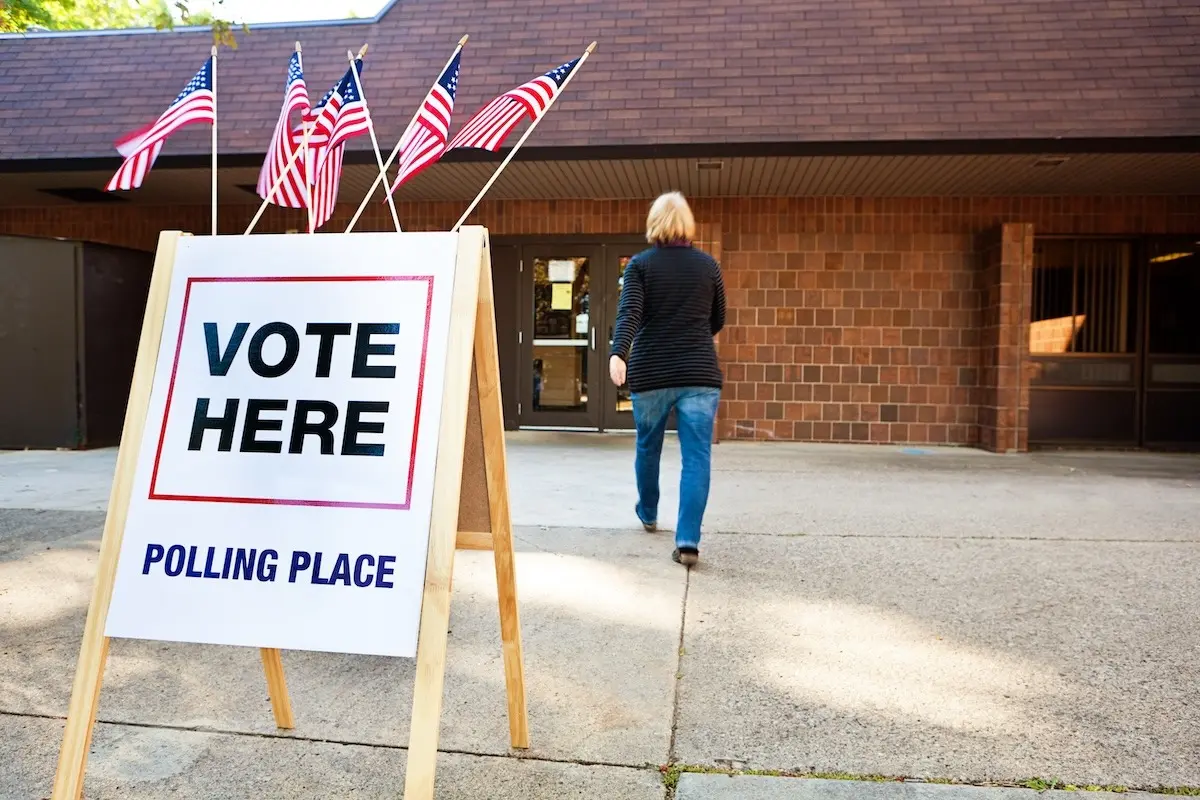
- Late September 2026: As the country braced for the November midterms, debates over voting access, localized poll closures (such as those considered in Tarrant County, Texas), and the integrity of the ballot box took center stage, framing the election not merely as a contest of ideologies, but as a defense of the electoral infrastructure itself.
Supporting Context & Metrics: Voter Turnout and the Anatomy of Apathy
The paradox of the contemporary American voter is stark. Public opinion data and anecdotal encounters across the country reveal a populace deeply dissatisfied with the status quo—citing inflation, immigration mismanagement, and geopolitical instability—yet remarkably entrenched in their partisan loyalties.
At the heart of the nation’s democratic vulnerability lies a persistent crisis of civic participation:
- International Standing: U.S. voter turnout consistently lags behind many of its democratic peers. While presidential elections typically see turnout hover around 60 percent, midterm participation routinely plummets closer to 40 percent.
- The Non-Voter Block: Approximately one in three eligible American adults routinely abstains from voting altogether.
- The Myth of the Extremist Majority: Political analysts note that the most fervent segments of the electorate—such as the hardline MAGA base—represent a vocal minority rather than a national majority. Their outsized influence is historically enabled not by overwhelming popular support, but by the systemic withdrawal of the disaffected majority.
This dynamic transforms every election cycle into a referendum on engagement. As political analysts frequently observe, when moderate and disaffected voters stay home, institutional guardrails weaken, leaving the machinery of democracy vulnerable to capture by political extremes.
Official Statements and Institutional Friction
The friction between the executive branch, the judiciary, and Capitol Hill has generated sharp rhetoric from lawmakers, jurists, and commentators alike, illuminating the deep fractures within the American system.
- On Executive Accountability and Foreign Policy: The shifting explanations regarding military engagements have drawn sharp rebukes from both sides of the aisle. Critics have pointed to statements from administration officials regarding the "excursion" in Iran as symptomatic of a broader disregard for congressional oversight and factual consistency.
- On Electoral Integrity: The Supreme Court’s intervention into voting procedures has set high stakes for the midterms. In blocking restrictive mail-in voting measures and curbing aggressive gerrymandering, the judiciary has reasserted the principle that access to the ballot box must remain a protected, non-partisan right.
- On Intra-Party Dissension: The willingness of traditional conservatives—such as departing lawmakers—to openly challenge leadership decisions regarding cabinet accountability and immigration signals a fracturing coalition. As Representative Salazar noted in her critique of immigration enforcement, the assumption of monolithic support among key demographic voting blocs is increasingly untenable.
Future Outlook: Preserving the Democratic System
As the nation approaches the November midterms, the overarching narrative transcends standard partisan debates over taxation, regulation, or social policy. The central challenge of 2026 is systemic: safeguarding the peaceful transfer of power, ensuring administrative transparency, and restoring public trust in local and national electoral processes.
The preservation of American democracy does not rely on sweeping national transformations, but on localized vigilance. Ensuring that polling sites remain accessible, ballots are securely counted, and election administration remains transparent is the baseline requirement for a functioning republic.
Ultimately, the 2026 midterms offer a definitive opportunity for course-correction. Whether the American electorate can look past a decade of political fatigue, cynicism, and institutional strain to participate in record numbers will determine if the nation can successfully reset its democratic trajectory. The responsibility rests not with the political class, but with the silent majority whose engagement remains the ultimate guarantor of the American experiment.