

Executive Overview
In the wake of a political earthquake that has upended the conventional calculus of Middle Eastern governance, Israel finds itself standing at a profound historical crossroads. Following an unexpected legislative election, long-serving Prime Minister Benjamin Netanyahu has neither definitively secured victory nor suffered an absolute defeat. Instead, the true casualty of the electoral contest may be Israel’s fragile democracy—a system hollowed out from within by decades of entrenched polarization, perpetual conflict, and Netanyahu’s relentless grip on power.
The parliamentary math presents a paradox that has paralyzed the nation’s political establishment. Parties opposed to Netanyahu’s hardline, far-right coalition captured 67 of the 120 seats in the Knesset, Israel’s parliament, suggesting a clear path toward a majority coalition of change. However, that total includes an unprecedented 19 seats won by Israel’s predominantly Arab parties—a seismic voter turnout that has thrown the entire political system into disarray.
For the first time in the nation’s history, the Arab minority—historically marginalized and treated as politically expendable—holds the balance of power. As centrist and Zionist opposition leaders grapple with whether to form a coalition supported by Arab lawmakers, citizens have taken to the streets in Tel Aviv and Jerusalem by the thousands. They are demanding a stark choice: embrace a coalition that includes Arab parties to unseat Netanyahu, or default once more to a right-wing government characterized by intensifying settlement expansion in the West Bank, renewed hostilities with Iran, and unyielding military campaigns in Gaza.
As observers draw inevitable parallels to the fractured state of American democracy on the eve of critical midterm elections, the fundamental question facing both nations is identical: Whose votes truly count, and are some citizens treated as more equal than others?
Detailed Chronology: How the 2026 Election Unfolded
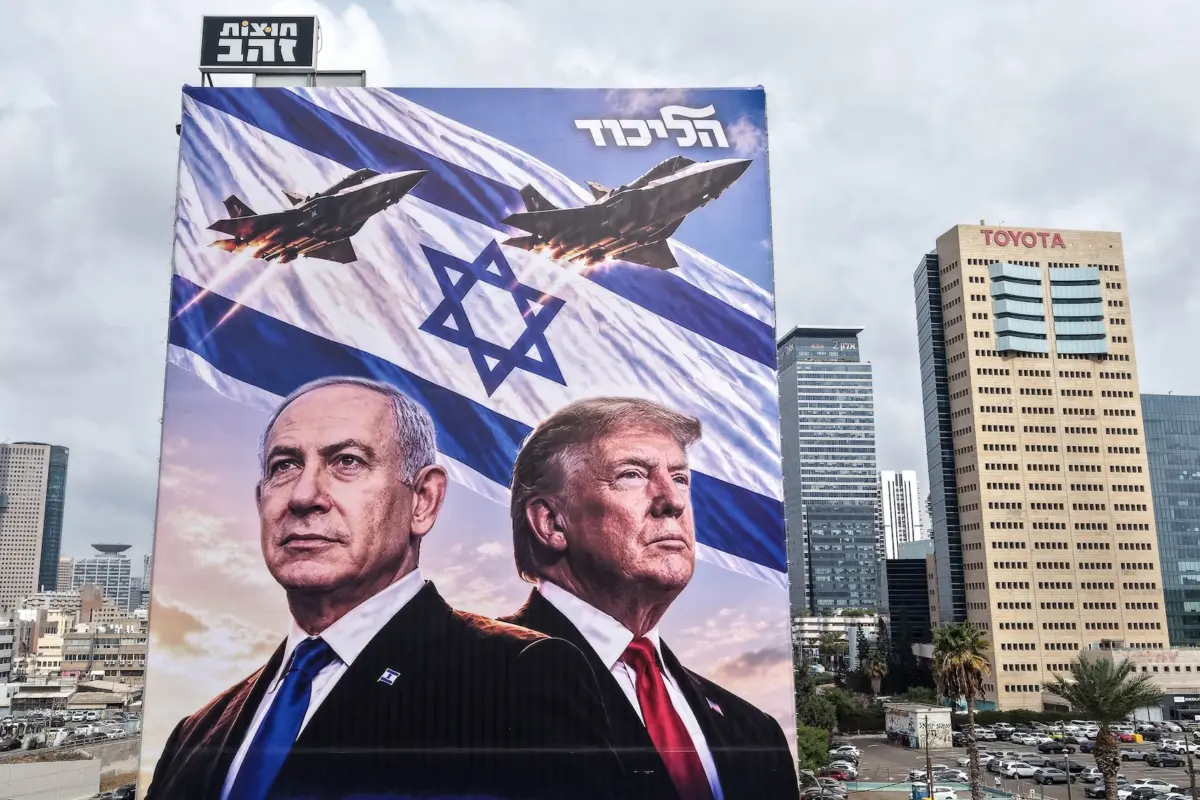
The lead-up to the November 2026 Israeli election was dominated by familiar campaign tropes. Netanyahu, campaigning alongside the omnipresent shadow and symbolism of his international populist allies—exemplified by campaign billboards pairing his image with Donald Trump—sought to rally his traditional base through appeals to national security and fear. Yet, beneath the veneer of standard political maneuvering, a quiet mobilization was taking place across Palestinian communities within Israel.
The October Surge
In the weeks leading up to election day, voter mobilization initiatives among Israeli Arabs—citizens who remained within Israel’s borders following the 1948 war—gained unprecedented momentum. Frustrated by systemic neglect, rising crime rates within their communities, and the acute polarization of the Netanyahu years, Arab voters turned out in numbers that completely defied polling models and expert predictions.
When the ballots were tallied, the "Arab parties" bloc surged to 19 seats in the Knesset, an all-time high that immediately disrupted the arithmetic of coalition-building.
The Aftermath and Allegations of Fraud
Facing the genuine prospect of losing his parliamentary majority, Netanyahu and his far-right allies swiftly pivoted to a playbook familiar to modern democratic observers worldwide. In the days immediately following the election, Netanyahu’s camp aired groundless allegations asserting that the election was compromised, rigged, or fraudulent.
This rhetoric served a dual purpose: to delegitimize the surging voter turnout among the Palestinian minority and to lay the groundwork for resistance against any opposition-led coalition. The Zionist far-right’s core objection was starkly clear: too many Arab citizens had exercised their democratic franchise, producing an outcome that neither Netanyahu’s bloc nor many within the traditional Jewish-majority parties had anticipated or desired.
The Street Protests and the "Bibi or Tibi" Dilemma
As the political crisis deepened, attention shifted to Gadi Eisenkot, the former military chief of staff and leader of the centrist-Zionist opposition. During the campaign, Eisenkot had explicitly pledged not to form a government reliant on Arab political support—a traditional red line in mainstream Israeli politics designed to appease right-wing nationalists.
However, the post-election reality rendered that promise politically untenable for those seeking a transition of power. Thousands of demonstrators flooded the streets of Tel Aviv and Jerusalem over subsequent nights, urging Eisenkot and the opposition "change bloc" to cross the Rubicon and negotiate with the Arab parties. Commentators framed the moment with stark clarity: it was a binary choice between ousting Netanyahu through an inclusive, albeit controversial, coalition or slipping back into the grim default of right-wing extremism.
Supporting Context & Metrics: The Demographic and Political Landscape
To understand the magnitude of the 2026 election, one must examine the demographic shifts and historical grievances that have shaped modern Israel.
The Electoral Breakdown
- Total Knesset Seats: 120
- Anti-Netanyahu Coalition Total: 67 seats (including traditional centrist, left-wing, and right-of-center anti-Bibi factions)
- Arab Parties Bloc: 19 seats (an all-time high, representing a decisive swing factor)
- Netanyahu-Led Right-Wing/Religious Bloc: 53 seats (falling short of the 61-seat majority threshold)
The Weight of History
Eighty years after the 1948 Nakba and the subsequent establishment of the State of Israel, the descendants of the Palestinian population that remained inside the country’s borders find themselves in an extraordinary position of leverage. Left-leaning Israeli commentators, such as Gideon Levy writing in Haaretz, captured the profound irony of the moment:
"The future of Israel now depends on its Arab citizens and on the attitude of its Jewish citizens toward its Arab ones. Eighty years after the Nakba and the establishment of the Jewish state, Israeli Palestinians may determine its fate. Is there greater historical justice than that?"
For decades, mainstream Israeli politics operated under an unwritten consensus that excluded Arab political parties from holding executive power or serving as coalition kingmakers. This exclusion was justified through a security lens, but critics argue it institutionalized a two-tiered citizenship model. The 2026 election has forced this contradiction into the open, compelling the Zionist opposition to decide whether their commitment to democratic pluralism supersedes ethno-nationalist exclusion.
Official Statements and Commentary
The ideological battle lines drawn across Israeli media and international commentary reflect a deep existential crisis regarding the nation’s identity.
The Opposition’s Test
Veteran analysts have argued that the moment serves as an acid test for Israel’s centrist parties. If the "change bloc" within the Zionist majority ultimately decides that partnering with Arab lawmakers is a bridge too far, it will signal a profound ideological alignment with the forces they claim to oppose.
As Levy articulated in his post-election analysis:
"If they cannot accept a coalition with Arab Israelis, they will make it clear that they are actually the same as Netanyahu, that they prefer even the devil Netanyahu over repressing their racism… [E]veryone will know that racism is the supreme value in this country, across the board, above any other value."
The Western Perspective and Historical Nostalgia
For generations of Western liberals and progressives, particularly in the United States, Israel was viewed through an idealized lens—a heroic sanctuary born from the ashes of the Holocaust, infused with democratic ideals and socialist pioneering spirit. Figures like Golda Meir and Moshe Dayan were celebrated icons, and the military conflicts of 1967 and 1973 were widely framed in Western media as existential battles of democracy versus authoritarianism.
However, the prolonged tenure of Benjamin Netanyahu—marked by the expansion of West Bank settlements, successive military campaigns in Gaza, and the erosion of judicial independence—has fractured that idealized narrative. The uncritical embrace of Israeli leadership by Western leaders, epitomized by high-profile diplomatic gestures following the October 7 attacks, has increasingly collided with the grim realities on the ground.
Observers note an uncomfortable parallel with the United States itself. Both nations are currently grappling with internal democratic decay, populist polarization, and foundational questions regarding constitutional equality. Just as Americans wrestle with the legacy of political division and the resilience of their own democratic institutions, Israelis are forced to look in the mirror and confront the divergence between their founding ideals and their current reality.
Future Outlook: A Turning Point or More of the Same?
As political negotiations continue behind closed doors in Jerusalem, Israel’s immediate future hinges on a few volatile variables:
- The Coalition Calculus: Will Gadi Eisenkot and other centrist leaders break historical taboos to form a governing coalition backed by the 19 Arab MKs? Doing so would require immense political courage and risk severe backlash from right-wing elements within their own parties, but it remains the only viable mathematical path to replacing Netanyahu.
- The Resilience of Netanyahu’s Base: Should the opposition fail to bridge the divide, Netanyahu is positioned to cobble together another minority or fragile right-wing government, perpetuating a cycle of regional conflict, international isolation, and deepening domestic civil strife.
- The Role of Civil Society: The massive street demonstrations in Tel Aviv and Jerusalem signal that a significant portion of the Israeli public is no longer willing to accept the status quo. The energy of these grassroots movements will likely dictate the longevity of any government that emerges from the crisis.
Ultimately, Israel and the United States remain conjoined by history, acting as distorted reflections of one another across an increasingly turbulent political landscape. Whether Israel seizes this unexpected moment to redefine its democracy—acknowledging the equal rights of all its citizens—will determine not only the fate of the nation, but the moral legacy it leaves for generations to come.