


Executive Overview
In the landscape of modern American broadcast journalism, few names carry the institutional weight and gravitas of Scott Pelley. A veteran of CBS News for nearly four decades, Pelley’s career has been defined by front-row seats to history—from the battlefields of Ukraine to the halls of the White House. Yet, his most consequential role may not have been chronicling global events, but rather acting as a lone institutional barricade against the shifting tides of corporate and political interference.
Pelley’s dismissal from CBS News in June—sparked by a confrontation with newly installed executive leadership—serves as a cautionary case study of the pressures facing traditional media in an era of massive corporate consolidation, political volatility, and sliding television ratings. The catalyst for his ouster was a high-stakes internal clash over the editorial independence of 60 Minutes, television’s preeminent investigative newsmagazine.
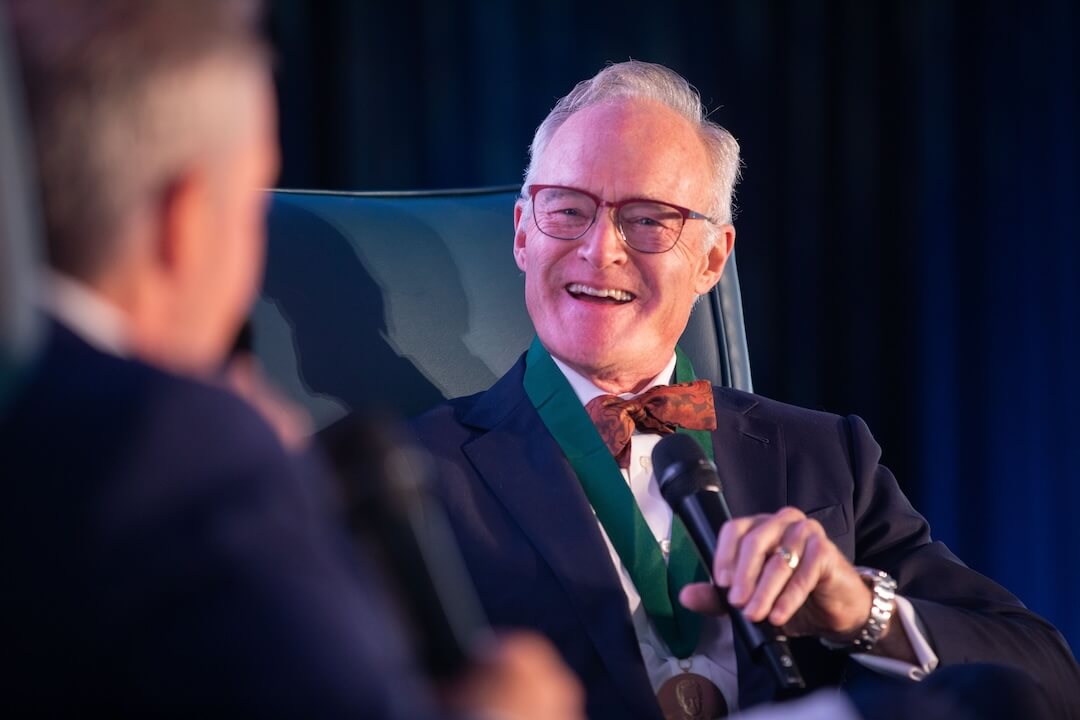
Honored recently with the prestigious Poynter Medal for Lifetime Achievement in Journalism at the Poynter Institute’s Bowtie Ball in Tampa, Florida, Pelley did not mince words regarding the state of his former employer. Addressing an audience of industry peers, he laid bare the internal fractures at CBS News, describing a corporate culture compromised by political appeasement and executive overreach.
Pelley’s departure is emblematic of a broader existential crisis sweeping legacy media institutions. As corporate parents navigate multi-billion-dollar mergers, regulatory hurdles, and intense partisan scrutiny, the historic "firewall" separating newsrooms from commercial and political pressures is showing catastrophic cracks. For Pelley, the cost of defending that wall was his career at the network he served for 37 years—a sacrifice he views as necessary to preserve the fundamental integrity of the fourth estate.
Detailed Chronology: The Anatomy of a Newsroom Collapse
The disintegration of the traditional editorial firewall at CBS News did not happen overnight; it was accelerated by a series of corporate maneuvers and executive appointments following Paramount’s $8 billion merger with Skydance.
The Lead-Up: Mergers and Appeasement
The structural shifts at CBS News and its flagship broadcast, 60 Minutes, trace back to the corporate machinations surrounding the Paramount-Skydance merger. As the two corporate entities awaited crucial federal regulatory approval, critics and industry observers raised alarms over actions that appeared calculated to curry favor with the incoming presidential administration, led by Donald Trump.
Among the most controversial decisions was Paramount’s agreement to pay $16 million to settle a defamation lawsuit filed by Trump—a legal challenge that media and First Amendment experts widely regarded as having minimal legal merit. To many within the journalistic community, the payout signaled an alarming willingness by corporate leadership to trade legal concessions and political appeasement for regulatory expediency.
The New Guard Takes Over
Following the merger, structural changes swept through CBS News. The corporate hierarchy pivoted, installing figures whose approaches to traditional journalism alarmed veteran staffers. Nick Bilton was brought in as the newly minted executive producer of 60 Minutes, while editorial leadership saw the integration of figures like Bari Weiss as editor-in-chief of CBS News.
In the months that followed Bilton and Weiss’s arrivals, a steady drain of talent afflicted the news division. Multiple veteran correspondents, seasoned producers, and support staff either resigned, were laid off, or were abruptly fired. While CBS News leadership maintained that these departures and subsequent editorial changes were standard components of a routine organizational restructuring process, those on the ground told a different story.内部 sources reported mounting pressure to subtly alter story angles, dilute investigative reporting, and inject political calculations into scripts to appease external stakeholders.
The June Confrontation
The simmering tension reached a boiling point during a tense June staff meeting at 60 Minutes. Up to that point, a pervasive climate of fear and economic vulnerability had kept the remaining newsroom personnel silent. Many producers and staffers had families, mortgages, and children in college; they simply could not afford to risk their livelihoods by speaking out against the new regime.
Scott Pelley, looking around the room, realized he was the only correspondent present. Senior leadership had been systematically gutted, leaving a vulnerable team staring down an uncertain future. When Bilton addressed the room, Pelley interrupted. He directly confronted the executive producer, demanding to know the whereabouts of editor-in-chief Bari Weiss and challenging the sweeping changes dismantling the broadcast’s historic independence.
Pelley later described the encounter not as a personal grievance, but as a mandatory defense of the 75 people sitting in that room—many of whom had shared harrowing combat zones with him, including a producer who had traveled to active war zones in Ukraine twice while pregnant. Instead of treating these seasoned professionals with institutional respect, Pelley noted, leadership appeared disconnected, treating their careers and sacrifices with administrative coldness.
His public insubordination sealed his fate. Shortly after the meeting, Pelley was terminated by CBS News, ending a legendary 37-year run.
Supporting Context & Metrics: The Cost of Compromise
The upheaval at CBS News unfolds against a backdrop of sweeping transformation across the media landscape, characterized by plummeting traditional television ratings, a flight of advertising dollars, and intense ideological polarization.
The Ratings Paradox and the Trump Interview
Ironically, the institutional turmoil at 60 Minutes coincided with a fleeting programming success. Weeks prior to Pelley’s public remarks in Tampa, the beleaguered newsmagazine scored a minor ratings and critical boost with an interview featuring President Donald Trump. While the segment drew rare praise from outside media critics—a desperately needed win for a program suffering from declining viewership and internal staff hemorrhaging—it underscored the schizophrenic reality of the broadcast: critically lauded high-profile interviews occurring alongside an unprecedented erosion of internal editorial trust.
A Lifetime of Accolades vs. Corporate Realities
To understand the gravity of Pelley’s firing is to examine the sheer scale of his journalistic resume. Presented with the Poynter Medal for Lifetime Achievement in Journalism by Poynter President Neil Brown, Pelley’s career reads as a masterclass in broadcast reporting.
Brown highlighted Pelley’s staggering collection of accolades during the gala presentation:
- 50 Emmy Awards
- 4 duPont-Columbia Awards
- 3 Peabody Awards
"What we identified with Scott Pelley is a firm voice that delivers searing yet respectful candor, truth without performance," Brown told the gala audience.
Pelley’s journey began early. At just 15 years old, he was cutting his teeth in local Texas newsrooms—working out of a station situated in the middle of a cotton field. There, he learned every facet of the trade: shooting footage, physically splicing film with razor blades, writing scripts, anchoring the 10 o’clock news, and hosting weekend radio broadcasts. It was a foundational crucible that instilled in him an intimate understanding of the technical and ethical mechanics of journalism—skills he would rely upon decades later while reporting from the White House, the impeachment trials of Bill Clinton, and the front lines in Ukraine.
The Disappearing Firewall
For the vast majority of Pelley’s tenure at CBS News, a strict institutional firewall insulated the newsroom from the corporate boardroom. Pelley recounted a telling piece of advice given to him by a former CEO of the CBS network while he was anchoring the CBS Evening News:
"I’ll handle the politics and the business. You take care of the audience."
That separation allowed reporters to chase stories wherever the facts led, whether interviewing world leaders or interrogating hostile heads of state. Pelley recalled a tense 2007 interview with then-Iranian President Mahmoud Ahmadinejad. When Pelley relentlessly pressed Ahmadinejad on whether Iran was actively developing nuclear weapons, the Iranian leader grew visibly frustrated.
"After a certain point, he looked at me and he said, ‘Are you with CIA?’" Pelley recalled. "He said, ‘I am the president of this country. You can’t treat me like that.’ But he wasn’t used to being on 60 Minutes."
That fearless accountability, Pelley argues, is precisely what corporate imperatives and political pressures have sought to neuter.
Official Statements and Industry Perspectives
The friction between legacy journalism standards and modern corporate governance has drawn sharp commentary from industry leaders, drawing lines between traditional watchdog reporting and corporate self-preservation.
The Defense of Routine Editing vs. Political Censorship
In response to allegations from departed staffers and figures like Pelley that political bias and corporate directives were being actively injected into broadcast scripts, representatives for CBS News and Bari Weiss have consistently pushed back. Network spokespeople have maintained that any revisions, re-writes, or adjustments made to stories were strictly part of standard, routine editorial oversight processes inherent to high-level television production.
However, critics argue that the sheer volume of departures among veteran investigative journalists points to a systemic shift rather than ordinary editorial fine-tuning.
The Press as the "Enemy of the People"
Pelley expanded his critique beyond the corporate halls of CBS, taking direct aim at the rhetoric used by political figures to erode public trust in the media. Contrasting the political climate of the second Clinton administration—when he first covered the White House—with today’s landscape, Pelley lamented the normalization of labeling the press as the "enemy of the people."
"When autocrats around the world and through history attempt to take away all of the people’s rights, they always start with the press," Pelley warned. "From the French Revolution to the fascists of the 20th century, the communists of the 20th century, they always start with the press, and then the rest of it becomes so much easier."
Celebrating Local Journalism: The Hearst Example
The Poynter Bowtie Ball also served as a platform to honor other titans of the industry, including Hearst President and CEO Steven Swartz, who received the Distinguished Service to Journalism Award. Swartz oversees a media conglomerate generating over $14 billion in annual revenue, encompassing national magazines like Esquire, Good Housekeeping, and Cosmopolitan, alongside dozens of local newspapers and television stations, such as the San Francisco Chronicle and The Dallas Morning News.
Both Swartz and Pelley emphasized the irreplaceable value of local journalism. Pelley noted that local newsrooms remain the bedrock of the entire media ecosystem, providing young journalists with the hands-on, foundational experience necessary to understand accountability reporting—an opportunity he believes is increasingly difficult to replicate in major metropolitan hubs like New York or Chicago.
Future Outlook: Pelley’s Next Chapter and the Fate of Broadcast News
While his chapter at CBS News has definitively closed, Scott Pelley shows no signs of slowing down. Embracing the ethos of an independent journalist, Pelley revealed that his post-CBS career is already fully engaged in high-impact storytelling.
Independent Storytelling and Multimedia Ventures
Pelley confirmed that he is actively writing a new book, shooting an intensive documentary project, and working alongside a dedicated production team to develop an original podcast. While keeping specific details under wraps prior to official release, Pelley indicated that his upcoming work will center on a timeless thematic core: the "triumph of truth and scholarship over the forces of ignorance."
"That idea of working and working and working to find literal truth, and using that light to push back the darkness of ignorance—I think that is a theme throughout human history and will continue to be so," Pelley told reporters.
The Broader Legacy for 60 Minutes and CBS
Pelley’s refusal to watch the broadcast he helped build reflects a profound grief shared by many veterans of traditional network news. As 60 Minutes attempts to navigate its ratings challenges under new corporate ownership, the shadow of Pelley’s public exit looms large.
The central question facing CBS News—and indeed, all legacy broadcast networks—is whether they can successfully weather economic pressures and political crosswinds without permanently sacrificing the editorial independence that earned them the public’s trust in the first place. For Scott Pelley, the answer was found on a stage in Tampa: once corporate imperatives and political bias cross the threshold of the newsroom, the broadcast loses its independence, surrenders its credibility, and ultimately forfeits its audience.
As Pelley turns the page to independent journalism, his stand serves as a stark reminder that the survival of the free press depends entirely on those willing to risk their careers to defend it.
