

Executive Overview
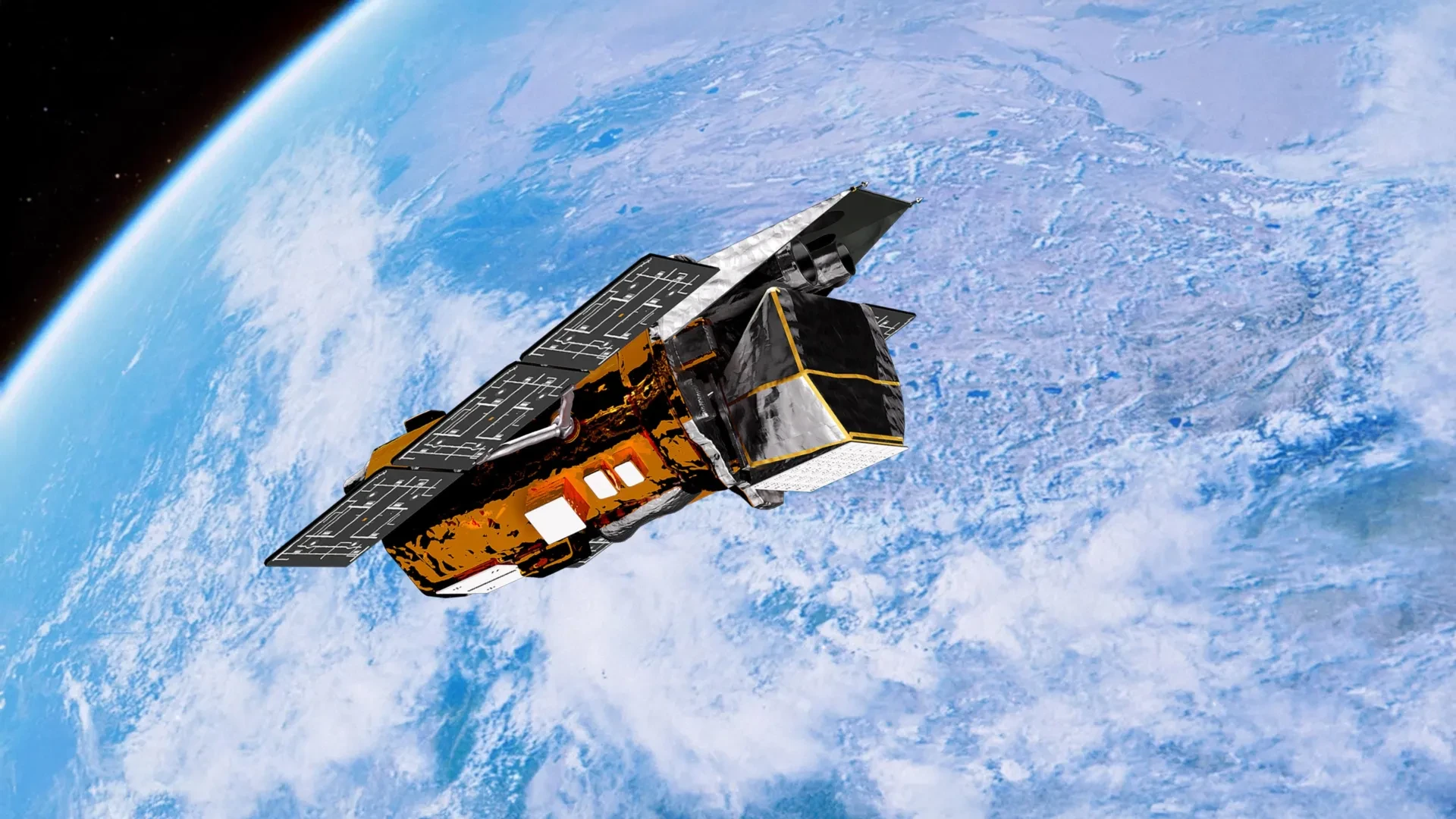
After navigating the harsh, silent expanse of low-Earth orbit for nearly twenty-two years, NASA’s Neil Gehrels Swift Observatory has met its fiery end. Plunging back into Earth’s atmosphere on Wednesday morning, the spacecraft brought down the curtain on one of the most remarkably successful, enduring, and prolific missions in the history of modern astrophysics.
According to confirmation from the U.S. Space Force, Swift re-entered the atmosphere at precisely 7:39 a.m. EST, its descent traced across the skies above North Sumatra, Indonesia, centered roughly at 3.4 degrees north latitude and 98.6 degrees east longitude. As anticipated by mission planners and orbital mechanics experts, the vast majority of the observatory disintegrated under the intense thermal stress and frictional heating of atmospheric entry. While aerospace authorities acknowledge that minor, heat-resistant components may have survived the plunge to impact the remote oceanic expanse below, the physical hardware is now gone.
What remains—and what will endure for generations—is an unprecedented scientific legacy.
Initially designed as a modest, two-year exploratory mission to capture the fleeting, ghost-like flashes of gamma-ray bursts, Swift defied expectations at every turn. It operated for more than ten times its intended lifespan, transforming from a specialized tracker of cosmic explosions into a multi-wavelength powerhouse. Swift became the agile watchdog of the cosmos, a spacecraft capable of pivoting on a dime to peer at the most violent, energetic events in the universe—from merging neutron stars and supermassive black holes to comets passing through our own solar system.
Its departure marks the end of an era, but the data it leaves behind continues to serve as a foundational pillar of time-domain astronomy. Swift did not merely observe the universe; it revolutionized how humanity watches the skies change in real time.
Detailed Chronology: From Concept to Fiery Re-Entry
The biography of the Swift mission is a masterclass in aerospace engineering, adaptive design, and scientific serendipity. To understand the magnitude of its twenty-two-year run, one must trace its journey from a specialized drawing board in the early 2000s to its final, glowing streak across the Indonesian dawn.
The Genesis and Launch (2004)
At its inception, Swift was built to solve one of astrophysics’ most stubborn mysteries: gamma-ray bursts (GRBs). These sudden, immensely energetic flashes of high-energy radiation represent the most luminous electromagnetic events since the Big Bang. Yet, because they typically last anywhere from a few milliseconds to several minutes before fading entirely into the cosmic background, capturing them had historically proven nearly impossible.
To tackle this, NASA, alongside an international consortium of partners from the United Kingdom and Italy, engineered a revolutionary spacecraft. Launched in November 2004 aboard a Delta II rocket, the observatory was christened simply as "Swift," a name chosen to reflect its primary superpower: speed.
Unlike traditional space telescopes that moved slowly and deliberately to gaze at static targets for weeks at a time, Swift was built like an agile hunter. It carried three advanced instruments on a single, highly maneuverable bus:
- The Burst Alert Telescope (BAT): A wide-field monitoring instrument designed to scan a massive fraction of the sky simultaneously, instantly spotting the high-energy gamma rays that signal the birth of a GRB.
- The X-ray Telescope (XRT): A sensitive focusing instrument capable of quickly slewing to the exact coordinates provided by the BAT to capture the fading X-ray afterglow of the burst.
- The Ultraviolet/Optical Telescope (UVOT): A co-aligned telescope providing high-resolution imagery across ultraviolet and visible light bands, allowing scientists to track how the explosion evolved across multiple spectrums.
The Golden Years of Discovery (2005–2015)
Almost immediately after achieving orbit, Swift began rewriting textbooks. Within its first few years of operation, it shattered expectations regarding what a mid-sized explorer could achieve. It routinely caught gamma-ray bursts in the act, autonomously calculating their coordinates within seconds and transmitting them via an automated relay network to ground-based and space-based observatories around the world.
This capability effectively birthed modern multi-messenger and time-domain astronomy. Astronomers no longer had to wait for scheduled viewing windows; whenever Swift screamed, the global astronomical community listened.
By the end of its first decade in space, Swift had localized hundreds of GRBs, proving definitively that long-duration bursts are tied to the cataclysmic deaths of massive stars (supernovae), while short-duration bursts originate from the violent mergers of dense compact objects, such as neutron stars.
The Extended Mission and Renaming (2018)
Long after its original two-year mission profile expired, Swift kept working. It survived solar storms, hardware degradation, gyro failures, and budgetary reviews. Year after year, mission operators found clever ways to work around aging components, utilizing autonomous software patches to keep the observatory operational.
In recognition of its monumental contributions—and to honor the late astrophysicist Neil Gehrels, who served as the mission’s primary principal investigator and a visionary leader in gamma-ray astronomy—NASA officially renamed the spacecraft the Neil Gehrels Swift Observatory in 2018. By this point, the spacecraft was no longer just a gamma-ray burst detector; it had evolved into a general-purpose astrophysical observatory relied upon by thousands of researchers worldwide.
The Final Descent (2024–2026)
All orbital missions must eventually succumb to the invisible drag of Earth’s upper atmosphere. For years, Swift maintained a stable orbit, but the gradual decay of its altitude became irreversible. As solar activity fluctuated and atmospheric drag increased, mission managers monitored the spacecraft’s inevitable return.
On Wednesday morning, that long-anticipated descent reached its conclusion. The U.S. Space Force’s tracking systems confirmed that Swift crossed the threshold of the dense atmosphere at 7:39 a.m. EST. Plunging earthward at hypersonic speeds, the spacecraft encountered extreme thermal friction, breaking apart over North Sumatra, Indonesia. For Swift, the long watch had finally ended.
Supporting Context & Metrics: The Numbers Behind the Legend
To truly grasp the impact of the Neil Gehrels Swift Observatory, one must examine the raw metrics of its operational life. The data tells a story of relentless productivity and exceptional engineering.
Mission Lifespan Statistics
- Original Planned Lifespan: 2 Years
- Actual Operational Lifespan: Nearly 22 Years (approx. 21 years and 3 months)
- Longevity Multiplier: ~10.5x the original mission architecture design.
- Orbits Completed: Over 115,000 trips around the Earth.
Scientific Output and Discoveries
During its two decades aloft, Swift fundamentally altered humanity’s catalog of the violent universe:
- Gamma-Ray Bursts Detected: Swift localized well over 1,500 gamma-ray bursts, providing the foundational datasets for the vast majority of modern GRB research.
- Multi-Wavelength Precision: By integrating the BAT, XRT, and UVOT instruments, Swift captured simultaneous data across gamma-ray, X-ray, ultraviolet, and optical spectra, giving scientists a holistic view of cosmic explosions.
- Tidal Disruption Events (TDEs): Swift became the premier discoverer of tidal disruption events—dramatic occurrences in which unsuspecting stars wander too close to supermassive black holes and are violently ripped apart, generating brilliant flares of X-rays and UV light.
- Supernova Tracking: The observatory cataloged hundreds of supernovae, capturing the critical early moments of stellar death before optical ground telescopes could even be pointed at the coordinates.
- Solar System Observations: Though built for deep space, Swift maintained a watchful eye on our cosmic backyard, tracking water production in comets, analyzing near-Earth asteroids, and monitoring volatile planetary atmospheres.
The Power of Rapid Response
What set Swift apart from heavy-duty observatories like Hubble or James Webb was its autonomy. While other telescopes required complex scheduling committees and months of advance booking, Swift was built to think on its own.
When the Burst Alert Telescope detected a sudden surge of high-energy photons, onboard software evaluated the event, repointed the entire multi-ton spacecraft in a matter of minutes, and beamed coordinates down to Earth via automated text and email alerts. This automated reflex reduced the latency between a cosmic explosion occurring and human scientists observing it from hours to mere seconds. It turned astronomy from a passive, retrospective science into an active, real-time discipline.
Official Statements & Institutional Perspectives
The conclusion of the Swift mission has prompted an outpouring of reflections from the international scientific community, highlighting both the emotional attachment researchers held to the spacecraft and its undeniable impact on space science.
Dr. Nicola Fox, associate administrator for NASA’s Science Mission Directorate at agency headquarters in Washington, emphasized the historical significance of the mission’s longevity.
"Swift was never supposed to change the entire landscape of astrophysics for two decades," Dr. Fox noted in a statement following the re-entry confirmation. "It was designed as a sharp, fast tool for a specific job. But thanks to the extraordinary dedication of the engineering and science teams who kept it running against all odds, Swift became much more than that. It became our eyes and ears in the violent, transient universe. Its legacy lives on in every textbook it rewrote and every young scientist whose career it inspired."
The international nature of the mission was a cornerstone of its success, drawing heavily on collaborations with the Italian Space Agency (ASI) and the UK Space Agency (UKSA), alongside academic institutions such as Penn State University, the University College London (UCL) Mullard Space Science Laboratory, and the Los Alamos National Laboratory.
Prof. Paul O’Brien from the University of Leicester, a key British scientist involved with Swift’s X-ray Telescope throughout its lifetime, reflected on the emotional reality of the spacecraft’s final moments.
"Watching Swift re-enter the atmosphere is like saying goodbye to an old, brilliant colleague," O’Brien said. "When we launched in 2004, we hoped we’d get a few good years of gamma-ray data. Instead, we got a front-row seat to the most extreme physics the universe has to offer. Swift taught us how to do real-time astronomy. It showed us that the cosmos is not a quiet, static museum, but a dynamic, roaring theater of explosions. We will miss its daily alerts, but its data will keep us busy for decades to come."
Engineers at NASA’s Goddard Space Flight Center, who spent decades managing the health of the spacecraft’s aging reaction wheels, gyroscopes, and solar panels, also shared their pride in the mission’s resilience. Despite facing multiple anomalies over the years—including the failure of one of its reaction wheels in 2005—the ground team routinely engineered innovative workarounds, such as developing a specialized observing mode that allowed Swift to continue operating with reduced stabilization hardware. That ingenuity is precisely what allowed a two-year mission to stretch gracefully into its third decade.
Future Outlook: The Post-Swift Era in Time-Domain Astronomy
As the glowing remnants of the Neil Gehrels Swift Observatory cool in the depths of the ocean, the astronomical community is not pausing to mourn; rather, it is actively building upon the foundation that Swift established.
Swift proved categorically that time-domain astronomy—the study of changes in the universe over short timescales—is essential to modern physics. Without the path blazed by Swift, humanity might never have been adequately prepared for the multi-messenger astronomy revolution kicked off by the first detection of gravitational waves from colliding neutron stars in 2017 (an event that Swift famously studied in X-rays).
Filling the Void
The retirement of Swift leaves a temporary gap in the world’s ability to rapidly monitor the X-ray and gamma-ray sky, but the next generation of space telescopes stands ready to pick up the torch.
- The Einstein Probe: Led by the Chinese Academy of Sciences in collaboration with European partners, this newly launched wide-field X-ray telescope is designed to monitor the sky for high-energy transients, serving a complementary role to Swift’s legacy.
- Future NASA Explorers: Concepts for next-generation transient-hunters are already moving through NASA’s pipeline, leveraging advanced digital detectors, machine learning-driven onboard autonomy, and wide-field optics inspired directly by Swift’s architecture.
- Ground-Based Synergies: The rise of massive optical survey facilities, such as the Vera C. Rubin Observatory, will rely heavily on space-based high-energy follow-up instruments. The lessons learned from Swift’s rapid-alert software network are now standard operating procedure for every major astronomical survey on Earth and in orbit.
An Immortal Scientific Archive
Ultimately, while the spacecraft itself has burned away, its treasure trove of data remains immortal. The public archive containing every single photon detected by Swift’s BAT, XRT, and UVOT instruments represents an exhaustive historical record of the dynamic universe between 2004 and 2026.
For generations of graduate students, astrophysicists, and amateur researchers to come, the Swift data archive will remain a gold mine. Whenever a new theoretical model of black hole accretion, stellar collapse, or relativistic jet physics is proposed, the first place scientists will look to test it is the database built by NASA’s tireless, agile explorer.
The Neil Gehrels Swift Observatory may have completed its final descent over Indonesia, but the light it chased across the cosmos will echo through human knowledge forever.
