

Executive Overview
November 2026 unfolds as a transformative period for astronomy enthusiasts, space agencies, and stargazers alike. The cosmic calendar for this month features a rare convergence of dynamic celestial phenomena within Earth’s immediate orbital neighborhood, alongside a monumental engineering and exploratory milestone unfolding in the farthest reaches of interstellar space. From brilliant meteor showers slicing through the autumn darkness and an arresting planetary conjunction in the pre-dawn hours, to the initiation of a sequential trio of lunar supermoons, Earth-bound observers are treated to a masterclass in orbital mechanics.
Simultaneously, humanity’s most distant ambassador, NASA’s Voyager 1 spacecraft, achieves a staggering distance benchmark: one light-day from Earth. This intersection of local stargazing highlights and deep-space exploration underscores a golden era of astronomical appreciation. This report provides an exhaustive analysis of November 2026’s celestial events, breaking down the chronology, scientific context, observational metrics, and future outlooks recommended by space agencies and international astronomical bodies.
Detailed Chronology of November 2026 Sky Events
To maximize observational success, stargazers must navigate a tightly packed timeline of events. The month’s calendar shifts rapidly from dust-strewn orbital paths of ancient comets to planetary alignments and lunar perigees.
Early November: The Taurid Complex Peaks
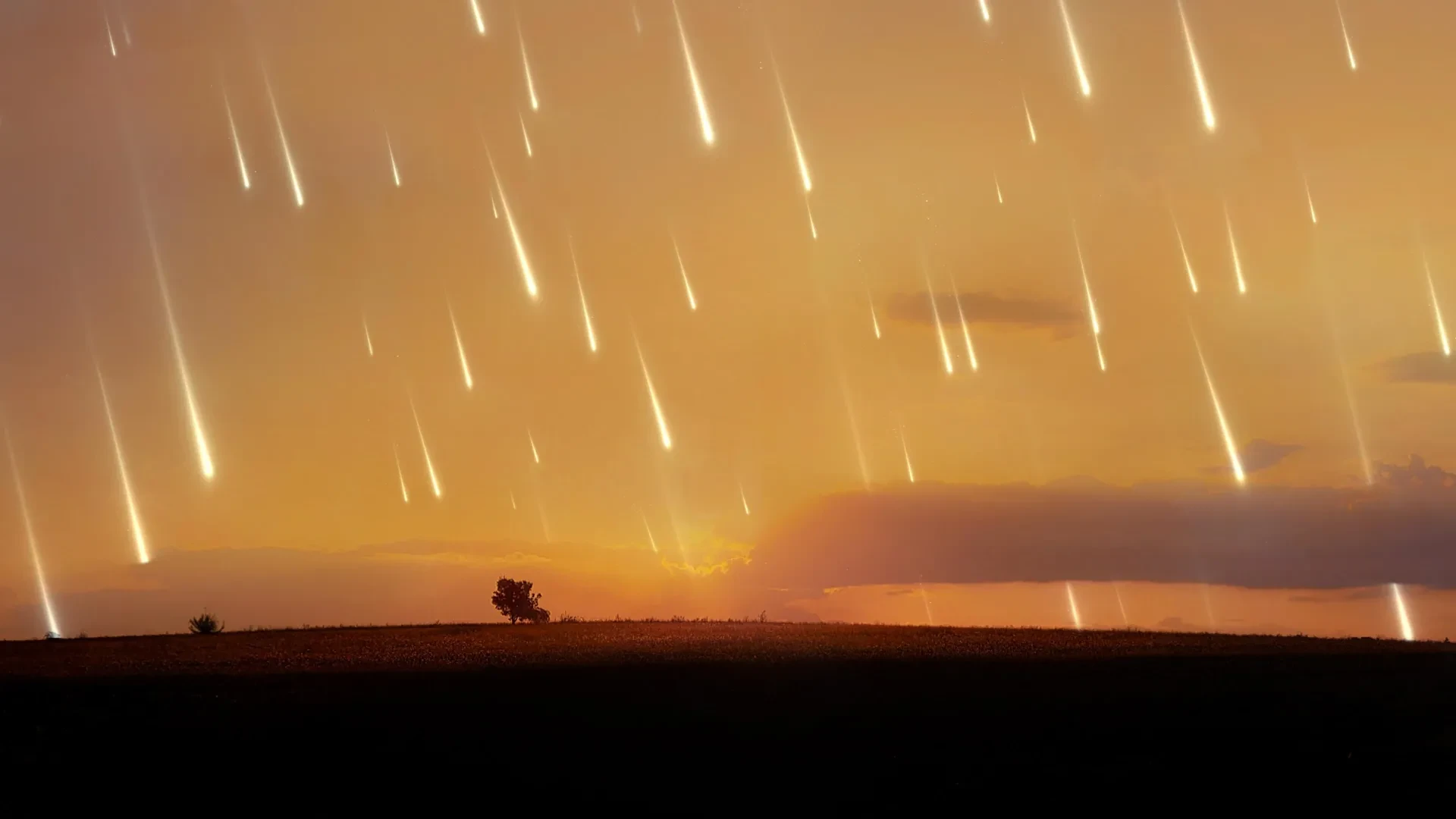
The month opens with the lingering dust tails of Encke-class debris interacting with Earth’s upper atmosphere. The Taurid meteor stream, split into Northern and Southern components, offers a prolonged window of activity.
- November 5: The Southern Taurids reach their peak zenith. While hourly rates remain modest at roughly five meteors per hour, the population density of larger, pebble-sized particulates frequently yields dramatic fireballs.
- November 12: The Northern Taurids hit their peak. Observers scanning the constellation Taurus will note a similar cadence, characterized by slow-moving, high-luminosity entries that command attention despite low overall frequency.
Mid-November: Planetary Conjunctions and Deep Space Beacons
The middle third of the month shifts focus from debris streams to planetary geometry and robotic exploration.
- November 15–16: Mars and Jupiter stage a breathtaking close approach in the southeastern sky just before dawn. Separated by a mere 1.2 degrees, the pairing offers a striking contrast between Jupiter’s brilliant, steady white glare and Mars’s unmistakable ruby-red hue. No optical instruments are required to appreciate this alignment.
- November 17: The peak of the Leonid meteor showers aligns with optimal pre-dawn dark hours, promising up to 15 meteors per hour under pristine skies, provided the Moon has set.
- November 17 (The Voyager Milestone): NASA officially marks the historic moment Voyager 1 crosses the one light-day distance threshold, an event commemorated globally through public engagement initiatives like the "Shine Bright for Voyager’s Light-Day" activation.
Late November: The Supermoon Sequence Begins
- November 24: The month concludes its celestial lineup with a full supermoon rising along the eastern horizon at sunset. This lunar event marks the inaugural chapter of a three-month consecutive supermoon trilogy that will carry astronomical observers through December and into January.
Supporting Context & Metrics
Understanding the physics behind these events elevates simple stargazing into an informed appreciation of solar system mechanics. Below is an analytical breakdown of the metrics driving November’s skywatching highlights.
The Taurid Fireball Factory
The Taurids originate from Comet 2P/Encke, a short-period comet with the smallest known orbit of any major comet in the solar system. Over millennia, gravitational perturbations from Jupiter have spread the debris into a broad, complex stream known as the Taurid Swarm. Because the particles within this swarm are often larger than those shed by typical comets, they penetrate deeper into Earth’s atmosphere before ablating entirely. This results in the characteristic slow, bright fireballs that define the shower.
Planetary Geometry: Mars and Jupiter
The apparent proximity of Mars and Jupiter on November 15 and 16 is an optical illusion born of perspective. Jupiter sits at an average distance of roughly 778 million kilometers from the Sun, while Mars orbits at an average distance of 228 million kilometers. From our vantage point on Earth, their orbital tracks occasionally overlap along our line of sight. Observers tracking these bodies over consecutive mornings will witness direct motion transforming into stationary points, followed by a wide divergence as the faster-moving Earth and Mars alter the spatial angles.
The Physics of One Light-Day
To conceptualize the milestone achieved by Voyager 1, one must evaluate the speed of light—approximately 299,792 kilometers per second (186,282 miles per second). A light-day is the spatial distance traversed by a photon in a 24-hour period:
- Distance in Kilometers: $approx 25.9$ billion kilometers
- Distance in Miles: $approx 16.1$ billion miles
- Distance in Astronomical Units (AU): $approx 173$ AU (where 1 AU is the average distance from the Earth to the Sun).
At this distance, radio signals traveling from NASA’s Deep Space Network take exactly 24 hours to reach the spacecraft. A query sent to Voyager 1 and the subsequent acknowledgement received back on Earth mandates a minimum round-trip latency of 48 hours. This extreme distance severely restricts real-time telemetry interventions, requiring the spacecraft’s aging automated systems to manage power preservation and scientific data throttling autonomously.
Lunar Perigee and the Supermoon Illusion
A supermoon occurs when a full moon coincides with lunar perigee—the point in the Moon’s elliptical orbit when it is closest to Earth (approximately 363,300 kilometers away, compared to its apogee of roughly 405,500 kilometers). This proximity increases the Moon’s apparent disk size by up to 14% and its brightness by roughly 30% compared to a micro-moon at apogee.
However, visual perception is heavily influenced by the "Moon Illusion." When the supermoon clears the eastern horizon at sunset, human brains compare it against terrestrial reference points like trees, buildings, and mountains, falsely magnifying its scale. Once the Moon ascends into the black expanse of the upper atmosphere, these terrestrial markers disappear, and the illusion dissolves, despite the physical disk remaining identical in size.
Official Statements and Agency Perspectives
Space agencies and international research institutions view November 2026 not merely as a visually stimulating month, but as a crucial public engagement window and a testament to long-term engineering resilience.
NASA’s planetary science divisions have emphasized the educational value of the overlapping phenomena. In briefing materials released ahead of the month, agency spokespeople noted that public interest in events like the Mars-Jupiter conjunction and the Taurid fireballs serves as an ideal gateway to deeper scientific literacy. By encouraging casual observers to step outside without sophisticated optical equipment—relying solely on the unaided human eye—astronomy outreach programs democratize the cosmos.
Regarding the Voyager 1 milestone, NASA Jet Propulsion Laboratory (JPL) engineers and mission operators have highlighted the sheer durability of hardware launched in an era predating modern microprocessors. Built with computing power a fraction of a modern smartphone, Voyager 1 continues to transmit invaluable plasma wave, magnetic field, and energetic particle data from the interstellar medium.
"Reaching one light-day is not just a numerical achievement; it is a monument to human ingenuity and the enduring drive to explore," noted representatives from the mission operations team. The Shine Bright for Voyager’s Light-Day campaign was specifically designed to bridge the gap between abstract cosmic distances and public imagination, utilizing synchronized global lighting events and educational streams to honor the craft’s ongoing legacy.
Future Outlook
As November 2026 draws to a close, the momentum built across this month sets the stage for an equally compelling transition into the winter season.
The successful passage of Voyager 1 into the one light-day zone serves as a grim yet awe-inspiring reminder of the spacecraft’s eventual operational limits. With nuclear radioisotope thermoelectric generators (RTGs) steadily losing thermal output year over year, mission planners continually decommission non-essential heaters and instruments to preserve core functions. Every kilometer gained into interstellar space pushes communication technologies to their absolute thresholds, setting the technical groundwork for future interstellar probe concepts currently resting on drawing boards.
In the near-Earth environment, the lunar supermoon on November 24 initiates a three-part chronological sequence that will peak again in December 2026 and conclude in January 2027. This rhythmic pulsing of lunar perigees offers researchers consistent opportunities to study tidal variations and coastal dynamics influenced by gravitational amplification.
Ultimately, November 2026 acts as a bridge connecting our ancient, primal fascination with the night sky—manifested in watching shooting stars and planetary alignments—with the cutting edge of interplanetary spaceflight. As the Earth races along its orbit, carrying its inhabitants through meteor streams and beneath the glow of rare lunar alignments, humanity continues to push outward, guided by both the naked eye and the silent, distant radio whispers of a lonely spacecraft crossing the threshold of a light-day.
