

Executive Overview
The architecture of post-Cold War Western security is fracturing at an unprecedented velocity, leaving the United States in a profoundly precarious strategic position. Nearly a decade after the first ominous warnings of foreign interference and partisan alignment with Moscow materialized on the American political stage, the federal government has crossed a historic and perilous Rubicon.
Under the stewardship of President Donald Trump, U.S. foreign policy has shifted from traditional Atlanticism to a transactional, isolationist model that actively undermines Western alliances. This transformation culminated in the systemic abandonment of Ukraine—once a vital democratic partner, now the collateral damage of a White House desperate to manufacture geopolitical "wins" amid compounding domestic and international failures.
Fuelled by soaring energy prices stemming from a disastrous, self-initiated conflict with Iran, the administration has pivoted toward a policy of outright appeasement of Russian President Vladimir Putin. From the sudden suspension of Russian oil sanctions and the bypassing of bipartisan congressional legislation, to the alleged technical sabotage of Ukrainian communications infrastructure via Elon Musk’s Starlink network, Washington has effectively chosen alignment with Moscow over its democratic obligations.
As Putin floats a neo-Yalta summit alongside Chinese President Xi Jinping to dictate the sovereign future of Eastern Europe, the United States stands diminished. Stripped of its moral authority and increasingly beholden to foreign autocrats, America faces not only an immediate reckoning at the upcoming midterm elections but a long-term decline in global trust, strategic capability, and national security.
Detailed Chronology: A Decade of Alignment
The descent of modern American foreign policy into its current state of crisis did not occur in a vacuum; it is the culmination of a decade-long trajectory initialized during the 2016 presidential primaries.
The 2016 Paradigm Shift
During the 2016 Republican National Convention, then-candidate Donald Trump made a public appeal that stunned national security veterans: he openly invited Russian intelligence agencies to target his political rival. "Russia, if you’re listening, I hope you’re able to find the 30,000 emails that are missing," he remarked, suggesting Russian state actors would be "rewarded mightily" by the American press.
This statement followed closely on the heels of the hacking of Democratic National Committee servers by Russian operatives. While dismissed by many at the time as characteristic political hyperbole or "trolling," the rhetoric signaled a profound ideological shift. Throughout the primary cycle, Trump repeatedly praised Vladimir Putin, defended the Russian leader’s extrajudicial actions with the casual dismissal that "our country does plenty of killing," and laid the ideological groundwork for a dramatic realignment of American loyalties.
The Helsinki Summit and First-Term Precedents
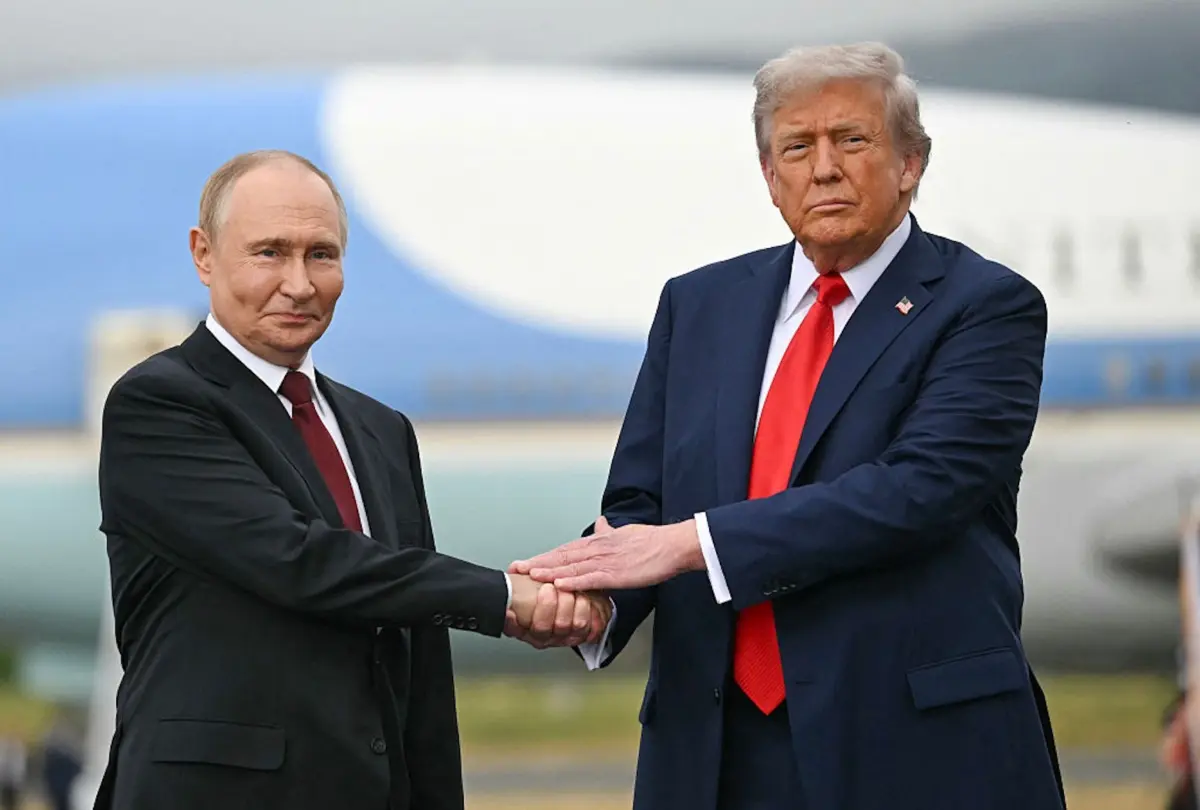
This orientation manifested starkly during Trump’s first term, most infamously at the 2018 Helsinki summit. Standing side-by-side with Putin, the sitting U.S. president publicly sided with the Russian dictator over the unanimous findings of America’s own intelligence agencies regarding the 2016 election interference. Trump’s proposal for a joint "cyber-security" initiative with Moscow laid bare the extent to which foreign influence had penetrated the highest levels of the executive branch.
The 2024–2026 Escalation
Fast-forward to the 2024 election cycle and its aftermath, and these dynamics hardened into destructive policy. Trump repeatedly campaigned on a promise to end Russia’s war of aggression against Ukraine "within 24 hours" of taking office. Operating under the delusion that he could command Ukrainian President Volodymyr Zelenskyy into immediate, unconditional surrender, Trump grew increasingly hostile as Kyiv refused to capitulate.
That frustration reached a boiling point against the backdrop of a catastrophic, miscalculated military engagement with Iran. Facing soaring domestic energy prices, a crumbling energy market, and the political reality of being exposed as a "paper tiger," the administration pivoted toward a desperate pursuit of a Russian-brokered victory.
In October 2026, this strategy materialized in rapid succession:
- October 11: The administration publicly signals support for Ukrainian leadership changes, while President Zelenskyy accuses Washington of forcing Kyiv into surrender.
- October 15–16: White House directives restrict critical Ukrainian access to the Starlink and Starshield satellite communication systems, triggering devastating Russian airstrikes against civilian and energy infrastructure.
- October 16–20: Trump signs an executive order lifting sanctions on Russian oil and waiving measures passed by a bipartisan congressional majority, culminating in reports of a proposed trilateral summit with Putin and Xi Jinping to carve out Ukraine’s future.
Supporting Context & Metrics: The Mechanics of Capitulation
The current crisis is underpinned by a complex web of economic desperation, energy market volatility, and technological dependency. To understand why the administration chose to sell out Ukraine, one must examine the cascading failures of its broader foreign policy agenda.
The Iran War and Energy Shock
Traditional geopolitical consensus long dictated that attacking Iran would inflict catastrophic volatility on global energy markets—a reality that kept previous administrations from launching direct military action. Ignoring these warnings, the current administration initiated an unprovoked war of choice with Tehran, sending domestic and international fuel prices skyrocketing.
Faced with impending midterm elections and plunging public approval, the White House desperately needed to lower gas and diesel prices. Rather than adopting sound domestic energy policies, the administration chose an expedient, dangerous workaround: lifting sanctions on Russian oil.
This move serves a dual, perverse purpose. By permitting Russian oil back onto the global market, the administration attempts to ease domestic energy pain while simultaneously providing Vladimir Putin with the capital necessary to fund his stalling war machine in Ukraine. Furthermore, because Russia is a critical economic and military ally to Iran, the administration’s refusal to acknowledge Moscow’s covert support for Tehran borders on providing "aid and comfort" to America’s adversaries.
Technological Sabotage and the Starlink Crisis
Perhaps the most egregious element of the betrayal involves the weaponization of private-public technology against an ally. Ukraine’s defensive and offensive military operations have relied heavily on SpaceX’s Starlink and Starshield satellite networks to maintain secure command and control.
In mid-October 2026, those systems were abruptly throttled. While Elon Musk pointed fingers at federal authorities, internal Pentagon sources confirmed that the directive to limit Starshield bandwidth originated directly inside the White House.
The consequences were immediate and catastrophic. Deprived of secure communications, Ukrainian forces were caught off-guard as Russia launched one of the most massive aerial bombardments of the entire conflict, specifically targeting population centers and critical power grids. When European allies voiced alarm and considered developing an independent, Europe-based secure satellite infrastructure, the U.S. government responded with threats of "devastating" economic retaliation—proving that Washington is now actively policing compliance with its pro-Russian agenda.
Official Statements and the Blame Game
As public outrage mounts over the sabotage of Ukraine and the sudden reversal of Russian sanctions, the administration and its allies have engaged in a dizzying campaign of obfuscation, denial, and deflection.
- The White House: President Trump has flatly denied ordering the restriction of Starlink services in Ukraine, claiming complete ignorance of the technical maneuvers that directly aided Russian missile strikes. Simultaneously, he has intensified his rhetoric against President Zelenskyy, calling for his ouster and framing Ukrainian strikes on Russian oil refineries as the primary obstacle to global economic stability.
- The Pentagon and Intelligence Officials: While anonymous defense sources leaked to the press that the Starlink restriction orders originated from executive mandates, high-ranking officials have publicly stumbled to maintain a coherent narrative. Secretary of State Marco Rubio downplayed the monumental strategic shift, offering the limp assessment that the crisis "just sort of happened."
- Ukrainian Leadership: President Volodymyr Zelenskyy has pulled no punches on the international stage. In a scathing interview with Bloomberg, Zelenskyy stated unequivocally that the U.S. president is actively pushing Ukraine toward forced capitulation, warning that a Russian victory achieved through American betrayal will permanently destabilize the democratic world.
- Domestic Opposition: The administration’s actions have shocked even members of its own party. With midterm elections fast approaching, slumbering Republican lawmakers—fearing a severe electoral backlash—have begun speaking out against the breach of trust. However, whether congressional opposition will translate into concrete legislative action to halt the executive branch’s unchecked foreign policy remains deeply uncertain.
Future Outlook: A Neo-Yalta World Order
The trajectory of U.S. foreign policy points toward an increasingly isolated, transactional, and perilous future. Reports that Russian President Vladimir Putin has floated a high-level summit between himself, Donald Trump, and Chinese President Xi Jinping to determine the fate of Ukraine signal the dawn of a neo-Yalta era.
If realized, such a summit will serve as a modern equivalent of the 1945 Yalta Conference, where great powers carved up spheres of influence at the expense of smaller nations. However, unlike historical precedents where the United States sat at the table as a dominant global architect, current dynamics suggest that Washington is no longer setting the terms. Instead, Putin and Xi have successfully engineered a dynamic where the United States dances to their tune, validating autocrats and legitimizing territorial expansion.
Long-Term Strategic Consequences
- The Death of Credibility: American security guarantees will no longer carry weight among international allies. Nations across the globe, from the Indo-Pacific to Europe, will realize that U.S. commitments are contingent upon the shifting political whims and personal ego of a single executive.
- Proliferation and Self-Reliance: Disillusioned by Washington’s betrayal of Kyiv, democratic nations will increasingly seek sovereign military and technological independence, accelerating the fragmentation of global alliances like NATO.
- Domestic Fallout: The immediate political consequence will likely manifest at the ballot box during the upcoming midterms, as voters register their disgust with inflation driven by unnecessary foreign wars and a foreign policy that trades American values for dictatorial appeasement.
Ultimately, the administration’s full-on embrace of Russia represents one of the most catastrophic national security decisions in modern history. By forsaking Ukraine to appease Vladimir Putin and salvage domestic political standing, the United States has left itself weaker, poorer, and fundamentally distrusted on the world stage—reaching yet another unprecedented low in the erosion of its democratic republic.