

Executive Overview
In the realm of seasonal agriculture and niche gastronomy, few events command the eccentric fascination of the annual apple harvest. As autumn sweeps across orchards and suburban homesteads alike, connoisseurs and casual consumers plunge headfirst into a deluge of crisp, tart, and occasionally baffling fruit. Continuing an exhaustive, highly subjective, yet startlingly rigorous organoleptic evaluation—fondly dubbed part two of a continuing pomological crusade—the Apple Snack Gang has cast its discerning gaze upon a fresh batch of seasonal contenders.
This investigation examines seven distinct cultivars procured during the peak of the harvest cycle: Kickapoo Spice, St Edmunds Pippin, Sops of Wine, Fenceline Surprise, Americus Crab, Campfield (False), and the formidable Graham. Ranging from historic cider fruit unsuitable for raw consumption to dense, jaw-challenging oddities bearing the unexpected flavor profile of nostalgic chewing gum, these apples offer a masterclass in the chaotic unpredictability of heirloom agriculture.
Far from a simple culinary review, this report delves into the structural integrity, historical provenance, and sensory paradoxes of each specimen. Utilizing a zero-to-ten rating scale, our findings highlight why certain cultivars ascend to the pantheon of elite snacking while others deservedly descend into what can only be described as "crap-town." As regional tasting tours prepare to expand into the rich pome-growing regions of New York, New England, and Canada, this analysis sets a new benchmark for agricultural critique.

Detailed Chronology of the Tasting Phase
The systematic sampling of the second batch of autumn apples unfolded over a series of days, capturing each fruit at varying stages of maturity post-harvest. The chronological progression of the tasting reveals vital insights into how storage duration dictates flavor profiles, structural integrity, and overall consumer satisfaction.
Phase 1: The Spice and the Shark Skin (Kickapoo Spice & St Edmunds Pippin)
The evaluation commenced with Kickapoo Spice, a dense, visually unassuming specimen that immediately evoked musical associations with classic rock anthems. Upon initial incision, the sensory data revealed an exceptionally high spice component. Dominated heavily by notes of nutmeg, alongside subtle undertones of cinnamon and clove, the fruit lived up to its nomenclature. However, structural shortcomings quickly became apparent. The flesh lacked optimal juiciness, leaving behind an unrefined aftertaste reminiscent of freshly cut grass. Pomologists noted that the apple may have suffered from improper storage timing—a critical variable in the lifecycle of any harvested pome. Ultimately, Kickapoo Spice secured a respectable 6.9 out of 10.
Transitioning to the St Edmunds Pippin, the tasting trajectory shifted upward. Encased in skin rough enough to draw comparisons to tactile mishaps with marine life, this early-season contender delivered an explosive auditory and physical crunch. Bursting with juice, sharp-breaking acidity, and a bright, herbal complexity reminiscent of fennel pollen balanced by underlying sweetness, the St Edmunds Pippin proved to be a masterclass in funk and satisfaction. Earning an impressive 8.3 out of 10, it set a high water mark for the day’s proceedings.

Phase 2: Historical Curiosities and Structural Disappointments (Sops of Wine & Fenceline Surprise)
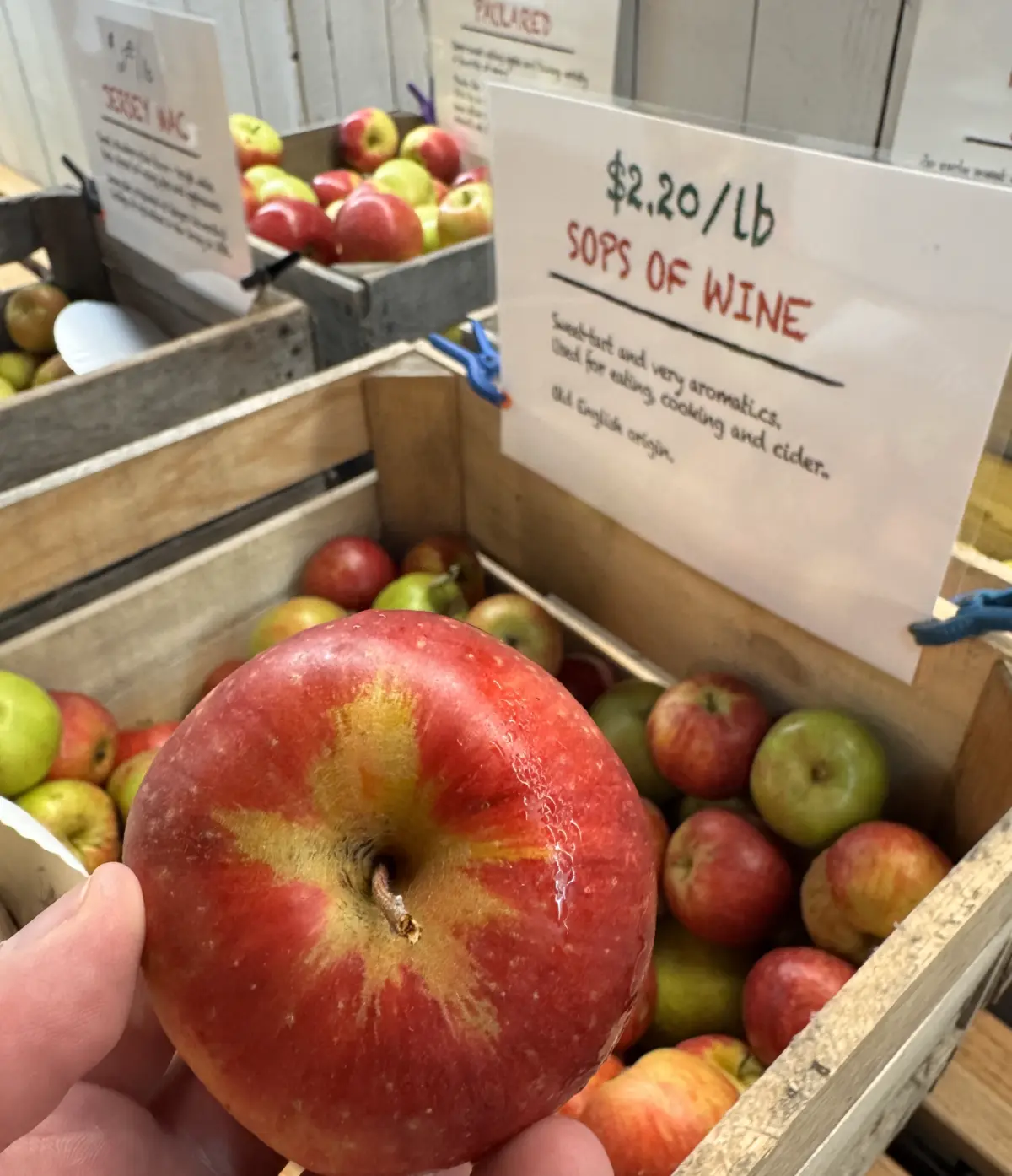
Midway through the chronological evaluation, the tasting team encountered the historically rich but texturally compromised Sops of Wine. Evoking visceral cinematic flashbacks of literary tragedy, this specimen presented a perplexing paradox. While offering a fascinating flavor profile—characterized by subacid sweetness, vanilla, and spice—its texture proved mealy, gritty, and advanced in its post-harvest degradation. Despite historical accounts pointing toward red-fleshed variations or complex multi-variety classifications under a single umbrella name, this particular specimen yielded a disappointing 3.5 out of 10.
The nadir of the tasting session arrived swiftly thereafter with the Fenceline Surprise. Despite an intriguing name that begged for a sophisticated French pronunciation, the fruit delivered little more than a bland, sandy mush. Offering merely a fleeting, mist-like impression of pear juice before dissolving into an unpalatable, abrasive mouthfeel, the apple appeared to have begun its decomposition long before reaching the consumer. Awarded a meager 1.0 out of 10, its survival from a zero-point score was salvaged solely by its promising nomenclature and aesthetic presentation.
Phase 3: Industrial Crabapples and Jaw-Smashing Giants (Americus Crab, Campfield, & Graham)
The final phase of the chronology ventured into the rugged domain of culinary crabapples and heavy-duty cultivars. The Americus Crab—sounding more like a steampunk inventor or an eccentric maritime superhero than a fruit—offered a complex barrage of savory, tart, and highly tannic notes. Strictly unsuited for raw, casual out-of-hand consumption, it scored 2.5 out of 10 as an acquired taste for the daring.

Similarly challenging was the Campfield (False), a purported cider apple heavily laden with tannins. Offering a chewy, resilient texture and a chemical tug-of-war between cloying sweetness and tongue-stripping astringency, it reinforced the horticultural reality that certain fruits demand the transformative alchemy of fermentation before human consumption. It was cataloged at a 4.1 out of 10.
Concluding the session was the Graham, a structural monolith so dense and hard it threatened the dental integrity of the tasting panel. Requiring monumental bite force to fracture its glacier-like interior, the Graham rewarded persistence with an utterly shocking flavor profile: an unadulterated, unmistakable blast of commercial Juicy Fruit gum. Despite the rigorous jaw conditioning required to consume it, the Graham triumphed with an 8.0 out of 10.
Supporting Context & Metrics
To fully comprehend the nuances of this agricultural audit, one must analyze the quantitative metrics and historical contexts surrounding the tested cultivars. The table below outlines the core performance indicators recorded during the evaluation:

| Cultivar Name | Primary Flavor Notes | Texture Profile | Identified Flaws | Final Score (out of 10) |
|---|---|---|---|---|
| Kickapoo Spice | Nutmeg, cinnamon, clove, cut grass | Dense, dry | Grass-like aftertaste, lack of juice | 6.9 |
| St Edmunds Pippin | Fennel pollen, herbal, sweet-tart | Crisp, sharp-breaking, juicy | Rough, abrasive skin | 8.3 |
| Sops of Wine | Vanilla, spice, subacid sweet | Mealy, gritty | Advanced structural breakdown | 3.5 |
| Fenceline Surprise | Faint pear mist | Bland, sandy mush | Extreme mealiness, premature aging | 1.0 |
| Americus Crab | Savory, tart, high tannin | Tough, rigid | Unsuitable for raw consumption | 2.5 |
| Campfield (False) | Tannic, sweet | Chewy, astringent | High tannin load, unsuitable for fresh eating | 4.1 |
| Graham | Juicy Fruit gum | Extremely dense, hard | High risk of temporomandibular strain | 8.0 |
Historical Provenance: The Campfield Legacy
Beyond simple sensory metrics, the evaluation of the Campfield apple uncovered deep historical roots tying back to the earliest days of American colonization. Historical records suggest the cultivar traces its lineage to Matthew Canfield (alternatively spelled Campfield), an anti-royalist Puritan who arrived in North America during the Great Puritan Migration prior to 1637. As a founding father of New Haven Colony, Norwalk, Connecticut, and Newark, New Jersey, Canfield operated within a socio-agricultural framework that mandated freeholders cultivate four acres of land—with stringent requirements for planting fruit trees to support the burgeoning hard cider industry. The intersection of this colonial history with modern pomological labeling illustrates how deeply intertwined heirloom fruit varieties are with the foundational infrastructure of early American settlement.
Official Statements and Horticultural Insights
Industry observers and agricultural historians have long noted the volatile nature of heirloom and specialty apple varieties. Unlike standardized commercial monoliths bred exclusively for shelf-life and uniform aesthetic appeal—such as the ubiquitous Red Delicious—heirloom varieties operate under entirely different biological rules.
According to statements synthesized from ongoing pomological field notes, the lifecycle of an apple remains fiercely independent of human convenience:

"Apples are weird like that. Some improve off the tree, some begin their descent to crap-town the moment they drop."
This sentiment underscores the precarious window of peak ripeness that defines specialty cultivars. Furthermore, industry experts emphasize that the presence of heavy tannins and aggressive astringency in varieties like the Campfield and Americus Crab should not be viewed as defects, but rather as specialized biological adaptations intended for the cellar and the cider press rather than the casual snack-seeker.
Future Outlook
As the autumn harvest reaches its zenith, the horizon for pomological exploration expands rapidly. With the investigative team packing its bags for an extensive regional tour spanning New York, New England, and Canada, the pipeline for incoming apple specimens is exceptionally robust.

Regional orchardists and agricultural purveyors in the northeastern territories are advised to prepare for rigorous, unfiltered evaluations. The intersection of historic growing regions and an unquenchable thirst for novel fruit varieties guarantees that the upcoming weeks will yield further discoveries, ranging from transcendent flavor triumphs to structural disasters. The Apple Snack Gang’s crusade marches onward—one bite, crunch, and grimace at a time.