

Executive Overview
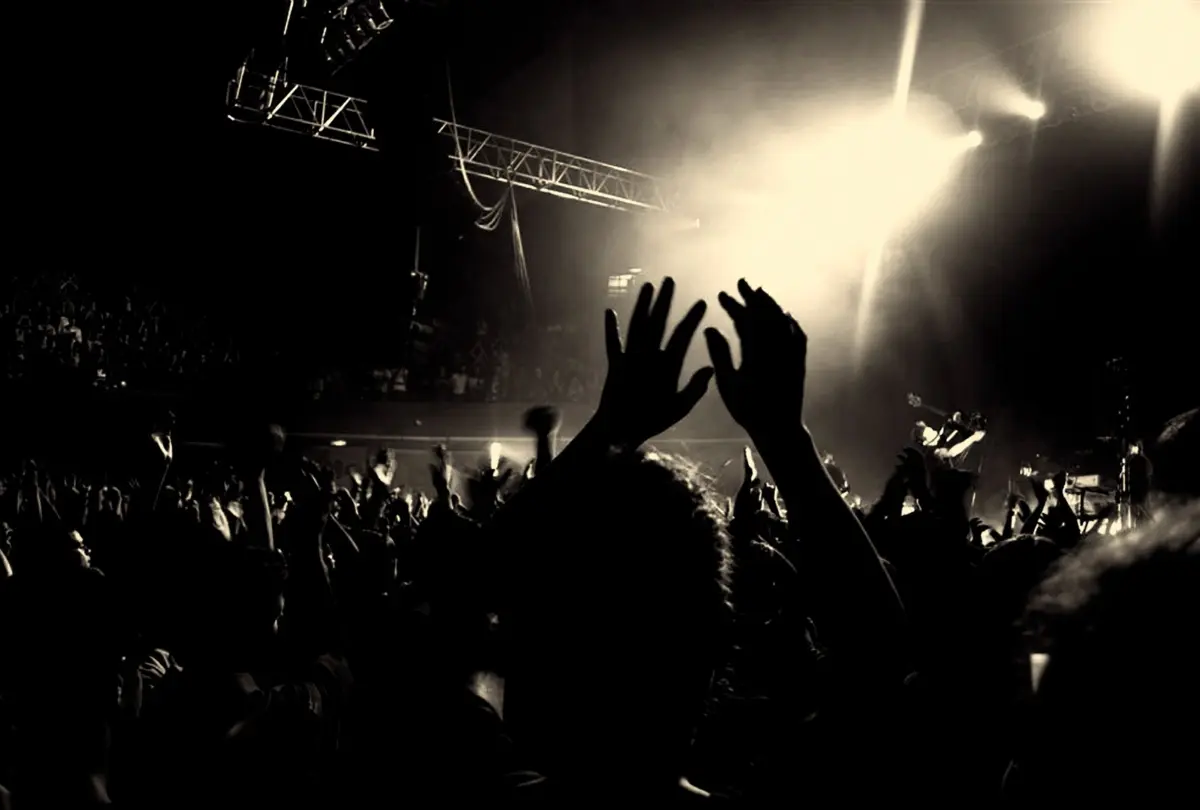
In contemporary cultural discourse, the act of attending a live music event alone has periodically been subjected to unwarranted scrutiny, framed by some mainstream publications as a quirky anomaly or, worse, a melancholy undertaking. Yet, a counter-movement is quietly dismantling this tired trope. For millions of dedicated music lovers, going to a concert solo is not a compromise born of isolation; it is a premier, uninhibited human experience.
From early evening performances at local dive bars to sold-out amphitheater spectacles, flying solo offers an unmatched level of immersion, schedule flexibility, and autonomy. Far from being a socially awkward endeavor, solo concertgoing is a celebration of self-reliance and an expression of supreme self-awareness. This report examines the cultural misconceptions surrounding solo attendance, chronicles the lived experiences of seasoned music enthusiasts, highlights the systemic hurdles erected by ticketing conglomerates, and reaffirms why going it alone remains the purest way to experience live art.
Detailed Chronology: A Lifelong Education in Solo Attendance
The appreciation of live music on one’s own terms is rarely a sudden epiphany; for many, it is a practice forged over decades of devotion. To understand the validity of solo concertgoing, one must look at how the practice manifests across different stages of a music lover’s life—from youthful initiation to seasoned independence.
The Adolescent Initiation
For many, the journey into solo concertgoing begins not out of preference, but out of necessity. Consider the classic rite of passage: an adolescent fan desperate to see an iconic artist—be it Bruce Springsteen at the New Haven Coliseum in the late 1970s or a modern pop sensation—whose peers simply do not share their specific musical fervor.
Overwhelmed by the fear of missing out, the young fan takes the plunge. Dropped off at the venue doors by a bewildered parent, the rookie concertgoer quickly learns a foundational truth of the live music ecosystem: you are never truly alone for long. Within minutes of finding a seat in the upper rafters, shared enthusiasm bridges social gaps. Conversations spark organically over local radio stations, favorite DJs, and touring histories. Phone numbers are exchanged, and temporary alliances are formed. The initial anxiety evaporates, replaced by the realization that a shared love for an artist creates an instant, welcoming community.
The Independent Adult Experience
Fast forward to adulthood, where the logistics of attending a show with companions become infinitely more complex. Coordinating disparate work schedules, aligning stylistic preferences, and agreeing on arrival times can turn what should be a joyful night out into an exercise in project management.
When an adult embraces solo attendance, these friction points vanish entirely. Recent experiences across diverse musical landscapes illustrate the seamless nature of the solo routine:
- The Dive Bar Matinee: Arriving early to a local venue for an unhurried, opener-free set by bands like The Dream Syndicate. The solo attendee can secure a prime bar stool, pull out a book or digital reader, and quietly absorb the atmosphere without needing to make small talk until the first notes drop.
- The General Admission Front Row: Venturing into a crowded 1,000-capacity theater for an R.E.M. tribute or an experimental jazz-rock ensemble like BASIC. Standing near the barrier not only guarantees optimal acoustic immersion—drowning out unwanted audience chatter—but also fosters camaraderie with neighboring fans who happily guard each other’s spots during restroom breaks.
- The Immersive Discovery: Spending pre-show hours browsing an attached record store, drifting into the acoustically ideal corner of an independent listening room, and letting the performance wash over damaged or sensitive hearing without having to compromise on sightlines or volume tolerance.
Supporting Context & Metrics: Deconstructing the "Sad Solo" Myth
Why does mainstream media periodically fixate on the supposed oddity of solo event attendance? Recent commentary in various lifestyle and music publications has attempted to romanticize solo concertgoing through awkward abstractions—describing it as a vehicle for achieving "the oneness of things." Yet, these analyses often miss the mark by treating the solitary aspect as a clinical experiment rather than a normal, everyday reality.
The Reality of Social Fragmentation
Modern social dynamics dictate that schedules rarely align perfectly. While the romantic ideal of a tight-knit circle of friends marching in lockstep to every tour announcement makes for good fiction, reality dictates otherwise.
- The Logistics Trap: Trying to force three or four people to agree on ticket tiers, transit methods, and arrival windows often results in missed opportunities.
- The Post-Show Connection: True music aficionados recognize that you do not need to sit next to someone for two hours to enjoy their company afterward. A post-show debrief over drinks, late-night diner food, or a subway ride captures the social benefit of companionship without sacrificing the purity of the live performance.
Generational Continuums
Data and anecdotal observations from across generational divides prove that solo concertgoing is thriving. Whether it is teenagers and college students attending shows by Harry Styles, Taylor Swift, or punk icons like Bikini Kill, the fundamental rituals remain unchanged. Youth across decades continue to swap social media handles, trade tour lore, and build instantaneous bonds in the pit or the nosebleeds. The medium has evolved from physical cassette tapes and paper flyers to digital handles, but the core human impulse—seeking out strangers who share your sonic obsessions—remains entirely intact.
Official Institutional Hurdles: The Ticketmaster Factor
While the cultural stigma surrounding solo attendance is rapidly dissolving, logistical roadblocks remain a frustrating reality, largely engineered by modern ticketing architecture.
The Single-Ticket Penalty
For the solo concertgoer, the single greatest impediment is not social anxiety or peer judgment; it is the automated friction enforced by corporate ticketing giants like Ticketmaster.
- The Pair-Lock Problem: Automated seating maps frequently restrict single buyers from purchasing one seat out of an available pair, or force users to select non-existent "adjoining seats."
- Gaming the System: Historically, experienced concertgoers often sought out single tickets as a strategic maneuver to score the best remaining seats in reserved sections. Today, algorithmic seat-locking mechanisms often penalize solo buyers, turning what should be a streamlined transaction into a digital obstacle course.
Interpersonal Dynamics in the Crowd
Another minor hurdle unique to certain demographics is unsolicited micro-policing within crowds. Solo female attendees, for instance, occasionally report encountering overzealous gatekeepers in the audience—individuals who feel compelled to interrogate those attending alone or test their musical knowledge. Fortunately, these encounters are minor anomalies easily bypassed by positioning oneself strategically near the soundboard, the barrier, or within self-selected communities of fellow music purists.
Future Outlook: Embracing Supreme Self-Awareness
As we look toward the future of live entertainment, the cultural consensus is shifting decisively in favor of personal autonomy. The notion that an individual must wait for permission, availability, or social alignment to experience art is increasingly recognized as obsolete.
The Rise of Mindful Consumption
Music lovers are placing a higher value on intentional listening. Phone-free concert initiatives—such as those popularized by artists like Phoebe Bridgers—have inadvertently highlighted the value of individual presence. When audiences are disconnected from their screens, the communal and personal elements of a live show are heightened. In this environment, being there by yourself allows for an unadulterated connection with the music, free from the performative pressures of digital documentation.
A Call to Action for Music Fans
Ultimately, deciding to attend a concert as a party of one is an exercise in profound self-love and self-awareness. It is an acknowledgment that your relationship with music is deeply personal and does not require validation from an entourage.
The prescription moving forward is simple: drop the hesitation, ignore outdated cultural scripts, and stop waiting for someone else to validate your passions. Buy the ticket, walk through the doors on your own schedule, and immerse yourself in the sound. Live music is too precious, too fleeting, and far too vital to miss simply because nobody was available to go with you.