

Executive Overview
The intersection of politics, media, and corporate journalism has reached a critical boiling point. In a shifting landscape defined by rapid polarization, economic contraction, and tectonic shifts in how information is disseminated, the fourth estate faces existential challenges on multiple fronts. From high-stakes federal courtroom battles over White House press credentials to executive shake-ups at legacy broadcasting institutions, and from high-profile televised apologies to the quiet, devastating erosion of local newsrooms, the media ecosystem is undergoing a violent recalibration.
At the center of this turbulence is an ongoing legal war between the Trump administration and major news organizations—specifically CNN, MS NOW, and Politico—over First and Fifth Amendment protections. Concurrently, the boundaries between traditional journalism and opinion media continue to blur, highlighted by high-profile talent migrations such as Ross Douthat’s dual roles at CBS News and The Free Press. Yet, while national outlets grapple with constitutional principles and corporate reinventions, the human cost of modern media’s relentless cycle is laid bare by events ranging from Stephen A. Smith’s forced reckoning over mental health commentary to the unceremonious gutting of legacy local newspapers like the Amarillo Globe-News.
This comprehensive report examines the structural tremors shaking the contemporary media world, breaking down the legal battles, ethical missteps, and industrial contractions shaping the future of public discourse.
Detailed Chronology: The White House Press Ban and the Federal Court Battle
The adversarial relationship between the executive branch and independent media entered uncharted legal territory when the Trump administration enacted a sweeping ban, barring reporters and technical crews from CNN, MS NOW, and Politico from entering White House grounds. The administration framed the exclusion around national security and content disputes, but the targeted organizations swiftly mounted a coordinated legal defense.
The Restraining Order and Preliminary Injunctions
Two weeks prior to the latest developments, attorneys for the banned outlets secured a temporary 14-day restraining order from U.S. District Judge Timothy J. Kelly of the U.S. District Court for the District of Columbia. This order temporarily stayed the administration’s ban, allowing credentialed journalists to reclaim access to the White House complex while litigation moved forward.
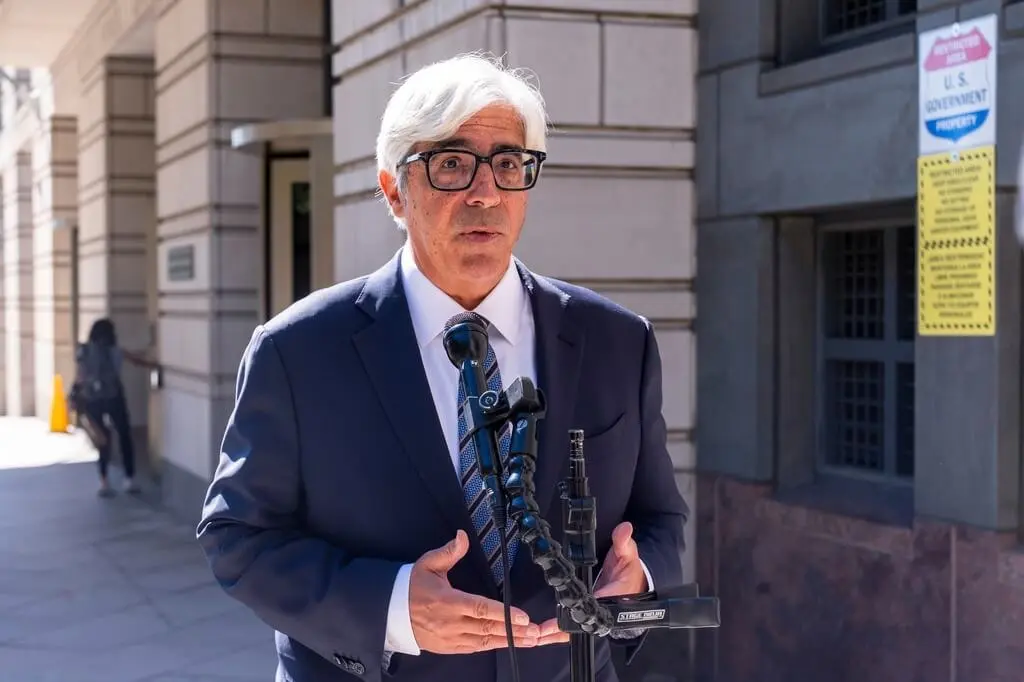
With that initial 14-day window slated to expire on a Thursday, both legal teams returned to federal court for a crucial extension hearing. Judge Kelly extended the restraining order through the following Tuesday, signaling his intention to weigh a more durable, long-term preliminary injunction that could govern access over months of protracted litigation.
Politico reporter Irie Sentner captured the mood of the courtroom, noting that “Kelly appeared to be gravitating toward a more durable injunction over the course of potentially months of litigation.” For the time being, however, the parties remain locked in a holding pattern.
Constitutional Hurdles: First vs. Fifth Amendments
During the proceedings, Judge Kelly pressed both sides on the constitutional framework underpinning the dispute. While the media outlets have anchored their arguments primarily on First Amendment violations—asserting that the administration is retaliating against unfavorable coverage—Judge Kelly has signaled that the plaintiffs’ most formidable hurdle may lie elsewhere.
“That’s probably the biggest hurdle you all have,” Kelly remarked to government attorneys, directing attention toward potential violations of the Fifth Amendment’s due process clause. Specifically, the court is scrutinizing whether the administration provided adequate procedural safeguards and fair notice before stripping outlets of their long-held credentials.
At the same time, the court has shown visible skepticism toward the administration’s core justification: that the targeted outlets’ reporting posed a direct threat to national security. Legal counsel for the media organizations argued that the ban was motivated purely by animus toward critical reporting.
To bolster this claim, plaintiffs’ attorneys introduced a piece of evidence described in court as a "coup de grace." During a recent interview with Time magazine, President Trump was directly asked why he chose to ban the specific outlets. His unvarnished response: “Well, it’s just bad story after bad story.”
Theodore J. Boutrous Jr., lead attorney for the media coalition, seized on the remark during Thursday’s hearing, arguing that the president’s own public admissions completely undermine the administration’s pretense of national security justifications. Legal analysts following the case suggest that the administration faces an uphill battle, with the proceedings increasingly trending toward a significant legal victory for the press.
The Air Force One Exception
Despite the momentum in federal court regarding White House grounds access, the administration’s travel restrictions remain partially intact. As detailed by The New York Times media reporter Erik Wemple, the court order did not extend to travel privileges aboard Air Force One. Consequently, the ban preventing CNN, MS NOW, and Politico reporters from covering presidential travels aboard the presidential aircraft remains legally permissible under the current scope of the injunction, highlighting the complex, piecemeal nature of press access litigation.
Supporting Context & Metrics: Talent Shuffles and the Rise of Hybrid Media
While constitutional battles play out in Washington, the structural architecture of television and digital news is undergoing its own radical transformation. A prime example is the high-profile career pivot of The New York Times opinion columnist Ross Douthat, whose recent moves underscore the fluid boundaries between mainstream institutional journalism and independent digital media.
The CBS News Shake-Up and Douthat’s Appointment
The summer months brought profound turbulence to CBS News, most notably to its legendary investigative flagship, 60 Minutes. Following a controversial restructuring that saw the departure of the program’s executive producer alongside several veteran, highly respected correspondents, newly installed CBS News Editor-in-Chief Bari Weiss made a surprising hiring decision: she tapped Ross Douthat—a writer with zero conventional television news experience—to serve as a 60 Minutes correspondent.
Douthat’s transition to broadcast journalism raised eyebrows across the industry. Yet, within weeks, a second, far less surprising announcement followed. Weiss revealed that Douthat would also be joining her independent digital media venture, The Free Press, as a regular columnist. The two previously worked together in the opinion section of The New York Times. Celebrating the reunion on social media, Weiss posted on X (formerly Twitter): “A dream come true.”
Building the Post-Woke, Post-MAGA Independent Press
Douthat inaugurated his new gig with a direct, essayistic column titled simply, "I’m Writing a Column for The Free Press." In the piece, he detailed the origins of the publication, recalling a post-2020 conversation he had with Weiss shortly after her departure from the Times.
"She was in an entrepreneurial mood, making calls and soliciting opinions, and I told her that I thought there was a potential market for a new general-interest publication that was politically independent, competitive with The Atlantic and The New Yorker, free from the ideological strictures of wokeness and the loyalty tests of MAGA."
What began as Weiss’s Substack publication, Common Sense, in 2021 has since evolved into the fully-fledged digital outlet The Free Press, launched in 2022.
Addressing potential conflicts between his new journalistic responsibilities, Douthat clarified that his opinion writing is distinct from his broadcast work:
"This is not my day job. I am a newly minted correspondent for 60 Minutes, where the goal is to ask probing questions, not sling political hot takes. If all goes well, this column will complement that work, staying a little bit above the partisan fray while giving readers useful frameworks (or, sometimes, truly eccentric frameworks) through which to understand our strange-and-getting-stranger century."
Douthat has already made his mark on 60 Minutes, having reported two major segments within the program’s first three episodes of the season: a probing interview with Patrick Clancy, the ex-husband of a woman accused of murdering their three children, and an in-depth profile of North Carolina Republican Senator Thom Tillis.
Official Statements and Industry Ethics: The Stephen A. Smith Controversy
The pressures of modern media consumption—driven by relentless output demands, 24-hour news cycles, and the mandate for provocative commentary—frequently result in severe ethical missteps. This dynamic was starkly illustrated by a major controversy involving ESPN commentator Stephen A. Smith.
The Controversy on First Take
Earlier in the week, Philadelphia Eagles offensive lineman Lane Johnson announced his sudden retirement from professional football, explicitly citing mental health struggles as the primary catalyst for his departure.
During a broadcast of ESPN’s morning debate show First Take, Smith addressed Johnson’s retirement. Rather than treating the player’s mental health disclosure with gravity, Smith appeared to make light of the situation, suggesting that the stated mental health reasons were merely a smoke-screen and that the real motivator behind Johnson’s exit was the team’s poor on-field performance.
The remarks drew immediate internal pushback. Show guest Kimberly A. Martin challenged Smith in real time on national television, cutting through the banter to tell him directly: “I feel like you’re making light of the situation.”
The Apology Evolution
Recognizing the mounting backlash, Smith attempted a preliminary defense later that day on his SiriusXM radio program. However, his initial response fell flat. He argued that his comments had been “misconstrued,” while insisting he would “never” make light of mental health—even detailing his own personal struggles with mental well-being over the years.
Critics pointed out that the defensive framing failed to take full accountability. The Athletic media columnist Andrew Marchand published a scathing critique asserting that Smith had deeply embarrassed himself and that the correct course of action was to “simply apologize.”
The pressure prompted a dramatic about-face on Thursday’s broadcast of First Take. Opening the show with a solemn, unscripted monologue, Smith offered a lengthy and unequivocal mea culpa:
"Here’s the reality of the situation. I was wrong. I messed up."
Smith extended direct apologies to Lane Johnson, the Philadelphia Eagles organization, and anyone navigating mental health battles. Crucially, he addressed the broader societal impact of his words:
"The biggest regret that I have for all of this is the fact that it may have given people that wanted to open the door to seek help a reason to pause and hesitate and not do so. And I can’t emphasize enough how sorry I am about that because it is a real issue."
Acknowledging the immense bravery required for professional athletes—particularly in hyper-masculine sports environments—to speak publicly about psychological distress, Smith’s apology was widely received as sincere and transparent. He noted that the statement was entirely self-directed and had not been mandated by ESPN executives.
The Danger of the Provocateur Model
Media critics, however, argue that the incident highlights a systemic pathology within modern sports and political commentary. When media personalities are contracted to produce thousands of hours of content annually under strict imperatives to be entertaining, provocative, and opinionated, the safeguards protecting basic human empathy often break down.
Writing in The Athletic, Marchand dissected the structural flaws of modern commentary culture:
"Talk show hosts mostly don’t know anything, but have to pretend they know everything. Smith and others are on your screen to entertain, not inform. If it is debating LeBron versus MJ or the Dallas Cowboys defense or who should be ranked No. 1, it really is no harm, no foul. But when you are talking about a serious topic, like mental health issues, don’t mock someone."
Marchand concluded with a warning that extends far beyond sports television:
"After all the clamor is done, he should make sure next time he gives himself a little more time to think before he takes on serious matters. Life is not a show."
Future Outlook: The Silent Collapse of Local Journalism
While national legal battles and high-profile television controversies dominate media headlines, the most foundational tier of the American press continues to suffer catastrophic attrition.
As reported by Poynter colleague Angela Fu, the structural erosion of local news has reached a grim milestone in Amarillo, Texas—a metropolitan hub of 205,000 residents. The city’s historic paper of record, the Amarillo Globe-News, is now officially down to a single high-school sports reporter.
Last week, the rest of the publication’s entire editorial staff was laid off “without warning,” according to an investigation by the Amarillo Tribune. The cuts at the Globe-News—which is owned by the USA Today Co. (Gannett)—arrived mere days after a wave of sweeping sports reporter terminations across the corporate chain’s nationwide network of publications.
These cuts follow a previous round of corporate restructurings and audience-team layoffs executed by USA Today Co. in September. Despite mounting public outcry and inquiries from industry watchdogs regarding the sustainability of news deserts, corporate leadership has declined to respond to requests for comment.
Conclusion
The state of the media as it navigates the mid-2020s is defined by deep institutional vulnerability. On one front, the constitutional architecture protecting the press is being stress-tested in federal courtrooms against executive overreach. On another, the economic pressures of corporate consolidation are systematically dismantling the grassroots reporting necessary for a functioning democracy, leaving communities like Amarillo entirely unmonitored.
Simultaneously, the migration of commentary toward hybrid digital models and the ethical hazards of round-the-clock entertainment culture remind audiences that the words spoken on screen and in print carry profound real-world consequences. As next week’s court rulings approach and newsrooms continue to adapt to economic and political pressure, the survival of independent, accountable journalism remains one of the defining challenges of the modern era.